
Cats are among the most beloved pets worldwide, yet their actions often leave owners puzzled. From squeezing into shipping boxes barely larger than their heads to staring blankly at walls for minutes on end, feline behavior can seem baffling — even irrational. But behind every odd habit lies instinct, biology, or subtle communication. Animal behaviorists, veterinarians, and ethologists have spent decades decoding these quirks. What emerges is a portrait of a species finely tuned to survival, comfort, and control over its environment. Understanding why cats behave the way they do isn’t just fascinating — it’s essential for building trust and improving their well-being.
The Science Behind Box-Sitting: More Than Just Cute
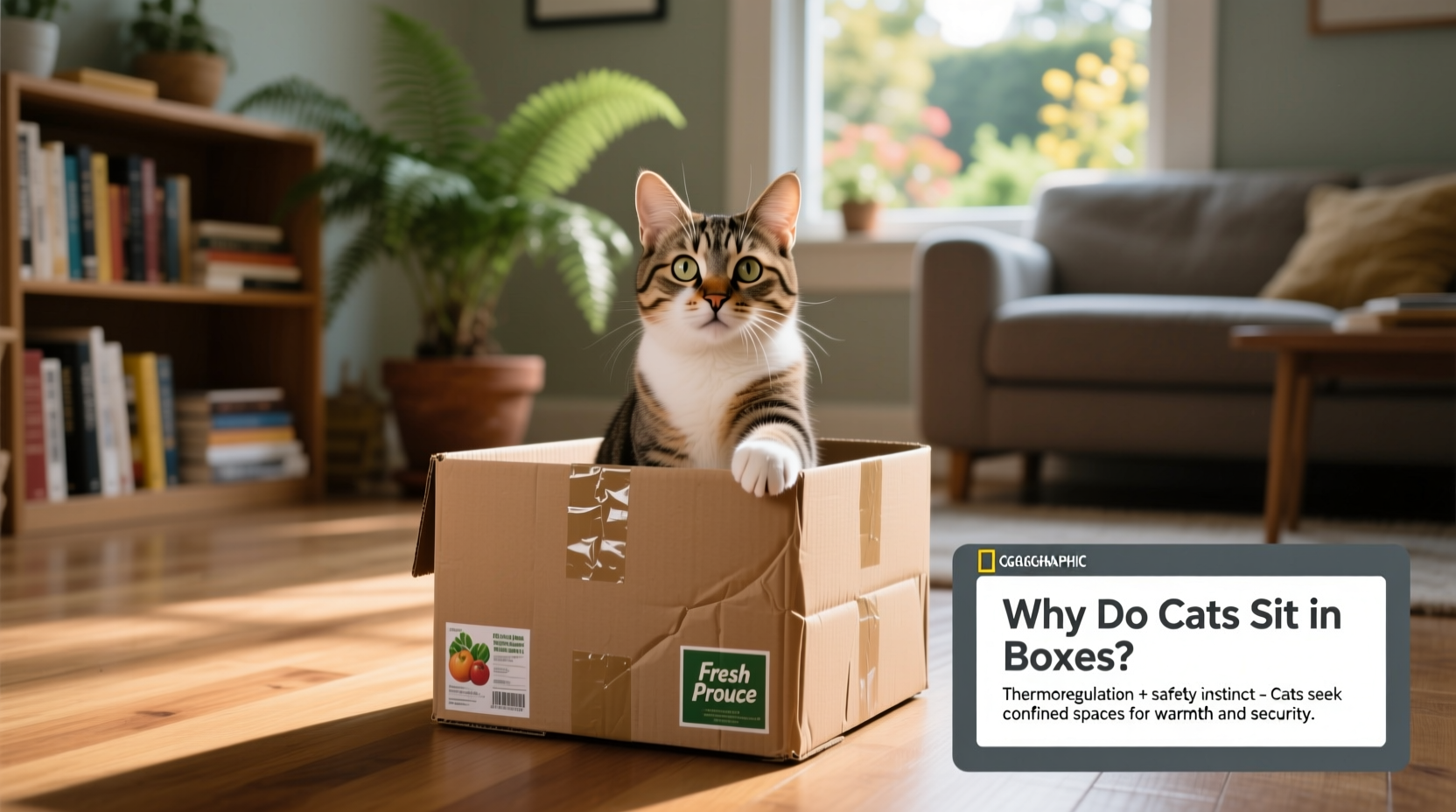
One of the most iconic cat behaviors — curling up in cardboard boxes — has inspired countless memes, but it's far from random. Research published in *Applied Animal Behaviour Science* found that shelter cats given access to hiding boxes adjusted to new environments faster and exhibited lower stress levels than those without them. The reason? Boxes offer security.
In the wild, cats are both predators and prey. Even domesticated cats retain an instinctual need for enclosed spaces where they can observe without being seen. A box provides thermal insulation, physical boundaries, and a sense of enclosure that mimics a den. This reduces anxiety and gives cats a tactical vantage point.
Interestingly, the size of the box matters less than the presence of boundaries. Cats will often squeeze into containers too small for comfort because the act of tucking themselves in triggers a calming neurological response. It’s not about space; it’s about containment.
Decoding Common Cat Behaviors: What Your Feline Is Really Saying
Cats don’t use words, but they communicate constantly through body language, vocalizations, and routine actions. Recognizing what these signals mean transforms confusion into connection.
Kneading: The “Making Biscuits” Mystery Solved
When a cat rhythmically pushes its paws against a soft surface — often accompanied by purring — it’s called kneading. This behavior originates in kittenhood, when nursing stimulates milk flow. The motion becomes associated with warmth, safety, and nourishment.
Adult cats continue kneading when they feel content or seek comfort. While some interpret it as territorial (due to scent glands in paw pads), the primary driver appears emotional rather than strategic. Kneading on laps is one of the highest compliments a cat can give — it means you’ve earned a spot in their inner circle of trust.
Tail Language: Beyond Just Mood Rings
A cat’s tail is a dynamic communication tool. Subtle shifts convey complex messages:
- Upright tail with a slight curl at the tip: Friendly greeting.
- Flicking or swishing tail: Agitation or intense focus (common during play).
- Puffed-up tail: Fear or surprise, designed to make the cat appear larger.
- Low or tucked tail: Submission or anxiety.
Unlike dogs, whose wagging tails usually signal excitement, a flicking cat tail often means the opposite — irritation brewing beneath the surface.
Slow Blinking: The Ultimate Compliment
When a cat stares at you and slowly closes its eyes, then reopens them, it’s performing what researchers call a “cat smile.” This behavior signals relaxation and trust. In feline social dynamics, direct eye contact can be confrontational; breaking that gaze slowly shows non-aggression.
“Slow blinking isn’t just cute — it’s a cross-species bonding mechanism. When humans mimic it, cats respond more positively.” — Dr. Karen McComb, Evolutionary Psychology Researcher, University of Sussex
Why Cats Bring You “Gifts” — And How to Respond
Finding a half-alive mouse on your pillow may not feel like gratitude, but in cat logic, it’s high praise. Hunting is hardwired, and bringing prey home serves multiple purposes: teaching, sharing resources, and reinforcing social bonds.
If your cat is an outdoor hunter or has access to windows, this behavior is especially common. Some experts believe cats view their human caregivers as clumsy kittens who need lessons in survival. Others suggest it’s an attempt to contribute to the household “pride.”
Mini Case Study: Bella the Apartment Hunter
Bella, a 4-year-old tabby living in a Chicago high-rise, began leaving rubber bands and crumpled paper balls near her owner’s bed every morning. Her owner was confused and slightly alarmed — until a behaviorist explained: Bella wasn’t malfunctioning. She was fulfilling her predatory sequence — stalk, chase, capture, present — using available substitutes.
After introducing timed treat-dispensing puzzles and daily feather wand sessions, Bella’s “gift-giving” decreased by 70% within three weeks. She still occasionally drops a sock near the couch — but now it feels more like pride than pestering.
Do’s and Don’ts of Responding to Strange Cat Behaviors
| Behavior | Do | Don’t |
|---|---|---|
| Sitting in boxes or tight spaces | Respect their need for privacy; provide safe enclosures | Force them out or remove shelters abruptly |
| Hissing or growling | Give space; identify trigger (noise, other pets) | Yell back or punish — increases fear |
| Scratching furniture | Offer sturdy scratching posts; use pheromone sprays | Declaw (medically harmful and banned in many countries) |
| Staring at nothing | Observe for patterns — may be tracking insects or light shadows | Assume illness immediately unless other symptoms exist |
| Knocking things off shelves | Engage with interactive play; enrich environment | Ignore — could indicate boredom or anxiety |
Understanding Nocturnal Zoomies and Wall Staring
Many cat owners wake to the sound of thundering paws at 3 a.m. This burst of energy, known colloquially as “the midnight crazies,” stems from cats’ natural crepuscular rhythms — most active at dawn and dusk. Even indoor cats retain this biological clock.
Wall staring, meanwhile, often coincides with these episodes. Cats have superior peripheral vision and can detect minute movements invisible to humans — a twitching curtain thread, dust motes in sunlight, or even electrical currents in walls (some theorize magnetic fields attract attention). However, prolonged unblinking stares with dilated pupils may indicate medical issues like hypertension or early cognitive decline, especially in senior cats.
Step-by-Step Guide to Managing Nighttime Activity
- Adjust feeding times: Serve dinner right before bedtime to encourage post-meal lethargy.
- Engage in active play: Spend 10–15 minutes before sleep mimicking prey sequences (chase, pounce, capture).
- Use automated toys: Motion-activated devices can redirect energy earlier in the evening.
- Create daytime stimulation: Rotate toys, add window perches, or use bird feeders outside windows.
- Maintain consistency: Stick to the same schedule — cats thrive on predictability.
FAQ: Common Questions About Cat Behavior
Why does my cat follow me into the bathroom?
Cats are highly attuned to routines. The bathroom is often a confined space where you’re stationary for several minutes — prime time for undivided attention. Additionally, the cool tiles, dripping faucet, and lingering scents make it sensorially rich. Some cats simply want to guard their favorite human.
Is it normal for cats to suck on wool or blankets?
This behavior, called pica, is common in certain breeds (especially Siamese) and often linked to early weaning. While occasional sucking is usually harmless, ingesting fabric can lead to intestinal blockages. Provide safe alternatives like fleece toys and consult your vet if the behavior intensifies.
Why do cats hate closed doors?
To a cat, a closed door represents a boundary they didn’t authorize. Their territorial nature drives them to monitor all areas of their domain. Being excluded creates frustration — not out of spite, but because information is blocked. They want to know what’s happening on the other side.
Checklist: Creating a Behavior-Friendly Home Environment
- ✅ Provide at least one enclosed hideout per cat (cardboard box, covered bed, cat cave)
- ✅ Install vertical spaces like shelves or cat trees for observation points
- ✅ Offer daily interactive play sessions (minimum 10 minutes twice a day)
- ✅ Use food puzzles to stimulate hunting instincts
- ✅ Maintain consistent routines for feeding, play, and quiet time
- ✅ Introduce new people or pets gradually to avoid stress spikes
- ✅ Monitor litter box placement — keep away from loud appliances or foot traffic
“The key to understanding cats isn’t anthropomorphism — it’s empathy. See the world from their perspective: small changes in environment, routine, or noise levels can feel seismic to them.” — Dr. Sarah Ellis, Feline Behavior Specialist, International Cat Care
Conclusion: Embracing the Quirks
Cats will never fully conform to human expectations — and perhaps that’s why we love them so much. Their mysterious habits aren’t flaws; they’re expressions of a complex evolutionary history shaped by independence, precision, and deep-seated instincts. By learning to read their signals — whether it’s slow blinking, box occupation, or presenting a toy mouse — we deepen our bond and support their mental health.
You don’t need to eliminate quirky behaviors. Instead, channel them constructively. Replace destructive scratching with appropriate surfaces. Turn gift-giving into shared play. Respect their need for solitude without taking it personally. Every odd action is a window into their inner world.




 浙公网安备
33010002000092号
浙公网安备
33010002000092号 浙B2-20120091-4
Comments
No comments yet. Why don't you start the discussion?