
Cats and cardboard boxes go together like peanut butter and jelly—so naturally that it seems almost predestined. Whether it’s a shipping box left on the floor or a tiny container barely big enough for their paws, cats will claim it as their own with unwavering confidence. But beyond the undeniable cuteness, there’s a deeper reason behind this quirky habit. The tendency for cats to curl up in confined spaces isn’t just whimsy; it’s rooted in evolution, survival instincts, and physiological needs shaped over thousands of years.
To understand why cats are drawn to boxes, we must look beyond domestication and consider the wild ancestors of today’s housecats. These behaviors didn’t emerge overnight—they were forged through necessity, refined by natural selection, and preserved because they serve real functions even in modern environments.
The Evolutionary Roots of Box Sleeping
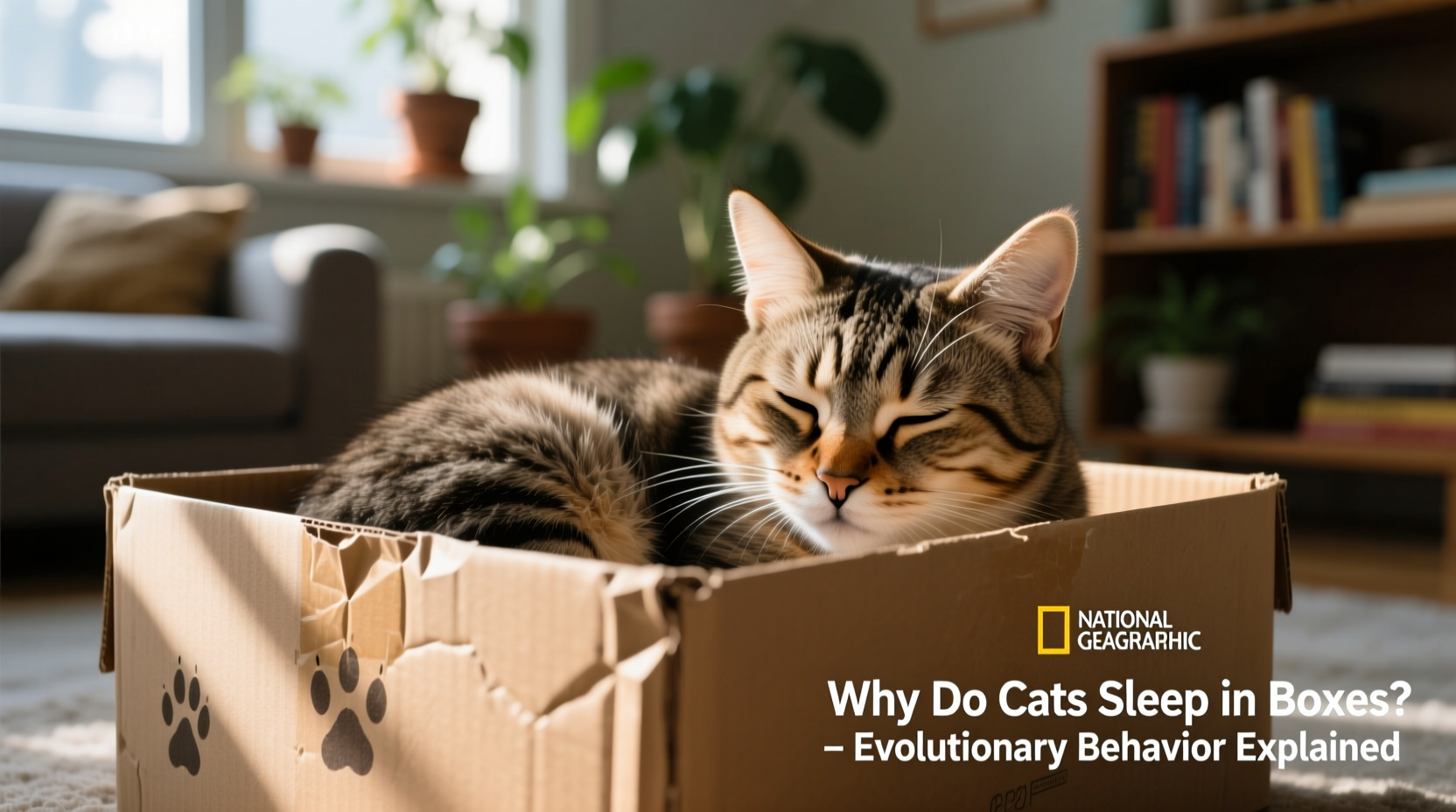
Domestic cats (Felis catus) evolved from the African wildcat (Felis lybica), a small, solitary predator native to arid regions of North Africa and the Middle East. In the wild, survival depended on avoiding detection by larger predators and conserving energy between hunts. One key strategy was seeking out enclosed, sheltered spaces—rock crevices, hollow logs, dense brush, or burrows abandoned by other animals.
These hiding spots provided several advantages: protection from predators, insulation against temperature extremes, and a concealed vantage point for observing prey. Over generations, the preference for tight, secure spaces became hardwired into feline behavior. Even though today’s indoor cats face no threat from jackals or eagles, their brains still operate under ancient programming. A cardboard box mimics the ideal den: enclosed on multiple sides, easily defensible, and just large enough to fit their body snugly.
“Cats are ambush predators by nature. Enclosed spaces make them feel hidden and in control—a psychological advantage whether they’re stalking a toy mouse or dodging household chaos.” — Dr. Sarah Bennett, Feline Behavior Specialist
This instinctual drive explains why a cat might bypass a plush, expensive cat bed in favor of a plain brown box. From an evolutionary standpoint, comfort is secondary to security. The walls of a box create a physical boundary that reduces sensory input, helping cats feel less exposed and more at ease.
Thermoregulation: Staying Warm in Small Spaces
Another critical factor driving box-sleeping behavior is thermoregulation. Cats maintain a higher core body temperature than humans—around 101–102.5°F (38–39°C). To preserve energy, especially when resting, they seek out warm microclimates. Cardboard, despite its humble appearance, is an excellent insulator. When a cat tucks itself into a box, the confined space traps body heat, creating a cozy thermal pocket.
In the wild, maintaining warmth without expending extra energy was essential for survival, particularly during cold desert nights. Today’s indoor cats may not face such extremes, but the instinct remains. Studies have shown that cats prefer ambient temperatures between 86°F and 97°F (30–36°C)—far warmer than most human homes are kept. Boxes help bridge that gap.
Interestingly, research conducted at Utrecht University found that shelter cats given access to cardboard boxes exhibited significantly lower stress levels during their first week compared to those without boxes. The reduction in anxiety was attributed not only to physical warmth but also to the psychological comfort of having a private retreat.
Safety, Security, and Stress Reduction
Cats are both predators and prey animals. While they hunt mice and birds, they themselves are vulnerable to larger carnivores. This dual role has made them hyper-aware of their surroundings. Open spaces leave them feeling exposed, triggering low-level anxiety even in safe environments. Boxes—and other enclosed spaces—offer a quick escape from perceived threats, whether it’s a loud vacuum cleaner, visiting guests, or a barking dog next door.
The act of squeezing into a tight space activates what ethologists call a “security response.” Once inside, the cat can observe its environment while remaining mostly hidden. This satisfies two competing needs: vigilance and vulnerability reduction. It’s no coincidence that cats often choose boxes positioned near doorways or elevated surfaces—locations that offer both concealment and visibility.
Moreover, the pressure of the box’s walls against the cat’s body can have a calming effect, similar to swaddling in human infants. This gentle tactile feedback helps regulate the nervous system, promoting deeper relaxation and faster onset of sleep.
Real-Life Example: The Shelter Cat Study
In a well-documented case study at a Dutch animal shelter, researchers introduced cardboard boxes to half of the incoming cat enclosures while leaving the other half without. Over ten days, staff used the Katterijn Cat-Stress-Score (CSS) to assess anxiety levels, tracking behaviors like hiding, vocalizing, and approachability.
The results were striking: cats with boxes adapted to their new environment much faster. By day three, many were visible and relaxed, whereas those without boxes remained withdrawn. By day seven, the difference in stress scores was statistically significant. The study concluded that simple environmental enrichment—like providing a cardboard box—can dramatically improve welfare in high-stress settings.
This example underscores how deeply ingrained the need for enclosed spaces is in feline psychology. Even in unfamiliar, potentially threatening environments, a box serves as an instant sanctuary.
Do’s and Don’ts of Supporting Natural Box Behavior
| Do’s | Don’ts |
|---|---|
| Provide clean, chemical-free boxes with open tops for easy escape | Use tape-heavy or stapled boxes that could injure curious paws |
| Place boxes in quiet, low-traffic areas for maximum privacy | Force a cat into a box or disturb them while inside |
| Add soft bedding or old towels for added comfort | Use boxes treated with pesticides, dyes, or strong adhesives |
| Rotate boxes regularly to keep novelty and hygiene high | Assume all cats will use boxes—some may prefer tunnels or covered beds |
Behavioral Enrichment: Beyond the Box
While boxes satisfy fundamental instincts, they should be part of a broader approach to environmental enrichment. Indoor cats thrive when their surroundings stimulate natural behaviors like hunting, climbing, scratching, and exploring. A single box is useful, but a variety of shelters—tunnels, cubbies, hammocks, and perches—can provide mental stimulation and reduce boredom-related issues like overgrooming or aggression.
Consider creating a “den zone” in your home: a dedicated area with multiple hideaways at different heights. Rotate items weekly to maintain interest. You might repurpose old furniture boxes, install wall-mounted shelves with fabric covers, or purchase commercially available cat caves made from breathable, insulated materials.
For multi-cat households, ensure each cat has access to at least one private retreat. Competition for safe spaces can lead to tension, especially if resources are limited. Observing which cats gravitate toward which types of enclosures can reveal individual preferences and help prevent conflict.
Step-by-Step Guide: Creating a Feline-Friendly Hideaway
- Select a clean, undamaged box – Avoid containers that held chemicals, food with strong odors, or toxic substances.
- Cut a single entrance – One opening allows the cat to monitor who or what approaches, enhancing their sense of control.
- Remove all tape and staples – These can snag claws or fur and pose ingestion risks if chewed.
- Line the bottom – Use an old towel, fleece blanket, or removable pad for warmth and comfort.
- Position strategically – Place near a heat source (but not too close), away from foot traffic, and ideally with a view of the room.
- Monitor usage – If the cat avoids it, try relocating or adding familiar scents (e.g., a worn T-shirt).
- Replace regularly – Discard when soiled, flattened, or frayed to maintain hygiene and structural integrity.
Frequently Asked Questions
Is it normal for my cat to sleep in boxes every day?
Absolutely. Daily use of boxes is completely normal and indicates your cat feels safe enough to express natural behaviors. As long as the box is clean and structurally sound, there’s no cause for concern.
What if my cat prefers boxes over their expensive cat bed?
This is extremely common. Many commercial cat beds fail to replicate the enclosed, den-like structure cats instinctively seek. Try modifying the bed by adding side panels or placing it inside a shallow box to increase perceived security.
Are there any risks to cats sleeping in boxes?
Risks are minimal but include potential injury from loose tape, staples, or collapsing structures. Always supervise young kittens around boxes, and avoid using boxes with small, detachable parts they could swallow.
Final Thoughts: Honoring Instinct in Domestic Life
The sight of a cat curled up in a box may seem trivial, even humorous. But beneath that image lies a complex interplay of evolution, physiology, and psychology. What appears to be a simple quirk is actually a window into the survival strategies that allowed cats to thrive across continents and millennia.
By understanding why cats sleep in boxes, we gain insight into their inner world. We learn that safety, warmth, and control are not luxuries—they are necessities. And we realize that sometimes, the simplest solutions—like a cardboard box—are the most effective.
As cat owners, we don’t need to buy the most expensive toys or designer furniture to support our pets’ well-being. Often, all it takes is observing their behavior, respecting their instincts, and providing basic accommodations that align with their evolutionary needs.
“The best care for a cat isn’t about luxury—it’s about letting them be cats.” — Dr. Elena Torres, Veterinary Ethologist




 浙公网安备
33010002000092号
浙公网安备
33010002000092号 浙B2-20120091-4
Comments
No comments yet. Why don't you start the discussion?