
Every holiday season, millions of homes light up with strings of festive bulbs. But few things are more frustrating than watching your carefully hung display flicker and fail—bulb by bulb—until half the strand is dark. The phenomenon where Christmas lights go out one by one isn’t random; it’s built into the design of many traditional light sets. Understanding why this happens—and how to stop it—is key to a brighter, longer-lasting holiday display.
The \"domino effect\" in Christmas lights refers to the gradual failure of individual bulbs causing entire sections or full strands to go dark. This issue primarily affects older-style incandescent mini-lights wired in series. While modern LED strings have improved reliability, even they can suffer cascading failures under certain conditions. The good news: most of these problems are preventable with the right knowledge and maintenance habits.
How Series-Wired Lights Work (and Why One Bulb Can Kill the Whole String)
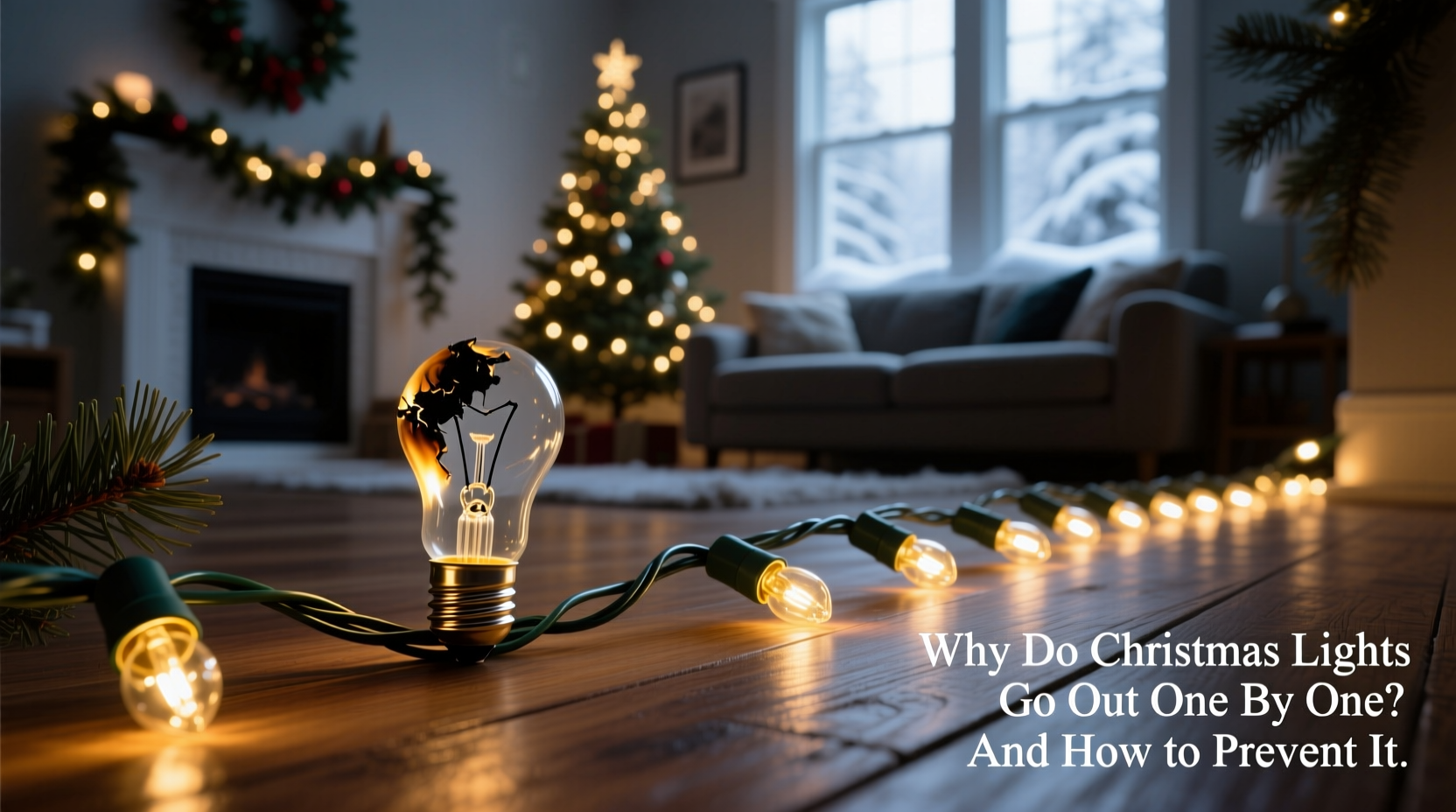
The root cause of the domino effect lies in electrical circuit design. Most traditional Christmas light strings use a **series circuit**, meaning electricity flows through each bulb in sequence before returning to the power source. If one bulb burns out or becomes loose, the circuit breaks, and no current can pass—resulting in a dead strand.
In older incandescent sets, each bulb acts as both a light source and a conductor. When a filament inside the bulb breaks, it interrupts the flow of electricity. Unlike parallel circuits—where each bulb has its own path to power—a single point of failure in a series circuit shuts down everything downstream.
Manufacturers attempted to solve this issue with **shunt wires**—tiny conductive pathways inside the bulb base designed to activate when the filament fails. In theory, when the filament breaks, the shunt should carry the current and keep the rest of the string lit. However, shunts don’t always work reliably. Corrosion, poor manufacturing, or voltage spikes can prevent them from activating, leaving you with a dark strand.
Modern LED Strings: Smarter Design, But Not Immune
LED Christmas lights are generally more reliable than their incandescent counterparts. Many are wired in a **combination of series and parallel circuits**, reducing the risk of total failure. Some high-end models even feature built-in resistors and fail-safe wiring that isolates faulty bulbs without affecting others.
However, not all LED strings are created equal. Budget-friendly sets may still rely on simple series wiring. A single failed LED or damaged connection can still take out an entire section. Additionally, LEDs are sensitive to voltage fluctuations and overheating—especially when connected in long runs or used outdoors without proper protection.
One common misconception is that because LEDs last longer (often 25,000–50,000 hours), they’re immune to early failure. While their lifespan is impressive, physical damage, moisture ingress, or poor installation can drastically shorten it. A cracked lens or corroded socket can lead to intermittent operation or complete failure.
“Even with advanced technology, the weakest link in any light string determines its reliability. It only takes one bad bulb or loose connection to disrupt the whole system.” — Daniel Reeves, Electrical Engineer & Holiday Lighting Consultant
Step-by-Step Guide to Preventing the Domino Effect
Preventing cascading failures starts with smart selection, careful installation, and routine maintenance. Follow this timeline-based approach to ensure your lights stay bright throughout the season and for years to come.
- Before Purchase: Choose the Right Type
Select light strings labeled as “parallel-wired” or “if one bulb goes out, the rest stay lit.” Look for features like built-in fuses, replaceable bulbs, and UL certification for outdoor use if needed. - Installation Day: Test First, Then Hang
Always plug in each string before installing. Replace any dim or non-functioning bulbs immediately. Use a light tester or multimeter for faster diagnosis. Avoid overloading extension cords—stick to no more than three standard-length strands daisy-chained together unless rated for more. - Middle of Season: Inspect Weekly
Check for flickering, discoloration, or warm spots along the wire. These can indicate resistance buildup or partial shorts. Feel connectors—they should never be hot to the touch. Tighten any loose bulbs and reseat connections. - End of Season: Clean and Store Properly
Wipe down cords with a dry cloth. Never store lights while damp. Wrap them loosely around a cardboard template or use a reel to prevent kinks. Store in a cool, dry place away from rodents and temperature extremes. - Next Season: Re-Test Before Use
Even well-stored lights can degrade over time. Plug them in before unpacking decorations. Replace outdated sets showing signs of brittleness or discoloration.
Essential Checklist for Reliable Holiday Lighting
- ✅ Test all light strings before hanging
- ✅ Replace any burnt-out or flickering bulbs immediately
- ✅ Use only outdoor-rated lights and extension cords outside
- ✅ Avoid sharp bends or pinching wires against nails or staples
- ✅ Limit daisy-chaining to manufacturer specifications (usually 3–5 sets)
- ✅ Install GFCI-protected outlets for outdoor displays
- ✅ Label stored sets by location (e.g., “front porch,” “tree”) for easier retrieval
- ✅ Discard any set with cracked insulation, exposed wires, or melted plugs
Real Example: How One Homeowner Fixed Recurring Light Failures
Mark T., a homeowner in Ohio, had struggled for years with his rooftop icicle lights going dark within days of installation. Each year, he’d spend hours troubleshooting only to find one or two dead bulbs—but replacing them didn’t solve the problem long-term.
After consulting a local electrician, Mark discovered two issues: first, he was using indoor-rated lights outdoors, exposing them to moisture. Second, he was connecting six strands end-to-end, exceeding the recommended load and causing voltage drop across the line.
He switched to commercial-grade LED strings rated for outdoor use and rewired his display using a star configuration—running separate leads from a central power strip instead of daisy-chaining. He also installed a weatherproof timer on a GFCI outlet.
The result? His display stayed fully lit for the entire season—with zero mid-season failures. “It took a little more planning,” Mark said, “but now I set it up once and forget it.”
Do’s and Don’ts of Christmas Light Maintenance
| Do | Don’t |
|---|---|
| Use a dedicated circuit for large displays | Plug heavy loads into standard multi-outlet strips |
| Inspect wires for cracks or fraying annually | Use duct tape or twist ties to repair damaged cords |
| Replace bulbs with the same voltage and wattage | Mix different brands or types of light strings without checking compatibility |
| Store lights on reels or in compartmentalized bins | Toss lights into a box without protection, risking tangles and breakage |
| Turn off lights when unattended or during storms | Leave lights on 24/7, especially in freezing or wet conditions |
FAQ: Common Questions About Failing Christmas Lights
Why do only half my lights go out when one bulb fails?
Some light strings are divided into multiple circuits. For example, a 50-bulb strand might have two series circuits of 25 bulbs each. If one bulb fails in Circuit A, only those 25 lights go dark, while Circuit B remains lit. This partial failure is actually a sign of better engineering than older full-string designs.
Can I convert a series-wired string to parallel?
Technically yes, but it’s impractical for most users. Rewiring dozens of bulbs in parallel requires advanced soldering skills, additional wiring, and safety testing. It’s safer and more cost-effective to purchase a new parallel-wired or commercial-grade LED string designed for reliability.
Are there tools to help find bad bulbs quickly?
Yes. A **light keeper pro** or similar handheld tester can detect open circuits and locate missing shunts without removing each bulb. Some models emit a tone or flash when passed over a faulty socket. Multimeters can also test continuity, though they require disconnecting sections of the string.
Expert Tips to Maximize Longevity and Reliability
Beyond basic maintenance, a few advanced strategies can dramatically improve performance:
- Use Constant Voltage Power Supplies: For permanent or semi-permanent installations, consider low-voltage DC systems with regulated power supplies. These reduce stress on LEDs and prevent burnout from surges.
- Add Surge Protection: Plug your main display into a surge-protected power strip, especially if controlled by timers or smart devices.
- Label and Rotate Sets: Keep track of which strings you use each year. Rotating between two sets reduces wear and extends overall lifespan.
- Invest in Smart Lighting: Modern smart LED strings often include self-diagnostics, app-based fault detection, and automatic shutoff features that alert you to problems before they escalate.
Conclusion: Shine Brighter, Longer
The frustration of Christmas lights going out one by one stems from outdated designs and preventable oversights—not fate or bad luck. With a clear understanding of how series circuits behave, the role of shunts, and the importance of proper installation, you can eliminate the domino effect for good.
Choose quality over convenience. Invest in well-engineered LED strings with protective features. Test thoroughly, install thoughtfully, and maintain consistently. Small actions—like wiggling bulbs into place, avoiding overloaded circuits, and storing properly—add up to big results.
Your holiday display should inspire joy, not hours of troubleshooting. By applying these proven strategies, you’ll spend less time fixing lights and more time enjoying the glow of the season.




 浙公网安备
33010002000092号
浙公网安备
33010002000092号 浙B2-20120091-4
Comments
No comments yet. Why don't you start the discussion?