
Ceiling fans are a staple in homes across the world, offering an energy-efficient way to manage indoor comfort. Yet many users operate them without understanding one fundamental aspect: the direction of rotation. Most fans default to spinning counterclockwise—but is that always ideal? And more importantly, does the direction actually affect how cool you feel? The answer isn’t just about airflow; it’s rooted in physics, seasonal needs, and smart home design.
This article explores the science behind fan rotation, explains why counterclockwise is standard in warm months, and reveals how reversing the direction can improve comfort during colder seasons. You’ll also learn how to optimize your fan settings year-round, avoid common misconceptions, and use this simple feature to reduce HVAC costs.
The Science Behind Fan Rotation and Airflow
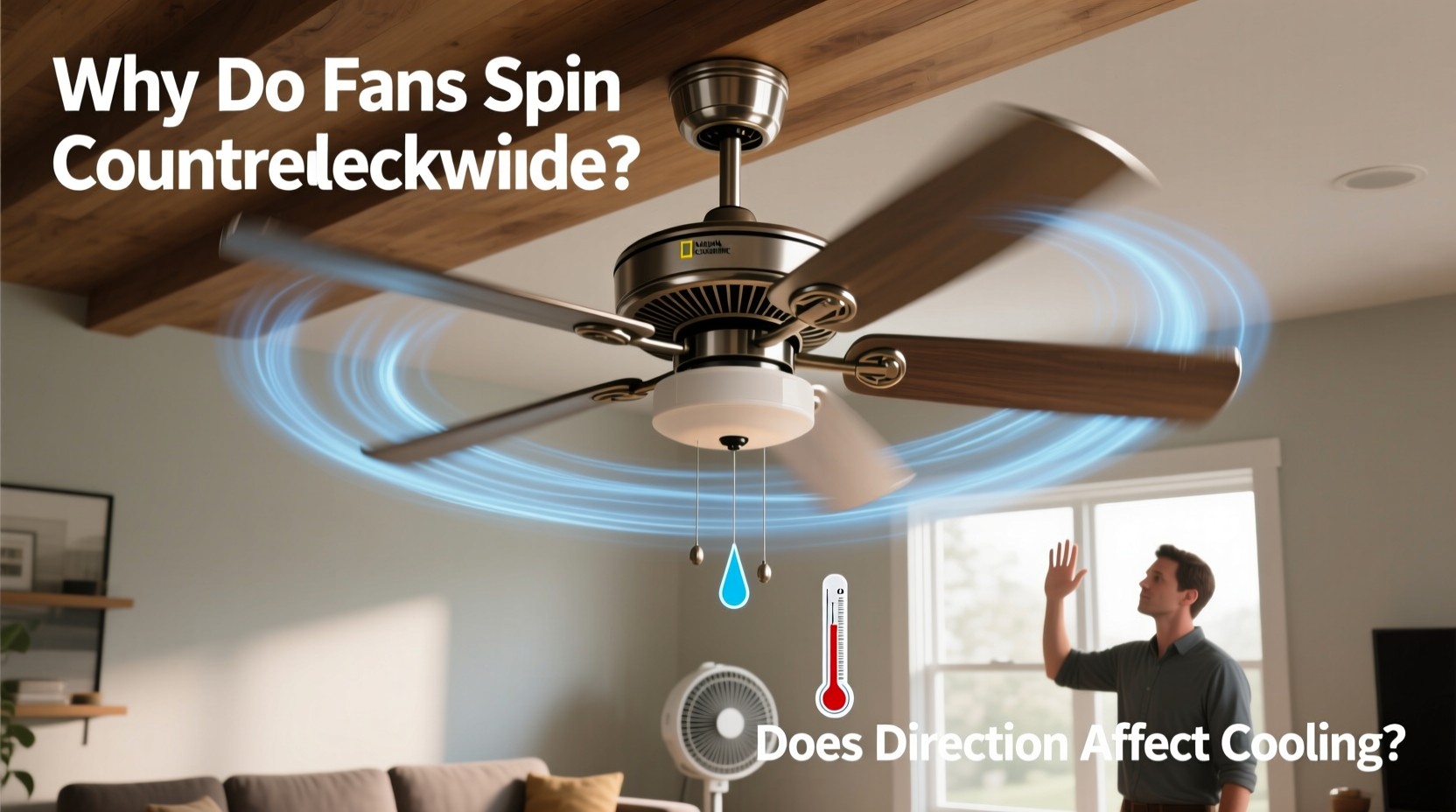
A ceiling fan doesn’t lower room temperature—it moves air. The sensation of cooling comes from increased evaporation of sweat on your skin due to airflow, a process known as convective heat transfer. The direction the blades spin determines how that air is distributed in the space.
When a fan spins counterclockwise (as viewed from below), it pushes air downward in a column, creating a direct breeze on occupants. This “wind chill effect” makes you feel cooler even if the actual temperature remains unchanged. In contrast, when the fan rotates clockwise at a low speed, it pulls air upward, redistributing warm air that has risen to the ceiling back down along the walls and into the living zone.
The motor and blade pitch are engineered to maximize efficiency in both directions, but their primary cooling function is strongest in counterclockwise mode. This is why manufacturers typically set fans to rotate this way out of the box—because most people install and use fans with summer cooling in mind.
“Air movement is more effective than many realize. A properly directed fan can make a room feel up to 8°F cooler without changing the thermostat.” — Dr. Linda Chen, HVAC Efficiency Researcher, University of Illinois
Why Counterclockwise Is the Default Summer Setting
In warmer months, the goal is personal cooling. Counterclockwise rotation creates a downdraft, forcing air straight toward the floor and generating a refreshing breeze. This directional setup leverages two key principles:
- Blade Angle (Pitch): Ceiling fan blades are tilted slightly downward. When spinning counterclockwise, this angle allows them to cut through the air and push it down efficiently.
- Motor Torque and Design: Most residential fan motors are optimized for high-speed counterclockwise operation, delivering maximum airflow with minimal resistance.
The resulting airflow pattern resembles an inverted cone. As air hits the floor, it spreads outward, circulating throughout the room. While it doesn’t cool the entire space like an air conditioner, it significantly enhances thermal comfort for people directly beneath or near the fan.
Winter Use: How Clockwise Rotation Improves Comfort
During colder months, warm air accumulates near the ceiling because heat rises. In a typical room, the temperature can be 5–10°F warmer at ceiling level than at floor level. This stratification wastes energy and forces heating systems to work harder.
By switching your fan to clockwise rotation at a low speed, you reverse its function. Instead of pushing air down, it gently pulls cool air upward and pushes the warm layer at the ceiling outward along the walls, where it descends slowly. This process, called destratification, creates more uniform temperatures and reduces the load on furnaces or heat pumps.
It’s crucial to keep the speed low in winter mode. High-speed clockwise rotation would create an uncomfortable updraft and defeat the purpose. The goal is subtle circulation, not a breeze.
Real Example: A Homeowner’s Winter Savings
Jamie R., a homeowner in Ohio, noticed her upstairs bedrooms were consistently warmer than the main floor despite balanced ductwork. After consulting an energy auditor, she learned that poor air mixing was causing heat to pool near the vaulted ceilings. She began running her ceiling fans in clockwise mode at low speed during winter nights. Within a week, she reported improved comfort and reduced furnace cycling. Her gas bill dropped by nearly 12% over three months compared to the previous winter.
Do All Fans Spin Counterclockwise? Exceptions and Variations
While the vast majority of ceiling fans spin counterclockwise in cooling mode, this isn't a universal law of physics—it's a convention based on design standards and user expectations. Some exceptions exist:
- Industrial or commercial fans: Large warehouse fans may have different rotational defaults based on mounting height and airflow requirements.
- Double-sided or reversible blade designs: Rare models allow physical flipping of blades to change performance without relying solely on motor reversal.
- Paddle fans or non-standard installations: Direction may vary depending on blade curvature and motor orientation.
However, for standard residential ceiling fans sold in North America and Europe, counterclockwise rotation during summer is the norm. The direction is controlled by a small switch on the fan’s housing, usually labeled “Summer/Winter” or marked with rotation arrows.
How to Check and Change Your Fan’s Direction
Changing fan direction is simple but requires caution:
- Turn off the fan completely using the wall switch or remote.
- Wait until the blades come to a full stop.
- Locate the direction switch—typically on the side or base of the motor housing.
- Flip the switch to the opposite position (counterclockwise for summer, clockwise for winter).
- Turn the fan back on and verify rotation by observing the blades or feeling for airflow.
If your fan lacks a manual switch, newer smart fans may allow direction control via app or voice command. Always consult the manufacturer’s manual before making changes, especially with older or vintage models.
Does Direction Actually Affect Cooling? The Evidence
Yes—direction profoundly affects perceived cooling and overall thermal efficiency, though not in the way many assume.
Cooling isn’t about lowering ambient temperature. It’s about enhancing heat dissipation from the human body. Studies conducted by ASHRAE (American Society of Heating, Refrigerating and Air-Conditioning Engineers) confirm that airspeeds of just 1–2 meters per second can reduce thermal discomfort equivalent to lowering room temperature by 4–7°F.
Counterclockwise rotation maximizes this benefit by directing airflow vertically downward. In contrast, clockwise rotation at high speed creates upward suction, which can make occupants feel drafty and cold—even in summer. That’s why using the wrong direction can negate the fan’s effectiveness or worsen discomfort.
| Rotation Mode | Season | Airflow Pattern | Primary Benefit | Recommended Speed |
|---|---|---|---|---|
| Counterclockwise | Summer / Warm Months | Downdraft | Direct cooling via breeze | Medium to High |
| Clockwise | Winter / Cold Months | Updraft with lateral spread | Destratifies warm air | Low |
Note: Running fans in unoccupied rooms wastes electricity. Since fans cool people, not spaces, turn them off when leaving the room.
Actionable Tips for Year-Round Fan Optimization
Maximizing your ceiling fan’s impact requires more than just flipping a switch. Consider these best practices:
- Dust blades monthly—accumulated dust disrupts airflow and reduces efficiency.
- Ensure proper blade clearance: At least 7 feet from floor and 18 inches from walls.
- Balance wobbly fans with a balancing kit to prevent strain and noise.
- Use dimmers or variable controls to fine-tune speed based on occupancy and outdoor conditions.
- Install fans in frequently used rooms like bedrooms, living rooms, and kitchens.
Checklist: Seasonal Fan Maintenance & Settings
- ✅ Spring: Switch fan to counterclockwise mode.
- ✅ Clean blades and motor housing.
- ✅ Test remote/wall control responsiveness.
- ✅ Verify secure mounting and absence of wobble.
- ✅ Summer: Run fan only when room is occupied.
- ✅ Fall: Prepare for reversal—inspect switch mechanism.
- ✅ Winter: Flip to clockwise mode and set speed low.
- ✅ Monitor room temperature distribution weekly.
- ✅ Annually: Lubricate motor (if recommended by manufacturer).
Frequently Asked Questions
Can a fan cool an empty room?
No. Fans create a wind chill effect that enhances sweat evaporation on human skin. Without someone present to feel the breeze, the fan uses energy without providing any cooling benefit. Turn it off when no one is in the room.
What if my fan doesn’t have a direction switch?
Some older or basic models lack a reversible motor. In such cases, the fan is designed for one-way operation—typically counterclockwise for cooling. To gain winter benefits, consider upgrading to a modern reversible model or supplement with portable fans aimed at stirring upper air layers.
Is it bad to run a fan overnight?
Running a fan overnight is safe for most people and can improve sleep comfort in warm weather. However, excessive airflow may cause dryness in the mouth or throat. Use lower speeds and ensure the fan isn’t blowing directly on you if sensitivity occurs.
Conclusion: Master Your Fan’s Direction for Smarter Comfort
Understanding why fans spin counterclockwise—and when to reverse that direction—is a small change with outsized benefits. By aligning fan rotation with seasonal needs, you enhance personal comfort, promote even temperatures, and reduce reliance on energy-intensive HVAC systems. Whether you’re looking to stay cool in July or stretch your heating budget in January, your ceiling fan is a powerful ally—if used correctly.
The next time you flip a light switch, take a moment to check your fan’s rotation. With just a simple toggle, you can transform how your home feels all year round. Don’t overlook this silent, cost-free upgrade to your indoor climate control.




 浙公网安备
33010002000092号
浙公网安备
33010002000092号 浙B2-20120091-4
Comments
No comments yet. Why don't you start the discussion?