
It’s a familiar scene for many hamster owners: just as the house settles into quiet at night, the soft but persistent whir of a spinning wheel begins. Your hamster, tucked away in its cage, is suddenly wide awake, sprinting with relentless energy while you try to sleep. While this behavior might seem excessive—or even concerning—it's actually a deeply ingrained part of your pet’s biology and instinctual routine. Understanding why hamsters run on wheels all night isn’t just about curiosity; it’s key to ensuring their physical health and psychological well-being.
Hamsters are crepuscular and nocturnal creatures by nature, evolved to be most active during twilight and nighttime hours. In the wild, they cover vast distances searching for food, avoiding predators, and exploring territory. The wheel in a domestic setting mimics this natural movement, offering an outlet for their innate need to roam. But what drives this compulsion? How much running is normal? And could there be signs of distress hidden within the spin?
The Evolutionary Drive Behind Nocturnal Running
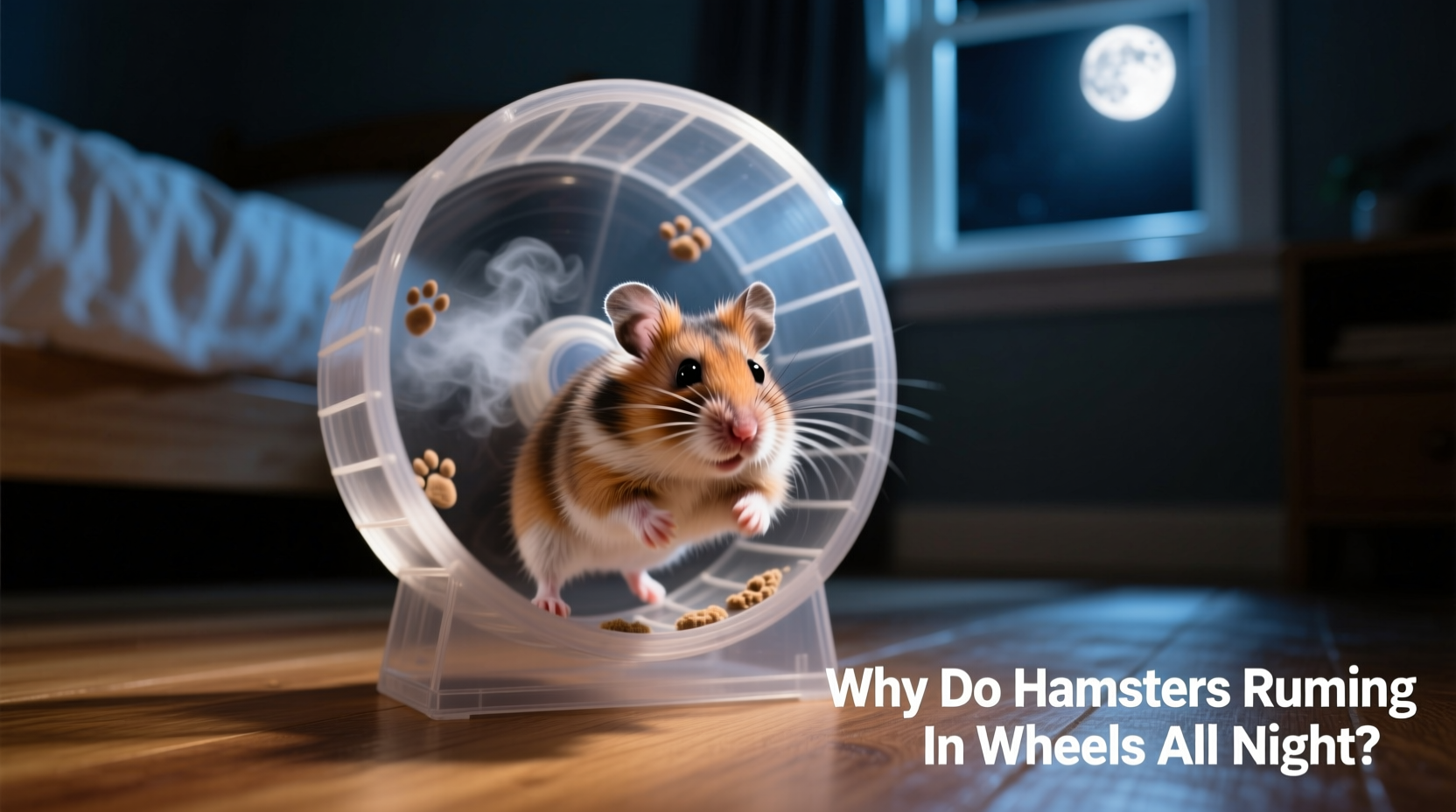
Hamsters originate from arid regions like Syria, Mongolia, and parts of China, where daytime temperatures can be extreme and predators abundant. To survive, they adapted to emerge primarily at dusk and throughout the night when conditions were cooler and safer. This evolutionary shift shaped not only their circadian rhythms but also their behavioral patterns—including high levels of physical activity after dark.
In the wild, Syrian hamsters (the most common pet species) have been observed traveling up to 5–6 miles per night in search of food and nesting materials. Dwarf species, though smaller, exhibit similarly intense locomotive behaviors relative to their size. These journeys weren't leisurely strolls—they involved constant vigilance, rapid bursts of speed, and long durations of movement.
When placed in captivity, that same biological imperative remains intact. Without miles of desert scrubland to traverse, the exercise wheel becomes the primary substitute. It satisfies both physical exertion needs and mental stimulation, preventing boredom-induced stress or destructive behaviors such as bar-chewing or over-grooming.
“Even in enriched environments, hamsters retain strong locomotor drives. A running wheel isn’t optional—it’s essential for species-appropriate care.” — Dr. Rebecca Nguyen, Exotic Mammal Behaviorist
How Much Nightly Activity Is Normal?
There’s no universal standard for how many hours a hamster should spend on its wheel each night, but studies using activity monitors suggest averages between 3 to 6 hours of intermittent running, often broken into multiple sessions. Some individuals may log over 8 miles in a single night, especially younger, healthier animals.
This activity typically follows a pattern: short bursts of sprinting followed by pauses for grooming, eating, or exploring other parts of the enclosure. The rhythm reflects natural foraging cycles rather than continuous endurance training.
Excessive, repetitive wheel use—especially if accompanied by weight loss, fur thinning on the feet, or lethargy during rest periods—can indicate underlying issues such as inadequate space, lack of enrichment, or even neurological concerns. However, moderate nightly running is not only normal—it’s a sign of a healthy, stimulated animal.
Choosing the Right Wheel: Design Matters
Not all wheels are created equal. Poorly designed wheels can cause injury, discomfort, or discourage use altogether. A silent, appropriately sized, solid-surface wheel is critical for safe and sustainable nightly activity.
| Wheel Type | Pros | Cons | Recommended? |
|---|---|---|---|
| Solid Plastic (e.g., Wodent Wheel) | No risk of foot/leg injuries, quiet operation, durable | Higher cost, limited sizes | ✅ Yes – Ideal for dwarfs and Syrians |
| Metal Mesh | Cheap, widely available | Risk of bumblefoot, toe injuries, noisy | ❌ No – Avoid entirely |
| Wire Rung | Good ventilation | Potential limb entrapment, uneven surface | ❌ Not recommended |
| Large Ceramic or Wood | Aesthetically pleasing, stable base | Heavy, harder to clean, rare | 🟡 With caution – Ensure smooth interior |
Size is equally important. A wheel that’s too small forces your hamster into an unnatural hunched posture, leading to spinal strain over time. As a rule:
- Syrian hamsters require a minimum diameter of 12 inches (30 cm).
- Dwarf hamsters (Roborovski, Campbell’s, Winter White) need at least 8–9 inches (20–23 cm), though larger is better.
Mount the wheel securely so it doesn’t wobble or tilt, and place it on a flat surface within the cage—not suspended over gaps that could lead to falls.
Environmental Factors Influencing Nighttime Behavior
Your hamster’s environment plays a significant role in determining when—and how intensely—it uses its wheel. Several factors can amplify or suppress nocturnal activity:
- Light exposure: Artificial lighting during evening hours can delay the onset of activity. Keep the room dimming naturally to support circadian alignment.
- Noise levels: Sudden loud sounds may interrupt running bouts. Conversely, consistent low background noise (like white noise) can help mask disruptive household sounds.
- Cage layout: Overcrowded enclosures with poor flow may limit access to the wheel. Ensure clear pathways and avoid placing food bowls directly in front of the entrance.
- Temperature: Hamsters are sensitive to heat. Rooms above 75°F (24°C) can reduce activity due to lethargy. Maintain a cool, stable climate between 65–72°F (18–22°C).
Mini Case Study: Luna the Overactive Dwarf
Luna, a 10-month-old Roborovski hamster, was brought to a small animal vet clinic after her owner reported she ran “nonstop” every night, sometimes until dawn. Initial concern pointed toward possible stereotypic behavior—a repetitive action indicating stress.
Upon evaluation, the veterinarian discovered Luna lived in a 20-gallon tank with minimal bedding depth, no tunnels, and a wire wheel just 7 inches in diameter. Despite having a wheel, her environment lacked complexity and safety.
The vet recommended upgrading to a 10-inch solid plastic wheel, increasing substrate depth to 6 inches for burrowing, and adding cardboard tubes and hideouts. Within two weeks, Luna’s running became more rhythmic—still active, but now interspersed with longer rest and exploration phases. Her overall demeanor improved, and her owner noted quieter nights.
This case illustrates that while wheel-running is natural, context determines whether it's healthy expression or coping mechanism.
Step-by-Step Guide to Supporting Healthy Wheel Use
If you're concerned about your hamster’s nighttime activity—or simply want to optimize its well-being—follow this practical guide:
- Assess wheel suitability: Confirm diameter and surface type match your hamster’s species. Replace any mesh or wire wheels immediately.
- Evaluate cage size: Minimum floor space should be 450 square inches (approx. 29 x 15 inches). Larger is always better.
- Add enrichment beyond the wheel: Include diggable bedding, chew toys, climbing structures, and foraging opportunities (scatter food instead of using bowls).
- Monitor activity patterns: Use a notebook or app to log approximate start/end times and duration of wheel use over several nights.
- Reduce disturbances: Avoid handling right before bedtime. Let your hamster settle into its natural cycle undisturbed.
- Check health indicators: Weigh weekly, inspect feet for sores, and ensure eyes and nose are clear—illness can alter behavior.
- Consider location: Move the cage away from bright screens or late-night foot traffic if possible, but don’t isolate completely—some ambient household sound provides comfort.
Frequently Asked Questions
Is it bad that my hamster runs all night?
No—nocturnal running is completely normal and healthy. Hamsters are biologically programmed to be active at night. As long as the behavior is voluntary, includes rest breaks, and your pet appears healthy, there's no cause for concern.
Can hamsters run themselves to death?
While extremely rare, chronic overuse of a wheel due to environmental deprivation can contribute to physical exhaustion or stress-related illness. However, hamsters will generally self-regulate unless their environment fails to meet basic needs. Providing enrichment reduces dependency on the wheel alone.
Should I cover the cage at night to muffle the noise?
Covering the entire cage can restrict airflow and increase humidity, which raises health risks. Instead, place the cage on a carpeted floor or rubber mat to absorb vibrations. Use a quiet wheel design and consider relocating the cage if noise consistently disrupts sleep.
Final Thoughts: Embracing the Spin Cycle
The nightly whirl of a hamster wheel is more than background noise—it’s a window into the mind and body of a creature finely tuned by evolution. What might seem like compulsive behavior is, in fact, a vital expression of natural instincts. By understanding the reasons behind this activity, we can move beyond annoyance or worry and instead appreciate it as a sign of vitality.
Providing the right tools—a spacious habitat, a properly sized wheel, and mental stimulation—ensures that your hamster’s midnight marathons remain a source of joy, not frustration. When cared for thoughtfully, these small athletes thrive, turning what some see as disruption into a testament to their resilience and spirit.




 浙公网安备
33010002000092号
浙公网安备
33010002000092号 浙B2-20120091-4
Comments
No comments yet. Why don't you start the discussion?