
Brown leaf tips are one of the most common complaints among indoor gardeners. Whether you're growing a peace lily, spider plant, or fiddle-leaf fig, seeing those crisp, discolored edges can be disheartening. But before you assume your plant is doomed, understand that brown tips are rarely a death sentence—they’re a symptom. They signal that something in your plant’s environment or care routine isn’t quite right. The good news? In most cases, the issue is fixable with a few targeted adjustments.
This guide dives deep into the root causes of brown tips—from improper watering to environmental stress—and offers practical, expert-approved solutions. You’ll also find actionable checklists, real-life examples, and a clear plan to restore your plant’s health and prevent future damage.
Understanding Brown Tips: What Your Plant Is Trying to Tell You
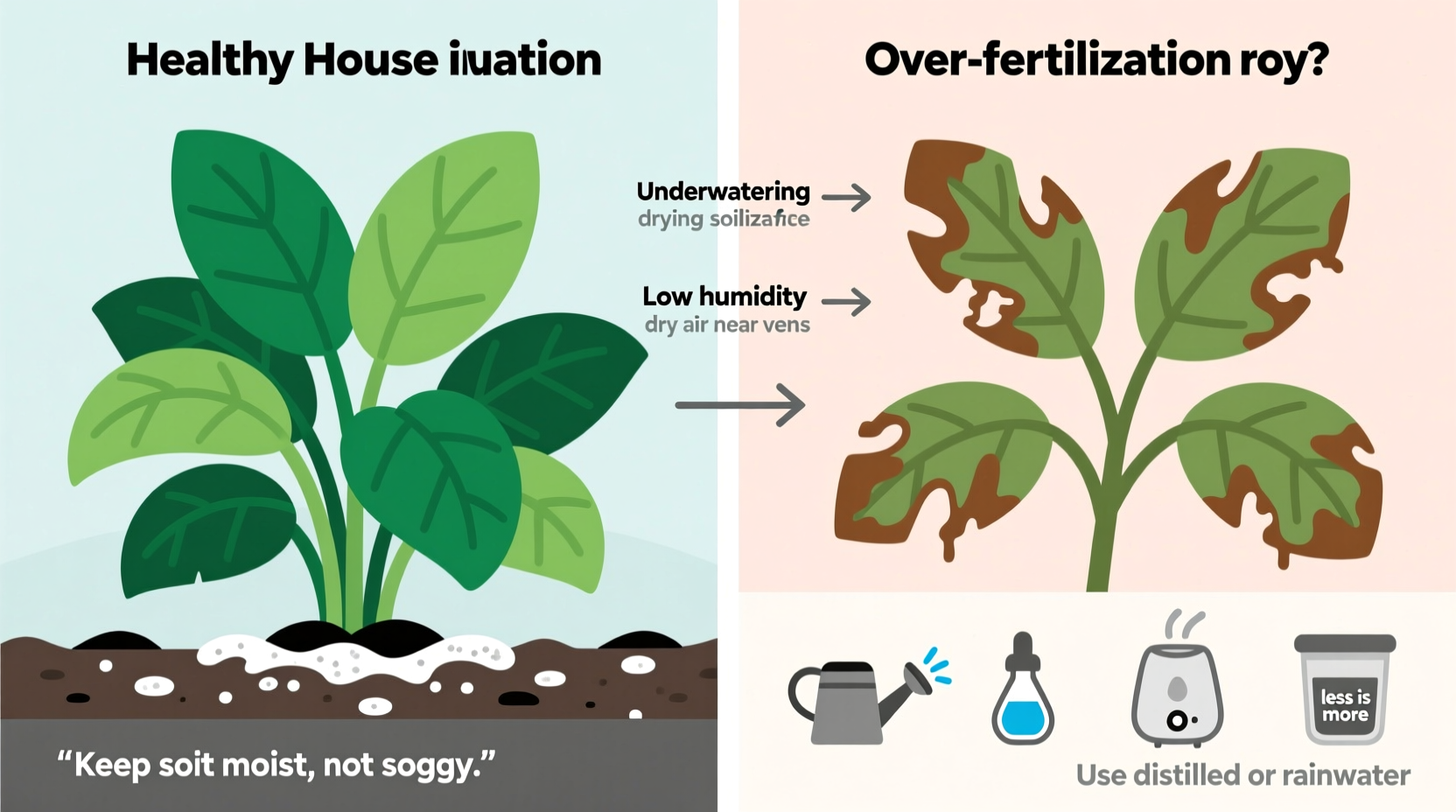
Brown tips occur when the plant’s leaf tissue dies due to stress. Unlike fungal diseases or pest infestations, which often show as spots or patches, browning at the tips typically points to systemic issues related to water, humidity, nutrients, or chemicals.
Plants absorb water through their roots and transport it upward through vascular tissues. When this process is disrupted—whether from under-watering, low humidity, or salt buildup—the outermost parts of the leaves (the tips) are the first to suffer. These areas receive the least moisture and are most vulnerable to desiccation.
It’s important to note that once a leaf tip turns brown, it won’t revert to green. However, stopping the underlying cause prevents further damage and allows new, healthy growth to emerge.
Top 5 Causes of Brown Leaf Tips (and How to Fix Them)
1. Inconsistent or Improper Watering
Both under-watering and over-watering can lead to brown tips. When soil dries out completely, roots struggle to take up water, causing dehydration. Conversely, chronically soggy soil damages roots, reducing their ability to deliver moisture and nutrients.
Solution: Water deeply but infrequently. Allow the top inch or two of soil to dry out between waterings for most tropical plants. Use the finger test: insert your index finger into the soil up to the second knuckle. If it feels dry, it’s time to water.
2. Low Humidity Levels
Most houseplants originate from tropical regions where humidity regularly exceeds 60%. Indoor environments, especially during winter with heating systems running, often drop to 30% or lower. This dry air pulls moisture from plant leaves faster than roots can replenish it.
Solution: Increase ambient humidity. Group plants together, place them on pebble trays filled with water, or use a humidifier. Avoid misting as a long-term solution—it provides only temporary relief and can encourage fungal issues.
3. Chemical Buildup in Soil
Tap water often contains chlorine, fluoride, and dissolved minerals like calcium and magnesium. Over time, these accumulate in the soil and can reach toxic levels, particularly in sensitive species like dracaenas and spider plants.
Solution: Flush the soil every 3–4 months. Slowly pour four times the pot’s volume in water through the soil to leach out excess salts. Use filtered, distilled, or rainwater when possible, especially for fluoride-sensitive plants.
4. Over-Fertilizing
Excess fertilizer leads to salt accumulation in the soil, damaging root cells and impairing water uptake. Symptoms include brown tips, stunted growth, and white crust on the soil surface.
Solution: Fertilize only during active growing seasons (spring and summer). Dilute liquid fertilizers to half-strength and apply every 4–6 weeks. Always follow label instructions and avoid feeding stressed or dormant plants.
5. Temperature Stress and Airflow Issues
Sudden temperature changes, cold drafts, or proximity to heating vents can shock plants and disrupt transpiration. Hot, dry air accelerates moisture loss from leaves, leading to browning.
Solution: Keep plants away from drafty windows, radiators, and AC units. Maintain a stable temperature between 65°F and 75°F (18°C–24°C). Ensure gentle air circulation without direct blasts.
“Brown tips are rarely about one single mistake. It’s usually a combination of low humidity, inconsistent watering, and chemical exposure.” — Dr. Linda Chen, Botanist and Indoor Plant Specialist
Action Plan: Step-by-Step Guide to Revive and Prevent Brown Tips
Follow this timeline to diagnose and correct the issue systematically:
- Week 1: Assess Current Conditions
Check soil moisture, humidity levels, and placement. Note any signs of over-fertilization or salt crust. Document symptoms with photos. - Week 2: Adjust Watering Routine
Establish a consistent schedule based on actual soil dryness. Use room-temperature water to avoid shocking roots. - Week 3: Flush the Soil
Leach accumulated salts by slow-flushing with distilled or filtered water. Allow full drainage and discard excess water from saucers. - Week 4: Improve Humidity
Introduce a humidifier or pebble tray. Monitor humidity with an inexpensive hygrometer. - Ongoing: Refine Fertilization and Maintenance
Switch to half-strength fertilizer during growing months. Rotate plants monthly for even light exposure.
Houseplant Brown Tip Checklist
- ✅ Check soil moisture before watering—don’t follow a fixed schedule
- ✅ Use filtered or distilled water for fluoride-sensitive plants
- ✅ Flush soil every 3–4 months to remove salt buildup
- ✅ Maintain humidity above 40% (ideally 50–60%)
- ✅ Keep plants away from heating/cooling vents and drafty areas
- ✅ Fertilize only in spring and summer at half-strength
- ✅ Inspect regularly for early signs of stress or pests
Do’s and Don’ts: A Quick Reference Table
| Do | Don’t |
|---|---|
| Water when the top 1–2 inches of soil are dry | Water on a strict weekly schedule regardless of soil condition |
| Use room-temperature, filtered water | Use softened tap water (high in sodium) |
| Group plants to create a microclimate | Place plants near heat sources or cold drafts |
| Flush soil periodically to remove salts | Let water sit in saucers after watering |
| Fertilize lightly during growing season | Apply full-strength fertilizer monthly |
Real Example: Reviving a Spider Plant with Chronic Brown Tips
Maria, an apartment dweller in Chicago, noticed her spider plant developing increasingly brown tips each winter. Despite regular watering, the problem worsened. After researching, she realized her home’s humidity dropped to 28% during heated months. She was also using tap water and fertilizing monthly—even in winter.
She took action: switched to distilled water, stopped winter fertilization, placed the plant on a pebble tray, and added a small humidifier nearby. Within six weeks, no new browning appeared. New shoots emerged lush and green. While the old leaves retained brown tips, the plant’s overall health improved dramatically.
This case illustrates how multiple factors—low humidity, chemical exposure, and incorrect feeding—can compound. Addressing all three led to recovery.
Frequently Asked Questions
Can I cut off brown tips without harming my plant?
Yes. Trimming brown tips with sterilized scissors does not harm the plant. Cut along the natural taper of the leaf to maintain aesthetics. Avoid removing more than 30% of a leaf’s surface at once.
Are some plants more prone to brown tips than others?
Absolutely. Plants like spider plants, dracaenas, calatheas, and peace lilies are highly sensitive to fluoride, low humidity, and inconsistent watering. Succulents and cacti, adapted to arid conditions, rarely develop brown tips from dry air.
Why do brown tips appear even when I water regularly?
Regular watering doesn’t guarantee proper hydration. If the soil is compacted or the pot lacks drainage, roots may not absorb water effectively. Additionally, high salt levels or root rot can block uptake even if the soil is moist.
Final Thoughts: Healthy Plants Start with Mindful Care
Brown tips are a wake-up call—not a failure. They reflect the gap between a plant’s natural needs and the conditions we provide. By paying attention to watering habits, humidity, water quality, and fertilization, you can create an environment where your houseplants don’t just survive, but thrive.
The key is consistency and observation. Learn your plant’s rhythm. Notice how it responds to seasonal changes. Adjust care proactively, not reactively. Over time, you’ll develop an intuitive sense of what each plant needs.




 浙公网安备
33010002000092号
浙公网安备
33010002000092号 浙B2-20120091-4
Comments
No comments yet. Why don't you start the discussion?