
Many people drift off easily, but for others, the moment their head hits the pillow, the mind begins to race. Thoughts about unfinished tasks, future worries, or even past conversations replay in a loop. This phenomenon—feeling anxious before bed—is more common than you might think. It’s not just about being “stressed.” It’s often the result of biological rhythms, mental habits, and lifestyle choices converging at the worst possible time: when you’re trying to rest.
Understanding why nighttime anxiety occurs is the first step toward managing it. More importantly, adopting the right bedtime routines can shift your nervous system from a state of alertness to one of relaxation. This article explores the root causes of pre-sleep anxiety and offers practical, research-supported strategies to help you reclaim peaceful evenings.
The Science Behind Bedtime Anxiety
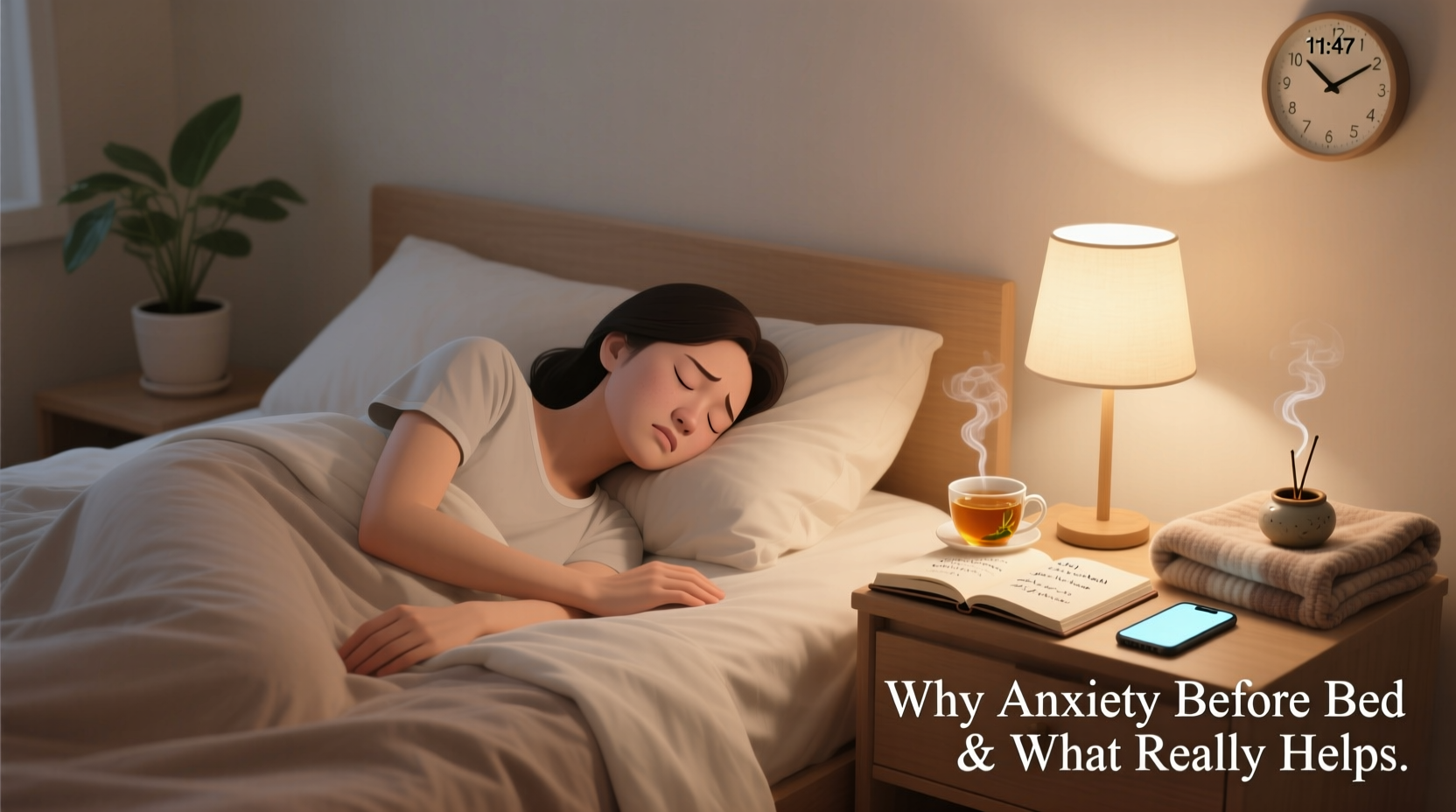
Anxiety before bed isn’t simply a matter of having too much on your mind. It’s deeply tied to your body’s internal clock and neurochemistry. As daylight fades, your brain begins producing melatonin, the hormone responsible for sleep onset. But if your mind remains in an overactive state, cortisol—the stress hormone—can interfere with this process.
In evolutionary terms, humans were most vulnerable during darkness. Our ancestors needed to stay alert at night, scanning for threats. While modern life doesn’t involve prowling predators, the same survival mechanisms still influence our biology. The quiet of night removes distractions, allowing suppressed worries to surface. Without daytime stimuli to occupy attention, the brain defaults to problem-solving mode—often catastrophizing minor issues.
Additionally, chronic stress rewires the brain over time. The amygdala, which governs emotional responses, becomes hypersensitive. Meanwhile, the prefrontal cortex—the area responsible for rational thought—weakens under prolonged stress, making it harder to talk yourself down from anxious spirals.
“Nighttime is when the thinking brain has the least competition from external input. That’s why worries amplify after dark.” — Dr. Rebecca Turner, Cognitive Behavioral Sleep Specialist
Common Triggers of Pre-Sleep Anxiety
While anxiety patterns vary, certain triggers consistently contribute to bedtime distress:
- Digital overstimulation: Scrolling through social media or checking work emails keeps the mind engaged in high-alert states.
- Poor sleep hygiene: Irregular bedtimes, caffeine late in the day, or using the bed for activities other than sleep confuse the brain’s associations.
- Unresolved daily stress: When emotions aren’t processed during the day, they resurface at night.
- Nutritional imbalances: Low magnesium or B-vitamin levels can increase nervous system sensitivity.
- Underlying anxiety disorders: Generalized Anxiety Disorder (GAD) or insomnia often manifest most strongly in the evening.
Bedtime Routines That Actually Work
Not all bedtime routines are equally effective. Some popular suggestions—like drinking warm milk or reading fiction—are better than nothing but don’t address the root cause of anxiety. The most impactful routines combine physiological calming with cognitive restructuring.
1. The 10-Minute Worry Journaling Practice
Instead of suppressing thoughts, give them structured space. Keep a notebook by your bed and spend 10 minutes writing down every worry that comes to mind. Don’t filter or solve—just list. Then, write one sentence acknowledging each thought: “I’ve noted this. I’ll revisit it tomorrow.”
This practice works because it signals closure to the brain. You’re not ignoring concerns; you’re deferring them. Studies show journaling reduces rumination and improves sleep latency—the time it takes to fall asleep.
2. Progressive Muscle Relaxation (PMR)
PMR involves systematically tensing and relaxing muscle groups, starting from the toes and moving upward. This technique interrupts the feedback loop between physical tension and mental anxiety.
- Lie down comfortably.
- Breathe in, tense the muscles in your feet for 5 seconds.
- Exhale and release completely, noticing the contrast.
- Move upward: calves, thighs, abdomen, hands, arms, shoulders, face.
- Spend 2–3 minutes breathing slowly after completion.
A 2020 study published in the *Journal of Clinical Sleep Medicine* found that participants who practiced PMR nightly fell asleep 27% faster and reported 40% less nighttime anxiety after four weeks.
3. The “Power-Down” Hour
Create a buffer zone between wakefulness and sleep. This hour should be screen-free, low-stimulus, and predictable. Sample routine:
| Time Before Bed | Action |
|---|---|
| 60 min | Turn off phones, dim lights, begin winding down |
| 50 min | Light stretching or gentle yoga |
| 40 min | Warm shower or bath (body temperature drop aids sleep) |
| 30 min | Read a physical book (non-digital, non-thriller) |
| 15 min | Practice PMR or deep breathing |
| 5 min | Set intentions for tomorrow (e.g., “I will check email at 9 a.m.”) |
What Not to Do: Common Mistakes That Worsen Nighttime Anxiety
Some well-intentioned habits backfire. Here’s what to avoid:
| Do | Don't |
|---|---|
| Use your bed only for sleep and intimacy | Watch TV, work, or scroll in bed |
| Keep a consistent wake-up time—even on weekends | Sleep in excessively after poor nights |
| Write down tomorrow’s top 3 priorities before bed | Review stressful emails or news |
| Drink herbal tea like chamomile or passionflower | Consume caffeine or alcohol within 6 hours of bedtime |
| Get out of bed if unable to sleep after 20 minutes | Lie awake stressing about not sleeping |
Staying in bed while frustrated trains your brain to associate the bed with anxiety rather than rest. If sleep doesn’t come, move to another room and do something quiet and boring—like folding laundry—until drowsiness returns.
Real Example: How Sarah Reduced Her Bedtime Anxiety
Sarah, a 34-year-old project manager, struggled with racing thoughts every night. She’d lie awake for hours analyzing meetings, worrying about deadlines, and replaying conversations. Over time, she began dreading bedtime.
After consulting a sleep coach, she implemented three changes:
- She started a 10-minute worry journaling habit at 8:30 p.m., separate from her bedtime routine.
- She replaced late-night Netflix binges with a warm bath and audiobook listening.
- She set a phone auto-lock at 9 p.m., disabling access to email and social media.
Within two weeks, Sarah fell asleep faster. By week four, her average sleep onset dropped from 75 to 25 minutes. “I used to think I needed to ‘solve’ everything before bed,” she said. “Now I know I just need to create space between my mind and my to-do list.”
Expert-Backed Checklist for Calmer Evenings
Follow this checklist nightly to reduce bedtime anxiety:
- ✅ Disconnect from digital devices by 9 p.m.
- ✅ Write down unresolved thoughts in a journal
- ✅ Take a warm bath or shower 1–2 hours before bed
- ✅ Dim household lights and switch to warm-toned bulbs
- ✅ Practice 10 minutes of deep breathing or PMR
- ✅ Ensure bedroom is cool (60–67°F / 15–19°C), dark, and quiet
- ✅ Avoid heavy meals, caffeine, and alcohol after 6 p.m.
- ✅ Stick to a consistent bedtime and wake-up time
“The most effective bedtime routines aren’t about comfort—they’re about consistency. Your nervous system thrives on predictability.” — Dr. Naomi Fields, Sleep Neurologist
Frequently Asked Questions
Can anxiety keep me from falling asleep even when I’m tired?
Yes. Physical fatigue and mental alertness are regulated by different systems. You can be exhausted yet mentally hyperaroused, especially if stress hormones like cortisol remain elevated. This is known as “tired but wired” syndrome. Addressing cognitive patterns—through journaling, mindfulness, or therapy—is key to resolving it.
Is it bad to nap if I have nighttime anxiety?
It depends. Short naps (10–20 minutes) before 3 p.m. can be refreshing. But longer or later naps reduce sleep pressure at night, making it harder to fall asleep and increasing the window for anxiety to take hold. If you struggle with bedtime anxiety, limit naps or eliminate them temporarily to reset your sleep drive.
Should I try supplements like melatonin or magnesium?
Magnesium glycinate (200–400 mg) may help relax the nervous system and is generally safe for nightly use. Melatonin can assist in resetting circadian rhythm but is best used short-term (2–4 weeks) and at low doses (0.5–3 mg). Consult a healthcare provider before starting any supplement, especially if you’re on medication or have underlying conditions.
Conclusion: Reclaim Your Nights, One Routine at a Time
Feeling anxious before bed isn’t a personal failing—it’s a signal. Your body is telling you that your current evening habits aren’t aligned with your biological needs. The good news is that small, consistent changes can yield significant results. You don’t need a complete lifestyle overhaul. Start with one element: a worry journal, a warm bath, or a hard stop on screen time. Build from there.
Sleep isn’t just downtime—it’s recovery, repair, and resilience. When you prioritize calm before bed, you’re not just improving sleep. You’re enhancing focus, mood, and long-term mental health. Tonight doesn’t have to repeat last night. Choose one step. Begin.




 浙公网安备
33010002000092号
浙公网安备
33010002000092号 浙B2-20120091-4
Comments
No comments yet. Why don't you start the discussion?