
Nothing disrupts the holiday spirit quite like a string of Christmas lights that flickers out moments after being plugged in. If you’ve found yourself replacing fuses every few hours—or worse, watching entire strands go dark mid-decoration—you’re not alone. Blown fuses in Christmas lights are more common than you think, but they’re rarely random. Most often, they point to an underlying electrical issue that’s easy to fix once you know what to look for.
Modern mini-string lights come with built-in fuses designed to protect the circuit from overloads. When a fuse blows, it's usually doing its job—but if it keeps happening, something is wrong. Whether it's a faulty bulb, overloaded circuits, or moisture damage, the root cause can be diagnosed and resolved without calling an electrician—most of the time.
Understanding How Christmas Light Fuses Work
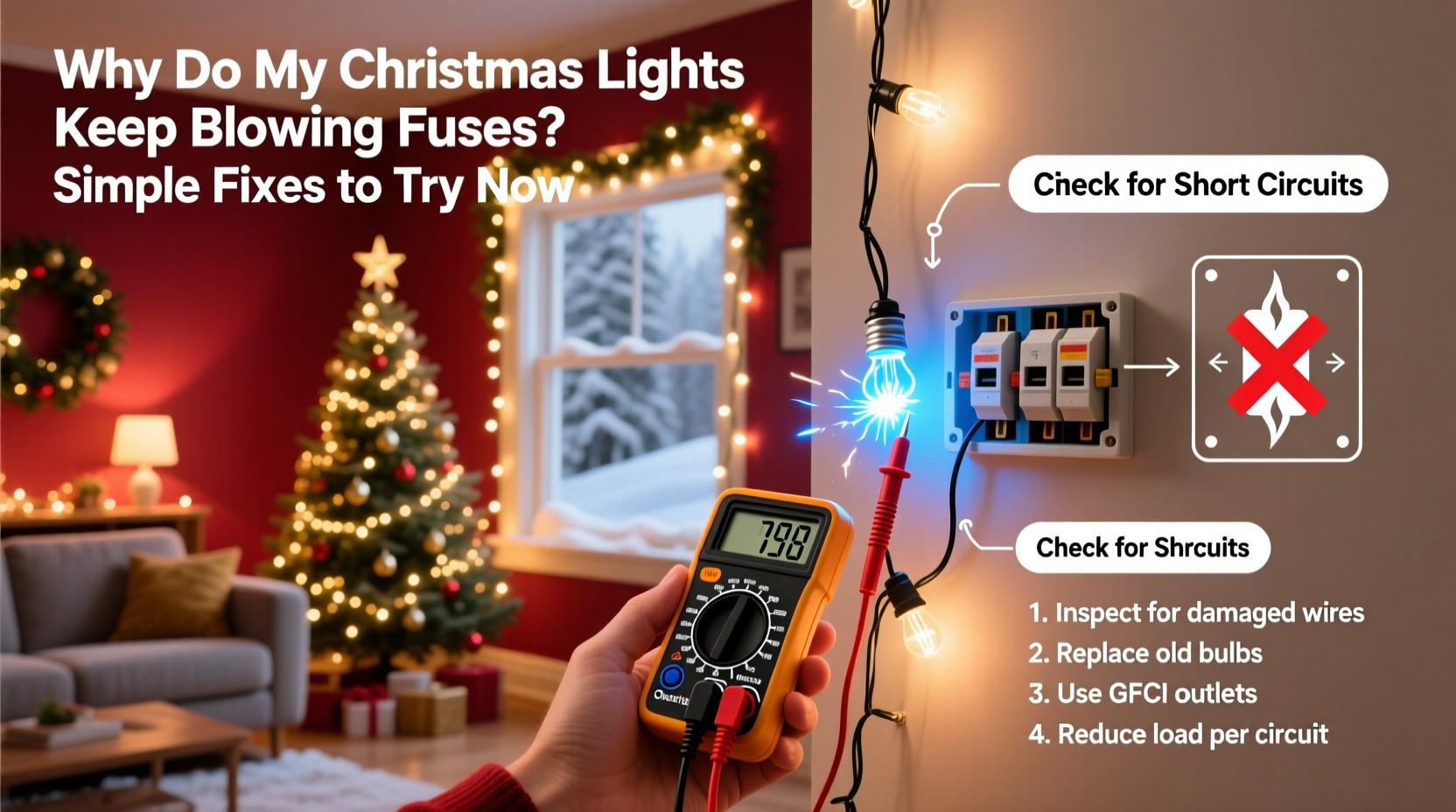
Most incandescent mini Christmas light sets contain two small fuses housed inside the male plug. These fuses are typically rated at 3–5 amps and are meant to break the circuit if too much current flows through the strand. This safety feature prevents overheating and potential fire hazards.
The reason these fuses blow isn’t always obvious. Unlike household circuit breakers, which trip due to high wattage demand, Christmas light fuses are sensitive to both overcurrent and physical disruptions in the circuit. A single loose bulb, damaged wire, or water intrusion can create a short that trips the fuse instantly.
Fuses in light strings are usually glass tubes, about half an inch long, visible through a small door on the plug. One side may have a tiny filament that breaks when overloaded. If the filament is severed or blackened, the fuse has blown. Replacing it temporarily restores function—but if the underlying problem persists, the new fuse will blow just as quickly.
“Repeated fuse failures in decorative lighting are almost never due to bad luck. They’re symptoms of electrical stress—either from component failure or misuse.” — James Ralston, Residential Electrical Inspector (Ret.)
Common Causes of Blown Fuses in Christmas Lights
Before grabbing another pack of replacement fuses, identify what’s causing them to fail. The following are the most frequent culprits:
- Overloaded light strings: Connecting too many strands end-to-end exceeds the manufacturer’s limit (usually 3–6 sets per circuit).
- Damaged or frayed wires: Cuts, kinks, or chew marks from pets can create shorts.
- Moisture exposure: Outdoor lights exposed to rain, snow, or condensation may short internally.
- Loose or corroded bulbs: Bulbs not fully seated or oxidized contacts increase resistance and heat.
- Faulty sockets: Cracked or broken sockets allow bulbs to shift and touch metal parts.
- Using non-compatible replacements: Installing higher-voltage bulbs than specified stresses the circuit.
- Aging light sets: Older strands degrade over time, increasing internal resistance and heat buildup.
Step-by-Step Guide to Diagnose and Fix Blown Fuses
Follow this practical troubleshooting sequence to restore your lights safely and permanently.
- Unplug the light strand immediately. Never inspect or handle lights while powered.
- Remove the fuse cover on the plug using a small screwdriver or coin. Carefully extract both fuses.
- Inspect the fuses visually. Hold them up to light. If the filament is broken or the glass is darkened, the fuse is blown.
- Replace with identical-rated fuses only. Use the same amperage (e.g., 3.5A) and size. Mismatched fuses can fail prematurely or create hazards.
- Test the strand with new fuses. Plug it in briefly. If it works, proceed to step 6. If it blows again, move to deeper diagnostics.
- Check each bulb manually. Remove and reseat every bulb. Look for darkened glass, bent filaments, or cloudy bases—signs of burnout.
- Examine the wiring along the entire length. Look for cuts, crushed sections, or exposed copper. Pay extra attention to where lights enter trees or gutters.
- Test continuity with a multimeter (optional). Set to continuity mode and test between the plug prongs. There should be a low-resistance reading. Infinite resistance means an open circuit; near-zero suggests a short.
- Separate and test individual sections. If using multiple connected strands, unplug all but one and test each independently to isolate the faulty set.
- Dry any damp components. If lights were exposed to moisture, let them air-dry indoors for 24 hours before reuse.
This process takes 15–30 minutes but can save hours of frustration later. Many people replace fuses without checking bulbs or connections, guaranteeing repeat failures.
Do’s and Don’ts: Best Practices for Safe Holiday Lighting
| Do’s | Don’ts |
|---|---|
| Use only fuses rated exactly for your light set (check packaging) | Never use household fuses or makeshift conductors like foil |
| Limit connected strands to the manufacturer’s recommendation | Don’t daisy-chain more than 3–6 sets unless labeled safe |
| Store lights coiled loosely around a cardboard spool | Don’t crumple lights into boxes—this damages wires |
| Use outdoor-rated lights and extension cords outside | Don’t use indoor-only lights in wet or exposed areas |
| Inspect all lights annually before use | Don’t ignore flickering, dimming, or warm plugs—they signal trouble |
Real Example: Sarah’s Garage Lights That Wouldn’t Stay On
Sarah had used the same set of 100-count icicle lights on her garage eaves for five years. This season, they blew the fuse within seconds of being plugged in. She replaced the fuses twice, only to see them pop again. Frustrated, she unplugged everything and brought the strand inside.
After reading online about bulb-related shorts, she began removing each bulb one by one. On the 12th bulb, she noticed the base was slightly discolored. When she inserted it back, the metal skirt touched the socket’s side, creating a direct short. She replaced the bulb with a spare from the original pack, reinstalled the correct fuse, and the lights stayed on.
The issue wasn’t age or weather—it was a single defective bulb installed crookedly after last year’s takedown. A five-minute inspection saved her from buying a new set or risking a fire hazard.
Essential Checklist: Prevent Fuse Blowouts This Season
Use this quick-reference checklist before plugging in any holiday lights:
- ☐ Verify fuse ratings match specifications (usually printed inside plug door)
- ☐ Inspect all bulbs for cracks, looseness, or darkening
- ☐ Check for damaged wires, especially at stress points (bends, clips, ends)
- ☐ Confirm total connected strands don’t exceed product limits
- ☐ Ensure outdoor lights are rated for exterior use and properly shielded
- ☐ Test lights indoors first after storage to catch issues early
- ☐ Use a GFCI-protected outlet for outdoor installations
- ☐ Replace missing or broken end caps to prevent moisture entry
Crossing off each item takes less than ten minutes but dramatically reduces the risk of electrical problems. Think of it as preventive maintenance for peace of mind.
When to Retire Old Christmas Lights
Even with careful handling, Christmas lights have a lifespan. Incandescent mini-lights typically last 3–5 seasons with moderate use. Signs it’s time to retire a set include:
- Frequent fuse blowouts despite repairs
- Multiple broken sockets or brittle insulation
- Bulbs consistently dimmer than others on the same strand
- Warm or discolored plugs during operation
- Visible corrosion inside bulb sockets
Consider upgrading to LED alternatives. Modern LED Christmas lights use up to 90% less energy, generate minimal heat, and often come with shatter-resistant bulbs and longer warranties. While the upfront cost is higher, their durability and safety make them a smarter long-term investment.
“LED technology has transformed holiday lighting. Fewer fuses, lower fire risk, and better reliability—especially in older homes with outdated wiring.” — National Fire Protection Association (NFPA) Safety Bulletin, 2023
Frequently Asked Questions
Can I use a higher-amp fuse to stop it from blowing?
No. Fuses are precisely rated to protect the wiring. Using a higher-amp fuse risks overheating the wires, melting insulation, and potentially starting a fire. Always replace with the exact specification listed on the plug or packaging.
Why do my lights blow fuses only when outdoors?
Outdoor environments introduce moisture, temperature swings, and physical stress. Water seeping into sockets or cracked insulation can create shorts. Also, outdoor outlets may have ground faults or unstable power. Try the same strand indoors—if it works, the issue is environmental or with the outlet.
Are there Christmas lights without fuses?
Some newer LED sets use electronic current regulation instead of physical fuses. However, most traditional incandescent and budget LED strings still include replaceable fuses. Always check product details before purchase if you prefer fuse-free designs.
Conclusion: Keep Your Lights Shining Safely All Season
Blown fuses in Christmas lights aren’t just annoying—they’re warning signs. By understanding the causes and applying straightforward fixes, you can restore your display safely and avoid potential hazards. From checking individual bulbs to respecting connection limits, the solutions are within reach of any homeowner.
Don’t treat holiday lighting as disposable. With a little attention and routine care, your favorite strands can bring cheer for years. Take the time tonight to inspect one set. Clean the sockets, verify the fuses, and store the rest properly. Small actions today ensure bright, reliable lights tomorrow.




 浙公网安备
33010002000092号
浙公网安备
33010002000092号 浙B2-20120091-4
Comments
No comments yet. Why don't you start the discussion?