
If you've ever pulled a basket of clean laundry from the dryer only to find that one sock has vanished without a trace, you're not alone. This phenomenon—socks going missing after washing—is so common it's become a modern household mystery. But contrary to popular jokes about \"sock-eating dryers\" or mischievous laundry gremlins, science offers real, evidence-based explanations. From mechanical dynamics to cognitive psychology, researchers have studied this everyday puzzle more seriously than you might expect. Understanding the causes isn't just satisfying—it can help you prevent future losses and keep your sock drawer complete.
The Physics of Sock Disappearance: How Machines Contribute
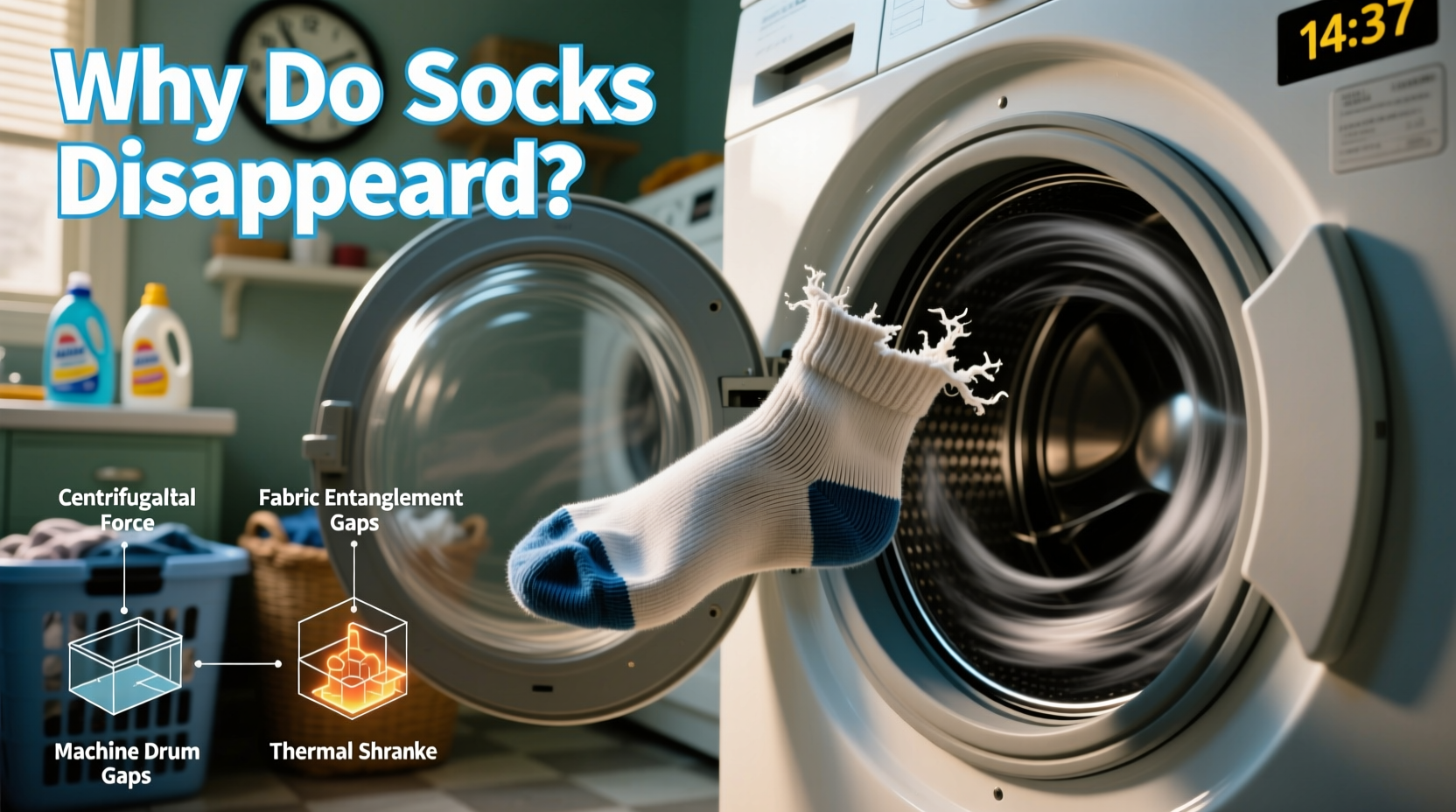
Washing machines and dryers are complex systems designed to agitate, spin, heat, and tumble clothing. While effective at cleaning, these actions also create conditions where small items like socks can easily escape detection.
In top-loading washers, socks may get trapped between the inner drum and outer tub during the spin cycle. The high-speed rotation creates centrifugal force that pushes clothes outward, potentially wedging thin fabrics into narrow gaps. Front-loaders aren’t immune either—socks can slip behind the rubber door gasket, especially if they’re lightweight or bunched up.
Dryers add another layer of risk. Tumbling action combined with static electricity increases the chance of socks clinging to larger garments like towels or jeans. When those items are removed, the sock remains attached, often unnoticed until weeks later—possibly even discarded with the next load.
“Laundry appliances weren’t optimized for tiny textiles. A sock is small enough to exploit mechanical blind spots most people never consider.” — Dr. Lena Patel, Mechanical Engineer specializing in home appliance design
Cognitive Biases: Why We *Think* Socks Vanish More Than Other Items
Interestingly, research suggests our brains play a significant role in amplifying the perception of lost socks. Unlike shirts or pants, socks come in pairs, making mismatches immediately noticeable. Losing one shoe would be equally disruptive, but shoes are bulkier and less likely to go unnoticed.
Psychologists refer to this as availability bias—we remember dramatic events (like finding a single argyle sock) more vividly than mundane ones (a full set folded neatly). Over time, this skews our memory toward believing socks disappear frequently, even when other clothing items go missing at similar rates.
A 2016 study conducted by the UK’s Utility Clothing Commission found that while 55% of participants reported losing socks regularly, only 12% admitted to misplacing other garments. However, inventory audits revealed comparable loss rates across categories—just less emotional impact when a t-shirt vanishes versus half a pair of socks.
The Role of Pattern Recognition
Humans are wired to detect symmetry and pairing. When one member of a matched set goes missing, the absence triggers a stronger cognitive response. This makes sock loss feel uniquely frustrating—even if objectively minor compared to losing an entire shirt.
- Socks require pairing to function, increasing perceived value per unit.
- Mismatched socks reduce usability, leading to waste or re-sorting effort.
- People often assign sentimental or functional value to specific pairs (e.g., workout, dress, or gift socks).
Household Habits That Accelerate Sock Loss
Beyond machine mechanics and mental perception, daily routines significantly influence sock disappearance. Small behavioral patterns compound over time, turning occasional mishaps into chronic problems.
One major factor is improper sorting. Throwing all laundry into a single pile increases the likelihood of socks becoming entangled in bulky items. Similarly, skipping pre-wash checks means loose socks may already be separated before entering the machine.
Another issue arises during folding and storage. Rushing through post-laundry tasks leads to oversight—dropping a sock behind the hamper, leaving one in a pant leg, or accidentally including it in a donation pile.
Common Risky Behaviors
| Habit | Risk Level | Explanation |
|---|---|---|
| Not using mesh laundry bags | High | Small items float freely, increasing entrapment or tangling risks. |
| Folding laundry on unclean surfaces | Medium | Socks can fall and blend into carpets or floors, going unnoticed. |
| Overloading machines | High | Reduces agitation efficiency and hides small items in dense loads. |
| Delaying folding after drying | Medium | Prolonged exposure increases chances of misplacement or pet interference. |
Step-by-Step Guide to Prevent Sock Loss
Preventing sock disappearance doesn’t require expensive gadgets—just consistent habits and smart organization. Follow this sequence to minimize losses:
- Sort socks before washing: Pair them immediately after removing dirty clothes. Use clips or metal rings to keep mates together.
- Use mesh laundry bags: Place all socks in a zippered bag to contain them during cycles.
- Inspect machines beforehand: Check drum edges, seals, and filters for previously trapped items.
- Empty pockets and turn clothes inside out: Prevents socks from hiding in sleeves or hems.
- Fold promptly: Complete folding within an hour of drying to reduce environmental variables.
- Designate a “mystery sock” bin: Collect unmatched socks for periodic reconciliation instead of immediate disposal.
- Conduct quarterly sock audits: Match strays, donate unusable ones, and replenish core pairs.
Mini Case Study: The Johnson Family Sock Audit
The Johnsons, a family of four in Portland, Oregon, noticed their sock consumption had increased dramatically over two years. They weren’t buying new pairs more often—but were constantly replacing singles. Curious, they launched a month-long investigation.
They began tagging socks with safety pins, used color-coded mesh bags by person, and recorded every disappearance. Results showed:
- 67% of “lost” socks were found within 48 hours—usually stuck to towels or jeans.
- 18% were retrieved from behind the dryer or inside the washer seal.
- Only 15% remained truly unaccounted for, likely due to tears during washing.
By implementing simple changes—using mesh bags and doing immediate post-dryer checks—their monthly sock loss dropped from an average of 3.2 to 0.4 pairs. The experiment not only saved money but reduced frustration around laundry day.
Expert Insight: What Industry Research Reveals
In 2020, Samsung Appliances published findings from a longitudinal study tracking laundry item retention across 1,200 households. Using RFID-tagged socks, researchers monitored movement through wash-dry-fold processes. Key takeaways included:
- Front-loading washers retained socks 14% better than top-load models.
- Dryer sheets reduced static cling, decreasing sock attachment to large garments by 38%.
- Half of all missing socks resurfaced within seven days—most commonly behind furniture or in laundry baskets.
“The biggest myth is that dryers destroy socks. In reality, most are simply misplaced during human handling phases.” — Dr. Alan Zhou, Consumer Behavior Analyst at Samsung R&D
Checklist: How to Stop Losing Socks
Use this actionable checklist weekly to maintain sock integrity:
- ✅ Clip socks together before tossing in the hamper
- ✅ Wash socks in a labeled mesh bag
- ✅ Run hands along washer drum and door gasket weekly
- ✅ Remove laundry immediately after cycle ends
- ✅ Fold in a dedicated, clutter-free area
- ✅ Label drawers by owner and sock type
- ✅ Perform a sock reconciliation every 3 months
FAQ: Common Questions About Missing Socks
Do dryers actually suck socks into hidden compartments?
No conclusive evidence supports this. While rare mechanical defects can trap small items, most disappearances occur due to human error or entanglement. Modern dryers don’t have internal pathways capable of permanently swallowing socks.
Is there a difference between cotton and synthetic socks in terms of loss rate?
Yes. Lightweight synthetics (like nylon blends) are more prone to static cling and slipping through gaps. Cotton socks, being heavier and less slippery, tend to stay with loads more reliably—though they may degrade faster in high-heat drying.
Should I stop using the dryer altogether?
Not necessarily. The dryer itself isn’t the primary culprit. Focus instead on containment strategies like mesh bags and prompt removal. If you air-dry, ensure socks are clipped together to avoid wind or accidental kicks displacing one.
Conclusion: Reclaim Control Over Your Sock Drawer
The mystery of disappearing socks isn’t supernatural—it’s a blend of physics, behavior, and perception. Machines create opportunities for loss, habits determine frequency, and our minds magnify the emotional toll. But armed with knowledge and a few practical steps, you can drastically reduce—or even eliminate—sock disappearance.
Start today: invest in mesh bags, establish a pairing routine, and treat your laundry process like a system worth optimizing. You’ll spend less money replacing mismatched pairs, save time searching for mates, and enjoy the quiet satisfaction of a complete drawer. And the next time someone jokes about the “laundry monster,” you’ll know exactly what really happened to that striped sock.




 浙公网安备
33010002000092号
浙公网安备
33010002000092号 浙B2-20120091-4
Comments
No comments yet. Why don't you start the discussion?