
For generations, the Christmas tree has anchored holiday decor—a towering symbol of tradition, festivity, and seasonal ritual. Yet in recent years, a quiet but growing number of households have chosen to forgo the tree altogether. This isn’t about apathy or neglect; it’s often the result of deliberate reflection on environmental impact, personal values, cultural identity, health needs, or lived experience. What replaces the tree isn’t always a direct substitute—it’s frequently something more intentional: a focal point that reflects authenticity over expectation, sustainability over spectacle, and meaning over mimicry. Understanding this shift reveals far more than decorating preferences; it illuminates evolving definitions of celebration, care, and belonging during the holidays.
Environmental and Ethical Concerns Drive the Shift
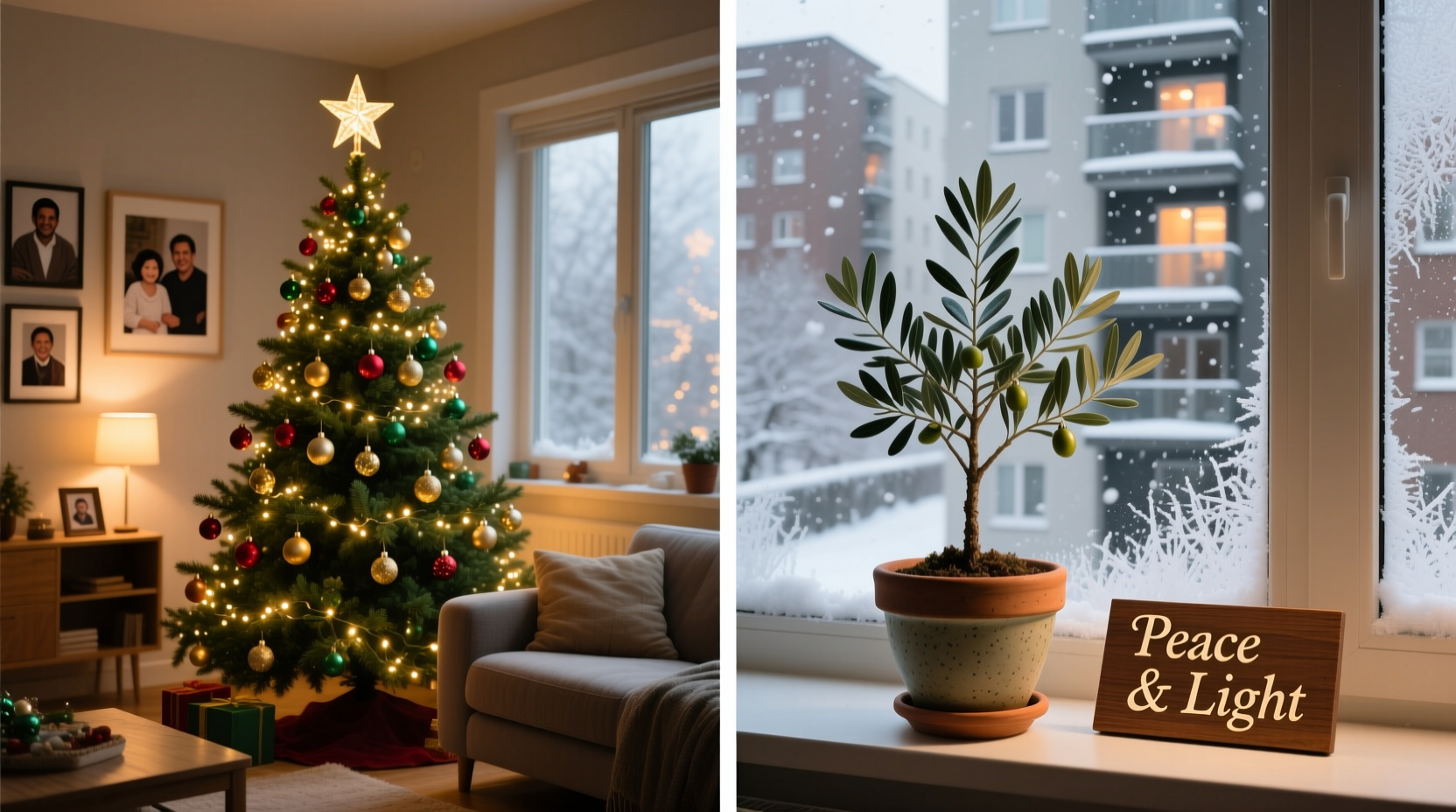
Many people omit the Christmas tree not out of indifference—but because its lifecycle conflicts with their ecological commitments. A typical 6–7 foot cut tree requires approximately 7–10 years to grow, consumes significant water and land resources, and often involves pesticide use. While real trees are biodegradable, an estimated 30 million—nearly half of all purchased trees in the U.S.—end up in landfills annually, where they decompose anaerobically and emit methane. Artificial trees, meanwhile, are typically made from non-recyclable PVC and petroleum-based plastics, with an average lifespan of only six years before disposal. Most are manufactured overseas and shipped globally, adding substantial carbon emissions to their footprint.
For those committed to climate-conscious living, the tree becomes a paradox: a symbol of renewal that relies on extraction and waste. As Dr. Lena Torres, environmental sociologist at the University of Vermont, explains:
“Choosing not to buy a tree isn’t a rejection of joy—it’s a recalibration of responsibility. When people say ‘no’ to the tree, they’re often saying ‘yes’ to longer-term stewardship: of forests, of air quality, of intergenerational equity.” — Dr. Lena Torres, Environmental Sociologist
This perspective extends beyond carbon math. It includes concern for biodiversity loss in tree-farming regions, labor conditions in artificial tree factories, and the cumulative microplastic shedding from synthetic trees indoors—especially problematic for households with infants or immunocompromised members.
Health, Accessibility, and Practical Realities
For others, skipping the tree is rooted in tangible daily realities—not ideology, but necessity. Seasonal allergies spike around November and December due to mold spores on cut trees (studies show indoor mold counts can triple within 14 days), triggering asthma, sinusitis, and eczema flare-ups. Pet owners face another layer: pine needles are toxic to cats and dogs if ingested, and sap can cause oral irritation or gastrointestinal distress. Flocked or pre-lit trees introduce additional hazards—lead in older light wiring, flame-retardant chemicals in flocking sprays, and tripping risks from cords in small or multi-level homes.
Accessibility is equally decisive. Renters often face lease restrictions against drilling into walls or installing heavy stands. Urban dwellers in studio apartments or high-rises may lack storage space for a 7-foot structure—or safe access to outdoor disposal. For aging adults or those with mobility challenges, hauling, watering, and stabilizing a tree poses genuine physical risk. One survey by the National Association of Home Builders found that 68% of respondents aged 65+ cited “safety and ease of maintenance” as primary factors in opting out of live or large artificial trees.
Values-Based Alternatives: Meaning Over Mass Production
What fills the visual and emotional space left by the absent tree? Not emptiness—but intentionality. Below is a comparison of common alternatives, ranked by sustainability, adaptability, and symbolic resonance:
| Alternative | Key Benefits | Considerations |
|---|---|---|
| Wooden Wall Sculpture (e.g., laser-cut birch or reclaimed oak) |
Zero emissions after fabrication; fully recyclable; customizable shape/size; doubles as year-round art | Upfront cost higher than mass-market trees; requires wall mounting |
| Potted Living Tree (e.g., dwarf Alberta spruce, Norfolk Island pine) |
Carbon-sequestering while alive; reusable for years; supports indoor air quality | Needs consistent light/water; not all species survive long-term indoors; root-bound plants decline without repotting |
| Minimalist Branch Arrangement (foraged or sustainably harvested birch, willow, or eucalyptus) |
Biodegradable; low-cost; celebrates seasonal texture and form; easy to compost | Shorter display window (5–10 days); requires sourcing ethics check (avoid protected or invasive species) |
| Digital or Light-Based Installation (e.g., programmable LED wall grid, projection mapping) |
No physical waste; energy-efficient with modern LEDs; adaptable for sensory-sensitive households | Relies on electronics manufacturing footprint; less tactile; may feel impersonal without curation |
| Family Story Tree (fabric or paper ornaments hung on a simple wooden frame, each representing a memory or value) |
Zero environmental impact; deeply personal; evolves yearly; inclusive of all family members’ voices | Requires time and reflection to assemble; not suited for those seeking traditional aesthetic |
Mini Case Study: The Chen Family’s Five-Year Evolution
The Chen household in Portland, Oregon, stopped buying Christmas trees in 2019 after their youngest child was diagnosed with severe mold-triggered asthma. Their first year without a tree felt like loss—until they visited a local arboretum and collected fallen birch branches. They arranged them in a tall ceramic vase beside the fireplace, strung with handmade beeswax candles and dried orange slices. By year two, they’d built a freestanding walnut frame and began hanging fabric ornaments stitched by each family member: a red cloth heart for love, a blue star for curiosity, a green leaf for growth. In year five, they launched a neighborhood “Story Tree Exchange,” inviting neighbors to contribute written memories tied to natural materials—pinecones inscribed with gratitude, smooth stones painted with hopes. What began as a health accommodation became a practice of presence, reciprocity, and rootedness.
A Step-by-Step Guide to Choosing Your Own Alternative
Replacing a tradition shouldn’t feel like compromise—it should feel like clarification. Follow this grounded, reflective process:
- Clarify your core reason. Is it allergy management? Climate accountability? Cultural alignment? Budget constraints? Write it down—not as limitation, but as compass.
- Assess your space and routine. Measure available floor/wall area. Note light exposure, pet traffic, and daily movement patterns. A 6-foot corner may suit a potted pine; a narrow hallway may call for a vertical branch installation.
- Define your symbolic need. Does your household seek awe? Calm? Connection? Playfulness? A 12-inch tabletop evergreen conveys quiet reverence; a kinetic mobile of recycled metals evokes joyful motion.
- Source mindfully. Prioritize local, secondhand, or natural materials. Check certifications (FSC wood, organic cotton, non-toxic dyes). Avoid “eco-washing”—e.g., bamboo ornaments coated in plastic sealant.
- Integrate, don’t imitate. Don’t hang lights on a branch arrangement just because trees have lights. Instead, ask: What light does this space truly need? A single beeswax candle? A string of warm-white LEDs behind sheer linen? Let function guide form.
FAQ
Isn’t skipping the tree isolating—especially for kids?
Not inherently. Children respond powerfully to participation, not props. Families who omit trees often report deeper engagement through co-creating alternatives: pressing leaves for ornaments, designing light patterns, or writing letters to community elders. Ritual matters more than relic—and consistency builds security far more than conformity does.
Can I still have a “tree-like” centerpiece without environmental cost?
Absolutely. A sturdy, untreated wooden tripod (made from urban-reclaimed timber) draped with dried lavender, cinnamon sticks, and hand-dyed wool garlands offers height, texture, scent, and warmth—with zero emissions after creation. Unlike cut trees, it can be stored flat and reused indefinitely.
Do religious or cultural traditions prohibit or discourage Christmas trees?
Some Christian denominations—including certain Anabaptist, Reformed, and Orthodox communities—have historically avoided Christmas trees due to associations with pre-Christian solstice rites or concerns about commercialization overshadowing theological focus. Similarly, interfaith or secular humanist families may opt for solstice-aligned alternatives (e.g., a sun wheel, yule log altar, or gratitude jar tree) that honor seasonal cycles without religious framing.
Conclusion
Skipping the Christmas tree is rarely about subtraction—it’s about substitution with significance. It’s choosing breath over spores, legacy over landfill, presence over performance. Whether motivated by science, sensitivity, spirituality, or simplicity, this choice reflects a broader cultural pivot: toward honoring limits not as lack, but as clarity; toward celebrating not by accumulating symbols, but by aligning actions with values. The alternatives aren’t lesser versions of tradition—they’re invitations to reimagine what “centerpiece” means: not a towering object demanding attention, but a quiet anchor reflecting who you are, how you live, and what you protect. Your home doesn’t need a tree to hold light. It needs intention. It needs care. It needs you—exactly as you are, right now.




 浙公网安备
33010002000092号
浙公网安备
33010002000092号 浙B2-20120091-4
Comments
No comments yet. Why don't you start the discussion?