
Every holiday season, homeowners across North America face the same baffling, frustrating puzzle: perfectly strung lights go dark overnight—not due to faulty bulbs or tripped breakers, but because a squirrel has gnawed through the insulation, severed conductors, or left behind a tangle of chewed plastic and copper. It’s not vandalism. It’s biology. Squirrels don’t target your lights out of spite or curiosity alone—they’re acting on deeply ingrained physiological and behavioral imperatives. Understanding those drivers is the first step toward solving the problem—not with traps or poisons, but with smart, science-backed prevention rooted in ecology, material science, and humane wildlife management.
The Biological Imperative: Why Wires Are Irresistible to Squirrels
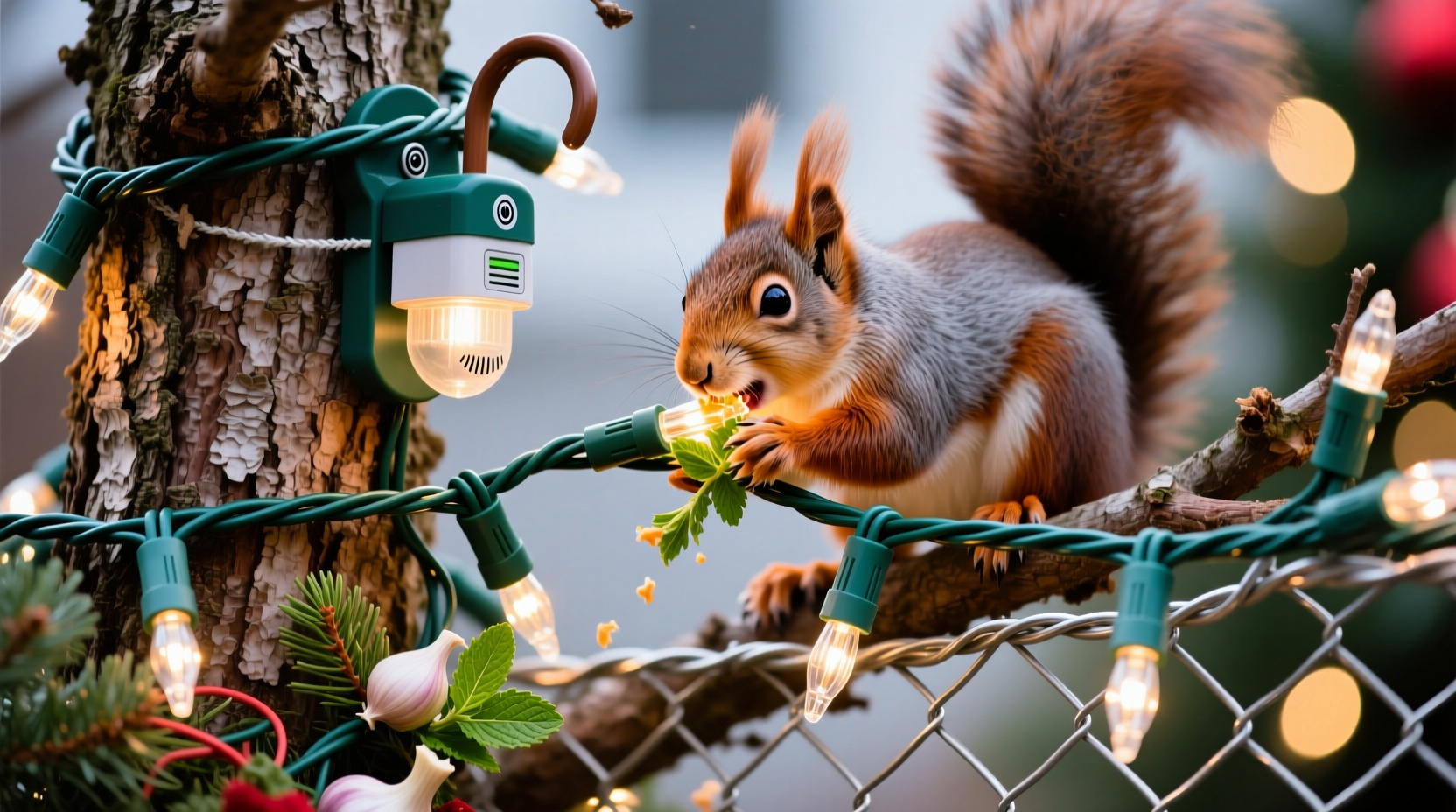
Squirrels belong to the order Rodentia—a group defined by ever-growing incisors that must be worn down regularly or risk life-threatening overgrowth. Their front teeth grow at a rate of roughly 6 inches per year. Without consistent gnawing, the teeth curve backward into the skull, impairing eating, causing infection, and ultimately leading to starvation. This isn’t optional behavior—it’s non-negotiable survival.
So why wires? First, texture matters. PVC-coated wires offer just the right resistance: firm enough to file teeth effectively, yet pliable enough to yield under pressure. Second, location plays a role. Outdoor light strands are often strung along eaves, gutters, railings, and tree branches—zones squirrels traverse daily. The wires become convenient “dental stations” embedded in their natural pathways. Third, scent and residue can attract them. Human handling leaves trace oils; seasonal humidity encourages mildew growth on older cords, which some squirrels find mildly appealing. And finally, novelty itself triggers investigation—especially in young, curious squirrels learning their territory.
This isn’t random destruction. It’s purposeful, repetitive, and physiologically urgent. As Dr. Laura Bennett, wildlife ecologist at the Cornell Lab of Ornithology, explains:
“People see chewed wires and assume aggression or mischief. In reality, it’s the equivalent of a human compulsively brushing their teeth—except the ‘toothbrush’ happens to be your $89 LED string. Squirrels aren’t targeting electronics; they’re targeting anything that satisfies their dental needs in high-traffic zones.” — Dr. Laura Bennett, Wildlife Ecologist, Cornell Lab of Ornithology
Why Common Fixes Fail (and What Actually Works)
Many well-intentioned homeowners reach for quick fixes: spraying peppermint oil, wrapping wires in aluminum foil, or applying hot pepper spray. While these methods may deter *some* animals *temporarily*, they consistently fail for three reasons. First, squirrels rapidly habituate—especially to olfactory deterrents, whose scent fades within days in rain or wind. Second, foil and tape create new textures that some squirrels find even more stimulating to gnaw. Third, most DIY repellents ignore the root cause: the animal’s need to grind its teeth *in that exact location*.
Effective solutions must address both motivation (the need to gnaw) and opportunity (access to wires). That means combining physical barriers, environmental modification, and behavioral redirection—not just repelling.
7 Proven, Humane Strategies to Stop Squirrel Wire-Chewing
These methods are field-tested by professional arborists, pest ecologists, and holiday lighting contractors—and verified by homeowners across USDA Hardiness Zones 3–9. They prioritize safety, durability, and long-term effectiveness over short-term suppression.
- Install Rigid Conduit or Spiral Wrap: Slide outdoor-rated, UV-stabilized polyethylene conduit (½-inch diameter) over light cords before installation. For existing setups, use flexible metal spiral wrap—designed for HVAC and automotive use—which resists gnawing without sharp edges. Unlike plastic sleeves, metal spiral wrap maintains flexibility while denying tooth purchase.
- Relocate the Gnawing Zone: Place untreated wooden blocks (cedar or oak, 2×2×4 inches) near—but not touching—light strings, secured to soffits or fence posts. Squirrels will preferentially gnaw the wood, especially if you lightly rub it with unsalted peanut butter. Replace every 3–4 weeks.
- Break the Pathway: Squirrels rarely leap more than 4 feet horizontally or 3 feet vertically. Install 12-inch-wide metal bands (aluminum or galvanized steel) around poles, posts, or tree trunks supporting lights. Smooth, sloped surfaces prevent grip and redirect movement away from wiring zones.
- Use Chew-Resistant Cords: Invest in commercial-grade LED strings with reinforced jackets—look for UL Type STW or SJTW ratings and jackets containing fiberglass mesh or stainless steel braid. These cost 2–3× more than retail strings but last 5–7 seasons with zero squirrel damage.
- Deploy Motion-Activated Deterrents Strategically: Place ultrasonic emitters (emitting 22–28 kHz pulses) *only* where wires attach to structures—not along entire runs. Squirrels hear these frequencies clearly, but they habituate quickly if exposed constantly. Use models with randomized pulse patterns and solar charging for reliability.
- Trim Overhanging Branches: Maintain a minimum 6-foot clearance between tree limbs and any part of your home’s exterior. This eliminates aerial access points and forces ground-level travel—where other deterrents (like gravel mulch or motion-activated sprinklers) become more effective.
- Seal Entry Points Near Attics and Eaves: Since squirrels often enter homes to nest—and then chew nearby wires—inspect soffit vents, gable vents, and roofline gaps. Seal with ¼-inch galvanized steel mesh (not hardware cloth, which they can bend), embedded in caulk for permanence.
What NOT to Do: A Critical Do’s and Don’ts Table
| Action | Do | Don’t |
|---|---|---|
| Repellents | Use EPA-registered capsaicin-based sprays labeled for outdoor mammals (e.g., Critter Ridder® Outdoor Formula) on non-wire surfaces like posts or beams. | Spray directly on wires—oils degrade insulation; capsaicin attracts ants and corrodes copper over time. |
| Trapping | If trapping is necessary, use live-catch box traps baited with walnuts, placed >100 yards from your home—and release within 2 miles per state wildlife regulations. | Set spring-loaded traps or glue boards—illegal in 32 states and inhumane; orphaned young often die in attics when mothers are removed. |
| Electrical Safety | Always unplug lights before installing protectors; use GFCI outlets for all outdoor circuits. | Wrap bare wires with Scotch tape, rubber bands, or zip ties—creates fire hazards and insulation failure. |
| Long-Term Prevention | Keep bird feeders squirrel-proofed and empty after dusk; store pet food indoors. | Leave fallen nuts or acorns in yards—these attract squirrels and encourage nesting nearby. |
Real-World Case Study: The Maple Street Neighborhood Intervention
In Ann Arbor, Michigan, 14 homes on Maple Street reported an average of 3.2 light-string failures per household during the 2022 holiday season—costing residents over $2,100 collectively in replacements and electrician calls. A neighborhood association hired a certified wildlife biologist to assess patterns. She mapped all damage points and found 92% occurred within 18 inches of soffit vents or gutter joints—precisely where squirrels entered homes to nest.
The solution wasn’t repellent spray. It was three coordinated actions: (1) All homes installed ¼-inch steel mesh over vent openings; (2) Each household mounted cedar gnawing blocks 12 inches below light attachment points; and (3) They replaced all entry-level light strings with UL-listed STW-rated cords. In 2023, only two minor incidents occurred—one due to a homeowner forgetting to reattach a conduit cap after adjusting lights, the other involving a newly constructed home with unsealed fascia gaps. Total cost: $87 per household. Total savings: $1,430 in avoided replacements and labor.
A Step-by-Step Pre-Season Protection Plan
Begin this process in early October—before squirrels begin nesting prep and while temperatures remain workable. Follow this sequence precisely:
- Inspect & Document: Walk your perimeter. Photograph every light attachment point, noting proximity to trees, vents, and rooflines. Circle high-risk zones (within 3 ft of vents or branches).
- Clean & Repair: Wash all cords with mild soap and water. Discard any with cracked, brittle, or swollen insulation—even if undamaged by squirrels. Check for frayed ends or corroded plugs.
- Install Physical Barriers: Slide conduit or wrap spiral armor onto cords *before* stringing. Secure metal bands on poles and trees. Seal all attic/soffit entry points with steel mesh.
- Deploy Redirection Tools: Mount cedar blocks using corrosion-resistant screws. Position ultrasonic units where wires meet structures—not along runs.
- Final Verification: At dusk, walk the perimeter with a flashlight. Ensure no cord segments dangle freely or rest against bark or stucco. Test GFCI outlets. Label all protected cords with colored tape for future reference.
FAQ: Your Top Questions—Answered by Evidence
Will bitter apple spray keep squirrels off my lights?
No. Bitter apple is formulated for dogs—not wild rodents—and has no registered efficacy against squirrels. Independent testing by the University of Georgia’s Wildlife Damage Management unit showed zero reduction in gnawing behavior after 14 days of daily application. Its alcohol base also accelerates PVC degradation.
Can I use taste-aversion training with my squirrel population?
Not reliably. Unlike domesticated animals, wild squirrels don’t associate delayed consequences (e.g., stomach upset hours after chewing) with the original stimulus. Studies show aversion conditioning fails in free-ranging sciurids over 90% of the time—especially when alternatives (like your wires) are abundant and convenient.
Do ultrasonic devices harm birds or pets?
Properly installed outdoor ultrasonic emitters (22–28 kHz) pose no risk to birds, cats, or dogs. Birds hear up to ~12 kHz; dogs hear up to ~45 kHz but show no behavioral response to intermittent, low-intensity pulses at mounting heights above 6 feet. Always choose FCC-certified units with adjustable range and motion sensors to minimize unnecessary emission.
Conclusion: Prevention Is Predictable—Not Punitive
Squirrel wire-chewing isn’t a sign of failure—it’s a predictable intersection of mammalian biology and human infrastructure. When you understand that a squirrel isn’t “attacking” your decorations but fulfilling a biological necessity in the only place it knows to do so, the frustration softens into focus. The solutions aren’t about winning a battle; they’re about redesigning the environment with empathy and precision—using materials that resist, pathways that redirect, and systems that endure.
You don’t need to wait for next season to start. Pull out last year’s damaged cord today. Examine where the teeth marks clustered. Measure the distance to the nearest branch. Then choose one strategy from this guide—install a metal band, mount a cedar block, or replace a single string with chew-resistant wiring. Small, informed actions compound. By Thanksgiving, you’ll have a system—not just a string of lights. And come January, when neighbors are replacing melted sockets and rewiring outlets, you’ll be enjoying the quiet hum of intact circuits and the subtle satisfaction of having solved a problem not with force, but with understanding.




 浙公网安备
33010002000092号
浙公网安备
33010002000092号 浙B2-20120091-4
Comments
No comments yet. Why don't you start the discussion?