
Towels are one of the most-used items in any household. After a shower or bath, we rely on them to feel soft, absorbent, and comforting against our skin. Yet, over time, many towels lose their plushness and start feeling rough, stiff, or even scratchy. This transformation isn’t just unpleasant—it can be frustrating when you’ve invested in high-quality cotton or bamboo fabrics only to see them deteriorate after a few months.
The good news is that scratchy towels aren’t a permanent condition. The causes are often rooted in everyday laundry habits, water quality, and fabric buildup—issues that can be reversed with simple, natural solutions. By understanding what leads to towel degradation and applying gentle, eco-friendly methods, you can restore softness without relying on synthetic fabric softeners or dryer sheets, which often do more harm than good in the long run.
The Science Behind Towel Stiffness
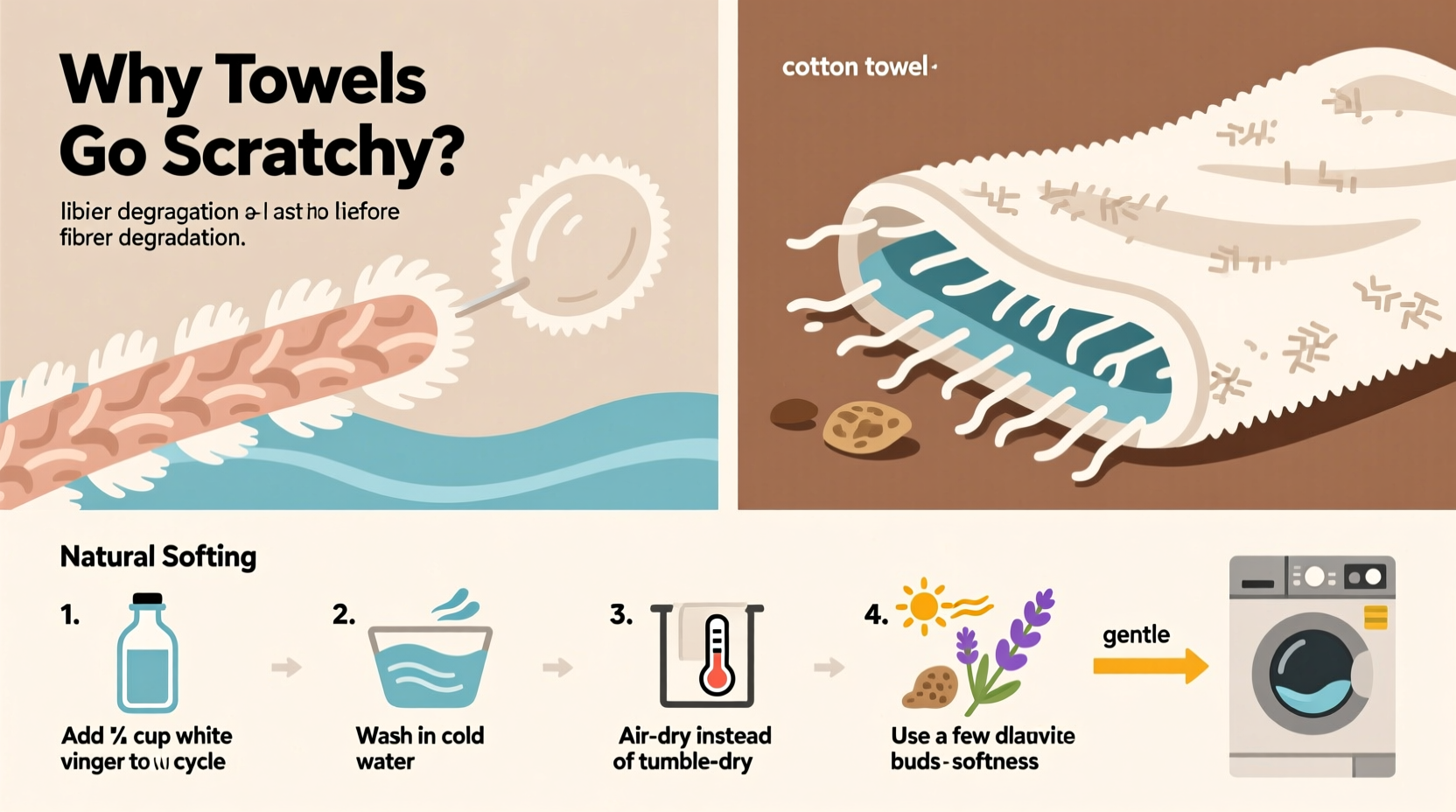
Towels, especially those made from cotton or cotton blends, are designed to be highly absorbent. Their loops and fibers trap moisture efficiently, making them ideal for drying off. However, this same structure also makes them prone to accumulating residues and mineral deposits that compromise both texture and performance.
One primary reason towels go scratchy is the buildup of detergent residue. Many conventional laundry detergents contain surfactants, optical brighteners, and fragrances that don’t fully rinse out during the wash cycle. These leftover compounds coat the fibers, reducing their ability to absorb water and making the fabric feel stiff. Over time, repeated exposure to these residues compacts the fibers, leading to a coarse, papery texture.
Hard water is another major culprit. If your home has high levels of calcium and magnesium in the water supply, these minerals bind to both the detergent and the towel fibers during washing. As the towels dry, the minerals crystallize, embedding themselves into the fabric and contributing to stiffness. In areas with particularly hard water, towels may become scratchy within just a few uses.
Additionally, fabric softeners and dryer sheets—often used in an attempt to counteract stiffness—can actually make the problem worse. These products coat fibers with a waxy layer intended to reduce friction, but they also clog the absorbent loops of towels. The result? A towel that feels temporarily softer but performs poorly and becomes increasingly difficult to clean over time.
“Softness isn’t just about comfort—it’s a sign of healthy fabric integrity. When towels feel scratchy, it usually means they’re coated with something they shouldn’t be.” — Dr. Lena Torres, Textile Scientist at Green Home Institute
Natural Methods to Soften Towels
The best way to restore softness to towels is to strip away accumulated residues and recondition the fibers using natural, non-toxic ingredients. Unlike chemical-laden products, these solutions clean deeply without leaving behind harmful coatings. They also help preserve the lifespan of your towels by maintaining their absorbency and structural integrity.
Vinegar is one of the most effective natural agents for softening towels. White distilled vinegar acts as a natural chelator, meaning it binds to and removes mineral deposits from hard water. It also helps break down soap scum and neutralizes odors. To use, add one cup of vinegar to the rinse cycle instead of fabric softener. Avoid mixing vinegar with bleach, as this creates toxic fumes.
Baking soda works synergistically with vinegar. It softens water by neutralizing minerals and helps lift dirt and oils from deep within fibers. Adding half a cup of baking soda during the wash cycle boosts cleaning power and reduces pH imbalances that contribute to stiffness.
For an even deeper clean, try a hot water soak with vinegar and baking soda. Fill your washing machine or a large tub with hot water (as hot as the fabric allows), add one cup each of vinegar and baking soda, and let towels soak for 30 to 60 minutes before running a normal wash cycle. This method dissolves years of buildup in a single treatment.
Step-by-Step Guide to Reviving Scratchy Towels
Restoring your towels doesn’t require special equipment or expensive products. Follow this proven five-step process to bring back softness and absorbency naturally.
- Strip the Buildup: Wash towels in the hottest water safe for the fabric (check labels). Use regular detergent and add ½ cup of baking soda to the drum. Run a full cycle.
- Rinse with Vinegar: Immediately run a second rinse cycle using 1 cup of white vinegar instead of detergent. This removes residual soap and minerals.
- Air Dry or Low Heat: Hang towels to dry in fresh air if possible. Sunlight naturally disinfects and softens fibers. If using a dryer, choose low heat to prevent fiber damage.
- Fluff the Loops: Once dry, shake each towel vigorously or tumble dry for 10 minutes on no heat with a couple of clean tennis balls. This helps fluff up compressed fibers.
- Maintain Going Forward: Use less detergent, skip fabric softeners, and include vinegar in every third rinse cycle to prevent future buildup.
This stripping process should be done every 2–3 months, depending on usage and water hardness. Frequent swimmers or gym-goers may need to do it monthly due to higher exposure to sweat, chlorine, and body oils.
Do’s and Don’ts of Towel Care
| Do | Don’t |
|---|---|
| Use white distilled vinegar in the rinse cycle | Use commercial fabric softeners or dryer sheets |
| Wash towels separately from clothes to avoid lint transfer | Overload the washing machine—towels need space to agitate |
| Dry completely to prevent mildew and odors | Leave damp towels bunched up in the hamper |
| Use half the recommended amount of detergent | Use bleach regularly—it weakens fibers over time |
| Air-dry when possible to preserve softness | Dry on high heat frequently—it shrinks and stiffens fabric |
Real Example: How Sarah Restored Her Towels Naturally
Sarah, a mother of two in Denver, Colorado, noticed her family’s towels had become so stiff they felt like sandpaper. Despite buying premium organic cotton towels, she was disappointed by how quickly they degraded. She suspected her home’s notoriously hard water was to blame—but wasn’t sure how to fix it without resorting to chemical treatments.
After researching natural laundry care, Sarah tried the vinegar-and-baking-soda stripping method. She washed her entire set of towels using hot water, added baking soda during the wash, then followed with a vinegar-only rinse. She dried them outside on a breezy spring day.
The results were immediate. “They came out smelling fresh, not vinegary,” she said. “And the texture was completely different—plush again, like when I first bought them.” She now repeats the process every six weeks and uses only half the detergent she used before. Her towels have lasted over three years without losing softness.
Checklist: Maintain Soft Towels Naturally
- ✅ Wash towels in warm or hot water, never cold
- ✅ Use only half the recommended detergent amount
- ✅ Replace fabric softener with 1 cup vinegar in rinse cycle
- ✅ Wash towels separately from clothes and linens
- ✅ Air-dry or use low heat in the dryer
- ✅ Strip towels every 2–3 months with vinegar and baking soda
- ✅ Avoid bleach unless absolutely necessary
- ✅ Store clean towels in a dry, ventilated space
Frequently Asked Questions
Can I use apple cider vinegar instead of white vinegar?
While apple cider vinegar has similar acidic properties, it contains pigments and sugars that may stain light-colored towels. Stick with clear, distilled white vinegar for best results and no discoloration.
Why do my towels still smell musty after washing?
Musty odors usually indicate trapped moisture or bacterial growth inside tightly packed fibers. Try washing with vinegar and baking soda, ensuring towels are fully dry before storage. Also, clean your washing machine monthly to prevent mold buildup in rubber seals.
Will vinegar damage my washing machine or towels?
No. Distilled vinegar is safe for both high-efficiency (HE) and standard machines. It does not degrade cotton or elastic fibers when used properly. In fact, it helps maintain machine cleanliness by removing lime scale and soap residue from hoses and drums.
Conclusion: Soft Towels Start with Smart Habits
Scratchy towels don’t mean it’s time to replace them—they’re a signal that your laundry routine needs adjustment. With a better understanding of how detergent residue, hard water, and improper drying affect fabric, you can take control of towel quality using simple, natural ingredients already in your pantry.
By replacing synthetic softeners with vinegar, reducing detergent use, and adopting mindful washing practices, you’ll not only restore softness but also extend the life of your towels, save money, and reduce environmental impact. Healthy towels should feel luxurious, dry quickly, and remain fresh between uses—and that’s entirely possible without a single chemical additive.




 浙公网安备
33010002000092号
浙公网安备
33010002000092号 浙B2-20120091-4
Comments
No comments yet. Why don't you start the discussion?