
At first glance, it’s one of the most baffling quirks in gaming: your character sprints through alien planets, war zones, or fantasy realms at a pace that would barely qualify as a brisk walk in real life. Whether you're escaping an explosion in a military shooter or fleeing a horde of zombies, the jog feels more like a cautious shuffle. So why do video game characters run so slowly? The answer isn’t a technical oversight or lazy animation—it’s deliberate design. Behind every sluggish sprint lies a complex web of gameplay mechanics, player psychology, level design, and narrative pacing.
Game developers don’t simply pick movement speed at random. Each decision is calculated to serve broader goals: maintaining tension, ensuring fair combat, guiding exploration, and preserving immersion. What seems like a flaw is often a carefully tuned feature. Understanding this reveals a deeper appreciation for the craft of game design—one where even the speed of a jog can make or break the experience.
The Psychology of Pacing and Player Control
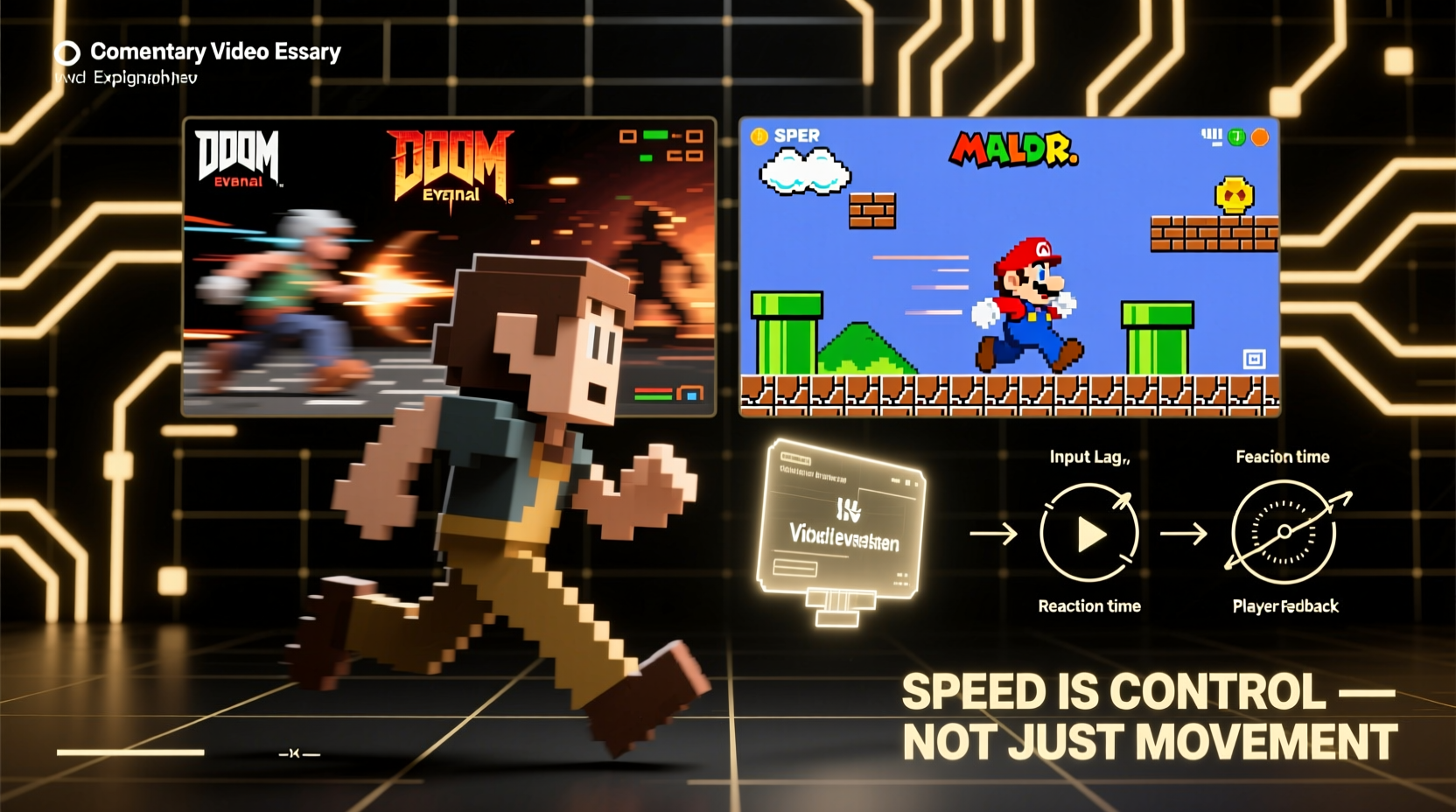
One of the primary reasons for slow movement in games is psychological pacing. Fast motion can overwhelm players, especially in visually dense environments. When a character moves too quickly, the brain struggles to process incoming stimuli—enemy positions, environmental hazards, quest markers—leading to frustration or disorientation. By slowing down the default movement speed, developers give players time to absorb information, react appropriately, and feel in control.
This principle is especially evident in survival horror titles like Resident Evil or Alien: Isolation. In these games, slow movement isn't just a limitation—it's a tool for building dread. The inability to flee rapidly heightens vulnerability, making every encounter with danger feel consequential. As game designer Jordan Thomas, known for his work on Bioshock, once noted:
“Speed isn’t freedom in games—it’s context. Slowness can be more powerful than speed when it forces the player to confront consequences.” — Jordan Thomas, Lead Designer, Irrational Games
Slower movement also allows for more precise control, which is crucial in platformers or stealth games. Imagine trying to land a jump across a narrow ledge at full sprint, or sneaking past guards without overshooting your cover. Reducing speed increases the margin for error and rewards deliberate, thoughtful play.
Level Design Constraints and Environmental Storytelling
Video game worlds are meticulously constructed spaces. Every corridor, room, and open field is designed with intention—not just for aesthetics, but for gameplay flow. Movement speed is directly tied to how levels are built. A fast-moving character would render many hand-crafted environments obsolete, rushing past scripted events, hidden items, or narrative details before the player could notice them.
Consider a detective game where clues are scattered across a crime scene. If the protagonist moved at sprinter-like speeds, players might miss critical evidence or fail to appreciate atmospheric details—a bloodstain under a rug, a half-burnt note in the fireplace. By keeping movement slow, designers ensure that players engage with the environment meaningfully, turning traversal into part of the investigative process.
In open-world games like The Legend of Zelda: Breath of the Wild, sprinting is possible—but heavily limited by stamina. This creates a rhythm: explore slowly to observe, then sprint briefly when necessary. It’s a compromise between freedom and focus, encouraging players to return to a walking pace where discovery happens.
| Game Genre | Average Walk Speed (units/sec) | Rationale for Speed |
|---|---|---|
| First-Person Shooter | 150–200 | Combat precision and aiming stability |
| Survival Horror | 80–120 | Tension, vulnerability, and limited escape options |
| Open-World RPG | 100–140 | Exploration pacing and stamina management |
| Platformer | 130–170 | Jump accuracy and timing control |
| Stealth | 90–110 | Sound propagation and guard detection mechanics |
Combat Balance and Game Fairness
In competitive or skill-based games, movement speed is a critical balancing factor. If characters could move too quickly, combat systems would collapse. Dodging attacks, landing hits, or predicting enemy movements would become nearly impossible. Slower base speeds create a “reaction window” that keeps gameplay fair and rewarding.
Take classic arena shooters like Doom or Quake. While these games allow high-speed movement, they also tie speed to power-ups and map layout. Without those boosts, default speeds remain moderate to prevent players from trivializing encounters. Even in modern multiplayer titles like Overwatch or Valorant, character movement is deliberately capped to maintain tactical depth. A sniper wouldn’t stand a chance if enemies could zip around at 30 mph.
Moreover, slower movement emphasizes positioning and strategy over reflexes alone. It transforms combat from a chaotic blur into a calculated exchange of abilities, cover usage, and resource management. As lead designer Chet Faliszek explained during a post-mortem on Left 4 Dead:
“We tested faster zombie AI early on, but it made cooperation impossible. Players couldn’t communicate, heal, or retreat. Slowing things down didn’t reduce intensity—it amplified teamwork.” — Chet Faliszek, Valve Corporation
Technical and Animation Limitations
While design intent drives much of the decision-making, technical constraints still play a role. Realistic running animations require significant resources: motion capture, frame interpolation, physics blending, and seamless transitions between states (idle → walk → run → stop). Running too fast can cause animation glitches—feet sliding, unnatural bobbing, or clipping through terrain.
Additionally, faster movement demands higher frame rates and tighter network synchronization, especially in online games. A character moving at high velocity across a server with latency can appear to teleport or phase through walls due to prediction errors. To mitigate this, developers often cap speeds to stay within the bounds of stable networking and rendering performance.
There’s also the issue of camera stability. Rapid motion can induce motion sickness in players, particularly in first-person perspectives. Excessive screen shake, head bob, or field-of-view expansion during sprinting may seem minor, but they accumulate over time, leading to discomfort. By moderating speed, studios reduce sensory overload and improve accessibility.
Mini Case Study: The Evolution of Master Chief
When Halo: Combat Evolved launched in 2001, Master Chief moved at what many considered a plodding pace. Fans joked about the “Halo jog.” Yet, this was no accident. Bungie’s designers tuned the speed to complement the game’s three-key system (health, shield, weapon), vehicle handling, and enemy AI behavior. Moving too fast would disrupt the rhythm of engagement—especially when fighting agile foes like Elites or dodging plasma fire.
In later entries like Halo 4 and Halo 5, movement was subtly increased, and Spartan Abilities introduced short bursts of speed. However, the base walk/run remained grounded. Why? Because changing it too drastically would have invalidated years of level design, multiplayer maps, and community muscle memory. The “slow” speed had become part of the franchise’s identity—and its functional backbone.
Player Expectations and Genre Conventions
Over time, certain movement speeds have become genre conventions. Players expect stealth operatives to move quietly and deliberately, space marines to trudge in heavy armor, and adventurers to explore cautiously. Deviating from these norms can break immersion, even if technically feasible.
For example, imagine playing Metal Gear Solid with Snake sprinting like Sonic the Hedgehog. The tone shifts instantly from tense espionage to absurd comedy. The slowness reinforces the character’s realism, weight, and vulnerability—key elements of the series’ atmosphere.
Likewise, in role-playing games like The Witcher 3, Geralt’s measured pace reflects his role as a seasoned monster hunter, not a marathon runner. His gait communicates fatigue, caution, and the burden of carrying heavy gear. These subtle cues enrich storytelling without a single line of dialogue.
Checklist: How to Evaluate Movement Speed in Game Design
- ✅ Does the speed support the game’s intended mood (e.g., tension, urgency, exploration)?
- ✅ Is there a clear difference between walking, sprinting, and sneaking?
- ✅ Does movement interfere with combat readability or targeting?
- ✅ Are stamina or cooldown systems used to limit prolonged sprinting?
- ✅ Do animations blend smoothly at different speeds?
- ✅ Is network performance stable with multiple moving characters?
- ✅ Does the camera handle motion without causing discomfort?
Frequently Asked Questions
Why can’t developers just let players choose their own speed?
While customizable speed settings exist in some games, unrestricted options can break core mechanics. For instance, increasing speed in a puzzle game might allow players to bypass traps unfairly. In multiplayer, variable speeds would create imbalance. Developers prioritize balanced, curated experiences over total freedom.
Don’t open-world games suffer from slow movement due to large maps?
They can—but this is usually mitigated through fast travel, vehicles, or mounted companions. Games like Red Dead Redemption 2 keep Arthur Morgan’s footspeed realistic to preserve immersion, but provide horses for long-distance travel. The slowness on foot makes the world feel vast and authentic, while transportation options solve practicality.
Has movement speed improved with better technology?
Yes and no. Hardware allows for smoother, faster animations, but design philosophy has shifted toward intentional pacing. Modern games often feature sprint mechanics, but with limitations like stamina bars or overheating. Technology enables speed, but design restrains it for better gameplay.
Step-by-Step: How Developers Tune Character Movement
- Define the game’s core experience – Is it frantic action, methodical exploration, or tactical combat?
- Create a prototype with adjustable speed – Test multiple values in a controlled environment.
- Observe player behavior – Do they miss objectives? Feel frustrated? Overwhelm enemies?
- Adjust based on feedback – Slight changes (even 5–10 units) can dramatically affect feel.
- Integrate with animation and physics – Ensure movement looks natural and interacts correctly with terrain.
- Test in multiplayer (if applicable) – Verify fairness and network stability.
- Finalize and document – Lock the value and communicate it to level designers and AI programmers.
Conclusion: Slow Is Not Broken—It’s Designed
The next time you find yourself cursing a character’s sluggish sprint, pause and consider the intention behind it. That pace wasn’t chosen by accident. It’s the result of careful iteration, psychological insight, and deep respect for gameplay integrity. Slow movement preserves tension, supports exploration, balances combat, and maintains immersion—all while working within technical limits.
Great game design often hides in plain sight. The most invisible mechanics are sometimes the most impactful. Movement speed is one of them: uncelebrated, frequently criticized, yet essential to the rhythm of play. Recognizing this transforms frustration into appreciation. What feels like a limitation may actually be the foundation of a richer, more engaging experience.




 浙公网安备
33010002000092号
浙公网安备
33010002000092号 浙B2-20120091-4
Comments
No comments yet. Why don't you start the discussion?