
Lex Luthor’s hatred for Superman is one of the most enduring and psychologically rich conflicts in modern storytelling. Unlike many villains driven by greed or chaos, Luthor’s animosity stems from a complex blend of ideology, ego, and existential dread. He doesn’t just oppose Superman—he sees him as an affront to human potential, a threat to free will, and a symbol of everything he believes holds humanity back. To understand why Lex Luthor hates Superman, we must go beyond surface-level rivalry and examine the philosophical, emotional, and societal layers that fuel this legendary enmity.
The Ideological Divide: Man vs. God
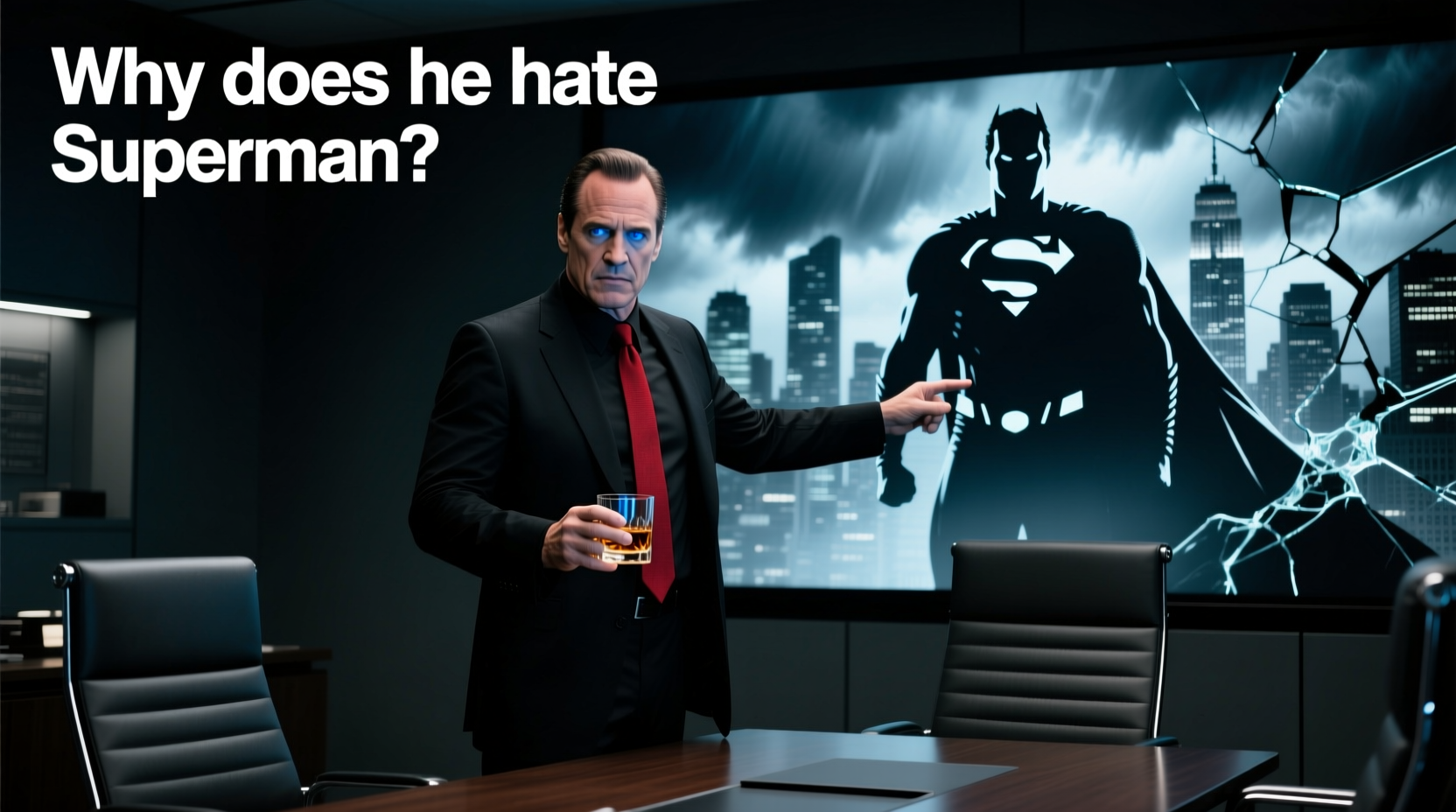
At its core, Lex Luthor’s disdain for Superman is ideological. Superman is an alien with near-limitless power who chooses—however benevolently—to act as Earth’s protector. To Luthor, this creates a dangerous precedent: humanity becoming dependent on a godlike figure rather than forging its own destiny through intellect, innovation, and self-reliance.
Luthor views himself as the pinnacle of human achievement—a self-made billionaire, scientific genius, and visionary leader. In his mind, Superman undermines human progress by making people complacent. Why strive for greatness when a being from another planet can solve every crisis with a single flight?
“Superman represents the end of human evolution—not because we’ve ascended, but because we’ve surrendered.” — Lex Luthor, Action Comics #775
This quote, from the acclaimed “What’s So Funny About Truth, Justice & the American Way?” storyline, encapsulates Luthor’s worldview. He doesn’t fear Superman’s strength; he resents the message his existence sends: that humanity is inadequate without external salvation.
Ego and Insecurity: The Genius Who Can’t Win
Beneath the polished suits and calculated speeches lies a deep-seated insecurity. Lex Luthor is brilliant, powerful, and influential—but no matter how high he climbs, Superman can undo his plans with minimal effort. This imbalance eats at Luthor’s ego. He cannot accept that all his intellect and ambition are rendered secondary in a world where raw power trumps reason.
In many versions of the character, especially post-Crisis on Infinite Earths, Luthor’s hatred intensifies after a pivotal moment in his youth: Superman saves him from a lab explosion, but in doing so, destroys Luthor’s experimental device and severs his hair. This event becomes symbolic—the first time Luthor feels humiliated by the alien. From that point forward, he associates Superman not just with interference, but with personal loss and emasculation.
Societal Fear: The Dangers of Unchecked Power
Luthor often frames his crusade against Superman as a defense of democracy and civil liberties. He argues that a being with Superman’s abilities cannot be held accountable. No court can try him, no law can bind him, and no government can regulate him. In a world governed by rules, Superman exists outside them—which, Luthor insists, makes him inherently dangerous.
This argument gains traction in storylines like Kingdom Come and Injustice, where Superman’s well-intentioned interventions lead to authoritarianism. Luthor uses these possibilities to paint Superman not as a hero, but as a ticking time bomb—one whose morality may shift with time, emotion, or external manipulation.
While Luthor’s rhetoric often serves as a smokescreen for his own ambitions, there’s undeniable truth in his warning: absolute power, even in noble hands, risks corruption. His obsession, then, becomes a twisted form of vigilance—one where the cure is often worse than the disease.
A Comparative Breakdown: Luthor’s Motivations Across Eras
| Era | Luthor’s Primary Motivation | Key Storyline Example |
|---|---|---|
| Golden Age | Greed and criminal enterprise | Smuggling, sabotage, wealth accumulation |
| Silver/Bronze Age | Scientific rivalry and ego | Outsmarting Superman with inventions |
| Post-Crisis (1986–2000s) | Ideological opposition and trauma | Lex Luthor: The Unauthorized Biography |
| Modern (New 52, Rebirth) | Nationalism, control, and anti-alien sentiment | Running for president, framing Superman |
| Alternative Universes | Survival, fear, or twisted admiration | Kingdom Come, Lex Luthor: Man of Steel |
The evolution of Luthor’s character shows a shift from cartoonish villainy to nuanced antagonist. While early versions portrayed him as a mad scientist bent on world domination, modern interpretations position him as a dark mirror to Superman—one who believes he is saving humanity from dependency, even as he commits atrocities in the process.
Mini Case Study: The Rise of President Luthor
In the early 2000s, DC Comics launched a bold storyline: Lex Luthor becomes President of the United States. Elected on a platform of technological advancement, national security, and skepticism toward alien influence, Luthor leverages public fear of the unknown to consolidate power.
During his presidency, he funds anti-Superman initiatives, manipulates global events to discredit heroes, and even orchestrates crises to justify increased surveillance. Yet, to the public, he remains a charismatic leader—proof that evil doesn’t always wear a cape.
This arc illustrates how Luthor channels societal anxieties into political power. His hatred of Superman isn’t just personal; it’s strategic. By positioning Superman as a destabilizing force, Luthor elevates himself as the rational alternative—the man who puts humanity first, no matter the cost.
Step-by-Step: How Luthor Justifies His War on Superman
- Observation: Superman intervenes in global crises, gaining immense public trust.
- Interpretation: This reliance weakens human initiative and democratic accountability.
- Framing: Superman is not a savior but a threat to sovereignty and progress.
- Mobilization: Use media, politics, and technology to undermine Superman’s credibility.
- Escalation: Deploy Kryptonite, clones, or alternate realities to neutralize the threat.
- Self-Justification: Position himself as the true protector of human dignity and freedom.
This pattern recurs across decades of storytelling. Whether through corporate influence, political office, or direct confrontation, Luthor follows a consistent logic: eliminate Superman to preserve humanity’s right to self-determination—even if that means sacrificing morality along the way.
Expert Insight: What Psychologists Say
“Luthor exhibits traits of narcissistic injury and reactive paranoia. When his sense of superiority is challenged by an uncontrollable external force—Superman—he responds with disproportionate aggression.” — Dr. Rebecca Tan, Clinical Psychologist specializing in narrative archetypes
This analysis helps explain why Luthor cannot coexist with Superman, even when their goals align. Cooperation would require humility. Acceptance would mean acknowledging a higher authority. To Luthor, both are unacceptable.
Frequently Asked Questions
Does Lex Luthor hate all superheroes?
No—his animosity is primarily focused on Superman. While he opposes other heroes when they interfere with his plans, none provoke the same depth of hatred. Superman represents a personal and philosophical nemesis in a way no other hero does.
Has Lex Luthor ever tried to become a hero?
Yes. In several storylines, including the Lex Luthor: Man of Steel arc and the Superman: Red Son alternate universe, Luthor takes on heroic roles—often to prove he can do what Superman does, but better and without alien biology. These attempts usually end in failure or reveal deeper flaws in his character.
Is Lex Luthor jealous of Superman?
Jealousy is part of it, but it’s more accurate to say he resents what Superman symbolizes. Luthor is envious of the effortless adoration Superman receives, but his deeper conflict is ideological: he believes worship of Superman stunts human growth.
Conclusion: Understanding the Enemy Within
Lex Luthor’s hatred of Superman is not born of simple villainy. It is a reflection of real-world tensions—between faith and reason, dependence and independence, power and accountability. He forces readers to ask uncomfortable questions: Should we trust those who save us unconditionally? Can absolute power ever be safe? And what happens when brilliance is corrupted by pride?
Luthor may be a villain, but his arguments are not without merit. That complexity is what makes the rivalry endure. In hating Superman, Luthor reveals not just his own flaws, but humanity’s deepest fears about progress, identity, and our place in a universe far larger than we understand.




 浙公网安备
33010002000092号
浙公网安备
33010002000092号 浙B2-20120091-4
Comments
No comments yet. Why don't you start the discussion?