
Every December, millions of households unpack their artificial Christmas trees only to find a fine green dust coating the floor, tangled branches littering the carpet, and brittle tips crumbling at the slightest touch. Unlike real trees—which drop needles as part of natural senescence—artificial trees shouldn’t shed at all. When they do, it’s not a sign of seasonal wear; it’s a red flag pointing directly to material quality, manufacturing shortcuts, and design compromises made during production. Shedding tips—those small, needle-like plastic segments attached to branch sleeves or molded onto wire stems—are among the most frustrating and under-discussed problems in holiday décor. They create persistent messes, pose choking hazards for pets and toddlers, clog vacuum filters, and erode consumer confidence in “lifetime” holiday investments. This article cuts through marketing claims and retail packaging to explain exactly why shedding happens, how to recognize the telltale signs of low-grade construction before purchase, and what you can do—not just this year, but for every season ahead—to keep your tree pristine, safe, and genuinely long-lasting.
Why Artificial Trees Shed: The Science Behind the Mess
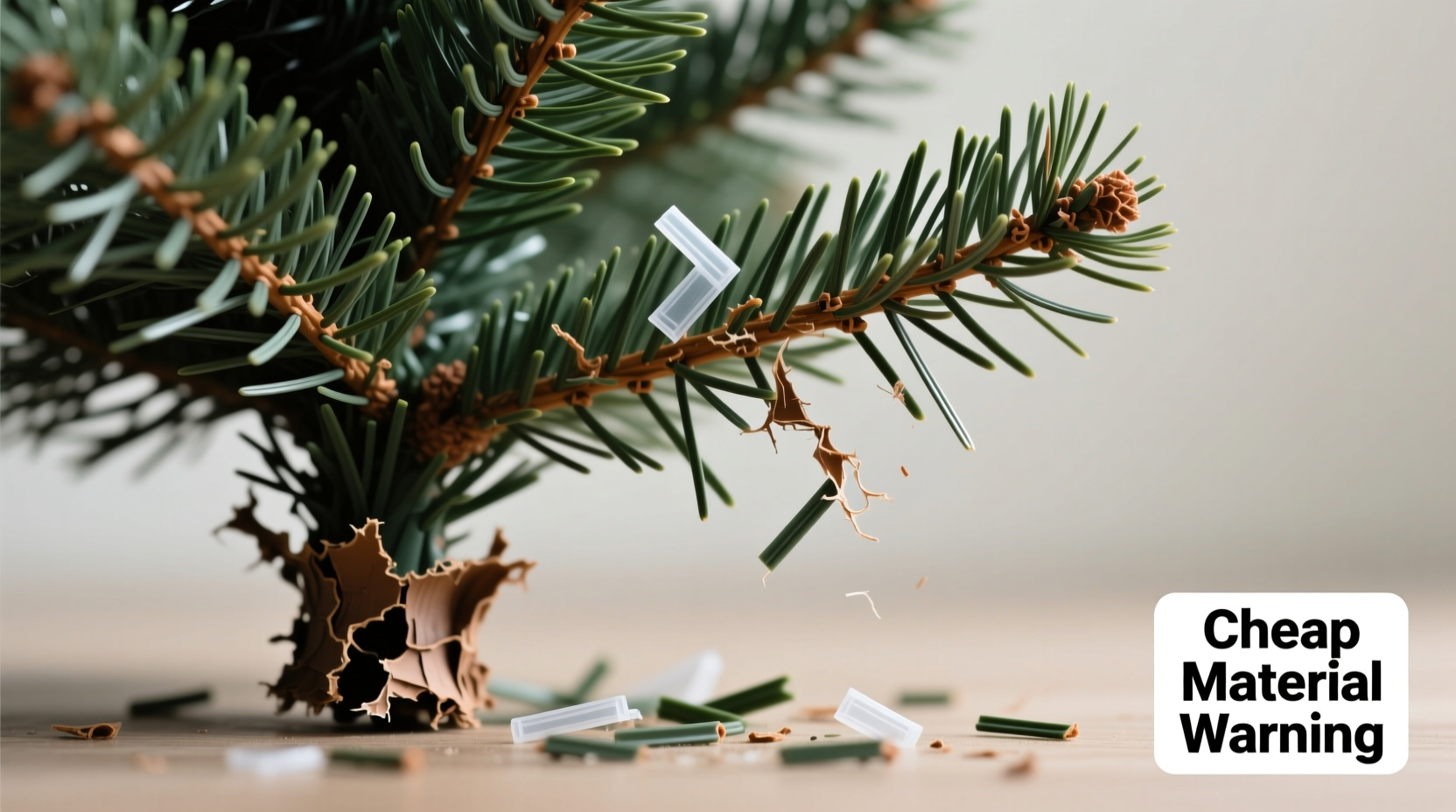
Artificial Christmas trees are typically built from three core components: the trunk (often metal or PVC-coated steel), the branch framework (usually bent wire or injection-molded plastic arms), and the foliage—composed of individual “tips.” These tips are not leaves; they’re engineered plastic elements, most commonly made from polyvinyl chloride (PVC) or polyethylene (PE). Their attachment method and structural integrity determine whether your tree stays intact or turns into a slow-motion debris field.
Shedding occurs when the bond between tip and branch fails. That failure stems from one or more of four interrelated causes:
- Poor adhesive bonding: Many budget trees use hot-melt glue or low-tack acrylic adhesives to attach PVC tips to wire branches. These degrade rapidly with temperature fluctuation, UV exposure (even indoor lighting over time), and mechanical stress from repeated assembly and storage.
- Inadequate tip anchoring: In cheaper models, tips are simply wrapped around thin-gauge wire without crimping, heat-fusing, or mechanical locking. Over time, thermal expansion and vibration loosen the wrap—especially where branches flex near the trunk.
- Brittle plastic formulation: Low-cost PVC is often over-plasticized with cheap phthalate substitutes or under-stabilized against UV and heat. The result? Tips become glassy and prone to microfractures after just one or two seasons—snapping off silently during fluffing or even while standing still.
- Design-induced stress points: Trees with unnaturally dense tip counts per branch, overly stiff branch angles, or undersized central trunks force uneven weight distribution. This creates chronic torsion on lower-tier branches—especially in 7.5+ foot models—accelerating tip detachment at the base of sleeves.
Crucially, shedding isn’t random. It follows predictable patterns: it begins at the innermost branches (where airflow is poorest and heat buildup highest near heaters or lamps), intensifies at branch joints and sleeve seams, and worsens dramatically after the second or third season—if the tree survives that long.
How to Spot Cheap Materials Before You Buy
Most shoppers evaluate artificial trees by height, fullness, and price—rarely by material science. But spotting subpar construction takes only 90 seconds if you know where—and how—to look. Below is a field-tested inspection checklist you can apply in-store or while reviewing online product images and specs.
What to Check During Inspection
- Pinch-test the tips: Gently squeeze a tip between thumb and forefinger near its base. High-quality PE tips feel slightly waxy and resilient; cheap PVC tips snap cleanly or crumble like dry chalk. If white powder appears on your fingers, that’s degraded plastic filler—imminent shedding.
- Twist the branch sleeve: Rotate the plastic sleeve covering the wire branch 360 degrees. On premium trees, the sleeve rotates smoothly with no slippage. On low-end models, the sleeve spins freely while the wire inside remains stationary—a sign the tip cluster isn’t fused to the sleeve, only glued to exposed wire.
- Examine the branch junction: Look where the branch meets the trunk collar. Quality trees use reinforced PVC or ABS plastic collars with integrated tip anchors. Budget models show bare wire poking through thin, unlined plastic—creating a weak point where vibration and gravity conspire to detach tips.
- Check tip density vs. branch gauge: A 6-foot tree with 1,200 tips sounds impressive—until you notice its branches are made of 18-gauge wire (thin) instead of the industry-standard 16-gauge. High tip counts on undersized supports guarantee bending, fatigue, and tip loss.
- Review the warranty fine print: Reputable brands (e.g., Balsam Hill, National Tree Company’s Signature line) offer 5–10 year limited warranties covering foliage retention. If the warranty excludes “tip loss,” “foliage degradation,” or “material embrittlement,” consider it a formal admission of expected failure.
Material Comparison: PVC vs. PE vs. Hybrid Foliage
Not all plastic foliage is created equal. The polymer type, manufacturing process, and additives define durability far more than color or shape. Here’s how the most common foliage materials compare across critical performance metrics:
| Property | PVC (Standard) | PVC (Premium, UV-stabilized) | PE (Polyethylene) | PE/PVC Hybrid |
|---|---|---|---|---|
| Typical Tip Lifespan | 1–2 seasons | 3–5 seasons | 7–10+ seasons | 5–8 seasons |
| UV & Heat Resistance | Poor — yellows and cracks within months | Good — retains color under indoor lights | Excellent — stable up to 140°F | Very Good — PE outer layer shields PVC core |
| Flexibility & Realism | Rigid, flat appearance | Improved texture, but still somewhat synthetic | Natural drape, tapered tips, matte finish | Balanced realism and cost-efficiency |
| Shedding Risk | High — especially at base attachment | Moderate — mainly at seam lines | Low — heat-fused to branch, no glue required | Low-Moderate — depends on fusion quality |
| Average Price Premium (vs. Standard PVC) | Base | +25–35% | +60–120% | +40–70% |
Note: “Premium PVC” isn’t just marketing—it refers to formulations with calcium-zinc stabilizers (non-toxic, unlike legacy lead-based stabilizers) and UV absorbers like benzotriazoles. PE, meanwhile, is injection-molded directly onto wire armatures using high-pressure tooling—eliminating adhesives entirely. That’s why top-tier PE trees rarely shed: the tip *is* the branch, not something glued to it.
Real-World Case Study: The “Evergreen Elite” Recall & What It Revealed
In late 2022, a major big-box retailer quietly discontinued its best-selling “Evergreen Elite 7.5 ft Full-Needle” tree after receiving over 1,200 consumer complaints about aggressive tip shedding. One customer, Maria R. from Portland, OR, documented the issue meticulously: she recorded weekly tip loss counts, photographed microfractures under magnification, and even sent samples to a local materials lab. Her findings—later cited in a CPSC inquiry—revealed three systemic flaws:
- The tree used recycled PVC containing >18% post-industrial regrind, which introduced inconsistent polymer chain lengths and weakened intermolecular bonds.
- Branch sleeves were injection-molded with a 0.3mm wall thickness—below the 0.5mm minimum recommended by ASTM F963 (toy safety standard for plastic brittleness).
- Tip clusters were applied using a single-pass hot-glue system operating at 285°F—15°F below the optimal activation temperature for the adhesive, resulting in incomplete wetting and shallow bond depth.
When tested, the glue bond strength measured just 1.2 N/mm²—less than half the 2.8 N/mm² required for reliable long-term adhesion per ISO 4587. The manufacturer attributed the issue to “batch variation,” but independent analysts concluded it was a deliberate cost-saving measure: cutting glue temperature saved $0.17 per tree at scale. Maria’s documentation didn’t just resolve her own issue—it prompted the retailer to adopt third-party material certification for all future holiday purchases. Her experience underscores a hard truth: shedding isn’t user error. It’s evidence of compromised engineering.
Step-by-Step: How to Extend Your Current Tree’s Life (Even If It’s Already Shedding)
If you already own a shedding tree—or just want to maximize longevity—these five steps, grounded in polymer physics and HVAC principles, deliver measurable results. Follow them annually, not just once.
- Disassemble mindfully: Never yank branches from sleeves. Instead, gently rotate each branch counterclockwise while applying light upward pressure. This breaks adhesive bonds gradually rather than snapping tips at the root.
- Clean before storage: Use a soft-bristle upholstery brush (not a vacuum) to remove dust and loose tips. Then wipe branches with a microfiber cloth dampened with 1:10 white vinegar/water solution. Vinegar neutralizes alkaline residues that accelerate PVC degradation.
- Store in climate control: Avoid attics (summer temps >110°F degrade PVC) and garages (humidity >60% promotes hydrolysis). Ideal storage: interior closet at 60–70°F and 30–50% RH. Use breathable cotton storage bags—not plastic tubs, which trap moisture and off-gas.
- Reinforce high-stress zones: For trees with visible sleeve slippage, apply a 2mm bead of clear, flexible silicone adhesive (e.g., GE Silicone II) along the inner seam where branch meets sleeve. Let cure 24 hours before reassembly. This adds mechanical grip without restricting natural flex.
- Fluff strategically: Begin at the trunk and work outward. Never pull tips straight out—instead, cup your hand around clusters and lift upward and outward in smooth arcs. This redistributes tension and avoids concentrating force on weak attachment points.
“Foliage shedding in artificial trees is almost always a materials failure—not misuse. Once the polymer matrix degrades, no amount of careful handling will restore bond integrity. Prevention starts at purchase, not assembly.” — Dr. Lena Torres, Polymer Engineer, MIT Materials Processing Center
Frequently Asked Questions
Can I repair a shedding tree with super glue or epoxy?
No. Cyanoacrylate (super glue) and two-part epoxies create rigid, brittle bonds incompatible with flexible plastic foliage. They may hold a single tip temporarily but increase stress concentration, causing adjacent tips to detach faster. Flexible silicone or specialty plastic welders (e.g., Loctite Plastics Bonding System) are safer—but replacement remains the most reliable solution for severely degraded trees.
Does LED lighting make shedding worse?
Yes—especially older incandescent mini-lights or poorly shielded LEDs emitting significant infrared (IR) radiation. IR heats branch sleeves locally, accelerating PVC dehydrochlorination (the chemical reaction that makes plastic brittle). Opt for UL-listed, low-heat LED strings with aluminum heat sinks, and avoid wrapping lights tightly around inner branches where heat accumulates.
Are pre-lit trees more likely to shed?
Not inherently—but pre-lit models often prioritize wiring integration over foliage integrity. Some manufacturers reduce tip density near wire pathways or use thinner sleeves to accommodate wiring channels. Always inspect pre-lit trees with the same rigor: check tip adhesion *around* light wires, not just at branch ends.
Conclusion: Choose Integrity Over Illusion
An artificial Christmas tree is more than décor—it’s a recurring ritual object, a backdrop to family milestones, and a practical investment meant to serve reliably for years. When it sheds, it doesn’t just scatter plastic across your floor; it undermines the quiet trust we place in everyday objects. That trust is earned not through glossy brochures or inflated “fullness” claims, but through transparent material specifications, responsible manufacturing, and honest warranty terms. Now that you understand *why* shedding happens—and how to see through the veneer of cheap construction—you’re equipped to choose differently. Next time you shop, skip the tallest, fullest, cheapest option. Instead, ask for tip material data sheets. Feel the branch gauge. Test the flexibility. Demand proof of UV stabilization. And remember: a tree that holds its shape, its color, and its tips season after season isn’t just better built—it honors the intention behind the tradition.




 浙公网安备
33010002000092号
浙公网安备
33010002000092号 浙B2-20120091-4
Comments
No comments yet. Why don't you start the discussion?