
If you’ve ever walked into the kitchen to find the refrigerator door ajar—again—while your boyfriend stands there scanning its contents like he’s searching for answers in a freezer drawer, you’re not alone. This seemingly minor habit can spark frustration, confusion, or even deeper questions about attention, care, and compatibility. But before jumping to conclusions, it's worth understanding the real reasons behind why someone might repeatedly leave the fridge open—and what that behavior could signify about their mindset, habits, or your relationship dynamics.
This isn’t just about cold air escaping or rising electricity bills. It’s a window into subconscious behaviors, communication patterns, and how two people navigate shared living spaces. By exploring psychology, neuroscience, and everyday relationship dynamics, we can uncover whether this is a harmless quirk, a sign of deeper disconnect, or simply a clash in household expectations.
The Psychology Behind Habitual Fridge Behavior
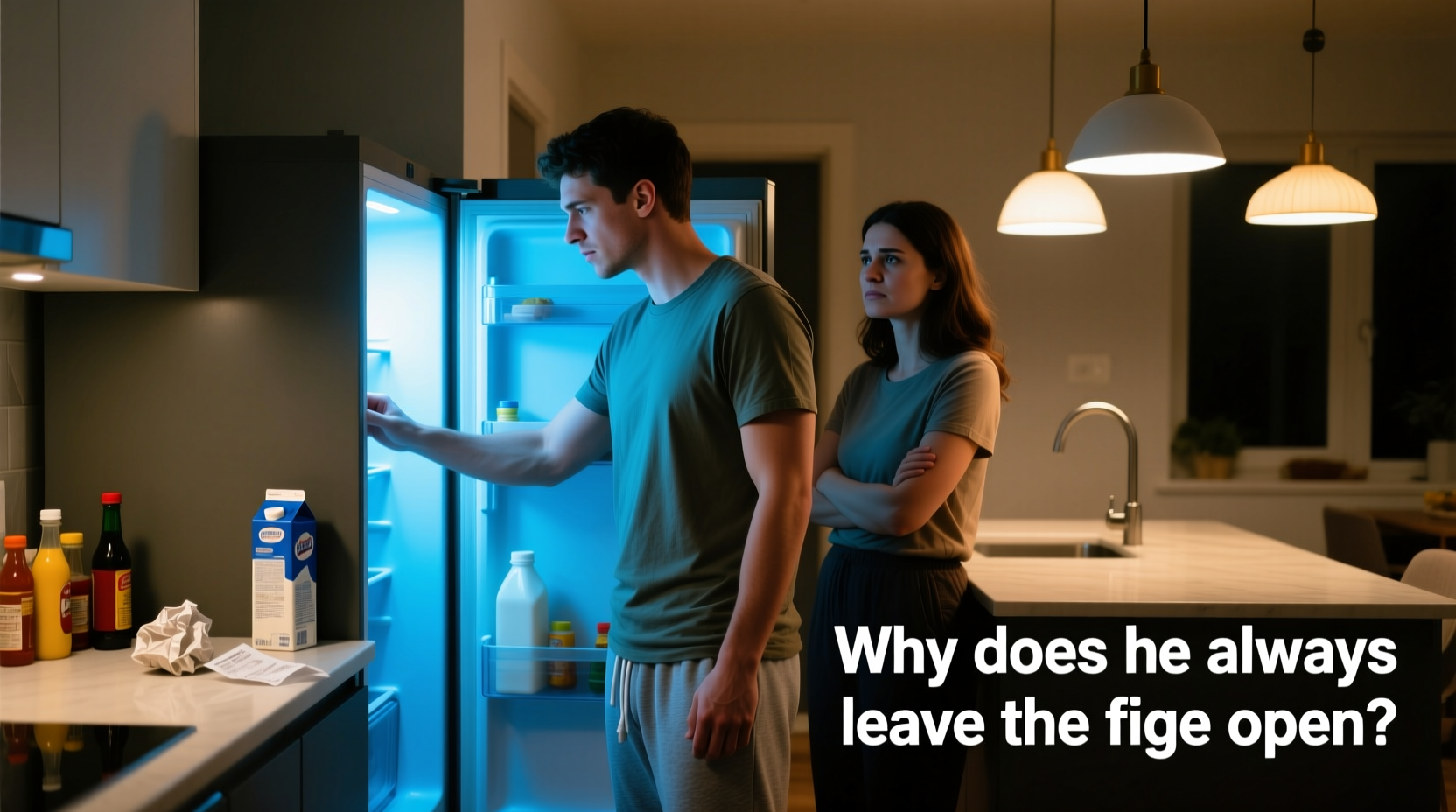
Leaving the fridge open isn’t typically an intentional act of defiance or laziness—it’s often an automatic behavior rooted in cognitive processing and habit formation. The human brain relies heavily on routines to conserve mental energy. When someone opens the fridge, their focus shifts immediately to decision-making: “What do I want to eat?” “Am I actually hungry?” “Is there anything good left?” In that moment, closing the door becomes a secondary task, easily forgotten when attention is consumed by internal dialogue.
Neuroscience supports this: the prefrontal cortex, responsible for executive function and self-regulation, may be momentarily overwhelmed during routine decisions, especially if the person is tired, distracted, or stressed. A 2021 study published in *Cognitive Psychology* found that individuals under mild cognitive load were 43% more likely to forget secondary actions (like shutting a door) after initiating a primary goal (like getting food).
In many cases, leaving the fridge open is less about disregard and more about inefficient task sequencing—a trait sometimes seen in people with high distractibility or those who operate in a state of \"flow\" between tasks without completing each step fully.
Communication Styles and Shared Living Expectations
Differences in household habits often reflect broader communication styles. For some, leaving the fridge open is so minor they don’t register it as an issue. For others, it symbolizes a lack of consideration or shared responsibility. These contrasting perspectives aren't inherently right or wrong—they highlight differing thresholds for what constitutes “respect” in cohabitation.
Psychologist Dr. Lena Reyes, who specializes in couple dynamics, explains:
“Small daily actions carry emotional weight because they become symbols. The fridge isn’t just a cooling unit—it represents attentiveness, follow-through, and mutual effort. When one partner feels unseen in these micro-moments, resentment builds over time.” — Dr. Lena Reyes, Relationship Psychologist
If this behavior triggers strong reactions, ask yourself: Is it really about the fridge? Or does it echo larger concerns—such as feeling unheard, overburdened with chores, or unappreciated in the relationship?
Consider the following scenario:
Mini Case Study: Sarah and Mark
Sarah noticed Mark frequently left the fridge open while searching for snacks late at night. Initially annoyed, she began tracking how often it happened and realized it coincided with his work stress. She also reflected on her own reaction: Was she upset about energy waste—or frustrated that she was always the one resetting things? After discussing it calmly, they agreed on a playful signal (a magnet shaped like a hand saying “Close Me”) to serve as a gentle reminder. More importantly, the conversation opened space for them to talk about workload imbalance at home. What started as a fridge issue evolved into improved teamwork.
Could It Be a Sign of ADHD or Executive Function Challenges?
For some individuals, habitual forgetfulness—including leaving appliances open—is linked to neurodevelopmental differences such as ADHD (Attention Deficit Hyperactivity Disorder). People with ADHD often struggle with executive functioning skills like task initiation, working memory, and inhibition control. This doesn’t mean they don’t care; rather, their brains process interruptions and transitions differently.
Common signs that fridge behavior might stem from executive function challenges include:
- Regularly forgetting other small tasks (e.g., turning off lights, locking doors)
- Difficulty transitioning between activities
- Frequent distractions mid-task
- Strong intention to remember but consistent failure to follow through
If this pattern fits your boyfriend’s behavior across multiple areas of life—not just the kitchen—it may be worth exploring further. However, avoid diagnosing; instead, approach the topic with curiosity: “I’ve noticed we both forget little things sometimes. Have you ever thought about how your focus works best?”
Practical Solutions: Turning Awareness Into Action
Understanding the root cause is only half the battle. Lasting change requires practical strategies tailored to your relationship dynamic. Below is a step-by-step guide to addressing the issue constructively.
Step-by-Step Guide: Resolving the Open Fridge Issue
- Observe Without Judgment: Track how often it happens and under what circumstances (time of day, mood, fatigue level).
- Pick a Calm Moment to Talk: Avoid confrontation during or right after the incident. Choose a neutral time when both of you are relaxed.
- Use “I” Statements: Frame the concern around your feelings, not blame. Example: “I feel anxious when the fridge is left open because I worry about food safety.”
- Collaborate on a Solution: Ask for input. Maybe he didn’t realize it was noticeable. Invite joint problem-solving.
- Implement Visual or Auditory Cues: Place a sticky note, use a door alarm, or attach a humorous sign (“Cold Air Escaping – Close the Gate!”).
- Reinforce Positive Change: Acknowledge improvements. A simple “Thanks for remembering to shut it!” goes a long way.
Do’s and Don’ts When Addressing the Behavior
| Do’s | Don’ts |
|---|---|
| Do express how the behavior affects you personally | Don’t label him as careless or irresponsible |
| Do offer help—like organizing the fridge for quicker access | Don’t bring it up repeatedly in anger |
| Do acknowledge progress, even small ones | Don’t compare him to others (“Even my dad remembers to close it!”) |
| Do consider environmental fixes (better lighting inside fridge, labels) | Don’t make it a litmus test for love or respect |
When It’s More Than Just the Fridge
Sometimes, a single behavior acts as a proxy for deeper relational imbalances. If you find yourself obsessing over the fridge door, ask: Are there other unresolved tensions beneath the surface? Common underlying issues include:
- Unequal division of household labor
- Lack of emotional reciprocity
- Different standards of cleanliness or order
- Unmet needs for recognition or partnership
In relationships where one person consistently manages logistics and maintenance (the “mental load”), small oversights like an open fridge can become symbolic flashpoints. According to a 2023 survey by the American Sociological Association, 68% of women in heterosexual couples reported carrying the majority of invisible household responsibilities—planning, organizing, reminding—leading to heightened sensitivity around seemingly minor lapses.
If this resonates, the solution isn’t nagging better fridge etiquette. It’s rebalancing the mental load. Start by mapping out all household tasks—not just physical chores, but planning meals, scheduling repairs, remembering birthdays. Share the list. Discuss which responsibilities each of you naturally handles and explore redistributing based on capacity, not assumption.
Checklist: Rebalancing Household Responsibilities
- ✅ List all recurring household tasks (visible and invisible)
- ✅ Assign current responsibility for each
- ✅ Identify tasks causing stress or resentment
- ✅ Negotiate fair redistribution
- ✅ Set regular check-ins (every 4–6 weeks)
- ✅ Use shared tools (calendar apps, chore charts) for transparency
FAQ: Common Questions About the Open Fridge Habit
Is leaving the fridge open a sign of disrespect?
Not necessarily. While it can feel disrespectful if it happens repeatedly without acknowledgment, most people aren’t intentionally disregarding their partner. Context matters: frequency, response to feedback, and overall pattern of consideration determine whether it reflects apathy or mere habit.
Can changing the fridge setup help reduce the problem?
Absolutely. Poor internal organization forces longer search times, increasing the chance the door stays open. Try labeling shelves, grouping items by category, improving lighting, or placing frequently used foods at eye level. A well-organized fridge reduces decision fatigue and makes closure more automatic.
Should I keep track of how often it happens?
Tracking can be useful—for insight, not ammunition. Note occurrences for a week without comment. Then use the data to show patterns objectively: “I noticed it happened five times this week, mostly late at night. Any idea why?” This removes emotion and invites collaboration.
Conclusion: Small Actions, Meaningful Conversations
The open fridge may seem trivial, but it touches on themes that matter deeply in any relationship: awareness, effort, and mutual care. Rather than viewing it as a flaw to correct, treat it as an invitation to understand your partner’s world a little better. Is he overwhelmed? Distracted? Unaware? Or is this a symptom of broader imbalance?
Every relationship has its quirks. What separates functional partnerships from strained ones isn’t perfection—it’s the willingness to communicate openly, adapt, and grow together. So next time you see that glowing rectangle inviting warm air into its cool sanctuary, take a breath. See it not as a failing, but as a prompt: a chance to connect, clarify, and maybe even laugh about the absurdity of sharing space with another imperfect human being.




 浙公网安备
33010002000092号
浙公网安备
33010002000092号 浙B2-20120091-4
Comments
No comments yet. Why don't you start the discussion?