
It starts with excitement—a date planned, meaningful conversation, physical closeness, even the promise of something real. Then, without warning, he disappears. No calls. No texts. Just silence. You're left wondering: What did I do wrong? The truth is, ghosting isn't usually about you. It's a behavioral pattern rooted in deeper psychological mechanisms—fear of intimacy, emotional immaturity, attachment insecurities, and avoidance coping strategies. Understanding these underlying drivers can help you make sense of the silence and protect your emotional well-being.
The Psychology Behind Post-Date Ghosting
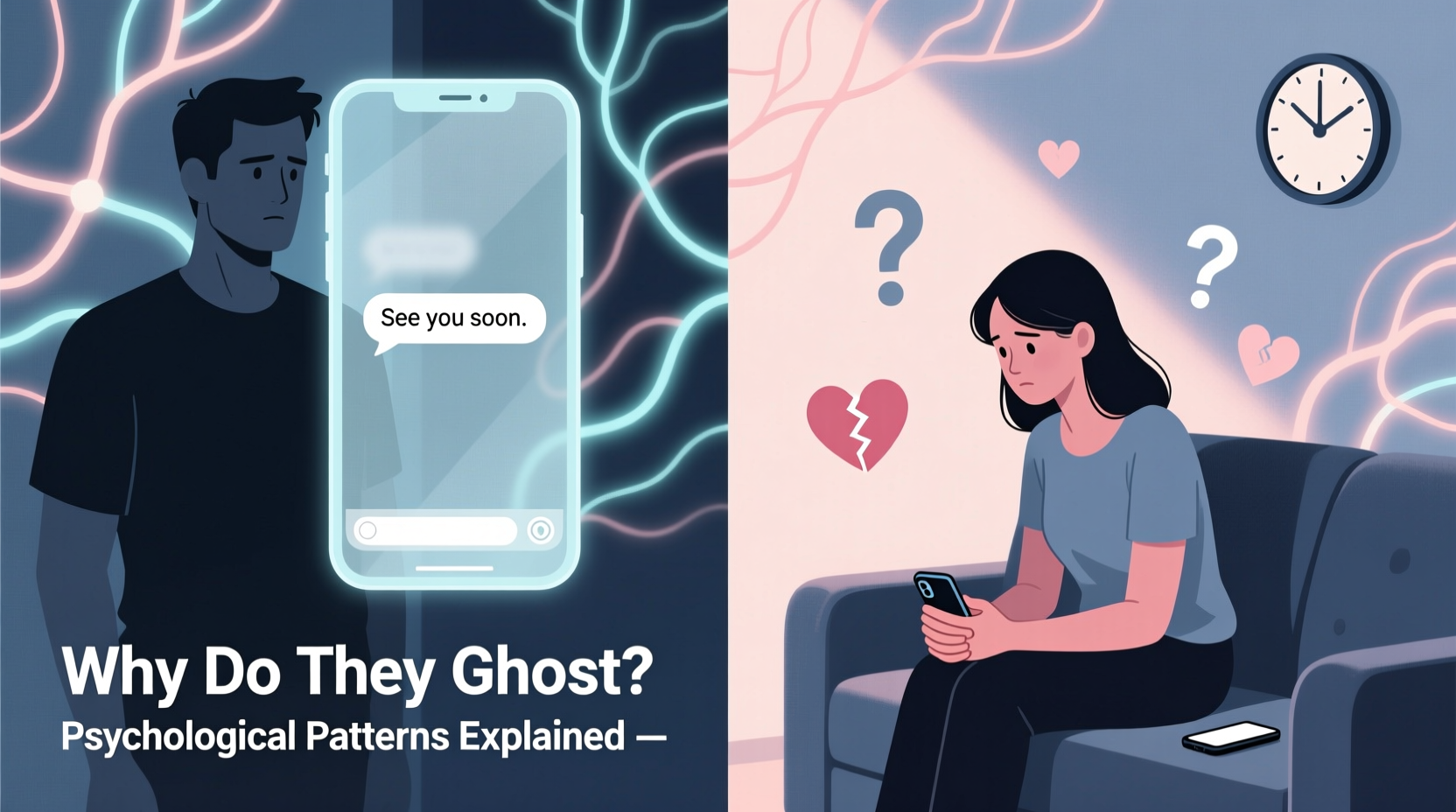
Ghosting—the abrupt cessation of communication without explanation—is more than just rudeness. It’s a defense mechanism. After spending time together, especially if the interaction was emotionally or physically intimate, some individuals experience a surge of anxiety. The connection triggers subconscious fears of vulnerability, commitment, or rejection. Instead of processing those feelings, they retreat.
Psychologists classify this as an avoidant response. In attachment theory, people with avoidant-dismissive or fearful-avoidant tendencies often pull away when intimacy increases. They may enjoy the initial chase but become overwhelmed once emotional proximity grows. The hangout becomes a threshold moment: crossing it creates pressure to define the relationship, which feels threatening to someone emotionally unprepared.
“Intimacy triggers both desire and fear. For those with unresolved attachment wounds, closeness can feel like entrapment, leading them to flee before they’re ‘trapped.’” — Dr. Lena Peterson, Clinical Psychologist & Attachment Specialist
Common Psychological Patterns That Drive Ghosting
Behind every instance of post-hangout ghosting lies one or more recurring psychological dynamics. Recognizing these can help you differentiate between temporary hesitation and chronic emotional unavailability.
1. Fear of Intimacy and Emotional Closeness
Some people crave connection but panic when it becomes real. A great date may spark genuine attraction, but that same attraction activates deep-seated fears of engulfment or loss of autonomy. Rather than communicate discomfort, they disengage completely. This isn’t malice—it’s self-protection gone awry.
2. Avoidant Attachment Style
Individuals with avoidant attachment often grew up in environments where emotional needs were dismissed. As adults, they equate closeness with dependency and view independence as safety. When a hangout introduces emotional reciprocity, their instinct is to withdraw to maintain control.
3. Low Self-Esteem and Projection
Paradoxically, someone who feels unworthy of love may sabotage budding relationships. They anticipate eventual rejection and preempt it by disappearing first. By ghosting, they regain a sense of control: “I didn’t get rejected—I left first.”
4. Decision Paralysis and Conflict Avoidance
Not everyone ghosts out of malice or fear. Some simply lack the emotional tools to say, “I’m not interested,” or “I’m confused about this.” Saying nothing feels easier than having a difficult conversation. This reflects poor communication skills rather than ill intent—but the impact on the recipient is the same.
5. Situational Stressors and External Pressures
Life circumstances—job stress, family issues, mental health struggles—can also trigger withdrawal. A man might enjoy your company but feel incapable of sustaining emotional energy for a new relationship. Instead of explaining, he defaults to silence, mistakenly believing it’s “kinder” than honesty.
Red Flags vs. Misunderstandings: How to Tell the Difference
Not every period of silence is ghosting. Sometimes, delays in communication stem from genuine busyness or social anxiety. The key is consistency and context. Use the following checklist to assess whether the behavior fits a concerning pattern.
✅ Checklist: Is This Ghosting or a Communication Gap?
- Did he initiate plans and seem enthusiastic during the hangout?
- Has he responded to messages at all since then, even briefly?
- Is there a history of inconsistent communication before the date?
- Have external factors (illness, travel, work crisis) been mentioned?
- Did he ever express uncertainty about dating or emotional readiness?
If he was engaged, responsive, and then vanished without explanation—especially after physical or emotional intimacy—it’s likely ghosting. If he’s normally inconsistent or recently shared personal stressors, allow space—but set boundaries on how long you’ll wait.
Real Example: Sarah’s Experience With Post-Date Disappearance
Sarah, 29, went on a third date with Mark, a man she met through mutual friends. Their chemistry was strong. They kissed at the end of the evening. The next day, she texted a lighthearted message referencing something he’d said. He read it—but never replied. Days passed. She followed up gently. Still nothing.
Confused, she reached out to a friend who knew Mark. Eventually, she learned he had been seeing multiple people casually and panicked when things felt “serious” after the kiss. He admitted later (through a mutual contact) that he “didn’t want to hurt her” and thought fading away was “easier.”
Sarah realized his silence wasn’t about her—it reflected his inability to handle emotional accountability. While painful, the experience helped her recognize that emotional maturity matters more than charm or chemistry.
Do’s and Don’ts When Facing Post-Hangout Silence
| Do’s | Don’ts |
|---|---|
| Give a reasonable window (3–5 days) before assuming ghosting | Don’t bombard with multiple messages or calls |
| Send one clear, calm follow-up: “Hey, I enjoyed our time. Not sure if you’re busy or not interested, but I’d appreciate clarity.” | Don’t apologize or blame yourself |
| Respect your own boundaries—stop initiating if ignored | Don’t confront via social media or mutual friends |
| Reflect on patterns: Has this happened before with others? | Don’t idealize or rationalize his behavior |
| Prioritize people who show up consistently | Don’t wait indefinitely for an explanation |
How to Protect Your Emotional Well-Being
Being ghosted doesn’t reflect your value—it reflects someone else’s limitations. But repeated experiences can erode self-trust. Here’s how to rebuild and safeguard your emotional health.
Step-by-Step: Recovering From Ghosting
- Acknowledge the hurt. Allow yourself to feel disappointment without judgment. Denial prolongs healing.
- Reframe the narrative. Instead of “He didn’t like me,” consider “He couldn’t handle intimacy.”
- Assess your dating patterns. Are you drawn to emotionally unavailable partners? Journaling can reveal unconscious choices.
- Set communication expectations early. In future interactions, observe responsiveness and consistency from the start.
- Practice selective vulnerability. Share gradually, not immediately. Let actions—not words—determine trust.
- Invest in self-validation. Build confidence outside dating: hobbies, friendships, therapy, goals.
Frequently Asked Questions
Can ghosting ever be justified?
In rare cases, yes—if there are safety concerns (e.g., harassment, manipulation), cutting contact may be necessary. But in standard dating scenarios, ghosting is emotionally immature. Even a simple “I’m not looking for anything serious” respects the other person’s dignity.
Should I confront him if he reappears?
You can—but only if you’re seeking closure, not reconciliation. Ask clearly: “When we stopped talking, I felt confused and disrespected. Can you help me understand what happened?” His response will tell you everything: defensiveness signals no growth; accountability suggests possible change.
Does ghosting mean he wasn’t interested at all?
Not necessarily. Many ghosters are highly interested—too interested. The intensity scares them. They don’t disappear because they dislike you; they disappear because they *do* like you, and that brings up fear of expectation, obligation, or heartbreak.
Breaking the Cycle: Building Healthier Relationship Foundations
Understanding why men ghost isn’t about excusing it—it’s about empowering yourself to choose differently. The right partner won’t leave you guessing. Emotional availability looks like consistency, direct communication, and effort—even when things get complicated.
If you’ve been ghosted repeatedly, examine your attraction patterns. Do you confuse intensity with intimacy? Are you overly accommodating to win approval? Therapy or self-reflection can help break cycles of pursuing emotionally elusive partners.
“The healthiest relationships aren’t the most passionate—they’re the most predictable. You know where you stand because the person shows up, again and again.” — Dr. Rajiv Mehta, Couples Therapist
Conclusion: Choose Clarity Over Confusion
Ghosting is a reflection of emotional limitation, not your worth. When someone vanishes after a meaningful hangout, they’re revealing their inability to handle closeness—not a flaw in you. Use these moments as data points, not verdicts on your desirability.
Move forward with compassion—for yourself and even for him—but don’t wait for closure that may never come. Invest your energy in people who meet you with honesty and presence. The right connection won’t require decoding silence. It will speak clearly, consistently, and kindly.




 浙公网安备
33010002000092号
浙公网安备
33010002000092号 浙B2-20120091-4
Comments
No comments yet. Why don't you start the discussion?