
Cats are creatures of comfort—but not always in the ways we expect. While you’ve carefully provided a plush cat bed, warm blanket, or cozy corner, your feline may have chosen to nap inside an empty cardboard box, atop the refrigerator, or curled up in the bathroom sink. These seemingly odd choices aren’t random quirks; they’re deeply rooted in instinct, environment, and emotional well-being. Understanding why your cat sleeps in strange places offers valuable insight into their psychology, health, and relationship with you.
Domestication hasn't erased thousands of years of evolutionary programming. Even the most pampered house cat retains survival instincts from its wild ancestors. Where a cat chooses to sleep often reflects a complex interplay of temperature regulation, security, territorial awareness, and sensory preferences. By decoding these behaviors, you can better meet your cat’s needs—and perhaps even predict their next favorite napping spot.
The Evolutionary Roots of Unusual Sleeping Spots
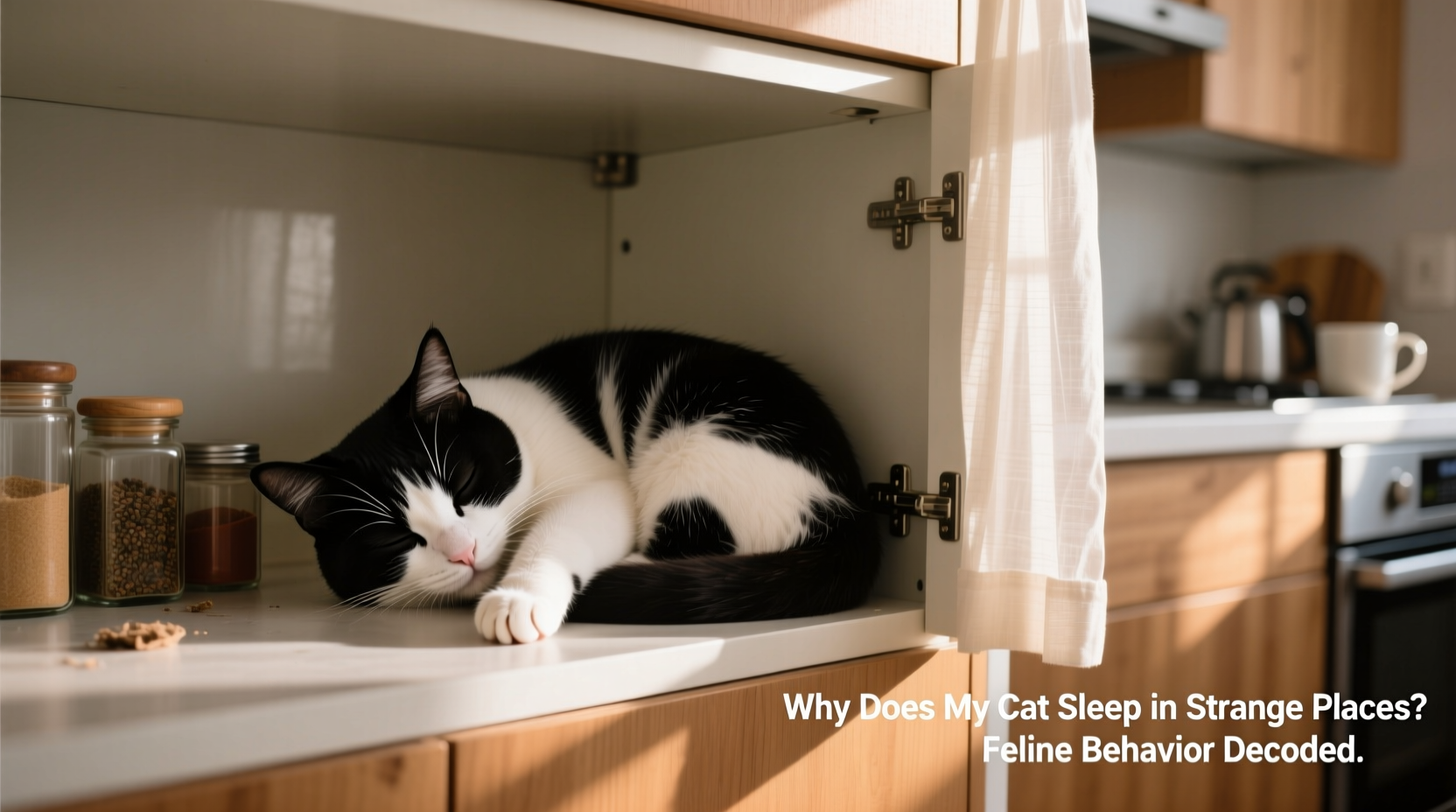
In the wild, cats are both predators and prey. Though skilled hunters, small felines remain vulnerable to larger animals, especially during rest. This dual role shaped a cautious approach to sleeping: safety is prioritized over comfort. Your cat’s choice of an unusual sleeping location may be a direct echo of ancestral survival strategies.
High vantage points—like bookshelves, cabinets, or the top of a doorframe—offer a strategic advantage. From above, cats can monitor their surroundings, detect movement, and escape quickly if needed. Similarly, confined spaces such as drawers, boxes, or under beds mimic the enclosed dens wild cats would seek for protection from weather and predators.
“Cats don’t just sleep where it’s comfortable—they sleep where they feel safest. That sense of security often trumps softness.” — Dr. Lena Patel, Feline Behavior Specialist, University of Edinburgh
This explains why a $50 orthopedic cat bed might be ignored in favor of a paper bag. The crinkly texture and enclosed space provide auditory feedback and physical boundaries that signal safety. Meanwhile, an open, low-lying bed may feel exposed and insecure.
Temperature and Sensory Preferences at Play
Another major factor influencing your cat’s sleeping habits is thermoregulation. Cats maintain a higher body temperature than humans—around 100–102.5°F (37.8–39.2°C)—and prefer ambient temperatures between 86–97°F (30–36°C). This means they’re constantly seeking microclimates that help them conserve energy and stay warm—or cool, depending on the season.
You’ll often find cats sleeping in sunbeams, on heated electronics, or nestled against radiators in winter. In summer, they may retreat to cool tile floors, bathtubs, or inside unused ovens (always check before turning appliances on!). These choices aren’t whimsical; they’re calculated responses to thermal comfort.
Sensory input also plays a key role. Cats rely heavily on scent and touch. A laundry basket full of recently worn clothes carries your scent, offering emotional reassurance. The texture of certain materials—such as plastic bins, vinyl chairs, or metal surfaces—may appeal due to their distinct feel or retained warmth.
Common Strange Sleeping Spots—And What They Mean
While every cat has individual preferences, certain locations appear repeatedly across households. Below is a breakdown of popular “odd” sleeping zones and the likely motivations behind them.
| Location | Possible Reasons | What It Suggests About Your Cat |
|---|---|---|
| Bathroom sink or tub | Cool surface, enclosed space, proximity to water sounds | Seeks temperature control and quiet; may enjoy white noise from dripping faucets |
| Cardboard boxes | Enclosed space, insulation, crinkly sound | Values security and tactile stimulation; mimics den-like safety |
| Top of refrigerator or bookshelf | Elevated view, warmth from appliance, isolation | Vigilant personality; desires oversight of territory |
| Inside closets or drawers | Darkness, limited access, familiar scents | May be shy, stressed, or seeking privacy; drawn to owner’s scent |
| On keyboards or laptops | Warmth, attention-seeking, scent marking | Attentive to human interaction; uses proximity to bond or redirect focus |
Note that while many of these behaviors are normal, sudden shifts in sleeping patterns—especially toward isolation or extreme hiding—can indicate illness or stress. A cat that once slept beside you but now consistently hides under the bed may be experiencing pain, anxiety, or environmental changes that need attention.
When Strange Sleeping Habits Signal Stress or Health Issues
Occasional odd sleeping spots are typical. But when combined with other behavioral changes, they can serve as early warning signs. Cats are masters at concealing discomfort, so subtle shifts in routine often precede visible symptoms.
Consider the following red flags:
- Sleeping in unusually cold or damp areas (e.g., basement floor)
- Avoiding favorite spots or people
- Increased vocalization during rest periods
- Limited mobility when getting up from sleep
- Changes in grooming or appetite alongside new sleeping habits
For example, arthritis can make jumping difficult, causing a senior cat to choose lower, harder surfaces—even if less comfortable—because they’re easier to access. A cat with respiratory issues might avoid enclosed spaces due to restricted airflow, opting instead for open, elevated perches where breathing feels easier.
“Behavioral changes are often the first clue to underlying medical conditions in cats. A shift in sleeping location should never be dismissed as mere quirkiness.” — Dr. Rafael Mendez, DVM, Veterinary Internal Medicine Consultant
If your cat begins sleeping in places that seem dangerous (like inside washing machines or near heaters), investigate immediately. Install child-safe locks on appliances and block off risky zones. More importantly, schedule a vet visit to rule out pain, neurological issues, or cognitive decline, especially in older cats.
How to Encourage Safer, More Predictable Sleeping Habits
You can’t force a cat to change their preferences overnight—but you can gently guide them toward safer, more suitable options. The key is understanding their needs and offering better alternatives, not restrictions.
Step-by-Step Guide to Redirecting Sleeping Behavior
- Observe and document – Track where your cat sleeps, at what times, and under what conditions (temperature, light, household activity).
- Identify the motivation – Is it warmth? Height? Seclusion? Scent? Match the reason to potential solutions.
- Create superior alternatives – Place a heated cat bed near a sunny window if they love warmth. Add a fleece-covered perch on a shelf if height is key.
- Incorporate familiar scents – Rub a soft blanket with your hands or place an unwashed shirt nearby to encourage use through scent association.
- Use positive reinforcement – Reward your cat with treats or affection when they use the desired spot—not by forcing them, but by celebrating natural choices.
- Gradually phase out access to unsafe areas – Close doors to rooms with hazards, or use motion-activated deterrents (like air puffs) near forbidden zones.
Mini Case Study: Luna and the Laundry Basket
Luna, a 4-year-old tortoiseshell cat, had a habit of sleeping exclusively in her owner’s laundry basket—specifically on top of freshly washed jeans. Her owner, Sarah, was frustrated: the cat shed on clean clothes, and she worried about allergens.
After tracking Luna’s behavior, Sarah noticed a pattern: Luna chose the basket only after laundry day, never before. The jeans carried Sarah’s scent strongly, and the fabric was still slightly warm from the dryer. Luna wasn’t attached to the basket itself—she was drawn to the combination of heat and personal scent.
Sarah placed a small fleece mat inside a cat cave bed and warmed it with a rice sock (microwaved for 30 seconds). She then rubbed the mat with a worn T-shirt. Within three days, Luna began using the new bed regularly. The laundry basket was moved to a closed closet, and the problem resolved without conflict.
This case illustrates how identifying the root cause—rather than reacting to the behavior—leads to humane, effective solutions.
Frequently Asked Questions
Is it normal for my cat to sleep in the litter box?
No, this is not normal and may indicate a serious issue. Possible causes include urinary tract infections, litter box aversion, stress, or competition with other pets. A vet visit is strongly recommended if your cat is sleeping in the litter box.
Why does my cat sleep on my head or chest?
This behavior combines warmth, bonding, and territorial marking. Your head emits heat, and your steady breathing is soothing. By resting close to your face, your cat also deposits facial pheromones, reinforcing social connection. As long as it doesn’t disrupt your sleep, this is a sign of deep trust.
Should I be concerned if my cat sleeps in high places?
Not inherently. High places fulfill natural instincts for observation and safety. However, ensure the area is secure—no unstable furniture or open ledges. Older cats may struggle to climb down, so provide ramps or steps if needed.
Action Checklist: Supporting Healthy Cat Sleep Habits
Use this checklist to assess and improve your cat’s sleeping environment:
- ✅ Identify all current sleeping spots and note patterns
- ✅ Rule out medical issues if behavior changes suddenly
- ✅ Provide multiple sleeping options at different heights and temperatures
- ✅ Use your scent (via worn clothing or blankets) to make new beds appealing
- ✅ Secure hazardous areas (appliances, balconies, high shelves with no exit)
- ✅ Monitor seasonal adjustments—add cooling or heating aids as needed
- ✅ Avoid punishing or startling your cat when found in odd places
Conclusion: Embracing the Quirks, Enhancing the Bond
Your cat’s tendency to sleep in strange places isn’t defiance or confusion—it’s communication. Each choice reflects a blend of instinct, comfort, and emotional state. Rather than correcting these behaviors, aim to understand them. When you do, you gain more than predictable routines; you deepen your connection with a creature who trusts you enough to let their guard down, even if it’s inside a shoebox.
Start today: observe one sleep session without interference. Note the location, time, and conditions. Ask yourself: what need is being met here? Then, offer a better version of that experience—one that keeps your cat safe, content, and close to you.




 浙公网安备
33010002000092号
浙公网安备
33010002000092号 浙B2-20120091-4
Comments
No comments yet. Why don't you start the discussion?