
Cats are enigmatic companions. One moment they’re curled up in your lap, purring softly; the next, they’re frozen in place, eyes locked on a blank stretch of wall with intense focus. You might wonder: is my cat seeing ghosts? Is something wrong? While occasional odd behavior is normal, persistent or extreme actions can signal underlying issues—medical, environmental, or psychological. Veterinary behaviorists and feline experts have spent years decoding these quirks. Understanding them not only deepens your bond but also ensures your cat’s well-being.
The Science Behind Wall-Staring: What Your Cat Might Be Seeing
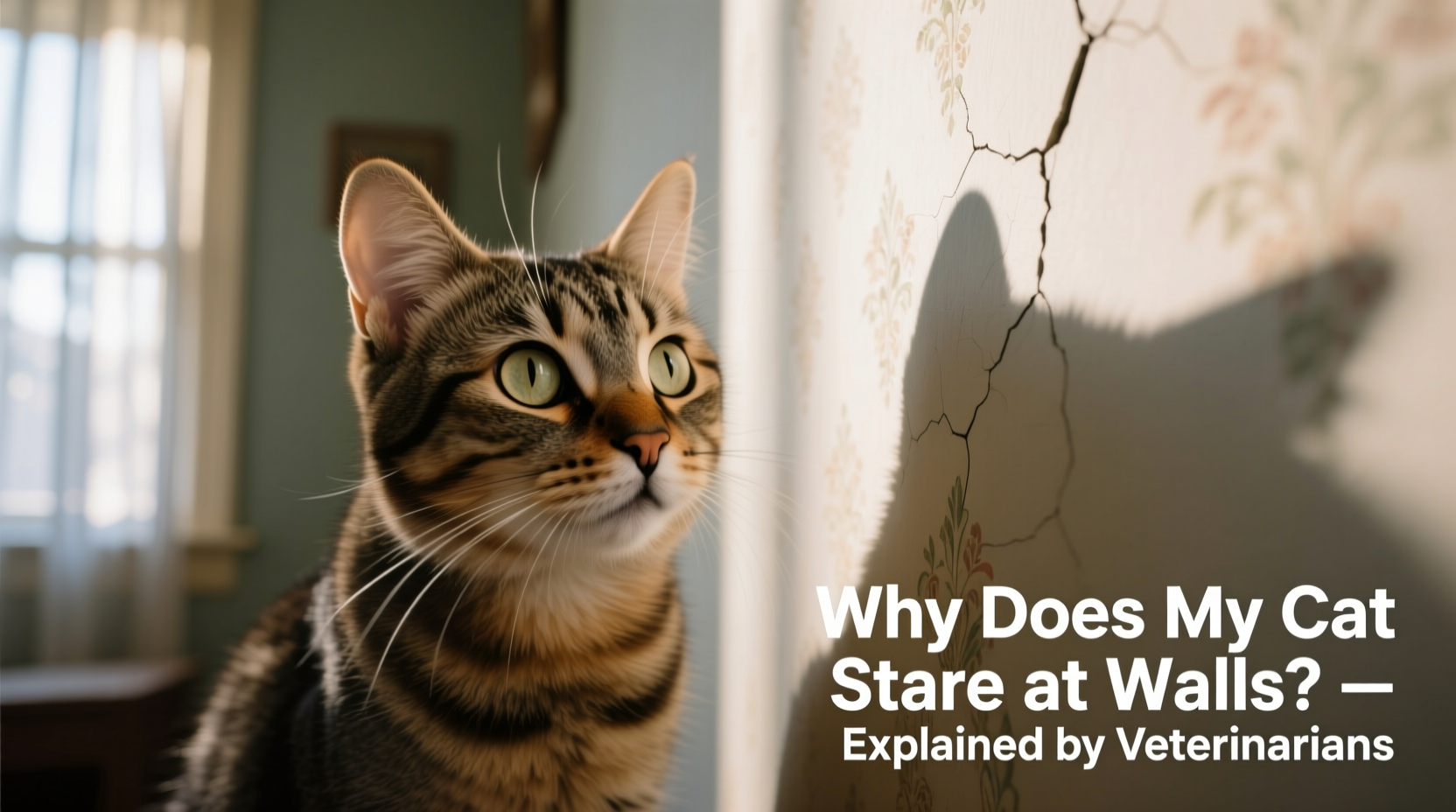
At first glance, a cat staring at a wall seems irrational. But cats perceive the world differently than humans. Their vision excels in low light, and they detect subtle movements invisible to us. What appears as a blank wall to you could be alive with flickering shadows, dust motes dancing in sunlight, or even insects moving behind baseboards.
Dr. Sarah Ellis, co-author of *The Trainable Cat* and feline behavior expert at the University of Lincoln, explains:
“Cats have a higher flicker fusion rate than humans, meaning they can detect rapid changes in light that we simply don’t see. A fluorescent light buzzing overhead may appear to strobe to a cat, creating visual disturbances on the wall.”
In addition, cats rely heavily on their peripheral vision. A slight movement at the edge of their field—like a curtain swaying or a fly crawling—can trigger a full-alert response. This hyper-awareness evolved from their predatory instincts. Even indoor cats retain this wiring, making them prone to reacting to stimuli we overlook.
When Staring Crosses the Line: Signs of Compulsive or Medical Issues
Occasional wall-gazing is usually harmless. But if your cat spends minutes—or hours—fixed on one spot, shows no reaction to stimuli, or exhibits other unusual symptoms, it may indicate a deeper issue.
Prolonged staring can be linked to:
- Epilepsy or seizures: Cats experiencing partial (focal) seizures may appear “zoned out,” with glazed eyes and unresponsiveness. These episodes can last seconds to minutes and may be followed by disorientation.
- Vision problems: Cataracts, retinal detachment, or high blood pressure affecting the eyes can cause hallucinations or misinterpretation of surroundings.
- Cognitive dysfunction: Older cats (10+ years) may develop feline cognitive decline, similar to dementia in humans, leading to confusion and repetitive behaviors.
- Pain or discomfort: Chronic pain, especially dental or neurological, can cause a cat to withdraw and fixate aimlessly.
A 2021 study published in the *Journal of Feline Medicine and Surgery* found that nearly 30% of cats exhibiting compulsive staring had an underlying medical condition, most commonly hypertension or ocular disease.
Red Flags That Warrant a Vet Visit
- Staring lasts longer than a few minutes without purpose.
- Accompanied by twitching, drooling, or loss of balance.
- Sudden change in personality or routine.
- Meowing at walls or apparent hallucinations.
- Other behavioral shifts like aggression, litter box avoidance, or excessive grooming.
Decoding Other Strange Cat Behaviors Experts See Daily
Wall-staring is just one of many puzzling feline habits. Veterinarians and animal behaviorists regularly encounter owners baffled by their pets’ actions. Here’s what science says about other common oddities:
Tail Chasing or Biting
While often dismissed as playful, obsessive tail-chasing can indicate flea infestations, skin allergies, or even a condition called feline hyperesthesia syndrome—a neurological disorder causing rippling skin, vocalization, and sudden bursts of self-directed aggression.
Sudden “Zoomies” at 3 a.m.
Nighttime sprints aren’t mischief—they reflect natural crepuscular rhythms. Cats are most active at dawn and dusk. Indoor cats, deprived of hunting opportunities, release pent-up energy in short, explosive bursts.
Licking Plastic Bags or Paper
This oral fixation may stem from early weaning, nutritional deficiencies, or sensory appeal. The crinkling sound and texture mimic prey movement, triggering instinctual interest.
Sitting in Boxes, Sink Bowls, or Unusual Spaces
Experts agree: confined spaces provide security. A 2019 study in *Applied Animal Behaviour Science* showed that shelter cats given boxes adapted faster to new environments due to reduced stress.
“The smaller the space, the safer a cat feels. It’s not about comfort—it’s about control over their environment.” — Dr. Karen Overall, Veterinary Behaviorist
Checklist: How to Respond to Your Cat’s Odd Behaviors
Before assuming the worst, follow this step-by-step evaluation:
- ✅ Observe frequency and duration: Is this a one-time event or recurring?
- ✅ Note environmental triggers: Time of day, lighting, sounds, or recent changes?
- ✅ Assess overall health: Any changes in appetite, litter use, or activity level?
- ✅ Rule out medical causes: Schedule a vet visit with bloodwork and blood pressure check.
- ✅ Enrich the environment: Add vertical space, puzzle feeders, and scheduled play sessions.
- ✅ Avoid punishment: Never yell or startle your cat during episodes—it increases anxiety.
- ✅ Consult a specialist: If behavior persists, seek a veterinary behaviorist.
Real Example: Bella’s Mysterious Wall Fixation
Maria, a cat owner from Portland, noticed her 7-year-old tabby, Bella, began spending increasing time staring at a corner near the kitchen. At first, she assumed Bella saw a spider. But when the behavior lasted 15 minutes daily and was followed by drooling and twitching, Maria grew concerned.
She recorded a video and brought it to her vet. After examination, Bella was diagnosed with mild hypertension—a common but often silent condition in middle-aged cats. Elevated blood pressure had affected her vision, causing visual distortions. With medication and dietary adjustments, Bella’s episodes stopped within three weeks.
This case highlights how seemingly bizarre behavior can be a cry for help—and why timely intervention matters.
Do’s and Don’ts: Managing Strange Cat Behaviors
| Do’s | Don’ts |
|---|---|
| Provide daily interactive play with wand toys to satisfy hunting instincts. | Ignore sudden or severe behavioral changes. |
| Use pheromone diffusers (like Feliway) to reduce environmental stress. | Punish or shout at your cat during odd episodes. |
| Keep a consistent routine for feeding, play, and sleep. | Assume all weird behaviors are “just cats being cats.” |
| Schedule annual vet checkups, including blood pressure screening for cats over 7. | Overload the environment with too many changes at once. |
| Introduce new enrichment tools gradually—cardboard tunnels, treat balls, window perches. | Leave your cat alone for long periods without stimulation. |
Frequently Asked Questions
Is it normal for cats to stare at nothing?
Yes, occasionally. Cats often react to imperceptible stimuli like air currents, sounds, or light reflections. However, prolonged or repetitive staring should be evaluated by a vet to rule out medical causes.
Can cats see spirits or ghosts?
There’s no scientific evidence that cats see supernatural entities. However, their acute senses allow them to detect things we cannot—such as high-frequency sounds, infrared heat patterns, or minute vibrations—which may create the illusion of reacting to “nothing.”
Why does my cat meow at the wall?
Meowing at walls may indicate frustration, confusion, or an attempt to communicate with perceived movement. In older cats, it can be a sign of cognitive decline. If accompanied by pacing or nighttime vocalization, consult your veterinarian.
Creating a Calmer Environment: A Step-by-Step Guide
If your cat displays odd behaviors rooted in stress or overstimulation, follow this timeline to improve their mental well-being:
- Week 1: Observation & Baseline
Track when and where behaviors occur. Note triggers like loud noises, visitors, or appliance use (e.g., vacuum). - Week 2: Environmental Audit
Identify stressors: lack of hiding spots, multi-cat tension, or poor litter box placement. Add vertical shelves and quiet retreats. - Week 3: Introduce Enrichment
Add two new enrichment items: a puzzle feeder and a bird-watching perch. Rotate toys weekly to maintain interest. - Week 4: Routine & Play Therapy
Implement two 10-minute play sessions daily using wand toys to simulate hunting. End with a treat to mimic the “kill-eat-groom” cycle. - Ongoing: Monitor & Adjust
Reassess monthly. If behaviors persist, consult a certified veterinary behaviorist.
Conclusion: Listen Beyond the Behavior
Cats don’t act out of boredom or spite—they respond to their environment, health, and instincts. When your cat stares at a wall, they’re not being weird; they’re communicating in the only way they know how. Whether it’s a flicker of light, a hidden pest, or an internal struggle, their behavior holds clues.
By combining observation, compassion, and professional insight, you can decode their actions and provide better care. Don’t dismiss strange habits as quirks. Instead, use them as invitations to understand your cat more deeply.




 浙公网安备
33010002000092号
浙公网安备
33010002000092号 浙B2-20120091-4
Comments
No comments yet. Why don't you start the discussion?