
There’s nothing more frustrating during the holiday season than festive lights that don’t behave as expected. You’ve carefully hung your string of Christmas lights, only to notice they flicker or blink at random—sometimes dimming, sometimes cutting out entirely. While blinking lights are often intentional in decorative sets, random or erratic blinking usually points to an underlying electrical issue. More often than not, the culprit lies in a failing fuse or poor circuit connection. Understanding how miniature incandescent and LED Christmas light strands function—and where they fail—can save you time, money, and the headache of replacing entire strings prematurely.
Modern Christmas light strands use low-voltage circuits with built-in safety features, including small glass or ceramic fuses housed inside the plug. These fuses protect the delicate bulbs from power surges and overheating. When one fails—or when connections degrade—the entire circuit can become unstable, leading to intermittent operation. This article breaks down the causes of random blinking, walks through diagnostic steps, and offers practical solutions so you can restore your display with confidence.
How Christmas Light Circuits Work
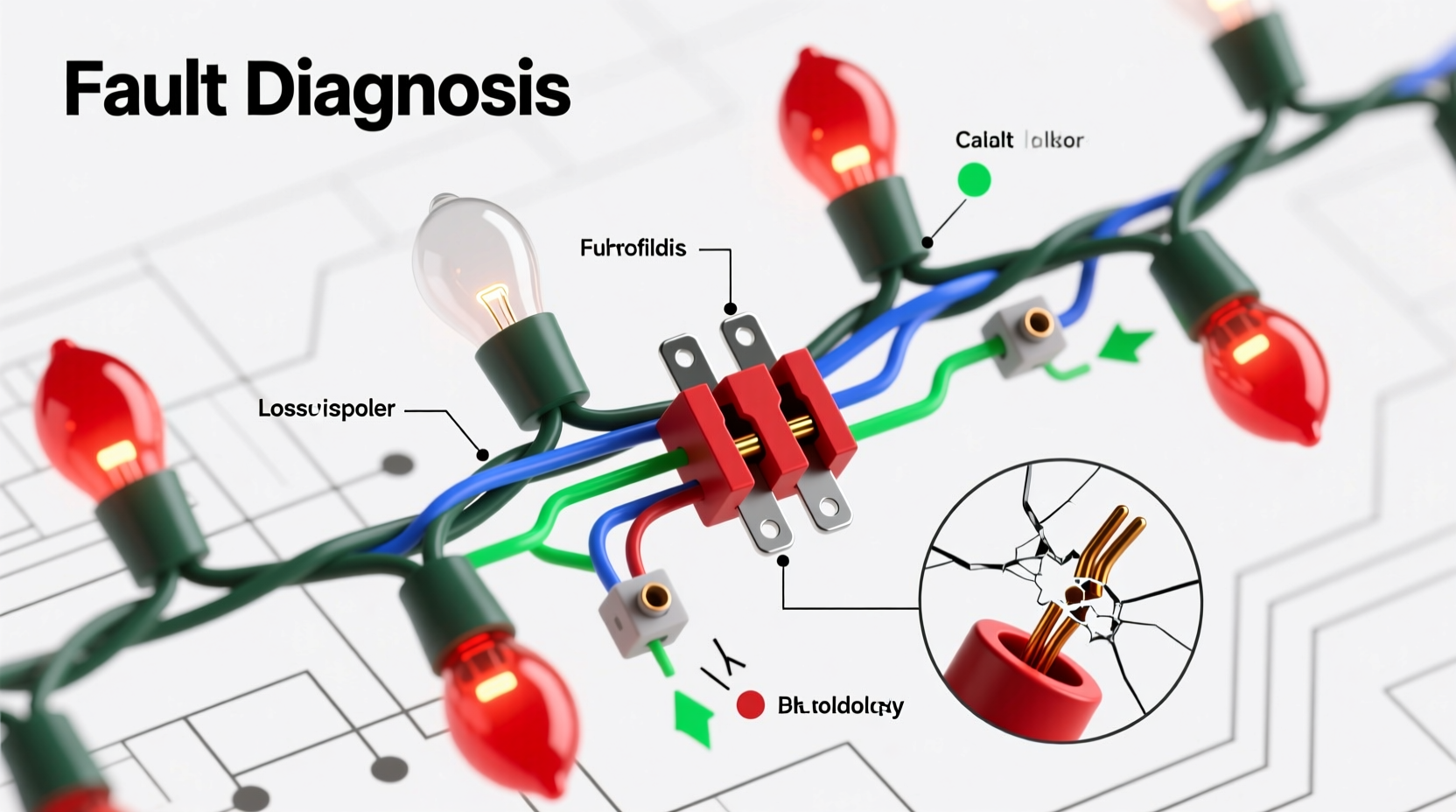
Most traditional mini-bulb Christmas light strings operate on a series circuit. In this design, electricity flows through each bulb in sequence. If one bulb burns out or becomes loose, the entire strand can go dark—unless the set includes shunt wires, which allow current to bypass dead bulbs. However, even with shunts, voltage inconsistencies or weak connections can cause erratic behavior like flickering or partial illumination.
The plug end of most light strands contains two small fuses, typically rated between 3 and 5 amps. These are designed to blow if there's a sudden surge—such as from a power spike or short circuit—preventing damage to the bulbs or fire hazards. Because many people daisy-chain multiple strands together, exceeding recommended load limits is common and often leads to premature fuse failure.
LED light strings, while more energy-efficient, still rely on similar circuit protection mechanisms. Some LED sets use rectifiers or resistors to regulate current, making them less prone to surges but not immune. Random blinking in LED strands may also stem from incompatible controllers or degraded solder joints on the circuit board near the plug.
Common Causes of Random Blinking
Random blinking isn't always due to a single fault—it can result from a combination of wear, environmental exposure, and electrical overload. Here are the most frequent causes:
- Failing or blown fuses: Even if the fuse appears intact, microscopic breaks in the filament can cause intermittent conductivity.
- Loose bulb connections: Bulbs that aren’t fully seated disrupt continuity, especially in older strands with corroded sockets.
- Damaged wire insulation: Cracks or pinches in the wiring can create short circuits or ground faults, triggering erratic behavior.
- Moisture ingress: Outdoor strands exposed to rain or snow may develop internal condensation, leading to temporary shorts.
- Overloaded circuits: Connecting too many strands together exceeds the fuse’s capacity, causing thermal cycling and flickering.
- Defective timer or controller: Built-in timers or remote-controlled modules can malfunction, sending inconsistent signals.
It’s important to differentiate between intentional blinking (controlled by a flasher bulb or digital module) and uncontrolled flickering. Intentional blinking follows a regular pattern; random blinking is irregular, unpredictable, and often worsens over time.
Step-by-Step Guide: Diagnosing and Replacing Faulty Fuses
If your light strand blinks erratically, start with the easiest and most likely fix: inspecting and replacing the fuses in the plug. Follow this process carefully.
- Unplug the strand immediately. Never work on live electrical components.
- Locate the fuse compartment. On most plugs, it’s a small sliding door on the side or bottom, secured by friction or a tiny screw.
- Remove both fuses using tweezers or a small tool. Take note of their rating—usually printed on the side (e.g., “3A” or “5A 125V”).
- Inspect visually. Hold the fuse up to the light. A broken filament or darkened glass indicates failure. But remember: some bad fuses look fine.
- Test with a multimeter (optional). Set to continuity mode. Touch probes to each end. No beep means the fuse is dead.
- Replace both fuses—even if only one looks damaged. Manufacturers recommend replacing in pairs to ensure balanced protection.
- Use exact replacements. Mismatched amperage can lead to under-protection (fire risk) or over-tripping (nuisance outages).
- Reassemble the plug and test the strand. Plug into a known-good outlet, preferably indoors first.
If the lights remain unstable after fuse replacement, the issue may lie elsewhere in the circuit. Move on to checking individual bulbs and wiring integrity.
Troubleshooting Beyond the Fuse: Bulbs, Wiring, and Connections
Once the fuses are confirmed functional, expand your diagnosis to other parts of the strand. Use a systematic approach to isolate faults.
Bulb and Socket Inspection
Walk along the strand and check each bulb. Look for:
- Darkened or blackened bulbs (signs of burnout or arcing)
- Loose fit—gently press each bulb to ensure full insertion
- Corrosion or white powder around the base (common in stored or outdoor lights)
Replace any suspect bulbs with identical replacements. Using higher-wattage bulbs can overload the circuit and cause new fuse failures.
Wiring and Continuity Checks
Inspect the entire length of the wire for cuts, kinks, or crushed sections. Pay special attention to areas near the plug and where the strand was bent during storage.
For advanced users, a multimeter can test continuity between the plug prongs and various points along the strand. Breaks in continuity indicate a severed wire, often requiring splicing or section replacement.
Daisy-Chaining Issues
Many people connect 5, 10, or even more strands together. However, most manufacturers specify a maximum of 3–5 sets per circuit. Exceeding this draws excess current, overheating fuses and causing thermal expansion/contraction—leading to intermittent contact and blinking.
“Overloading is the number one reason we see premature fuse failure in holiday lights. People don’t realize that stacking strings multiplies the load exponentially.” — Carlos Mendez, Electrical Safety Technician, Consumer Lighting Institute
Checklist: Fix Your Blinking Lights in Under 30 Minutes
Follow this concise checklist to quickly identify and resolve the issue:
- ✅ Unplug the light strand
- ✅ Locate and remove fuses from the plug
- ✅ Visually inspect fuses for damage
- ✅ Test fuses with a multimeter (if available)
- ✅ Replace both fuses with correct-rated spares
- ✅ Reinsert all bulbs firmly into sockets
- ✅ Inspect wiring for visible damage
- ✅ Plug in and test indoors on a short cycle
- ✅ If blinking persists, disconnect additional strands and retest
- ✅ Consider retiring old or repeatedly failing sets
Mini Case Study: The Garage-Stored Lights That Wouldn’t Stay On
Sarah from Portland had a favorite set of warm-white mini lights she used every year on her front porch. Last December, they started blinking randomly after being stored in a damp garage over summer. She replaced bulbs but saw no improvement. After reading about fuse diagnostics online, she opened the plug and found one fuse visibly shattered. She replaced both fuses with 3A spares from a hardware store. The lights worked perfectly—for two days. Then the blinking returned.
Upon closer inspection, she noticed corrosion inside several sockets. She cleaned them with isopropyl alcohol and cotton swabs, replaced two more suspect bulbs, and wrapped the plug in waterproof tape before reinstalling. The strand has worked flawlessly since. Her experience highlights that fuse failure is often a symptom—not the root cause—of broader degradation from moisture and poor storage.
Do’s and Don’ts of Christmas Light Maintenance
| Do’s | Don’ts |
|---|---|
| Store lights on cardboard reels or soft spools to prevent wire kinks | Wrap lights tightly around sharp edges or hangers |
| Label sets by location and color for easy setup next year | Mix different brands or voltages in a single daisy chain |
| Use dielectric grease on plug contacts if storing outdoors | Leave lights plugged in unattended for extended periods |
| Test each strand before installation | Ignore frayed wires or cracked insulation |
| Keep spare fuses and bulbs on hand | Use household fuses instead of manufacturer-specified ones |
Frequently Asked Questions
Can a single bad bulb cause the whole strand to blink?
Yes, especially in older series-wired incandescent strings. A loose or burned-out bulb breaks the circuit. Even with shunt wires, degraded connections can cause intermittent contact, resulting in flickering or blinking across sections of the strand.
Why do my lights blink only when it gets cold outside?
Temperature changes cause materials to expand and contract. A weakened fuse, cracked solder joint, or loose bulb may make/break contact with temperature shifts. This is common in older strands stored improperly. The blinking often stops temporarily when warmed indoors.
Are LED Christmas lights less prone to blinking issues?
Generally, yes. LEDs draw less current and generate less heat, reducing stress on fuses and wiring. However, LED strings with built-in controllers or Bluetooth modules can develop software glitches or power regulation faults that mimic random blinking. Check for firmware updates if applicable.
Conclusion: Restore Your Lights with Confidence
Random blinking in Christmas light strands is rarely random at all—it’s a signal from your lights that something needs attention. Whether it’s a worn fuse, corroded socket, or overloaded circuit, the fix is often simple and inexpensive. By understanding how holiday lighting systems work and taking a methodical approach to diagnosis, you can extend the life of your favorite sets and enjoy a reliable, radiant display year after year.
Don’t toss a blinking strand just yet. With basic tools and a little patience, most issues can be resolved in under an hour. And once fixed, proper storage and seasonal testing will keep future holidays bright and trouble-free.




 浙公网安备
33010002000092号
浙公网安备
33010002000092号 浙B2-20120091-4
Comments
No comments yet. Why don't you start the discussion?