
Dogs engage in a wide range of behaviors that can seem puzzling to their owners. One such habit—licking windows—might appear harmless at first glance, but when repeated frequently or intensely, it raises questions about underlying causes. Is your dog simply curious? Are they responding to taste or smell on the glass? Or could this be a sign of something more serious, like obsessive-compulsive disorder (OCD)? Understanding the root of this behavior is essential for ensuring your dog’s mental and physical well-being.
Licking is a natural canine behavior. Dogs use their tongues to explore their environment, communicate, self-soothe, and even express affection. However, when licking becomes focused on non-edible surfaces like windows, walls, or floors—and occurs for extended periods—it may cross into the territory of compulsive behavior. This article explores the possible reasons behind window licking, how to differentiate between normal and problematic behavior, and what steps you can take to address it effectively.
Common Reasons Dogs Lick Windows
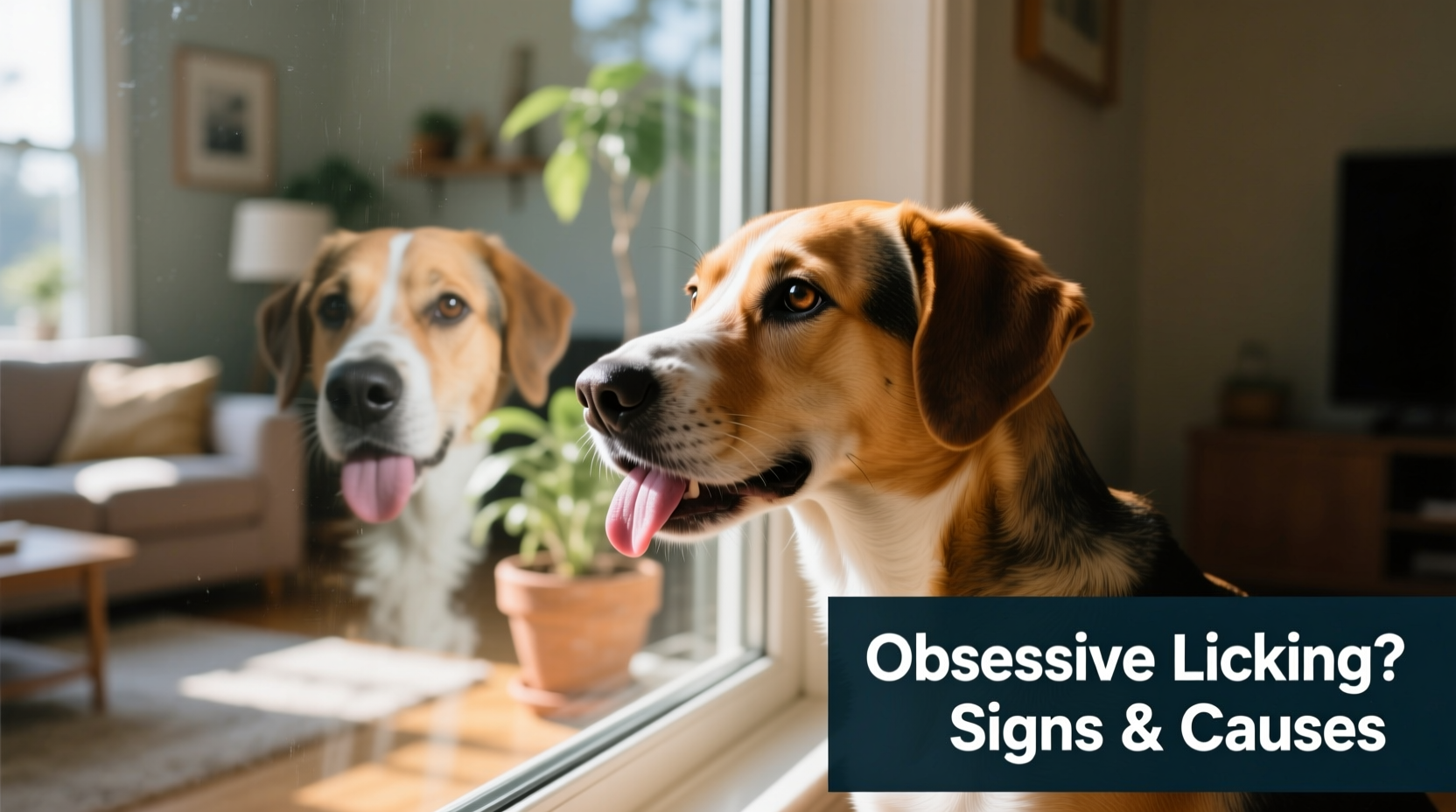
Before jumping to conclusions about obsession or anxiety, it’s important to consider the everyday explanations for why a dog might lick a window. These reasons are often environmental, sensory, or behavioral rather than psychological.
- Taste and Smell Residue: Windows accumulate fingerprints, food particles, condensation, and outdoor scents from pollen or animals. Dogs have an acute sense of smell and may be drawn to investigate these traces.
- Condensation and Moisture: On humid days or near air conditioning units, windows can develop a film of moisture. Some dogs enjoy the sensation or taste of water droplets.
- Reflections and Movement: Birds, squirrels, passing cars, or even the dog’s own reflection can capture attention. Licking may be an attempt to interact with what they see.
- Boredom or Lack of Stimulation: A dog left alone for long periods without toys, exercise, or mental engagement may resort to repetitive actions like licking as a form of self-entertainment.
- Attention-Seeking: If licking previously resulted in a reaction—positive or negative—from the owner, the dog may repeat the behavior to elicit attention.
When Licking Crosses Into Compulsive Territory
Not all repetitive behaviors are compulsive, but there are clear signs when licking shifts from occasional curiosity to a potential disorder. Canine compulsive disorder (CCD) is characterized by repetitive, invariant behaviors that serve no obvious purpose and persist despite attempts to redirect the dog.
According to Dr. Karen Overall, a leading veterinary behaviorist, “Compulsive behaviors in dogs often start as displacement activities during stress and become ingrained over time, especially if reinforced by environmental triggers.”
Signs that window licking may be compulsive include:
- Licking for prolonged periods (e.g., 10+ minutes at a time)
- Inability to stop even when distracted or called away
- Obsessive focus on specific spots on the glass
- Increased frequency over time
- Appearing trance-like or unaware of surroundings while licking
- Physical consequences like chapped lips, sores, or dental wear
Compulsive behaviors often emerge in dogs that experience chronic stress, lack routine, or have limited outlets for natural behaviors like sniffing, exploring, or chewing.
Medical Causes That May Trigger Licking
Before attributing licking solely to behavioral issues, rule out medical conditions. Dogs cannot verbalize discomfort, so repetitive actions like licking may be a cry for help.
Several health problems can manifest as excessive licking:
- Gastrointestinal Issues: Nausea, acid reflux, or irritable bowel syndrome can cause dogs to lick surfaces—including windows—as a way to manage nausea. Studies show that up to 74% of dogs who lick floors excessively have an underlying GI condition.
- Dental Pain: Gum disease, broken teeth, or oral infections may prompt a dog to lick hard surfaces, possibly seeking relief.
- Nerve or Neurological Disorders: Seizures, brain tumors, or cognitive dysfunction can lead to abnormal repetitive behaviors.
- Nutritional Deficiencies: Anemia or mineral imbalances might trigger pica-like behaviors, including licking non-food items.
- Skin or Allergy Conditions: While less directly related to windows, generalized itchiness can increase overall licking behavior, which may generalize to surfaces.
“Any sudden onset of repetitive licking should prompt a veterinary evaluation. What looks like a behavioral issue could be rooted in pain or illness.” — Dr. Emily Carter, DVM, Veterinary Neurologist
A full veterinary workup—including bloodwork, urinalysis, and gastrointestinal screening—can help identify or eliminate medical causes. Treating the underlying condition often resolves the licking behavior.
Step-by-Step Guide to Addressing Window Licking
If medical issues are ruled out, the next step is behavioral intervention. The goal is not just to stop the licking but to address its root cause—often stress, boredom, or learned reinforcement.
- Observe and Document: Track when, where, and how often the licking occurs. Note environmental triggers (e.g., after being left alone, during storms, when guests arrive).
- Eliminate Access: Use baby gates or close curtains to block access to windows if licking is frequent in certain areas.
- Enrich the Environment: Provide puzzle toys, chew-resistant bones, snuffle mats, and rotating toys to keep your dog mentally engaged.
- Increase Physical Exercise: Aim for at least 30–60 minutes of daily activity tailored to your dog’s breed and age. A tired dog is less likely to engage in compulsive habits.
- Add Mental Stimulation: Teach new tricks, practice obedience, or try scent games to channel energy productively.
- Interrupt and Redirect: When you catch your dog licking, calmly interrupt with a command like “come” or “sit,” then reward them for compliance with a treat or toy.
- Use Positive Reinforcement: Reward calm behavior and alternative activities. Never punish licking—it can increase anxiety and worsen compulsions.
- Consult a Professional: If the behavior persists, seek help from a certified veterinary behaviorist or a trainer experienced in OCD-like behaviors.
Real-Life Example: Max, the Border Collie
Max, a 4-year-old Border Collie, began licking the living room window every afternoon after his owner returned to full-time office work. At first, it was brief and seemed tied to watching birds outside. But within weeks, Max would stand in front of the window for over an hour, tongue moving rapidly against the glass, unresponsive to calls or treats.
His owner consulted a veterinarian, who found no medical issues. A behaviorist observed Max’s routine and noted high arousal levels in the mornings followed by long stretches of solitude. The diagnosis: environmentally induced compulsive behavior due to under-stimulation and separation anxiety.
The solution involved structured changes: morning training sessions, hiring a dog walker, introducing interactive feeders, and installing a white noise machine to reduce external stimuli. Within six weeks, Max’s window licking decreased by 80%. By week ten, it had stopped entirely.
This case illustrates how seemingly odd behaviors can stem from unmet needs—and how targeted interventions can restore balance.
Do’s and Don’ts: Managing Repetitive Licking
| Do’s | Don’ts |
|---|---|
| Rule out medical causes with a vet visit | Ignore sudden or intense licking episodes |
| Provide consistent daily routines | Yell at or punish your dog for licking |
| Offer safe chew toys and enrichment | Leave your dog alone for extended periods without stimulation |
| Use distraction and redirection techniques | Assume the behavior will go away on its own |
| Seek professional behavioral support early | Rely solely on home remedies without diagnosis |
Frequently Asked Questions
Is it normal for puppies to lick windows?
Puppies explore the world through their mouths, so occasional licking of windows is normal. However, if the behavior is frequent, intense, or continues past adolescence, it warrants closer observation. Early intervention can prevent habits from becoming ingrained.
Can anxiety cause a dog to lick windows?
Yes. Anxiety—especially separation anxiety, noise phobias, or general insecurity—can lead to displacement behaviors like licking. Dogs may fixate on windows if they associate them with departure cues (e.g., seeing keys, bags, or the owner near the door).
Are certain breeds more prone to compulsive licking?
Yes. Herding breeds like Border Collies, Australian Shepherds, and Shetland Sheepdogs are genetically predisposed to high drive and repetitive behaviors when under-stimulated. Similarly, working breeds such as German Shepherds or Dobermans may develop compulsions without adequate mental and physical outlets.
Prevention Through Lifestyle and Routine
Preventing compulsive behaviors starts with creating a balanced lifestyle. Dogs thrive on predictability, engagement, and appropriate challenges. Consider the following preventive strategies:
- Maintain a consistent daily schedule for feeding, walks, and play.
- Incorporate training into daily routines—even 5–10 minutes of commands reinforces mental focus.
- Rotate toys weekly to maintain novelty and interest.
- Use food-dispensing toys to simulate foraging, a natural dog behavior.
- Limit exposure to overwhelming stimuli (e.g., loud noises, chaotic environments).
Environmental enrichment is not a luxury—it’s a necessity for psychological health. Just as humans need meaningful activity to avoid restlessness, dogs require structured engagement to prevent maladaptive coping mechanisms.
Checklist: Is Your Dog’s Licking a Cause for Concern?
Use this checklist to evaluate whether your dog’s window licking requires action:
- ☑ Occurs multiple times per day or lasts longer than 5 minutes at a time
- ☑ Happens in isolation or when anxious
- ☑ Cannot be interrupted with treats or toys
- ☑ Has increased in frequency or intensity over time
- ☑ Is accompanied by other signs of stress (panting, pacing, whining)
- ☑ No obvious external trigger (like condensation or bugs)
- ☑ Persists despite attempts to redirect
If three or more apply, consider consulting a veterinary behaviorist.
Conclusion: Understanding Behavior Leads to Better Care
Dog licking windows isn’t inherently alarming, but it shouldn’t be dismissed without understanding the context. Whether driven by curiosity, medical discomfort, or emotional distress, the behavior sends a message. As responsible caregivers, our role is to listen—not just to barks and whines, but to subtle actions that reveal inner states.
By combining veterinary insight, behavioral awareness, and compassionate intervention, you can help your dog feel safer, more fulfilled, and free from compulsive cycles. Start today: observe closely, enrich their world, and don’t hesitate to seek expert guidance when needed. Your dog’s well-being depends not only on food and shelter but on mental and emotional care too.




 浙公网安备
33010002000092号
浙公网安备
33010002000092号 浙B2-20120091-4
Comments
No comments yet. Why don't you start the discussion?