
Dogs are deeply social animals, shaped by thousands of years of evolution and domestication to form strong bonds with humans. Their behaviors—no matter how peculiar they may seem—are often rooted in instinct, communication, or emotional need. One such behavior that many dog owners have noticed is their pet staring intently at them during vulnerable moments, especially while defecating. This seemingly odd act raises questions: Why does my dog stare at me while pooping? Is it a sign of trust, anxiety, or something else entirely? And perhaps more importantly—should I look away?
The answer lies at the intersection of canine psychology, evolutionary biology, and the unique relationship between dogs and their human companions. Understanding this behavior not only demystifies a common moment but also strengthens the bond between owner and pet.
The Evolutionary Roots of Canine Vulnerability
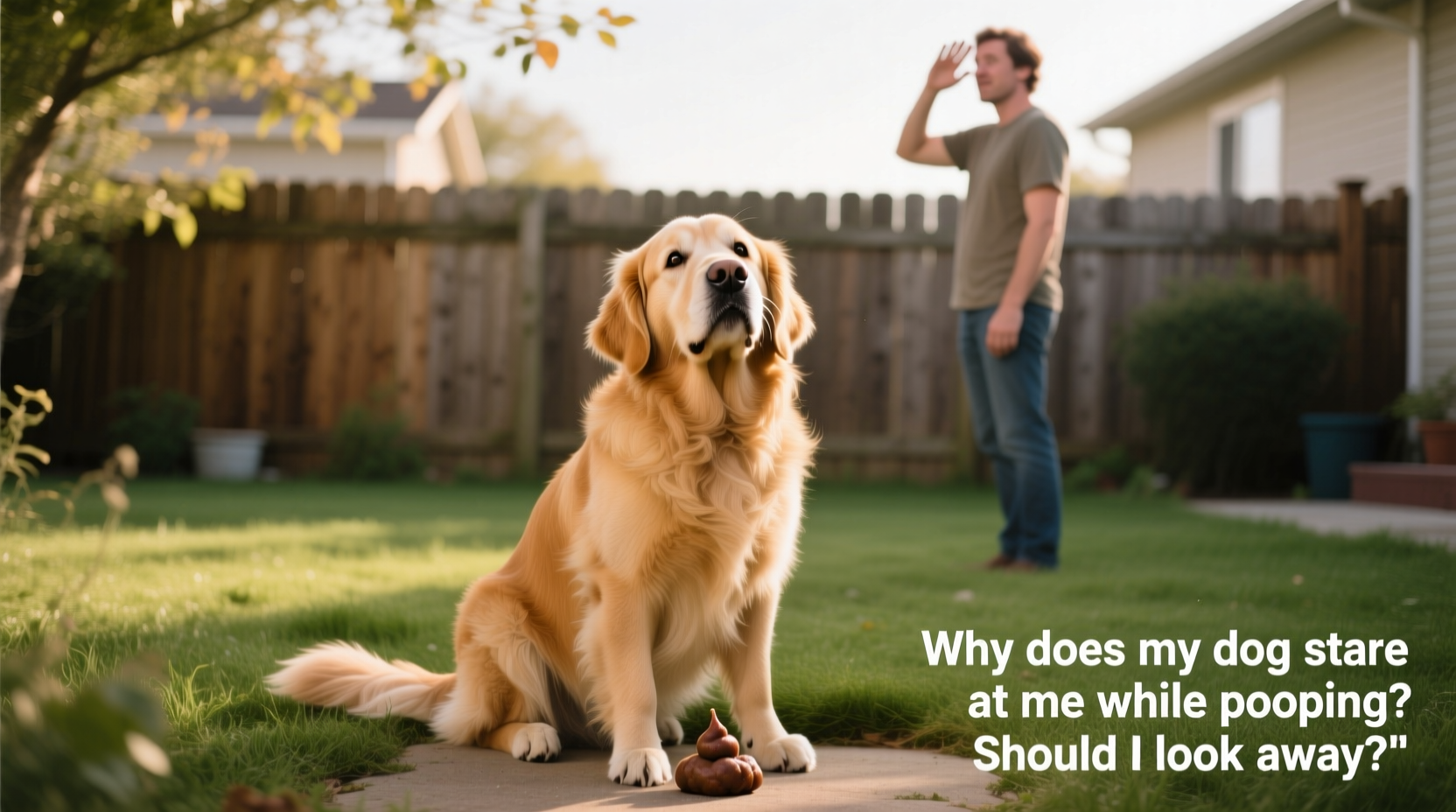
In the wild, animals lower themselves to the ground to eliminate waste at great risk. A crouched posture slows movement, limits field of vision, and delays escape from predators. For prey species—and even some predators—this moment is one of heightened vulnerability. Domesticated dogs, though far removed from life on the savannah, still carry these ancestral instincts. Even in safe environments, the act of defecating triggers an innate sense of exposure.
This is where the role of the human guardian comes into play. Dogs view their owners as part of their pack, relying on them for protection and reassurance. When your dog stares at you while pooping, it's often a silent signal: “I’m in a vulnerable position—please watch my back.” The gaze serves as a nonverbal request for vigilance, a way of checking whether you’re alert to potential threats.
“Dogs don’t just see us as food providers—they see us as social partners and protectors. That glance over the shoulder during elimination is a profound expression of trust and dependence.” — Dr. Sarah Bennett, Canine Behavior Researcher, University of Edinburgh
This behavior is particularly common in dogs with strong attachments to their owners. It’s less about dominance or control and more about connection. The dog isn’t asking for permission; it’s seeking confirmation that the environment remains secure.
Communication Through Eye Contact
Eye contact plays a complex role in dog communication. In some contexts, prolonged staring can be perceived as a challenge or threat, especially between unfamiliar dogs. However, between bonded individuals—human and dog—eye contact often signals affection and attentiveness.
Studies have shown that when dogs and humans exchange mutual gazes, both experience a rise in oxytocin levels—the so-called “love hormone” associated with bonding. This neurochemical feedback loop reinforces attachment, making eye contact a powerful tool in the human-dog relationship.
When your dog looks at you while defecating, it may not only be checking for safety but also reinforcing its emotional connection with you. The act becomes a shared moment, subtly strengthening trust. Unlike wolves, who typically avoid eye contact during elimination, domesticated dogs have evolved to include humans in nearly every aspect of their lives—even bathroom routines.
Should You Look Away? Context Matters
The question of whether to look away lacks a one-size-fits-all answer. It depends on your dog’s temperament, your relationship dynamics, and the environment.
For most dogs, maintaining soft, passive eye contact—or simply being visibly present—is reassuring. Looking away abruptly might be interpreted as disengagement, which could increase anxiety in sensitive or insecure dogs. On the other hand, intense staring from the human side (especially with a fixed, unblinking gaze) can be perceived as confrontational, potentially causing stress.
The key is mindful presence: be aware, available, and calm—but not intrusive. Avoid hovering too closely or making direct, hard eye contact. Instead, adopt a relaxed posture, glance occasionally, and let your dog know you’re nearby without dominating the moment.
Situations Where Looking Away May Help
- Nervous or reactive dogs: Some dogs become tense if they feel watched too closely, even by their owners. In these cases, turning your head slightly or pretending to scan the surroundings can reduce pressure.
- Puppies learning independence: Young dogs benefit from gradually building confidence. Occasional disengagement teaches them they can handle brief moments without constant reassurance.
- Overly dependent dogs: If your dog follows you constantly and struggles with separation, minor disengagements during routine activities—including elimination—can promote emotional resilience.
Situations Where Staying Present Is Better
- New environments: When walking in unfamiliar areas, your dog may rely more heavily on your presence for security.
- After a scare: If your dog has recently been startled by a noise, animal, or person, staying visibly attentive helps restore calm.
- Older or anxious dogs: Senior dogs or those with anxiety disorders often seek continuous validation. Withholding attention during vulnerable acts may amplify distress.
Behavioral Checklist: Responding to Your Dog’s Poop-Time Stare
To support your dog’s emotional well-being during elimination, follow this practical checklist:
- Stay within sight but avoid looming over them.
- Maintain a calm demeanor—no sudden movements or loud noises.
- Use soft eye contact; avoid unblinking stares.
- Offer quiet verbal reassurance if needed (“Good job,” “You’re okay”).
- Respect their pace—don’t rush or pull on the leash.
- After they finish, praise gently and continue your walk.
- Observe patterns—if staring increases with location, note potential triggers.
Real-Life Example: Max, the Rescue Terrier
Max, a three-year-old Jack Russell Terrier mix, was adopted from a rural shelter where he had lived in a crowded kennel with minimal human interaction. After coming home, his new owner, Lisa, noticed he would freeze mid-squat if she turned her back—even slightly.
At first, she assumed he wanted privacy and began looking away deliberately. But Max’s bowel movements became infrequent, and he started avoiding going altogether on walks. Concerned, Lisa consulted a certified dog behaviorist.
The expert explained that Max’s early life lacked consistent protection, making him hyper-vigilant during vulnerable acts. By looking away, Lisa—though well-intentioned—was inadvertently signaling disengagement, which Max interpreted as abandonment.
The solution? Lisa began standing quietly beside Max, offering soft glances and occasional murmurs of reassurance like “I’ve got you.” She avoided direct eye contact but remained visibly present. Within two weeks, Max’s elimination habits normalized, and his overall confidence improved.
This case illustrates how subtle shifts in human behavior can profoundly impact a dog’s emotional state—even during something as routine as defecation.
Do’s and Don’ts: How to Handle the Poop-Stare
| Do | Don’t |
|---|---|
| Remain calmly present during elimination | Hover directly over your dog |
| Use soft, intermittent eye contact | Stare intensely or unblinkingly |
| Speak in a low, soothing tone if needed | Talk excessively or excitedly |
| Scan the environment naturally (e.g., check your phone casually) | Turn your back completely or walk away |
| Praise after completion | Rush or pull on the leash before they’re done |
| Be consistent across walks and locations | React inconsistently—one day attentive, next day distant |
Frequently Asked Questions
Is it normal for my dog to stare at me while pooping?
Yes, it’s very common. Most dogs will glance at their owners during elimination as a way of seeking reassurance. As long as the behavior isn’t accompanied by signs of distress (pacing, whining, inability to go), it’s considered a normal part of canine-human bonding.
Does staring mean my dog doesn’t trust me?
No—quite the opposite. The stare is usually a sign of trust. Your dog trusts you enough to be vulnerable in your presence and relies on you to monitor the environment. If they didn’t trust you, they’d likely avoid eliminating altogether when you’re nearby.
Should I make eye contact back?
Soft, brief eye contact is fine and often reassuring. Blink slowly and break gaze naturally. Avoid prolonged, direct staring, which can be perceived as threatening. A gentle “I’m here” glance is more effective than a fixed stare.
When to Be Concerned: Red Flags in Elimination Behavior
While staring during defecation is typically benign, certain changes warrant attention:
- Refusal to eliminate when unsupervised: If your dog only goes when you’re watching, it may indicate over-dependence or anxiety.
- Excessive scanning or trembling: Signs of fear suggest environmental stressors or past trauma.
- Straining or crying: Could indicate medical issues like constipation or anal gland problems.
- Sudden change in habit: A dog that previously eliminated independently but now insists on your presence may be reacting to a recent scare or health shift.
If any of these patterns persist, consult your veterinarian or a certified canine behaviorist. Medical causes must be ruled out before assuming behavioral roots.
Final Thoughts: Honor the Moment
The next time your dog locks eyes with you mid-squat, resist the urge to laugh or look away out of discomfort. That gaze is more than a quirk—it’s a window into your dog’s mind and heart. It speaks of loyalty, vulnerability, and the deep interdependence that defines the human-canine bond.
You don’t need to perform any grand gesture in response. Simply being there—calm, aware, and accepting—is enough. Whether you choose to meet their gaze softly or glance away with quiet confidence, do so with intention. These small moments accumulate into a lifetime of trust.




 浙公网安备
33010002000092号
浙公网安备
33010002000092号 浙B2-20120091-4
Comments
No comments yet. Why don't you start the discussion?