
There’s a special kind of magic in watching an electric Christmas train chug around the tree, its tiny headlight cutting through the holiday glow. But when that charm is interrupted by sudden stops, jerky movements, or complete shutdowns, the experience turns frustrating. If your electric Christmas train keeps stalling, you’re not alone—and more importantly, it’s usually fixable. Most issues stem from poor track contact, dirty components, misalignment, or electrical inconsistencies. With systematic inspection and routine care, you can restore smooth operation and enjoy years of reliable seasonal joy.
Common Causes of Stalling and How They Work
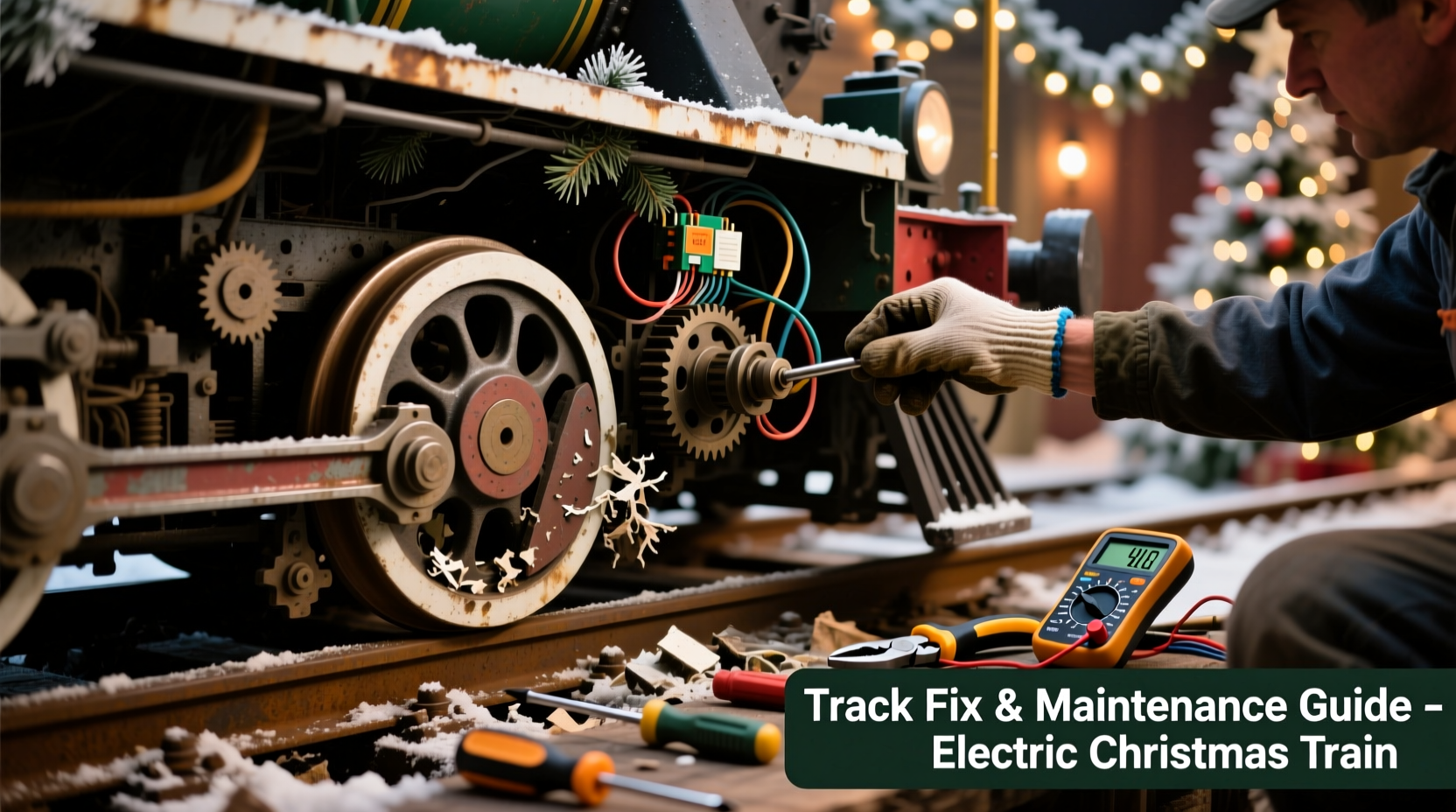
Before diving into solutions, it helps to understand what’s actually happening when your train stalls. Electric model trains rely on consistent power delivery from the transformer, through the track, and into the locomotive via metal wheels and pickups. Any break in this chain—no matter how small—can interrupt current flow, causing the motor to stop or stutter.
The most frequent culprits include:
- Dirt and oxidation on tracks or wheels: Dust, pet hair, and tarnish act as insulators, blocking electricity.
- Misaligned or loose track connections: Gaps between sections disrupt conductivity and create physical obstructions.
- Worn or bent metal contacts: Over time, tabs and rails can bend out of shape, reducing surface contact.
- Insufficient voltage or transformer issues: Weak power supply fails to maintain momentum, especially on curves or inclines.
- Poor wheel alignment or binding gears: Mechanical resistance inside the locomotive forces the motor to overheat and shut down.
Each of these problems can occur independently or in combination. The key is isolating variables methodically rather than guessing at fixes.
Step-by-Step Guide to Diagnosing and Fixing Track Issues
Start with the track—it's the foundation of your train’s performance. Even one dirty or poorly connected section can bring everything to a halt.
- Disconnect power and remove the train. Safety first. Unplug the transformer and clear the layout.
- Inspect all track segments for visible damage. Look for cracks, warping, or melted plastic near connection points. Replace damaged pieces immediately.
- Check rail alignment at joints. Run your finger across each seam. There should be no noticeable bump or gap. Misaligned rails cause both electrical and mechanical disruptions.
- Tighten every connector. Many systems use tab-and-slot or clip-style connectors. Ensure they’re fully seated. Wiggle each piece to confirm stability.
- Clean the rails thoroughly. Use a lint-free cloth dampened with isopropyl alcohol (70% or higher). Wipe both top and inner surfaces of each rail. For stubborn grime, use a dedicated track-cleaning eraser or pad.
- Test continuity with a multimeter (optional). Set to ohms and touch probes to opposite ends of a track run. A reading close to zero indicates good conductivity. High resistance suggests poor connections.
- Reassemble and test incrementally. Reconnect power and run the train on a short loop first. Gradually expand the circuit as performance improves.
If the train runs smoothly on a small loop but stalls on the full layout, the issue likely lies in a specific section—often where two curved tracks meet or where expansion has created tension.
Locomotive Maintenance: Cleaning, Lubrication, and Inspection
Even perfect track won’t help if the locomotive itself is compromised. Internal wear, dirt buildup, and dried lubricants are silent killers of consistent performance.
Begin by removing the locomotive shell (refer to manufacturer instructions if unsure). Inspect the following components:
- Wheels and pickups: Clean with alcohol and a cotton swab. Oxidized wheels appear dull; polishing gently with a pencil eraser can restore conductivity.
- Gears and axles: Check for broken teeth or excessive play. Spin each wheel by hand—motion should be smooth, not gritty or stiff.
- Motor brushes (if accessible): On older models, worn brushes reduce power transfer. Replace if frayed or too short.
- Weight distribution: Some trains stall on inclines due to light front ends. Adding small weights (e.g., adhesive-backed fishing weights) can improve traction.
Lubrication is critical—but often misunderstood. Over-greasing attracts dust and gums up gears. Use only lightweight, non-conductive oils designed for model trains. Apply sparingly to gear teeth and axle points. Avoid spraying lubricants directly onto electrical contacts.
“Most stalling issues I see in holiday trains come down to neglected cleaning and outdated lubricants. A 15-minute service once a year prevents 90% of problems.” — Daniel Reeves, Model Railroad Technician with 28 years of experience
Do’s and Don’ts of Christmas Train Care
| Do | Don’t |
|---|---|
| Clean tracks and wheels annually with isopropyl alcohol | Use household cleaners like Windex or vinegar—they can corrode metal |
| Store track and train in a dry, temperature-stable place | Leave setup assembled under the tree year-round—moisture and dust accumulate fast |
| Tighten all track connections before seasonal use | Force misaligned tracks together—they’ll warp further |
| Lubricate moving parts with model-specific oil | Use WD-40—it dries out quickly and leaves residue |
| Test the transformer output with a voltmeter | Plug in a damaged transformer—risk of fire or inconsistent power |
Real Example: Restoring a Vintage O-Gauge Train
A collector in Ohio inherited his grandfather’s 1950s electric train set. Every holiday season, it stalled after just two laps. He assumed it was beyond repair—until he followed a structured diagnosis.
First, he cleaned every track segment and discovered green oxidation on several rails. After scrubbing with alcohol and a fiberglass brush, resistance dropped significantly. Next, he removed the locomotive shell and found hardened grease gumming the gears. He disassembled the drive mechanism, cleaned it with solvent, and re-lubed with light machine oil. Finally, he checked the transformer: though it powered on, output voltage fluctuated under load. He replaced it with a modern regulated unit.
The result? The train ran continuously for 37 hours during the holidays—its best performance in decades. The fix wasn’t about replacing parts, but restoring integrity at every level.
Power Supply and Transformer Troubleshooting
Your train is only as strong as its weakest link—and often, that’s the transformer. Older units degrade over time, delivering unstable voltage or insufficient amperage. Symptoms include:
- Train starts but slows dramatically on curves
- Smoke smell or warm casing from the transformer
- Frequent circuit breaker trips
To assess your transformer:
- Unplug it and let it cool.
- Set a multimeter to AC volts.
- Plug in the transformer and connect probes to output terminals.
- Note the voltage at idle. Then attach it to the track with the train running and measure again.
A drop of more than 1–2 volts under load indicates weakness. Modern digital transformers offer better regulation and overload protection. Upgrading can eliminate chronic stalling, especially for longer layouts or multiple cars.
Preventive Maintenance Checklist
Follow this checklist each year before setting up your display:
- ☐ Clean all track sections with alcohol and lint-free cloth
- ☐ Inspect and tighten every track connection
- ☐ Remove locomotive shell and clean wheels and pickups
- ☐ Check gear movement and lubricate if needed
- ☰ Test transformer output with multimeter
- ☐ Examine wiring for frays or exposed copper
- ☐ Verify smooth operation on a test loop before full setup
- ☐ Store spare bulbs, fuses, and contact cleaner with your set
This routine takes less than an hour but pays dividends in reliability and longevity.
Frequently Asked Questions
Why does my train stall only on certain parts of the track?
This usually points to localized issues such as a dirty or misaligned joint, a warped track segment, or debris caught beneath the rails. Isolate the problem area by running the train on smaller sections. Focus cleaning and realignment efforts there.
Can I use any replacement transformer?
No. Match the voltage and amperage ratings exactly. Using a higher-output transformer can burn out the motor. If upgrading, choose a regulated model designed for model trains—not generic AC adapters.
Is it safe to run the train unattended?
While modern sets are generally safe, it’s best not to leave them running overnight or when no one is home. Heat buildup, electrical faults, or mechanical jams can pose risks. Unplug when not actively viewing.
Keep the Holiday Spirit Rolling
An electric Christmas train isn’t just a decoration—it’s a tradition, a storyteller, a centerpiece of family memories. When it stalls, it’s not just the wheels that stop; the moment dims. But with informed care, most issues are preventable or easily resolved. Regular cleaning, smart storage, and attention to detail transform frustration into seamless motion.
Don’t wait for next December to act. Take your train out now, give it the attention it deserves, and store it properly. That small investment ensures not just another year of trouble-free runs, but potentially decades. Let the whistle blow clear, the wheels turn true, and the lights shine bright—year after year.




 浙公网安备
33010002000092号
浙公网安备
33010002000092号 浙B2-20120091-4
Comments
No comments yet. Why don't you start the discussion?