
Every holiday season, homes come alive with festive lights, glowing windows, and cheerful displays. But if you’ve noticed your extension cord warming up—or worse, becoming hot—while powering your Christmas lights, it’s not just a minor inconvenience. It’s a warning sign. Overheating cords pose serious fire risks and can damage both your decorations and electrical system. Understanding why this happens and how to fix it isn’t just about convenience—it’s about safety.
The warmth you feel in an extension cord under normal conditions is usually minimal and harmless. However, excessive heat indicates that the cord is struggling to handle the electrical load. This issue often stems from mismatched equipment, poor-quality cords, or improper usage. With the right knowledge, you can enjoy your holiday lighting safely without risking overheating, short circuits, or even electrical fires.
Why Extension Cords Heat Up with Christmas Lights
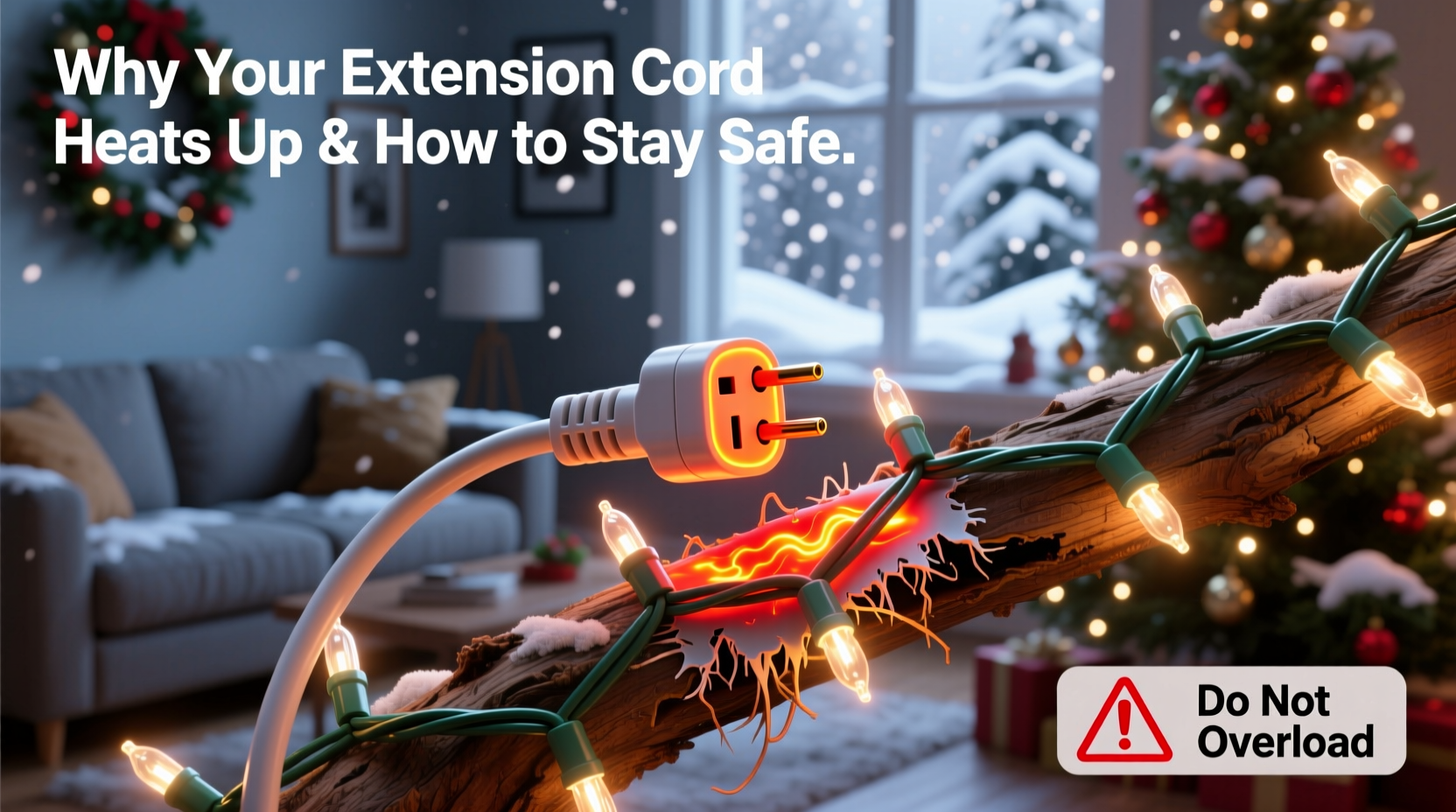
Extension cords are designed to carry electricity from an outlet to a device—but they have limits. When those limits are exceeded, resistance builds up inside the wire, generating heat as a byproduct. Several factors contribute to this phenomenon when using Christmas lights:
- Overloading the circuit: Plugging too many strings of lights into one cord exceeds its amperage rating.
- Using undersized wire gauge: Thin wires (higher gauge numbers) cannot carry large currents efficiently, increasing resistance and heat.
- Poor cord quality: Inexpensive or indoor-rated cords used outdoors may lack proper insulation and durability.
- Daisy-chaining multiple cords: Connecting several extension cords end-to-end increases resistance and voltage drop, leading to overheating.
- Environmental exposure: Moisture, snow, or direct sunlight can degrade insulation and increase electrical resistance.
According to the National Fire Protection Association (NFPA), decorative lighting accounts for an estimated 7% of home structure fires during the holiday season. Many of these incidents stem from faulty wiring, overloaded circuits, or misuse of extension cords.
“An extension cord should never be a permanent solution, especially under high load. If it’s warm to the touch, it’s already working too hard.” — James L. Rogers, Electrical Safety Engineer, NFPA
Understanding Load Capacity and Wire Gauge
Not all extension cords are created equal. The thickness of the internal copper wire—measured by gauge—affects how much current it can safely carry. Lower gauge numbers mean thicker wires and higher capacity.
Christmas lights vary widely in power draw. Traditional incandescent mini-lights consume significantly more energy than modern LED strings. For example:
| Type of Light | Wattage per String (approx.) | Amps Drawn | Max Strings Safe to Daisy Chain |
|---|---|---|---|
| Incandescent Mini-Lights (100-count) | 40W | 0.33A | 3–4 |
| LED Mini-Lights (100-count) | 5W | 0.04A | Up to 8–10 |
| C7 Incandescent (25-count) | 175W | 1.46A | 1–2 |
| C9 LED (25-count) | 25W | 0.21A | Up to 5 |
To calculate total load, add up the wattage of all connected light strings and divide by voltage (typically 120V in the U.S.). The result gives you total amperage. Compare this to your extension cord’s maximum amp rating, usually printed on its jacket.
Step-by-Step Guide to Prevent Overheating
Solving the problem requires both immediate action and long-term planning. Follow this sequence to ensure your holiday display stays bright—and safe.
- Unplug immediately if the cord is hot. A slightly warm cord may be acceptable, but one too hot to touch needs attention now.
- Check the label on your extension cord. Look for gauge (e.g., 16 AWG, 14 AWG, 12 AWG), length, and whether it’s rated for indoor or outdoor use.
- Count and assess your light strings. Identify types (incandescent vs. LED), number of sets, and total wattage. Use manufacturer specs or online calculators.
- Reduce daisy-chaining. Avoid connecting more than three standard extension cords together. Instead, use separate cords running directly from outlets.
- Upgrade to a lower-gauge cord. For outdoor or heavy-duty use, switch to a 12 or 14 AWG cord, which handles more current with less heat buildup.
- Use dedicated circuits. Plug lighting circuits into outlets on different breakers to avoid overloading a single household circuit.
- Install GFCI protection. Especially outdoors, use ground-fault circuit interrupter (GFCI) outlets or extension cords to reduce shock and fire risk.
- Inspect regularly. Check cords weekly for fraying, cracking, discoloration, or melted areas near plugs.
Common Mistakes That Cause Overheating
Even well-meaning homeowners make errors that compromise safety. These habits dramatically increase the chance of overheating:
- Using indoor cords outside: Indoor-rated cords lack weather-resistant jackets and degrade quickly when exposed to moisture.
- Running cords under rugs or through doorways: This traps heat and causes physical wear, increasing resistance and fire risk.
- Ignoring manufacturer limits: Most light strings specify a “maximum connectable” number. Exceeding this overloads the first string’s plug and socket.
- Using old or damaged cords: Frayed insulation or bent prongs create arcing and hot spots.
- Placing cords in tight coils while in use: Coiling traps electromagnetic fields and generates heat due to inductance.
Real Example: A Close Call on Chestnut Street
In December 2022, a homeowner in Portland, Oregon, decorated their front yard with over 1,200 incandescent mini-lights and several illuminated figures. All were powered through two 50-foot, 16 AWG indoor extension cords daisy-chained together and plugged into a single outdoor outlet.
By mid-December, neighbors reported smelling burning plastic near the house. The homeowner discovered one cord had melted near the female end, exposing live wires. Fortunately, the circuit tripped before a fire started. An electrician later determined the setup was drawing nearly 14 amps—exceeding the cord’s 10-amp limit—and creating dangerous resistance.
The solution? The homeowner replaced the cords with two 12 AWG outdoor-rated cords, switched most lights to LEDs, and split the load across two GFCI-protected circuits. The new setup ran cool throughout the season.
Choosing the Right Equipment: Do’s and Don’ts
Selecting appropriate gear makes all the difference. Use this guide when shopping for cords and lights.
| Action | Do | Don't |
|---|---|---|
| Cord Selection | Choose 12 or 14 AWG for outdoor/heavy loads | Use 16 or 18 AWG for high-wattage displays |
| Location | Use only cords labeled \"Outdoor Use\" | Run indoor cords outside, even temporarily |
| Connection Method | Plug each major section into its own outlet | Daisy-chain more than three extension cords |
| Light Type | Prefer LED lights for longer runs and cooler operation | Mix incandescent and LED strings on same circuit without checking compatibility |
| Storage During Use | Lay cords flat, fully uncoiled | Leave cords bunched or coiled during operation |
Frequently Asked Questions
Is it normal for an extension cord to get warm?
A slight warmth is common under load, especially with longer cords or multiple devices. However, if the cord is too hot to touch comfortably, it’s being overloaded or is defective. Unplug it immediately and reassess your setup.
Can I use multiple extension cords if I spread out the lights?
Yes, but avoid daisy-chaining them. Instead, run separate cords from different wall outlets to various sections of your display. This reduces strain on individual cords and prevents circuit overload.
Are LED Christmas lights safer than incandescent ones?
Yes. LEDs consume up to 90% less power, generate far less heat, and place less stress on extension cords and circuits. They also last longer and are less likely to cause overheating issues, making them ideal for large or complex displays.
Essential Safety Checklist Before Turning On Your Lights
Before flipping the switch on your holiday display, go through this checklist to minimize risk:
- ✅ Verify all extension cords are rated for outdoor use (if applicable).
- ✅ Ensure cords are fully uncoiled and laid out straight.
- ✅ Confirm total wattage of connected lights is below 80% of cord capacity.
- ✅ Use GFCI protection for all outdoor circuits.
- ✅ Avoid running cords under carpets, through doors, or near water sources.
- ✅ Inspect all cords and plugs for damage, melting, or corrosion.
- ✅ Test lights individually before full installation.
- ✅ Set timers to turn off lights when unattended or overnight.
Conclusion: Stay Festive, Stay Safe
Your holiday lights should bring joy—not danger. An overheating extension cord is a clear signal that your electrical setup needs attention. By understanding load limits, choosing the right cords, and avoiding common mistakes, you can create a dazzling display that’s also safe and reliable.
Start by auditing your current setup: check cord ratings, convert to LED where possible, and eliminate daisy-chaining. Small changes today can prevent emergencies tomorrow. Share this knowledge with family and neighbors—especially those who love elaborate light shows. Together, we can keep our holidays bright and safe.




 浙公网安备
33010002000092号
浙公网安备
33010002000092号 浙B2-20120091-4
Comments
No comments yet. Why don't you start the discussion?