
Few makeup frustrations are as visible—or as common—as foundation separating on the nose. You spend time blending a flawless base, only to notice by midday that your nose has developed patchy streaks, oily shine, or even visible cracks in your makeup. This issue doesn’t just ruin your look—it can make you question your entire routine. The good news is that separation isn’t inevitable. With the right understanding of skin behavior, product compatibility, and application technique, you can achieve a smooth, lasting finish that holds up through humidity, sweat, and daily wear.
The nose is one of the most challenging areas to maintain foundation integrity. It’s naturally oilier than other parts of the face, frequently touched (from adjusting glasses to wiping), and often exposed to environmental stressors. These factors create a perfect storm for foundation breakdown. But before jumping to blame your products, consider the full picture: from skincare prep to powder choice, every step plays a role.
Why Foundation Separates on the Nose: The Science Behind the Breakdown
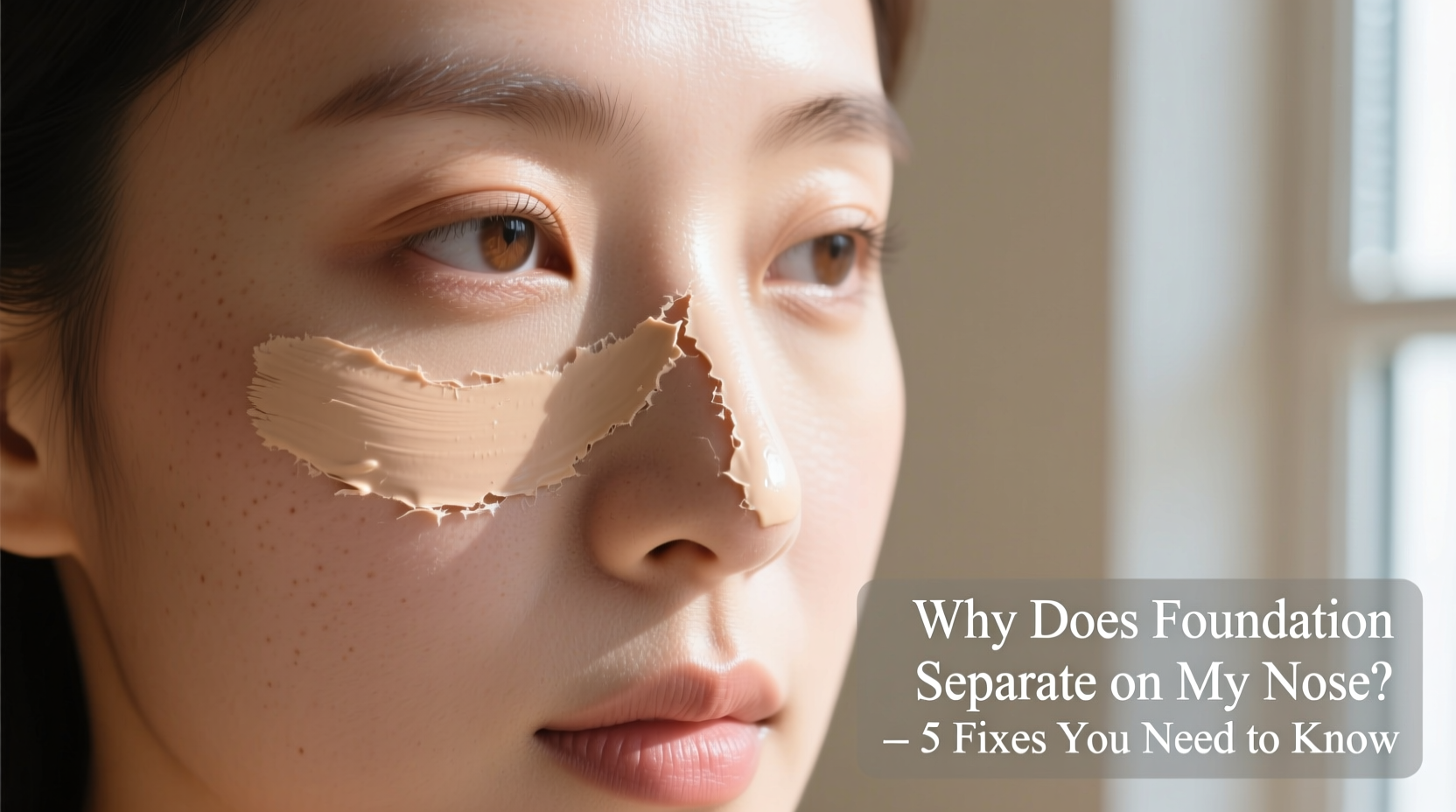
Foundation separation—also known as pilling, creasing, or breaking apart—occurs when the makeup formula begins to lift, crack, or slide off the skin. On the nose, this happens more frequently due to several interrelated factors:
- Excess sebum production: The T-zone, especially the nose, contains a high concentration of sebaceous glands. Oil breaks down emulsifiers in foundation, causing it to slide and separate.
- Movement and friction: Touching your nose throughout the day—whether adjusting glasses, rubbing due to allergies, or resting your hand on your face—disrupts the makeup layer.
- Poor skincare preparation: Applying foundation over dry patches or overly greasy skin creates an uneven surface that repels or absorbs product inconsistently.
- Incompatible product layers: Mixing silicone-based and water-based formulas without proper sealing can cause repulsion, leading to pilling.
- Dehydration: When skin lacks moisture, it may produce more oil as compensation, accelerating foundation breakdown.
“Makeup longevity starts long before the brush touches your face. If your canvas—the skin—isn’t prepped correctly, even high-end foundation will fail by noon.” — Lena Torres, Celebrity Makeup Artist & Skincare Consultant
The Role of Skincare in Preventing Foundation Separation
Your skincare routine sets the stage for how well your foundation performs. A poorly balanced base leads to oiliness, flakiness, or both—conditions that sabotage makeup adherence.
Start with a gentle cleanser suited to your skin type. For oily or combination skin, a foaming or gel cleanser helps remove excess oil without stripping. Follow with a toner if needed, but avoid alcohol-heavy formulas that can over-dry and trigger rebound oil production.
Hydration is key. Use a lightweight, non-comedogenic moisturizer that absorbs quickly. Look for ingredients like hyaluronic acid, glycerin, or squalane—these attract and retain moisture without clogging pores. Apply while your skin is still slightly damp to lock in hydration.
For those prone to oiliness, consider using a mattifying primer with pore-filling properties. However, avoid heavy silicones if your foundation is water-based—they may not bond properly and could lead to separation.
Step-by-Step Guide to Long-Lasting Foundation on the Nose
Follow this detailed routine to minimize separation and maximize wear time:
- Cleanse and tone: Wash your face with a pH-balanced cleanser. Pat dry—do not rub.
- Apply hydrating serum: Use a thin layer of hyaluronic acid serum to plump the skin and prevent dryness.
- Moisturize: Choose a lightweight lotion or gel-cream. Focus on the nose but avoid over-application.
- Wait 5 minutes: Let skincare absorb fully. Rushing this step is a leading cause of pilling.
- Prime strategically: Use a targeted nose primer—either mattifying or pore-blurring—applied only where needed.
- Apply foundation: Use a damp beauty sponge or dense brush for seamless blending. Avoid heavy layers; build coverage only where necessary.
- Conceal after foundation: Applying concealer over foundation reduces product buildup, which can crack on the nose.
- Set immediately: Press a translucent setting powder onto the nose using a puff or flat brush. Do not swipe—press to avoid disturbing the base.
- Lock with setting spray: Hold the bottle 8–10 inches away and mist in an “X” and “T” motion for even distribution.
- Carry blotting papers: Midday, gently blot excess oil instead of adding more powder, which can accumulate and cake.
Product Compatibility: Do’s and Don’ts
Using incompatible products is a silent culprit behind foundation separation. Here’s how to ensure your products work together:
| Category | Do | Don't |
|---|---|---|
| Primer | Match the base: silicone primer with silicone foundation, water-based with water-based. | Mix silicone and water-based without setting in between. |
| Foundation | Choose formulas labeled “long-wear” or “transfer-resistant” for oily zones. | Use thick, full-coverage foundations without proper prep. |
| Setting Powder | Use finely milled translucent powders to avoid ghosting. | Over-powder the nose—this leads to cracking. |
| Setting Spray | Opt for alcohol-free sprays with humectants for flexible hold. | Skip setting spray entirely—your last line of defense matters. |
| Sunscreen | Use a lightweight, non-greasy SPF that absorbs quickly. | Layer heavy chemical sunscreens under foundation without waiting. |
Mini Case Study: From Midday Meltdown to All-Day Wear
Sarah, a 32-year-old office worker with combination skin, struggled daily with her foundation separating on her nose by 1 PM. She wore glasses, which required frequent adjustments, and worked in a warm building with inconsistent air conditioning. Despite using a high-end matte foundation, she experienced visible lines and oil slicks across her nose.
After consulting a dermatological esthetician, Sarah revised her routine. She switched to a hydrating gel moisturizer, waited five minutes before applying a silicone-based primer only on her nose, and used a stippling brush to apply a long-wear liquid foundation in thin layers. She set the area with a light press of translucent powder and finished with a setting spray. Throughout the day, she used blotting papers instead of reapplying powder.
The result? Her foundation stayed intact until 6 PM with minimal touch-ups. The key changes weren’t about using more product—but using the right products in the right order and quantity.
Expert Tips for Troubleshooting Common Issues
Even with a solid routine, occasional separation can occur. Here’s how to diagnose and fix common problems:
- Dry, flaky patches: Exfoliate 1–2 times per week with a gentle chemical exfoliant (like lactic or mandelic acid). Avoid physical scrubs that can irritate the nose.
- Oily shine within hours: Incorporate a niacinamide serum into your morning routine to regulate sebum production.
- Pilling when applying: Reduce product layers or switch to formulas with similar bases. Always allow time between steps.
- Glasses causing smudging: Use anti-slip nose pads or apply a thin layer of eyeshadow primer under the arms of your glasses to create a protective barrier.
“Many clients come to me blaming their foundation, when the real issue is layering too much too fast. Less is more—especially on the nose.” — Marcus Lee, Editorial Makeup Artist
Checklist: How to Prevent Foundation Separation on Your Nose
Use this checklist each morning to ensure your makeup stays put:
- ✅ Cleanse with a gentle, non-stripping cleanser
- ✅ Apply hydrating serum to damp skin
- ✅ Moisturize and wait 5 minutes
- ✅ Use a targeted primer on the nose (matte or pore-refining)
- ✅ Apply foundation with a damp sponge or brush—avoid fingers
- ✅ Conceal after foundation, not before
- ✅ Set the nose with a pressed or translucent powder (press, don’t swipe)
- ✅ Finish with a setting spray in X and T motions
- ✅ Carry blotting papers for midday oil control
- ✅ Avoid touching your face throughout the day
FAQ
Can I use powder foundation on my nose to prevent separation?
Yes, but cautiously. Compact or loose powder foundations can work well for spot application on oily areas, but avoid layering them over liquid foundation unless you’ve set properly. Over-layering increases the risk of caking and cracking.
Does drinking more water really help my foundation stay on?
Indirectly, yes. Well-hydrated skin functions better and is less likely to overproduce oil or develop dry patches. While water alone won’t stop separation, it supports overall skin health, which improves makeup adherence.
Should I skip moisturizer on my nose to reduce oiliness?
No. Skipping moisturizer can signal your skin to produce even more oil. Instead, use a lightweight, oil-free moisturizer and apply sparingly. Dehydrated skin worsens shine and accelerates foundation breakdown.
Conclusion: Take Control of Your Makeup Longevity
Foundation separation on the nose is a common but solvable problem. It’s rarely about a single flawed product—it’s about the entire system of skincare, application, and maintenance. By understanding your skin’s needs, choosing compatible products, and refining your technique, you can achieve a smooth, enduring base that survives your busiest days.
Start small: pick one change from this guide—maybe waiting longer after moisturizing or switching your primer—and test it for a week. Observe the results. Gradually layer in more adjustments until your routine works seamlessly with your skin, not against it.




 浙公网安备
33010002000092号
浙公网安备
33010002000092号 浙B2-20120091-4
Comments
No comments yet. Why don't you start the discussion?