
Commuting is a daily reality for millions. Whether it’s a packed subway, a noisy bus ride, or a crowded train platform, the sounds of urban transit are rarely peaceful. In this environment, wireless earbuds have become an essential companion—offering music, podcasts, calls, and a much-needed mental escape. But when choosing between models with Active Noise Cancellation (ANC) and those without, the decision isn’t always straightforward. Is ANC worth the extra cost and power consumption? Or can passive isolation and affordability make up the difference?
The answer depends on your commute type, environment, priorities, and budget. This guide breaks down the real-world implications of ANC in commuting scenarios, compares key trade-offs, and helps you determine what truly matters most.
Understanding ANC: How It Works and What It Solves
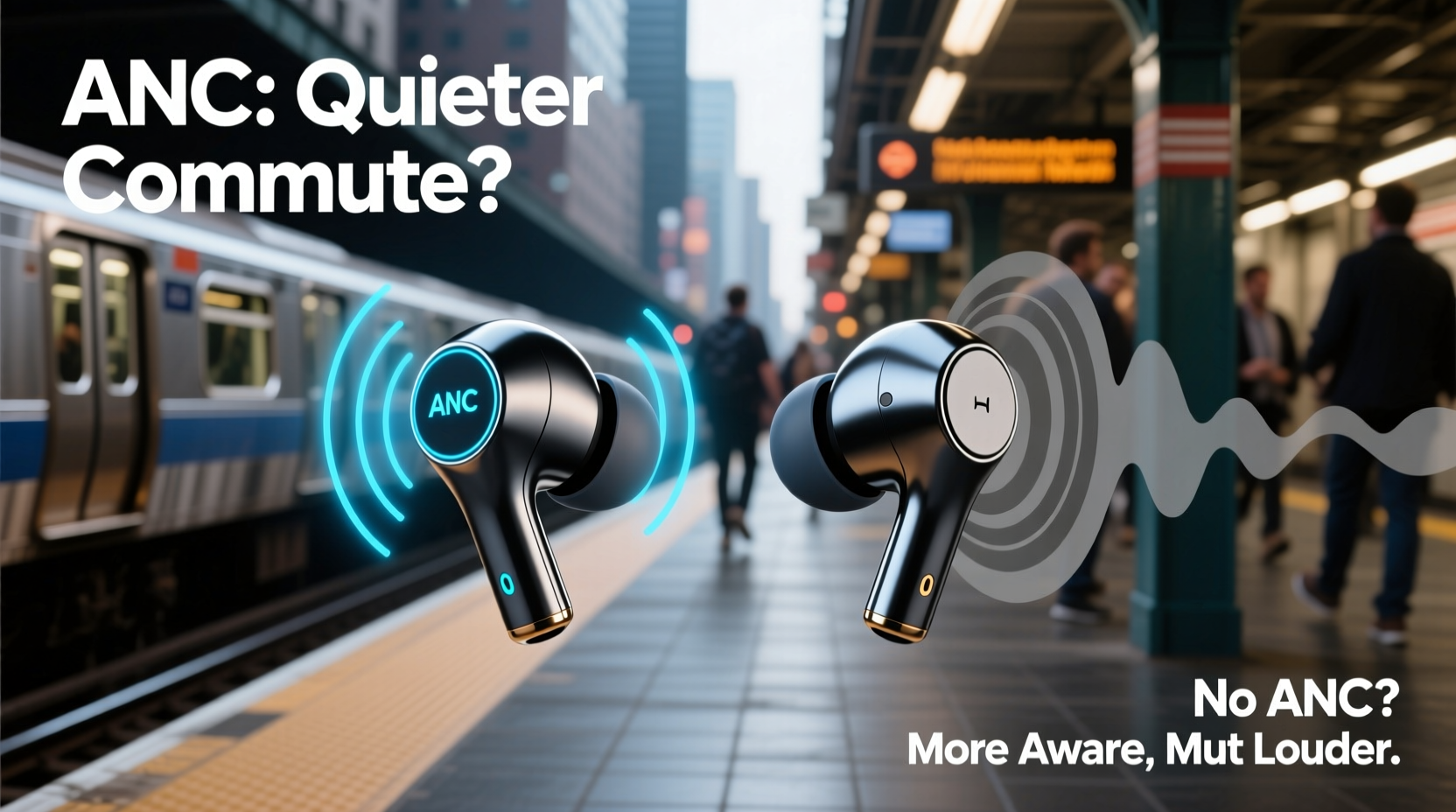
Active Noise Cancellation uses built-in microphones to detect ambient sound and generate inverse sound waves that cancel out external noise. This technology is particularly effective against low-frequency, consistent sounds—like the rumble of a train engine, airplane cabin hum, or traffic drone.
In contrast, earbuds without ANC rely solely on passive noise isolation—the physical seal created by ear tips inside your ear canal. While well-fitting silicone or foam tips can block a surprising amount of sound, they’re less effective against lower frequencies and inconsistent noises like horns, chatter, or announcements.
For commuters, the key question becomes: does the added complexity and cost of ANC deliver meaningful benefits over a good passive seal?
Commute Types and Their Sound Profiles
Not all commutes are equal. The effectiveness of ANC varies dramatically depending on your transportation method and surroundings. Consider these common scenarios:
- Subway/Metro Commuters: Constant low-frequency rumble from trains, loud PA systems, and high human chatter. ANC excels here, especially during long stretches underground where noise is continuous.
- Bus Riders: Engine noise, road vibration, and frequent stops with abrupt sounds. ANC helps, but sudden noises (doors opening, honking) may still penetrate unless paired with good fit.
- Walking/Cycling Commuters: Intermittent traffic, wind, and environmental sounds. Safety becomes a concern—many prefer earbuds without ANC or use transparency modes to stay aware.
- Train Travelers (Regional/Intercity): Long durations with steady engine noise. ANC shines in reducing fatigue over hours of travel.
- Ride-Sharing or Car Commuters: Lower ambient noise; conversation and call clarity matter more than deep noise suppression.
As a general rule, the longer and noisier your commute, the more value ANC provides—not just for audio enjoyment, but also for reducing auditory fatigue.
“Long-term exposure to urban transit noise—even at moderate levels—can contribute to stress and cognitive load. ANC-equipped earbuds act as a buffer, helping maintain mental clarity during daily travel.” — Dr. Lena Patel, Auditory Health Researcher, Urban Mobility Institute
Performance Comparison: ANC vs Non-ANC Earbuds
To assess real-world differences, we evaluated five key factors across both categories:
| Factor | With ANC | Without ANC |
|---|---|---|
| Noise Reduction | Excellent for low-frequency noise (e.g., engines). Reduces perceived volume by 15–25dB. | Limited to passive seal. Blocks ~10–15dB, mostly mid/high frequencies. |
| Battery Life | Reduced by 30–50% when ANC is active. Typical: 4–6 hours per charge. | Generally longer—6–9 hours common due to lower power demands. |
| Audio Quality | Slightly altered sound profile; some bass boost to compensate for noise masking. | More natural tuning, but harder to hear details in loud environments. |
| Call Clarity | Advanced models use beamforming mics and AI noise filtering. Better in wind/noise. | Varies widely. Budget models struggle with background interference. |
| Price Range | $100–$300+ for quality ANC. Premium brands dominate this segment. | $30–$100. More budget-friendly options available. |
The data shows a clear trade-off: ANC improves acoustic control at the expense of battery life and cost. For short, quiet commutes, non-ANC earbuds may be sufficient. But for longer, louder journeys, ANC offers tangible improvements in comfort and usability.
Real-World Case Study: Two Commuters, Two Choices
Alex, New York City Subway User: Alex takes the 7 train for 45 minutes each way, often standing in crowded cars. Background noise averages 75–85 dB. After trying several non-ANC earbuds, Alex found music drowned out by train rumbles and had to crank volume to unsafe levels. Switching to ANC earbuds reduced perceived noise by half, allowing comfortable listening at safer volumes. Battery life was shorter, but charging during lunch made it manageable.
Jamila, Portland Bike-to-Work Commuter: Jamila cycles 20 minutes each way on protected bike lanes. She values situational awareness and safety over silence. Her non-ANC earbuds provide light audio without blocking traffic sounds. She occasionally uses one earbud only. ANC would feel excessive—and potentially dangerous—in her scenario.
These examples illustrate that context defines necessity. ANC isn’t universally better—it’s situationally superior.
When ANC Matters Most: Key Decision Factors
Before investing in ANC earbuds, ask yourself the following:
- Is your commute consistently loud? If yes, ANC will reduce fatigue and improve focus.
- Do you listen to audio for most of your journey? ANC enhances immersion and reduces volume strain.
- Are you frequently on trains, planes, or buses? These environments benefit most from ANC.
- Do you take calls while commuting? ANC models often include better mic arrays and voice isolation.
- Can you tolerate shorter battery life? Charging once mid-day may be necessary.
- Is budget a constraint? Good non-ANC earbuds offer strong value under $60.
Step-by-Step Guide: Choosing the Right Earbuds for Your Commute
Follow this process to make an informed decision:
- Map Your Commute: Note transportation types, duration, typical noise levels, and whether you wear helmets, masks, or carry bags that affect access.
- Assess Audio Needs: Determine if you primarily listen to music, take calls, or need situational awareness.
- Test Fit and Comfort: Look for lightweight designs with multiple ear tip sizes. In-ear seal directly impacts passive isolation.
- Evaluate ANC Features: Check for adaptive ANC, transparency mode, and wind noise reduction—especially if outdoors.
- Check Battery and Charging: Ensure total battery life (with case) covers your day. Fast charging is a plus.
- Compare Price vs. Value: Don’t assume higher price equals better performance. Read independent reviews focused on real-world use.
- Demo If Possible: Retail stores or return policies let you test ANC effectiveness in actual conditions.
This structured approach ensures you prioritize functionality over marketing hype.
Common Misconceptions About ANC
Despite its popularity, ANC is often misunderstood:
- Myth: ANC blocks all noise. Reality: It works best on steady low-frequency sounds. Voices, horns, and sudden clicks remain audible.
- Myth: ANC is only for music lovers. Reality: It reduces cognitive strain even when not playing audio—helpful for reading or resting.
- Myth: All ANC is the same. Reality: Performance varies significantly between brands and price tiers. Entry-level ANC may offer minimal improvement.
- Myth: You can’t hear alerts with ANC on. Reality: Most modern earbuds include transparency or ambient mode to let in important sounds.
Understanding these nuances prevents disappointment and guides smarter purchasing decisions.
Frequently Asked Questions
Does ANC damage hearing over time?
No, ANC does not harm hearing. In fact, by reducing the need to increase volume in loud environments, it may help protect your ears from noise-induced hearing loss.
Can I use ANC earbuds safely while walking or cycling?
Only if they include a reliable transparency or ambient mode. Otherwise, blocking ambient sound can reduce awareness of traffic, sirens, or pedestrians. For outdoor commutes, situational awareness should outweigh noise cancellation.
Do non-ANC earbuds become obsolete?
No. They remain excellent choices for shorter, quieter commutes, fitness use, or users prioritizing battery life and affordability. Technology doesn’t make older solutions irrelevant—just different tools for different needs.
Final Verdict: What Matters More for Commuting?
After evaluating noise profiles, user needs, and real-world performance, the conclusion is clear: ANC matters more than ever for long, loud, or stressful commutes. It transforms a fatiguing experience into a controlled, personalized space—improving audio quality, reducing stress, and supporting safer listening habits.
However, for short, quiet, or outdoor commutes where awareness is critical, non-ANC earbuds are not only sufficient—they’re often preferable. Simplicity, longer battery life, and lower cost make them practical for many.
The deciding factor isn’t ANC alone—it’s alignment with your specific routine. A $250 ANC model might be overkill for a 15-minute walk, just as budget earbuds could fall short on a two-hour train ride through a tunnel.




 浙公网安备
33010002000092号
浙公网安备
33010002000092号 浙B2-20120091-4
Comments
No comments yet. Why don't you start the discussion?