
If you've noticed a clicking or popping sound in your jaw while chewing, speaking, or opening your mouth wide, you're not alone. Millions of people experience this sensation at some point in their lives. While occasional clicking may be harmless, persistent or painful jaw noises can signal an underlying condition that warrants attention. The temporomandibular joint (TMJ), which connects your jawbone to your skull, is one of the most complex joints in the body—capable of sliding, rotating, and gliding with precision. When its function becomes disrupted, symptoms like clicking, locking, or pain can follow. Understanding the root causes and knowing when to seek help can prevent long-term complications.
Understanding the Temporomandibular Joint (TMJ)
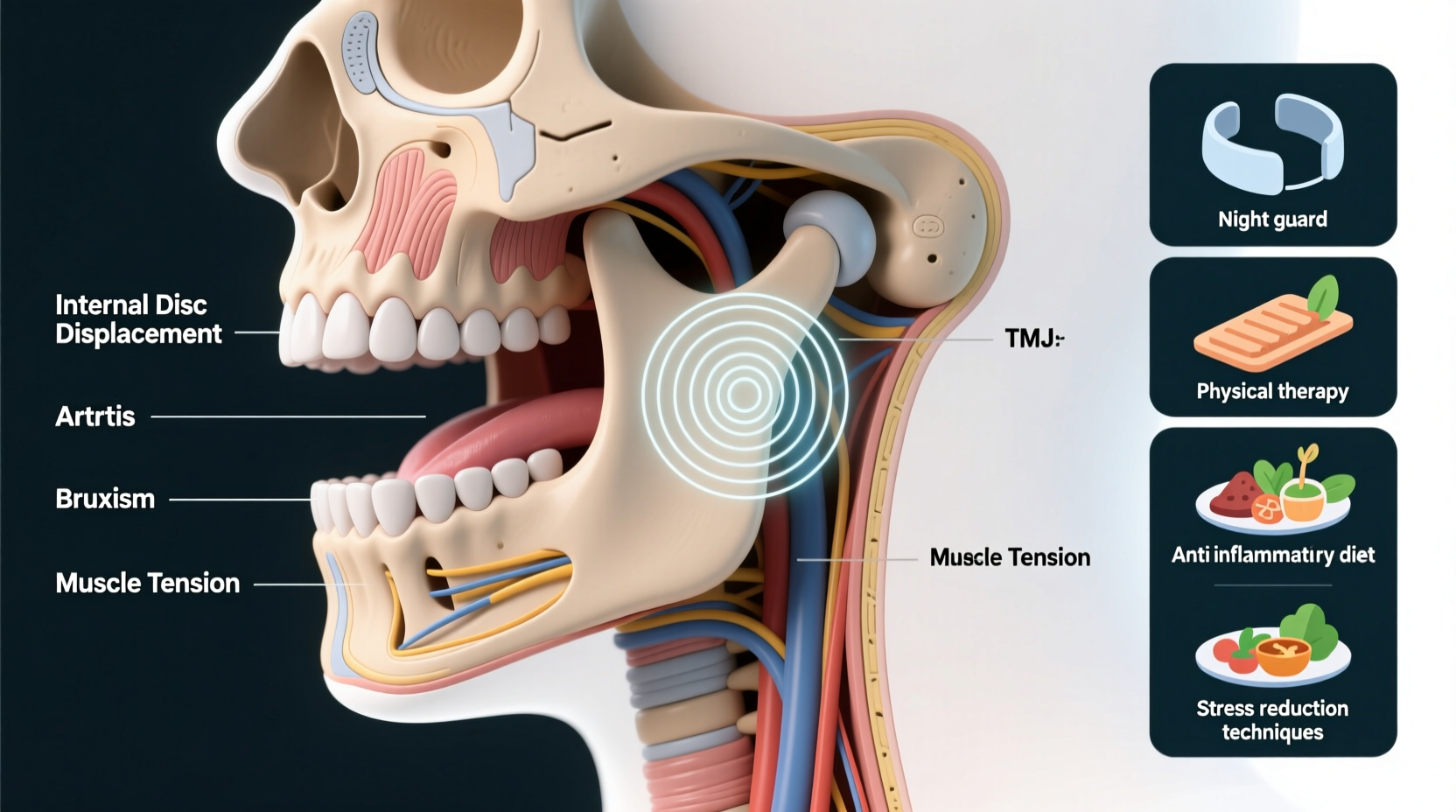
The TMJ acts like a hinge combined with a sliding joint, allowing your jaw to move up and down, side to side, and forward and back. A small disc of cartilage sits between the mandible (jawbone) and the temporal bone of the skull, cushioning movement and absorbing shock. This disc is held in place by ligaments and muscles. When everything functions smoothly, jaw motion is silent and pain-free. However, if the disc becomes displaced, inflamed, or worn down, it can lead to abnormal sounds such as clicking, popping, or grating during movement.
Jaw clicking often occurs when the disc temporarily slips out of alignment during jaw opening or closing. As the jaw moves, the disc may snap back into place, creating a pop. In mild cases, this happens without pain. But over time, repeated misalignment can irritate surrounding tissues, leading to discomfort, muscle tension, and even limited jaw mobility.
Common Causes of Jaw Clicking During Eating
Eating involves repetitive jaw movements that can exacerbate existing joint or muscle issues. Several conditions contribute to jaw clicking, ranging from mechanical imbalances to systemic diseases.
1. Temporomandibular Joint Disorder (TMD)
TMD refers to a group of conditions affecting the TMJ and surrounding muscles. It's the most frequent cause of jaw clicking. Misalignment of the articular disc, muscle tension, or joint inflammation can all produce audible snapping during chewing. TMD affects up to 15% of adults, with women more commonly affected than men, especially between ages 20–40.
2. Bruxism (Teeth Grinding or Clenching)
Chronic clenching or grinding—often occurring unconsciously during sleep or under stress—places excessive pressure on the TMJ. Over time, this strain can displace the joint disc or fatigue the muscles, resulting in clicking. Many patients report increased jaw noise after stressful periods or upon waking, linking bruxism directly to TMJ dysfunction.
3. Arthritis in the Jaw Joint
Osteoarthritis or rheumatoid arthritis can degrade the cartilage within the TMJ, leading to rough surfaces that grind or click during movement. Osteoarthritis typically develops with age or due to injury, while rheumatoid arthritis is an autoimmune condition that attacks joint linings. Both reduce smooth articulation and may cause progressive stiffness.
4. Trauma or Injury
A direct blow to the jaw, whiplash, or even dental procedures requiring prolonged mouth opening can damage the TMJ. Such injuries may dislocate the disc or stretch supporting ligaments, causing immediate or delayed onset of clicking.
5. Malocclusion and Bite Issues
While controversial among specialists, some dentists believe that misaligned teeth or an uneven bite can alter jaw mechanics, contributing to TMJ strain. If your upper and lower teeth don’t fit together properly, your jaw may shift unnaturally during chewing, increasing wear on the joint.
“Not every jaw click is dangerous, but consistent noise accompanied by pain or limitation should never be ignored. Early intervention prevents chronic degeneration.” — Dr. Alan Pierce, Oral & Maxillofacial Surgeon
When to Be Concerned: Red Flags to Watch For
Occasional, painless clicking is usually benign and may resolve on its own. However, certain symptoms indicate a need for professional evaluation:
- Pain in the jaw, face, neck, or ears during movement
- Difficulty opening or closing the mouth fully
- Jaw locking in an open or closed position
- Headaches, especially upon waking
- Clicking that worsens over time
- Swelling around the joint area
- Changes in how your teeth fit together
If any of these signs accompany jaw clicking, consult a dentist or TMJ specialist promptly. Left untreated, TMD can progress to chronic pain, joint degeneration, or permanent disc displacement.
Home Remedies and Lifestyle Adjustments
Mild cases of jaw clicking often respond well to conservative management. Implementing simple changes can relieve strain and restore normal joint function.
Diet Modifications
Switch to soft foods like soups, mashed potatoes, yogurt, and scrambled eggs. Cut food into small pieces to minimize wide jaw opening. Avoid tough meats, raw vegetables, popcorn, and sticky candies.
Heat and Cold Therapy
Apply a warm compress to the jaw for 15 minutes several times a day to relax tight muscles. Alternatively, use ice packs wrapped in cloth for 10 minutes to reduce inflammation after flare-ups.
Stress Management
Since emotional stress fuels bruxism and muscle tension, techniques like deep breathing, meditation, yoga, or counseling can reduce jaw strain. Mindfulness practices have been shown to decrease parafunctional habits like clenching.
Jaw Exercises
Gentle stretching and strengthening exercises can improve joint alignment and muscle coordination. Try these daily:
- Resisted Opening: Place thumb under chin and slowly open mouth, pushing gently against resistance. Hold for 5 seconds, repeat 5 times.
- Lateral Movement: Move jaw slowly to the left and right without opening, holding each side for 3 seconds. Repeat 10 times per side.
- Chin Tuck: Keep head level and pull chin straight back, creating a “double chin.” Hold 5 seconds, repeat 10 times.
Stop if pain increases. These exercises should feel like mild stretching, not strain.
Medical and Dental Treatments
When self-care isn’t enough, professional treatments offer targeted relief. Diagnosis typically begins with a clinical exam and may include imaging like MRI or CT scans to assess disc position and joint integrity.
| Treatment | How It Helps | Effectiveness |
|---|---|---|
| Occlusal Splint (Night Guard) | Reduces grinding and clenching; stabilizes joint | High for bruxism-related TMD |
| Physical Therapy | Improves muscle balance and joint mobility | Moderate to high |
| Corticosteroid Injections | Reduces inflammation in severe cases | Short-term relief |
| Orthodontics or Bite Adjustment | Corrects alignment issues contributing to strain | Controversial; case-dependent |
| Surgery (Arthroscopy or Open Joint) | Repairs or replaces damaged joint structures | Rarely needed; last resort |
Most patients respond well to non-invasive options. According to the American Academy of Orofacial Pain, over 85% of TMD cases improve with conservative therapy within six months.
Mini Case Study: Recovery Through Conservative Care
Sarah, a 32-year-old teacher, began noticing her jaw clicking loudly during meals. After a few weeks, she developed ear pain and difficulty yawning. Her dentist diagnosed early-stage TMD linked to nighttime bruxism. She was fitted with a custom night guard and prescribed gentle jaw exercises. Within two months, the clicking reduced significantly, and pain disappeared. Sarah also started practicing mindfulness meditation to manage work-related stress, which further improved her symptoms. No invasive treatment was needed.
Prevention Checklist
To protect your TMJ and avoid recurrence, follow this practical checklist:
- ✅ Avoid chewing gum and hard snacks
- ✅ Practice good posture—keep head aligned over spine
- ✅ Use a supportive pillow to prevent jaw strain during sleep
- ✅ Manage stress through regular exercise or relaxation techniques
- ✅ Visit your dentist annually for TMJ screening
- ✅ Wear a night guard if you grind your teeth
- ✅ Don’t cradle your phone between shoulder and ear
- ✅ Limit extreme jaw movements (e.g., wide yawns, large bites)
Frequently Asked Questions
Is jaw clicking always a sign of a serious problem?
No. Many people experience painless clicking without any underlying disease. However, if clicking is new, worsening, or associated with discomfort or restricted motion, it’s best to get evaluated.
Can a dentist fix a clicking jaw?
Yes. Dentists trained in TMJ disorders can diagnose the cause and provide treatments like splints, bite adjustments, or referrals to physical therapists. They play a key role in managing TMD.
Will jaw clicking go away on its own?
In many cases, yes—especially if triggered by temporary factors like stress or minor trauma. However, persistent clicking should not be ignored, as untreated TMD can lead to chronic joint damage.
Conclusion: Take Action Before It Gets Worse
Jaw clicking when eating is more than just a curious noise—it can be an early warning sign of joint dysfunction. While not all cases require urgent care, understanding the potential causes empowers you to make informed decisions about your oral health. Simple lifestyle adjustments, stress reduction, and timely professional guidance can halt progression and restore comfortable jaw function. Ignoring persistent symptoms risks long-term complications, including chronic pain and reduced quality of life.




 浙公网安备
33010002000092号
浙公网安备
33010002000092号 浙B2-20120091-4
Comments
No comments yet. Why don't you start the discussion?