
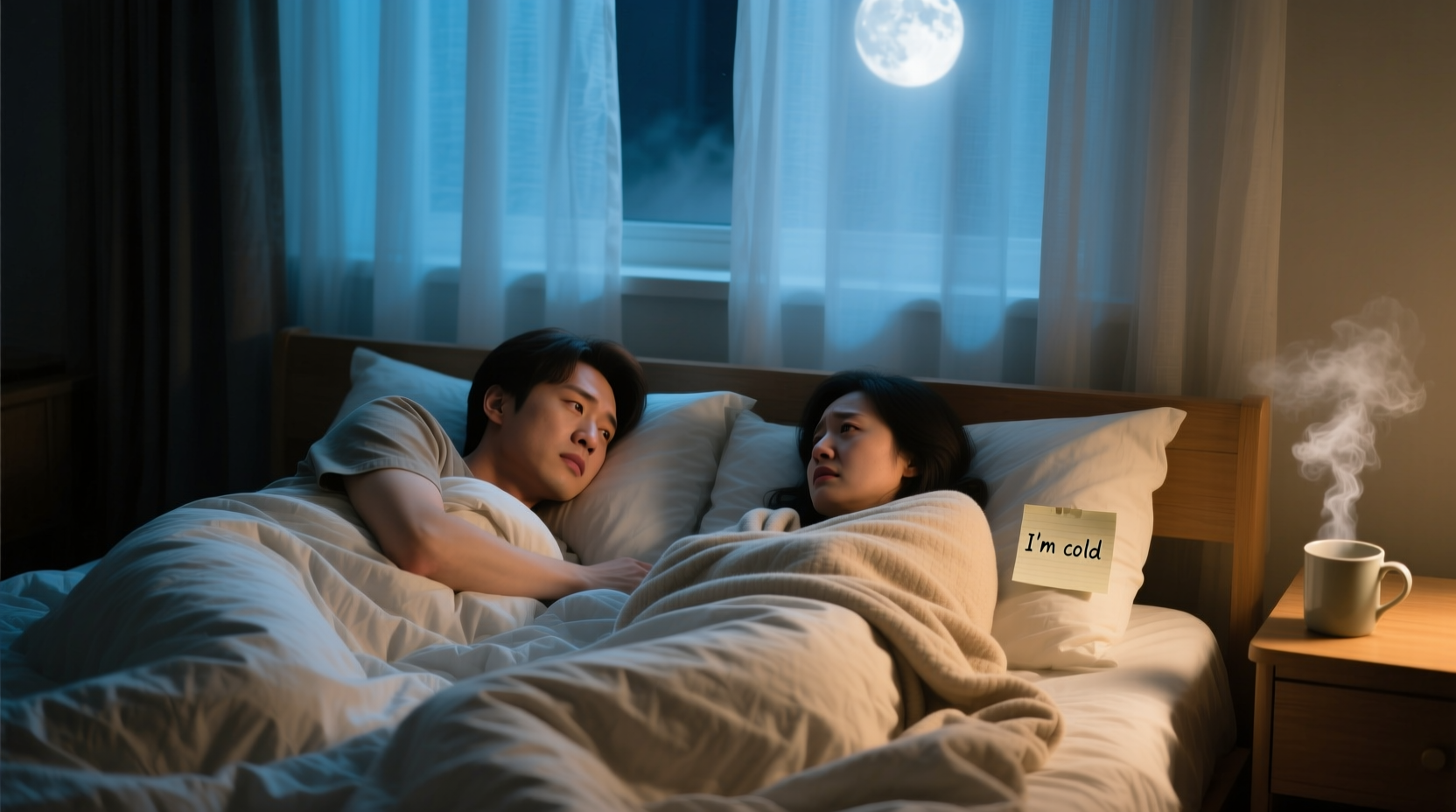
Sleeping with a partner should be comforting, yet one of the most common nighttime conflicts is blanket-related. One person pulls the covers tightly around themselves, only to wake up complaining they’re freezing. It’s confusing, frustrating, and oddly universal. Why does someone who clearly has all the blankets still feel cold? The answer lies in a mix of physiology, behavior, sleep cycles, and even subconscious habits. Understanding the root causes can transform this nightly tug-of-war into a shared solution—without resentment or frostbite.
The Science Behind Body Temperature and Sleep
Human body temperature naturally fluctuates throughout the 24-hour cycle, regulated by the circadian rhythm. Core body temperature drops slightly as bedtime approaches, signaling the brain that it’s time to sleep. This cooling process is essential for falling and staying asleep. However, individual differences in metabolism, circulation, and hormone levels affect how people experience warmth—or lack thereof—during the night.
Some individuals naturally run colder due to lower metabolic rates, reduced muscle mass, or conditions like anemia or hypothyroidism. Women, on average, tend to have lower skin temperatures than men, especially in extremities like hands and feet, making them more sensitive to cold even under warm bedding. Meanwhile, men often generate more heat but may struggle with overheating if covered too heavily.
This biological mismatch means that two people sharing a bed may have entirely different thermal comfort zones. One might kick off the covers to cool down, while the other scrambles to reclaim them seconds later.
Habitual Blanket Hogging: More Than Just Selfishness?
Blanket hogging isn’t always intentional. In many cases, it's a subconscious behavior rooted in deep sleep patterns. During certain stages of sleep—particularly REM (rapid eye movement) sleep—the body experiences muscle atonia, meaning voluntary muscles are temporarily paralyzed. But fine motor control, such as hand and arm movements, can still occur.
In this semi-conscious state, people may instinctively pull the blanket closer when they feel a draft or momentary chill. They aren’t aware they’re doing it. By morning, one side of the bed looks like a snowdrift formed overnight, while the other resembles a desert.
Psychologically, the act of wrapping oneself in fabric mimics nesting or self-soothing behaviors. Feeling enclosed provides a sense of security, which promotes deeper sleep. So even if your partner doesn’t need extra warmth, their nervous system may drive them to cocoon.
“During sleep, we revert to primal instincts—seeking warmth, safety, and containment. Blanket-hogging is less about greed and more about unconscious comfort-seeking.” — Dr. Lena Torres, Sleep Psychologist and Author of *Dream Spaces*
Why Cold Complaints Persist Despite Full Coverage
If your partner has the entire duvet wrapped around them like a burrito, how can they possibly say they’re cold? There are several explanations:
- Poor insulation distribution: Even under layers, if the blanket slips or bunches unevenly, exposed areas (especially feet and shoulders) lose heat rapidly.
- Internal vs. external temperature perception: A person might feel warm where the blanket touches but still perceive overall coldness due to poor blood circulation or room drafts.
- Overheating followed by chills: Pulling too many covers can cause localized sweating. As sweat evaporates, it cools the skin suddenly, leading to shivering—even if the room is warm.
- Dream-induced thermoregulation: Vivid dreams or nightmares can trigger physiological responses, including chills or goosebumps, prompting complaints upon waking regardless of actual temperature.
In some cases, the complaint isn’t about physical cold but emotional discomfort. People who feel insecure or anxious during sleep may interpret minor sensations as extreme cold—a signal for needing closeness or reassurance.
Practical Solutions for Peaceful Co-Sleeping
Resolving the blanket battle requires compromise, communication, and a few strategic adjustments. Here’s a step-by-step approach to achieving thermal harmony:
- Assess individual needs: Have an honest conversation about each person’s ideal sleep temperature. Track symptoms like night sweats, cold feet, or frequent tossing for a week to identify patterns.
- Upgrade bedding setup: Invest in dual-comfort solutions such as two lightweight blankets instead of one heavy one, allowing each person to manage their own layer.
- Use a double duvet technique: Some couples use two single duvets inside a larger cover. This way, each person controls their own warmth without encroaching on the other.
- Regulate room temperature: Aim for a bedroom climate between 60–67°F (15–19°C), which supports optimal sleep for most adults. Use fans, heaters, or smart thermostats to maintain consistency.
- Wear appropriate sleepwear: Thermal pajamas, bed socks, or heated blankets for the colder partner can reduce dependency on shared covers.
| Solution | Best For | Effectiveness (1–5) |
|---|---|---|
| Two separate duvets | Couples with vastly different temp preferences | ★★★★★ |
| Weighted blanket (shared) | Anxiety-driven blanket pulling | ★★★☆☆ |
| Heated mattress pad (half-bed) | Partner with poor circulation | ★★★★☆ |
| Cooling sheets + warm socks combo | Mismatched heat tolerance | ★★★★☆ |
| Negotiated “blanket zones” | Mild conflicts, high cooperation | ★★★☆☆ |
Mini Case Study: The Blanket Truce That Saved a Relationship
A couple in Portland, Oregon—Sarah and Mark—struggled with nightly blanket fights for over three years. Sarah, who had Raynaud’s syndrome, needed constant warmth, while Mark frequently woke up drenched in sweat. Their arguments escalated until they considered sleeping in separate rooms.
After consulting a sleep therapist, they implemented the double-duvet method using two tog-rated blankets (one light, one medium) zipped into a queen-sized duvet cover. Sarah wore bed socks and used a low-setting heated pad on her side. Mark switched to bamboo sheets known for breathability.
Within two weeks, both reported better sleep quality and fewer conflicts. “It sounds silly,” Sarah said, “but solving the blanket issue made us feel like teammates again.”
Checklist: Achieve Blanket Harmony Tonight
- ☐ Discuss each partner’s sleep temperature preferences openly
- ☐ Evaluate current bedding: material, weight, coverage
- ☐ Try layering with individual blankets or split duvets
- ☐ Adjust bedroom thermostat to 65°F (18°C) as a baseline
- ☐ Add personal warmth tools: socks, heated pads, or cooling pillows
- ☐ Observe results for 5–7 nights before adjusting further
- ☐ Reassess weekly and celebrate small improvements
Frequently Asked Questions
Can anxiety really make someone feel cold even under blankets?
Yes. Anxiety activates the sympathetic nervous system, which can redirect blood flow away from extremities and toward vital organs. This creates a sensation of coldness, particularly in hands and feet. Additionally, stress hormones like cortisol can disrupt normal thermoregulation during sleep.
Is it better to sleep with or without socks?
For people who run cold, wearing clean, non-restrictive bed socks improves circulation and helps retain heat. However, socks made from synthetic materials or worn too tightly can cause overheating or restrict blood flow. Opt for merino wool or cotton blends designed for sleep.
What’s the best type of blanket for couples with different temperature needs?
Layered bedding offers the most flexibility. Start with a flat sheet, add a lightweight blanket for the warmer partner, and a heavier one for the cooler partner. Alternatively, use a reversible duvet with different tog ratings on each side. Some brands now offer “dual-climate” comforters engineered for split preferences.
Conclusion: Turn Conflict Into Connection
The paradox of blanket hogging and cold complaints isn’t just about fabric—it’s about understanding. Behind every midnight tug-of-war is a human trying to meet their basic need for comfort and safety. When approached with curiosity rather than criticism, this common friction can become an opportunity to deepen intimacy through collaboration.
Small changes in bedding, environment, and communication can yield dramatic improvements in sleep quality and relationship satisfaction. Instead of viewing the situation as a zero-sum game—where one person wins and the other freezes—redefine it as a shared project. Test solutions together, laugh at the absurdity of tangled sheets, and remember that sometimes, the simplest acts of care begin under the same cover.




 浙公网安备
33010002000092号
浙公网安备
33010002000092号 浙B2-20120091-4
Comments
No comments yet. Why don't you start the discussion?