
You spritz your favorite perfume in the morning with confidence, only to realize by midday that it’s nearly gone. No one comments on your scent. You sniff your wrist—nothing. It’s frustrating, especially when a bottle costs more than a nice dinner. Yet some people wear the same fragrance and still catch whiffs of it hours later. What gives? The truth is, perfume longevity isn’t just about the product—it’s about chemistry, concentration, and how you use it. Understanding these factors can transform your experience from fleeting whispers to enduring elegance.
The Science Behind Scent Longevity
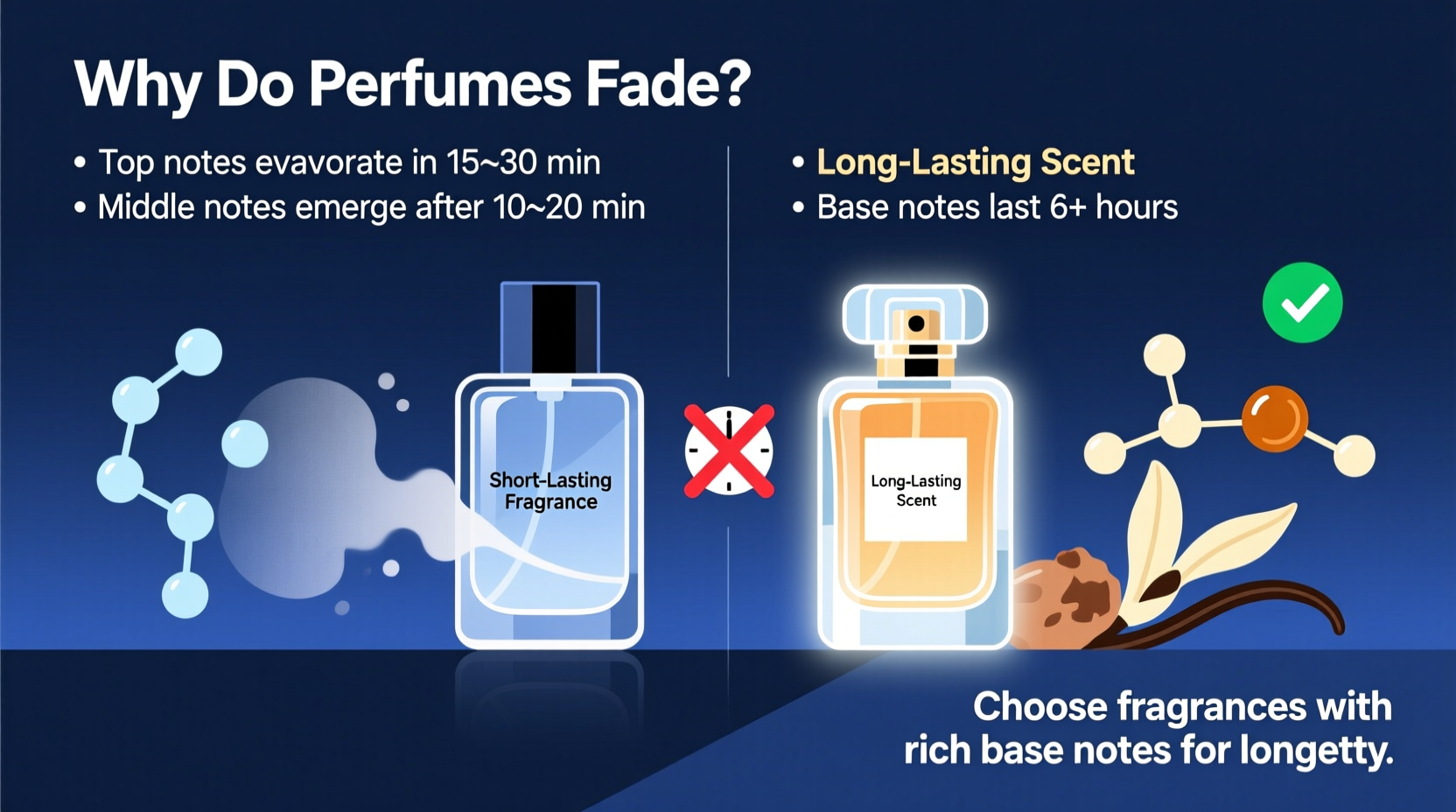
Perfume doesn’t simply \"disappear\"—it evaporates in stages dictated by its composition. Fragrances are built using a pyramid structure: top, middle (heart), and base notes. Top notes are light, volatile molecules like citrus or herbs that hit your nose first but fade within 15–30 minutes. Heart notes—floral, spicy, or fruity elements—emerge next and last for several hours. Base notes, such as sandalwood, vanilla, musk, or amber, are heavy and slow to evaporate, forming the foundation of long-lasting scents.
However, even a well-structured fragrance may not last if external or biological factors interfere. Skin chemistry plays a pivotal role. Your pH level, sebum (oil) production, hydration, and even diet influence how fragrance interacts with your body. For instance, dry skin lacks the natural oils needed to hold onto scent molecules, causing perfumes to vanish faster. Oily skin tends to retain fragrance longer because oils help anchor aromatic compounds.
“Fragrance is not just a product—it’s a dialogue between chemistry and biology. Two people wearing the same perfume may experience entirely different results.” — Dr. Laura Harper, Cosmetic Chemist & Perfume Formulation Expert
Fragrance Concentrations: Know What You're Buying
Not all perfumes are created equal. The concentration of aromatic oils determines both intensity and staying power. Many consumers assume “perfume” means maximum longevity, but labeling can be misleading. Here's a breakdown of common fragrance types:
| Type | Oil Concentration | Average Longevity | Best For |
|---|---|---|---|
| Eau de Cologne (EDC) | 2% – 4% | 1 – 2 hours | Daytime freshness, hot weather |
| Eau de Toilette (EDT) | 5% – 10% | 2 – 4 hours | Casual wear, office environments |
| Eau de Parfum (EDP) | 10% – 15% | 4 – 8 hours | Evening events, cooler seasons |
| Parfum (Extrait) | 15% – 30% | 6 – 12+ hours | Special occasions, signature scents |
If your current fragrance fades within an hour, check the label. An EDT might be the culprit. Upgrading to an EDP or parfum version of the same scent can dramatically improve performance without changing your preferred aroma.
Skin Type and Application: The Hidden Variables
Your skin is the canvas for perfume, and its condition directly affects longevity. Dry skin absorbs fragrance quickly and releases it fast. If you notice your perfume vanishing, consider your skincare routine. Moisturizing before applying fragrance creates a barrier that slows evaporation.
Apply an unscented lotion or petroleum jelly to pulse points before spraying. This technique traps scent molecules and provides a neutral base, preventing unwanted interactions with other fragranced products. Avoid layering multiple scented lotions or deodorants, which can distort or weaken your perfume.
Application method also matters. Spraying on clothes can extend life, especially with heavier base notes like patchouli or oud. However, be cautious with delicate fabrics—alcohol in perfumes can cause staining or deterioration over time. When applying to skin, target warm areas: wrists, behind ears, base of the throat, and inner elbows. These spots emit heat, helping diffuse the scent gradually.
- Do not rub your wrists together after spraying—this breaks down top notes and accelerates evaporation.
- Avoid spraying directly into hair—alcohol can dry strands and alter scent projection.
- Reapply strategically: carry a travel atomizer for touch-ups during long days.
Real Example: The Office Worker’s Dilemma
Sophie, a project manager in Toronto, loved a popular floral-citrus EDT. She applied it each morning, but by 10:30 a.m., her coworkers couldn’t detect it. After switching to a moisturizing routine with a neutral body cream and upgrading to the EDP version of the same fragrance, she noticed a dramatic change. Not only did the scent last until lunch, but colleagues began complimenting her on her “soft, lingering aroma.” Her simple adjustments—hydration and concentration upgrade—solved what felt like an unsolvable problem.
Choosing Long-Lasting Scents: A Strategic Approach
Selecting a fragrance that lasts requires more than liking the initial spray. Many fall in love with bright top notes only to be disappointed when the heart and base don’t follow through. To make smarter choices, adopt a structured testing process.
- Test on your skin, not paper strips. Paper cannot replicate how a scent evolves with body heat and chemistry.
- Wait at least 4–6 hours before judging. Revisit the scent after work or dinner to assess its true staying power.
- Smell subtly. Olfactory fatigue sets in quickly. Step outside or smell coffee beans to reset your nose.
- Consider seasonality. Light, fresh scents thrive in summer but dissipate faster. Rich, warm fragrances (oriental, gourmand, woody) perform better in cold months and typically last longer.
- Look for key long-lasting ingredients. Vanilla, amber, musk, vetiver, incense, tobacco, and resins like benzoin are known for their tenacity.
Checklist: How to Pick a Long-Lasting Perfume
- ✅ Choose Eau de Parfum (EDP) or Parfum concentration
- ✅ Apply to moisturized skin or use a scent-free base
- ✅ Focus on base notes during testing, not just opening impressions
- ✅ Avoid over-applying—2–3 sprays are usually sufficient
- ✅ Store perfume properly to maintain integrity (see below)
- ✅ Match fragrance weight to climate: lighter in summer, heavier in winter
Storage and Shelf Life: Preserving Your Investment
Even the most enduring fragrance degrades if stored improperly. Heat, light, and air exposure break down aromatic compounds. A perfume kept on a sunny bathroom counter may lose potency in under a year. To maximize shelf life:
- Store in a cool, dark place—inside a drawer or closet is ideal.
- Keep the cap tightly closed to minimize oxidation.
- Avoid humid areas like bathrooms where temperature fluctuates.
- Original boxes provide extra protection from light and should be retained if possible.
Most perfumes last 3–5 years unopened, and 1–3 years once opened, depending on formulation. Citrus and green notes degrade fastest; oriental and woody fragrances age more gracefully. If your perfume smells sour, flat, or overly alcoholic, it’s likely past its prime.
Frequently Asked Questions
Why does my perfume last longer on some days than others?
Your skin’s condition varies daily. Hydration levels, stress, hormonal changes, diet (especially spicy foods), and medications can all alter how your skin interacts with fragrance. On well-hydrated, calm days, scents tend to last longer.
Can I make any perfume last longer without buying a new one?
Yes. Apply an unscented moisturizer before spraying, focus on pulse points, avoid rubbing your wrists, and consider layering with a matching scented balm if available. Storing the bottle properly also ensures the formula remains effective over time.
Is it true that expensive perfumes last longer?
Not necessarily. Price reflects branding, packaging, and marketing as much as quality. Some affordable niche or designer fragrances outperform luxury ones in longevity. Always test for yourself rather than relying on price as an indicator.
Expert Insight: The Role of Perfumer Intent
It’s important to recognize that not all perfumes are designed to last all day. Some modern fragrances prioritize a soft, intimate aura over strong projection. As perfumer Julien Dossena explains:
“Today’s trends favor subtlety. A fragrance that lingers close to the skin is often intentional—not a flaw. The art is in balance: presence without intrusion.” — Julien Dossena, Master Perfumer at Symrise
If you prefer bold, long-lasting scents, seek out fragrances described as “intense,” “extrait,” “concentrated,” or “parfum.” These are crafted with endurance in mind.
Final Thoughts: Building a Lasting Scent Wardrobe
Finding a perfume that stays with you throughout the day is less about luck and more about informed choices. Start by understanding your skin type and how it interacts with fragrance. Upgrade to higher concentrations when needed, and always test with patience—don’t decide based on the first impression alone. Pair smart application with proper storage, and your favorite scents will reward you with depth and duration.
Remember, a great fragrance tells a story that unfolds over time. The opening is just the beginning. With the right knowledge, you can ensure that story doesn’t end too soon.




 浙公网安备
33010002000092号
浙公网安备
33010002000092号 浙B2-20120091-4
Comments
No comments yet. Why don't you start the discussion?