
Every December, veterinarians see a predictable uptick in emergency visits: dogs with oral burns, cats with intestinal obstructions, and panicked owners holding frayed cords and singed fur. Christmas lights—seemingly innocuous strands of festive illumination—are among the top 10 non-food household hazards reported to the ASPCA Animal Poison Control Center during the holiday season. Yet most pet owners are baffled when their usually gentle Labrador snaps at tinsel-wrapped wires or their curious kitten pounces on a dangling strand. This isn’t misbehavior. It’s biology, instinct, and environment converging in ways that put pets at real risk. Understanding the *why* is the first step toward effective, compassionate prevention—not punishment.
The Real Reasons Pets Chew Christmas Lights
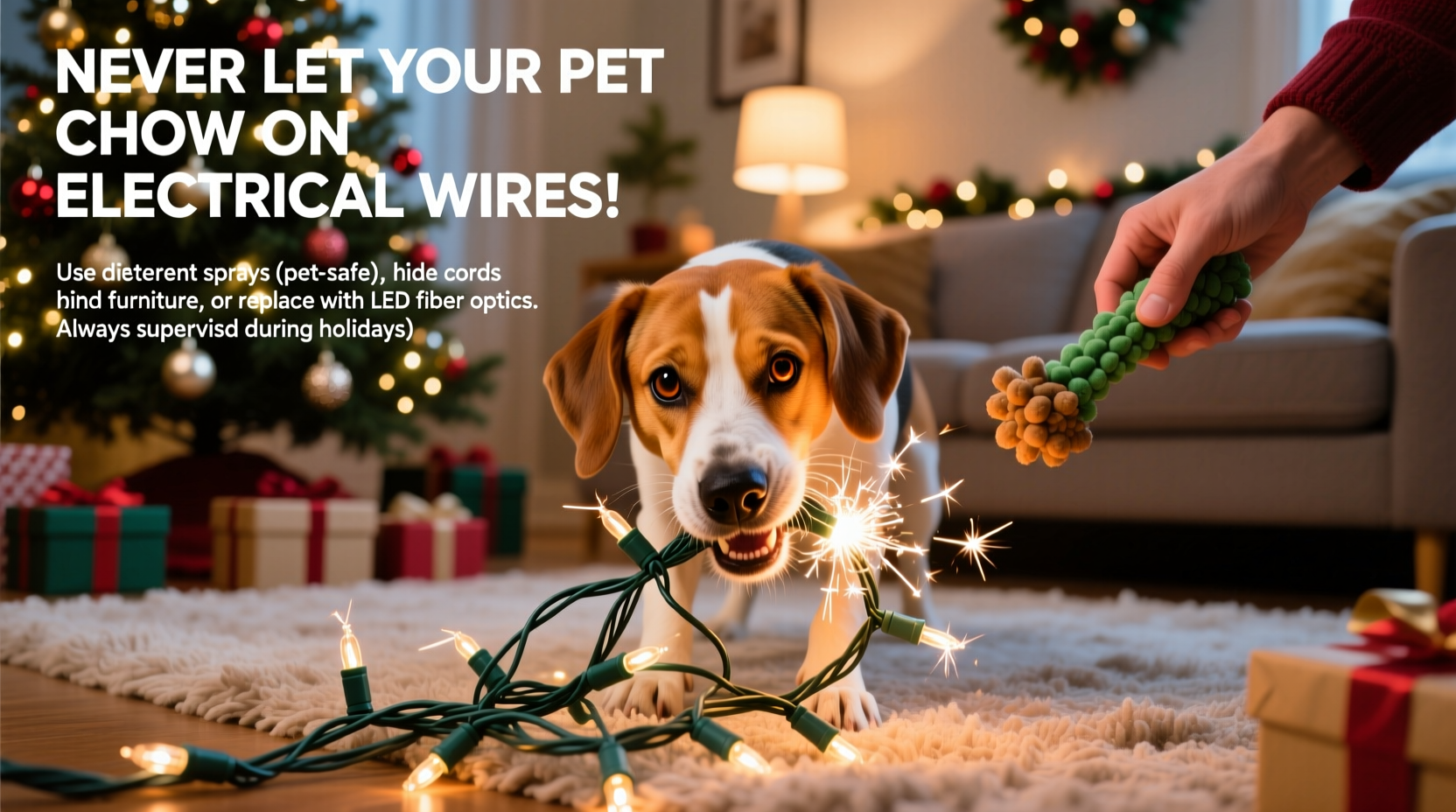
Chewing isn’t random mischief. It’s driven by identifiable physiological and psychological triggers—many amplified during the holidays. Puppies and kittens chew as part of teething and sensory exploration; adult dogs may chew due to boredom, anxiety, or nutritional gaps; and cats often target moving or reflective objects due to predatory drive. Holiday-specific factors intensify these instincts:
- Sensory stimulation: Twinkling lights mimic prey movement. The faint hum of low-voltage LED strings (often imperceptible to humans) registers as vibration for dogs’ sensitive hearing and whisker systems.
- Novelty and access: Decorations introduce new textures—plastic casings, flexible copper wiring, rubberized coatings—all unfamiliar and intriguing to mouths accustomed to routine toys.
- Stress displacement: Increased foot traffic, loud music, unfamiliar guests, and disrupted routines elevate cortisol in pets. Chewing releases endorphins, serving as self-soothing behavior.
- Olfactory cues: Some light cords contain plasticizers like phthalates or residual manufacturing oils that emit faint, appealing scents to dogs’ 300 million olfactory receptors—far more than humans’ 6 million.
Crucially, chewing lights poses three distinct dangers: electrocution (especially with older incandescent strings or damaged insulation), thermal injury from hot bulbs or short-circuiting components, and gastrointestinal obstruction from ingested plastic, wire, or glass shards.
Vet-Approved Prevention Strategies That Actually Work
Traditional deterrents—bitter apple spray, yelling, or confining pets to another room—fail because they address symptoms, not causes. Effective prevention combines environmental management, behavioral reinforcement, and species-specific needs. Here’s what veterinary behaviorists and certified animal trainers recommend:
Step-by-Step Light-Safe Setup Timeline
- Week Before Decorating: Audit your pet’s daily routine. Is playtime consistent? Are walks shortened due to weather? Add one 15-minute enrichment session (e.g., snuffle mat, frozen KONG) to reduce baseline stress.
- Decorating Day (Before Lights Go Up): Secure all light cords *first* using cord clips screwed into baseboards—not tape or Velcro, which pets can dislodge. Route cords behind furniture or inside cord covers designed for pet households (look for chew-resistant ABS plastic).
- Light Installation: Hang lights *only* where pets cannot reach—minimum 7 feet high for cats, 5 feet for dogs. Use battery-operated LED strings for lower-level trees or tabletop displays. Avoid plug-in adapters near floor level.
- First 72 Hours: Supervise all interactions with the decorated tree or mantel. Redirect attention immediately with a high-value chew (e.g., bully stick for dogs, catnip-filled teaser wand for cats) when they approach cords.
- Ongoing (Holiday Season): Rotate safe chew toys weekly to maintain novelty. Check all light strands daily for exposed wires, melted casings, or chew marks—even if no damage is visible, retire any cord handled by a pet.
Do’s and Don’ts: A Safety Comparison Table
| Action | Do | Don’t |
|---|---|---|
| Cord Management | Use screw-mounted cord clips and rigid conduit covers rated for pet resistance (e.g., “PetCord Guard”) | Rely on adhesive tape, zip ties (easily chewed), or hiding cords under rugs (traps heat, encourages digging) |
| Tree Safety | Anchor tree to wall with a pet-proof bracket; use only battery-powered lights below 3 feet | Place tree near stairs or furniture pets can jump from; hang ornaments or lights within paw/swipe range |
| Distraction Strategy | Offer species-appropriate enrichment 15 minutes before unsupervised time near decor (e.g., lick mat with yogurt for dogs, food puzzle for cats) | Leave pets unattended near decorations—even for “just five minutes”—or use punishment-based corrections |
| Emergency Prep | Keep ASPCA Animal Poison Control (888-426-4435) and your vet’s after-hours number saved; have hydrogen peroxide (for vet-directed vomiting) and gauze on hand | Administer home remedies like milk (ineffective for electrical burns) or induce vomiting without vet guidance (risk of aspiration) |
A Real Example: How Maya Saved Her Golden Retriever’s Life
Maya, a dog trainer in Portland, Oregon, noticed her 2-year-old Golden Retriever, Jasper, fixating on the blinking lights of her pre-lit tree stand weeks before Thanksgiving. He’d nose the cord, then whine softly—a classic sign of conflicted arousal, not aggression. Instead of waiting for an incident, she implemented a targeted plan: she installed a motion-activated air canister (Ssscat) aimed at the base of the tree, paired with daily “leave-it” training using low-value treats near unplugged cords, and introduced a rotating schedule of frozen broth cubes in silicone molds. Within 10 days, Jasper stopped approaching the tree entirely. When Maya later discovered he’d chewed through a neighbor’s garden hose (a known texture preference), she replaced his evening chew with a Himalayan yak chew—dense, long-lasting, and satisfying his need for sustained oral engagement. Jasper spent Christmas Eve napping beside the tree, not gnawing it.
“Chewing Christmas lights isn’t ‘bad behavior’—it’s a communication. Your pet is saying, ‘I’m stressed,’ ‘I’m bored,’ or ‘This feels interesting in a way my toys don’t.’ Punishment breaks trust; understanding builds safety.” — Dr. Lisa Radosta, DVM, Board-Certified Veterinary Behaviorist, Florida Veterinary Behavior Service
Species-Specific Solutions You Can Implement Tonight
One-size-fits-all advice fails because dogs and cats experience the world differently. Their motivations, sensory priorities, and physical capabilities demand tailored approaches.
Dogs: Address the Drive, Not Just the Cord
Dogs chew for oral satisfaction, stress relief, or to fulfill hunting instincts (retrieving, tugging). Preventive actions include:
- Provide appropriate outlets: Offer durable, food-rewarded chews (e.g., elk antler for power chewers, rubber toys stuffed with peanut butter for moderate chewers). Rotate weekly to prevent habituation.
- Build impulse control: Practice “leave-it” with low-distraction items first (e.g., a treat on the floor), then progress to unplugged light cords placed on a table. Reward calm observation—not just avoidance.
- Reduce environmental triggers: If your dog fixates on twinkling lights, cover the tree with a lightweight, breathable fabric drape during unsupervised hours—never plastic, which poses suffocation risk.
Cats: Redirect the Predator, Not the Paw
Cats rarely chew lights out of hunger—they’re drawn to movement, reflection, and texture. Their small size and agility mean standard cord management often fails. Better solutions:
- Eliminate visual triggers: Use matte-finish LED strings instead of glossy or mirrored bulbs. Avoid flickering modes or color-changing settings that mimic prey darting.
- Install vertical barriers: Place double-sided tape or aluminum foil strips along baseboard edges near the tree—cats dislike the texture and sound. Pair with a tall, stable cat tree nearby to redirect climbing energy.
- Engage the hunt: Schedule two 5-minute interactive play sessions daily using wand toys that mimic erratic movement—satisfying the predatory sequence (stare-chase-pounce-bite) so lights lose appeal.
Frequently Asked Questions
What if my pet already chewed a light cord? What do I do immediately?
Unplug the strand instantly—even if the pet seems fine. Examine the mouth for burns, bleeding, or embedded fragments. Do not induce vomiting unless instructed by a veterinarian (electrical burns can worsen with gastric acid exposure). Call your vet or an emergency clinic immediately—even asymptomatic pets need evaluation for internal injuries or delayed arrhythmias. Bring the light packaging if possible; voltage and bulb type inform treatment.
Are LED lights safer than traditional incandescent ones?
LEDs run cooler and use lower voltage (typically 2–5V DC vs. 120V AC for incandescents), reducing burn and electrocution risk. However, they’re not risk-free: lithium batteries in battery-operated strings pose ingestion hazards, and the plastic casings remain chewable. Always choose UL-listed, pet-rated LEDs with reinforced insulation—and never assume “LED = safe.”
Can I train my pet to ignore decorations permanently?
Yes—with consistency and positive reinforcement—but it requires ongoing maintenance. Dogs and cats retain learned associations best when trained in short, frequent sessions (3–5 minutes, 2x/day) and reinforced with high-value rewards. Expect setbacks during travel, illness, or household changes. The goal isn’t perfection—it’s building reliable alternatives that make chewing lights irrelevant to their daily coping toolkit.
Conclusion: Protect More Than Just Your Lights
Your pet’s fascination with Christmas lights isn’t defiance. It’s a window into their needs—needs for safety, stimulation, and stability amid seasonal chaos. Every chewed cord is a signal, not a sin. By replacing fear-based restrictions with science-backed prevention—securing cords with hardware-grade solutions, enriching their environment with species-appropriate challenges, and honoring their biological drives—you do more than safeguard holiday decor. You deepen trust. You reduce anxiety. You affirm that their well-being matters as much as your festive joy. This season, let your greatest decoration be peace of mind: knowing your home is truly safe, your pet is understood, and your celebrations are shared—not compromised—by those who love you most unconditionally.




 浙公网安备
33010002000092号
浙公网安备
33010002000092号 浙B2-20120091-4
Comments
No comments yet. Why don't you start the discussion?