
Itching after applying skincare products is more common than many realize—but that doesn’t mean it should be ignored. What starts as a mild tingle can quickly escalate into persistent discomfort, redness, or even skin damage if left unchecked. While some sensations are normal with certain active ingredients, consistent or worsening itchiness often signals an underlying issue. Understanding the causes, recognizing warning signs, and knowing when to seek professional help can protect your skin’s health and prevent long-term irritation.
Common Causes of Facial Itching from Skincare Products
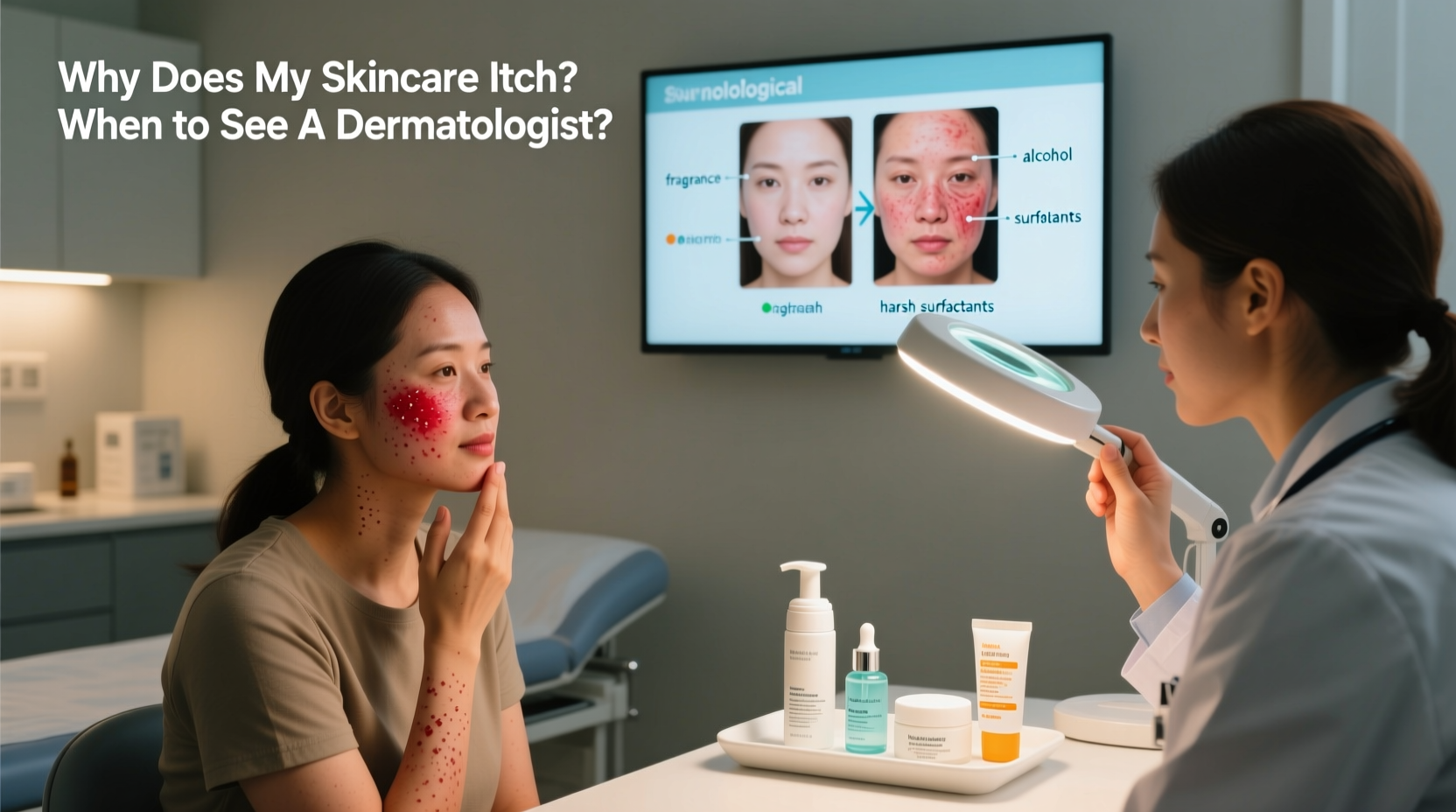
Facial skin is among the most sensitive on the body, making it highly reactive to external stimuli. When your skincare routine triggers itching, the culprit is rarely just one factor—it’s often a combination of product ingredients, application habits, and individual skin biology.
- Allergic reactions: Ingredients like fragrances, preservatives (e.g., parabens, formaldehyde releasers), essential oils, and botanical extracts can provoke allergic contact dermatitis in susceptible individuals.
- Irritant reactions: Harsh surfactants, alcohol-based toners, and high concentrations of acids (like glycolic or salicylic acid) may strip the skin barrier, leading to dryness and itchiness.
- Over-exfoliation: Using chemical exfoliants or physical scrubs too frequently disrupts the skin’s natural protective layer, increasing sensitivity and triggering itch.
- New product introduction: Introducing multiple new products at once makes it difficult to identify which ingredient is causing the reaction.
- Moisturizer mismatch: Some occlusive or emollient-rich moisturizers can trap irritants or cause clogged pores, especially in acne-prone or oily skin types, leading to itching and breakouts.
How to Identify the Trigger in Your Routine
Pinpointing the exact cause of facial itching requires methodical evaluation. Start by reviewing your current regimen step-by-step. Ask yourself: Did the itching begin after introducing a specific product? Is it localized to one area, suggesting uneven application or residue buildup?
- Simplify your routine: Strip down to just a gentle cleanser and fragrance-free moisturizer for 5–7 days to allow your skin to reset.
- Reintroduce products one at a time: Add back each product every 3–5 days, monitoring for any return of symptoms.
- Check ingredient labels: Look for known allergens such as limonene, linalool, fragrance (parfum), phenoxyethanol, and lanolin.
- Note timing: Does itching occur immediately after application, or several hours later? Immediate stinging often points to irritation; delayed reactions (6–24 hours) suggest allergy.
Keep a skincare journal to track products used, application times, and symptom onset. This log becomes invaluable when discussing your concerns with a dermatologist.
When Sensitivity Crosses the Line: Signs You Need Professional Help
Not all skin reactions resolve on their own. Persistent or escalating symptoms indicate that home adjustments aren’t enough. Dermatologists emphasize that delaying treatment can lead to chronic inflammation, post-inflammatory hyperpigmentation, or secondary infections from scratching.
“Facial itching that lasts beyond two weeks despite discontinuing suspected products warrants medical evaluation. Early intervention prevents progression to chronic dermatoses.” — Dr. Lena Torres, Board-Certified Dermatologist
Consider seeing a dermatologist if you experience any of the following:
- Itching persists for more than 10–14 days after stopping all new products
- Visible rash, scaling, or oozing develops
- Symptoms spread beyond the face to neck, ears, or eyelids
- You develop swelling, blistering, or burning pain
- Over-the-counter hydrocortisone provides only temporary relief
- You have a history of eczema, rosacea, or allergic conditions
Diagnosis and Testing: What to Expect at the Dermatologist
A dermatologist will conduct a thorough assessment to determine whether your reaction is irritant-induced, allergic, or part of an underlying skin condition. The process typically includes:
- Clinical examination: Visual inspection of affected areas, including texture, color changes, and distribution pattern.
- Patch testing: Small amounts of common allergens are applied to the back using adhesive patches. After 48 and 72 hours, the site is examined for delayed hypersensitivity reactions.
- Medical history review: Discussion of your skincare habits, product usage, allergies, and family history of skin disorders.
- Differential diagnosis: Ruling out conditions like seborrheic dermatitis, perioral dermatitis, or fungal infections that mimic allergic reactions.
Based on findings, your dermatologist may prescribe topical corticosteroids, calcineurin inhibitors (like tacrolimus), or oral antihistamines. They’ll also guide you in rebuilding a safe, effective skincare routine tailored to your skin type and sensitivities.
Skincare Do’s and Don’ts for Itch-Prone Skin
| Do | Don't |
|---|---|
| Use fragrance-free, hypoallergenic products labeled “for sensitive skin” | Use products with added fragrance, alcohol, or essential oils |
| Apply moisturizer within 60 seconds of cleansing to lock in hydration | Apply multiple actives (retinoids, acids, vitamin C) simultaneously |
| Wash face with lukewarm water—never hot | Scratch or rub irritated areas vigorously |
| Introduce one new product at a time, waiting 5–7 days between additions | Use washcloths, loofahs, or abrasive scrubs on inflamed skin |
| Store products in a cool, dark place to prevent ingredient degradation | Share skincare tools or apply products with unwashed hands |
Real-Life Scenario: A Case of Misguided Skincare Enthusiasm
Sophia, a 28-year-old marketing professional, began experiencing intense facial itching two weeks after launching what she called her “glow-up routine.” She had introduced a vitamin C serum, exfoliating toner, retinol cream, and clay mask—all within ten days. Initially, she dismissed the mild tingling as a sign the products were “working.” But soon, her cheeks became persistently red and itchy, especially at night.
After three weeks of worsening symptoms and failed attempts with OTC creams, Sophia visited a dermatologist. Upon reviewing her regimen, the doctor diagnosed her with compromised skin barrier and irritant contact dermatitis. Patch testing revealed no true allergy, but overuse of actives had stripped her skin’s natural lipids.
The prescribed recovery plan included a six-week “skin rehab” phase: only a non-foaming cleanser, ceramide-based moisturizer, and daily sunscreen. Actives were reintroduced gradually, one every four weeks. Within two months, Sophia’s skin stabilized—and she learned that more products don’t equal better results.
Prevention Checklist: Building a Safe Skincare Routine
To avoid future flare-ups, follow this actionable checklist:
- ✅ Patch test all new products before full-face application
- ✅ Read ingredient lists carefully—avoid known irritants based on your skin history
- ✅ Limit active ingredients to one per routine (e.g., use retinol at night or exfoliant in the morning—not both)
- ✅ Use lukewarm water and pat skin dry—never rub
- ✅ Choose creamy, non-foaming cleansers if you have dry or sensitive skin
- ✅ Apply sunscreen daily—even indoors—to prevent UV-aggravated sensitivity
- ✅ Replace old products regularly; expired formulations can degrade and become irritating
- ✅ Consult a dermatologist before starting potent treatments like prescription retinoids or acids
Frequently Asked Questions
Can natural or organic skincare cause itching?
Yes. Many assume “natural” means safer, but plant-based ingredients like tea tree oil, lavender, chamomile, and citrus extracts are common allergens. Organic products often lack preservatives, which can lead to microbial growth and contamination—another source of irritation.
Is it normal for retinol to make my face itch?
Mild tingling or dryness during initial retinol use is common, especially in the first 2–4 weeks. However, persistent itching, redness, or peeling indicates overuse or incorrect application. Always start with a pea-sized amount twice weekly, buffer with moisturizer, and avoid combining with other exfoliants.
Should I stop all skincare if my face itches?
Not necessarily. Abruptly stopping everything can leave skin unprotected and dehydrated. Instead, scale back to a minimalist routine: a gentle cleanser, soothing moisturizer (with ceramides or colloidal oatmeal), and sunscreen. Reintroduce other products slowly once symptoms resolve.
Conclusion: Listen to Your Skin and Act with Confidence
Your skin communicates through sensation. Itching is not just discomfort—it’s a signal that something in your environment or routine needs adjustment. While trial and error is part of finding the right skincare, persistent reactions demand attention, not endurance. By understanding ingredient risks, respecting your skin’s limits, and knowing when to involve a professional, you protect not only your complexion but your overall well-being.




 浙公网安备
33010002000092号
浙公网安备
33010002000092号 浙B2-20120091-4
Comments
No comments yet. Why don't you start the discussion?