
Smoothies are a staple of modern healthy living—packed with nutrients, quick to make, and endlessly customizable. But there’s one frustration many home blenders know all too well: open the fridge the next morning, only to find your once-creamy smoothie split into layers, with liquid pooling at the bottom and pulp floating on top. It's unappetizing, inconvenient, and makes you question whether it’s still safe to drink.
The truth is, separation is a natural physical process, not a sign of spoilage. Understanding *why* it happens—and how to prevent or minimize it—can transform your smoothie experience from frustrating to flawless. Whether you're meal-prepping breakfasts for the week or making an extra-large batch for the family, keeping your smoothie creamy is entirely possible with the right ingredients, techniques, and storage practices.
The Science Behind Smoothie Separation
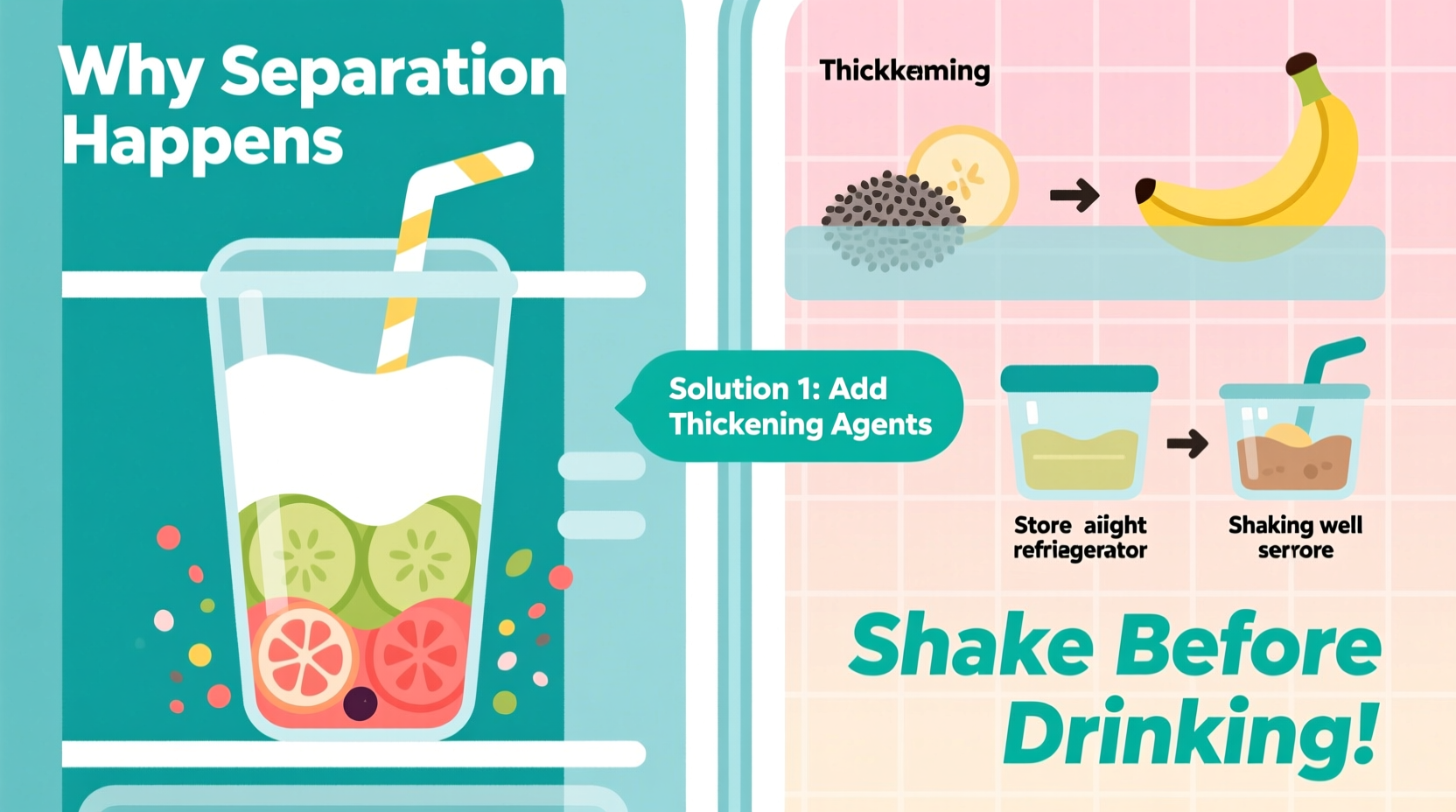
Smoothie separation occurs due to differences in density and molecular composition among the ingredients. When blended, components like fruit pulp, leafy greens, liquids (water, milk, juice), oils, and powders form a temporary emulsion—a mixture where substances that don’t naturally blend stay suspended together through mechanical force (blending).
However, this emulsion is unstable. Once blending stops, gravity begins to act. Heavier solids (like banana chunks or chia seeds) sink, while lighter liquids rise. Additionally, enzymes in fruits such as pineapple and papaya break down proteins and fibers over time, accelerating breakdown. This process, known as sedimentation and enzymatic degradation, is completely normal but can be managed.
“Separation isn’t a flaw—it’s physics. The key is creating a more stable suspension using ingredient synergy and smart preparation.” — Dr. Lena Patel, Food Scientist & Nutritional Biochemist
Key Factors That Cause Smoothies to Separate
Several variables influence how quickly and severely a smoothie separates. Recognizing these helps you adjust your recipe and method accordingly.
1. Ingredient Density Differences
Liquids like almond milk or water are less dense than fibrous fruits or nut butters. Over time, they naturally migrate upward. High-water-content fruits (e.g., watermelon, oranges) release juice as they sit, contributing to layering.
2. Lack of Emulsifiers or Stabilizers
Commercial smoothies often contain gums (like xanthan or guar gum) or lecithin to stabilize texture. Homemade versions usually lack these, making them more prone to separation unless natural alternatives are used.
3. Blending Technique and Duration
Under-blending leaves large particles that settle faster. Conversely, over-blending can introduce excess air, leading to foaming and quicker phase separation when chilled.
4. Temperature Changes
Refrigeration slows molecular movement but doesn’t stop settling. Cold temperatures can also cause certain fats (like those in avocado or coconut oil) to thicken unevenly, altering texture distribution.
5. Time Spent Stored
The longer a smoothie sits, the more pronounced separation becomes. While most smoothies remain safe for 24–48 hours, creaminess degrades significantly after just a few hours.
How to Keep Your Smoothie Creamy: Proven Strategies
Maintaining a smooth, uniform texture starts long before refrigeration. It’s about choosing the right ingredients, blending effectively, and storing properly.
Choose Ingredients That Naturally Stabilize Texture
Incorporate components that act as natural thickeners and emulsifiers:
- Avocado: Adds creaminess and healthy fats that resist separation.
- Banana (frozen): Provides pectin and fiber, helping bind water and solids.
- Oats : Absorb liquid and create a gel-like consistency when blended.
- Chia or flax seeds: Expand in liquid, forming a viscous gel that stabilizes mixtures.
- Nut butters: Contain natural oils and proteins that help emulsify the blend.
Add Natural Emulsifiers
A small amount of lecithin (sunflower or soy) can dramatically improve stability. Just ½ teaspoon per serving prevents oil and water phases from splitting. Xanthan gum (¼ tsp) thickens without altering flavor and is especially effective in green smoothies with high leafy green content.
Optimize Your Blending Process
Order matters. Follow this sequence for optimal emulsion:
- Start with liquids (milk, yogurt, juice).
- Add soft ingredients (greens, herbs).
- Follow with frozen items (fruit, ice).
- Finish with powders and superfoods.
This layering ensures even processing. Blend for 45–60 seconds until completely smooth—no visible chunks or swirls. Pause and scrape sides if needed.
Use the Right Storage Method
Airtight glass jars with narrow necks reduce surface exposure and slow oxidation. Fill to the top to minimize air pockets, which contribute to texture changes. Label with date and time for freshness tracking.
Avoid Common Mistakes
| Mistake | Why It Causes Separation | Solution |
|---|---|---|
| Using mostly watery fruits (e.g., melon, citrus) | High water content accelerates layering | Bulk up with oats, avocado, or banana |
| Adding ice instead of frozen fruit | Ice melts quickly, diluting the mix | Use frozen bananas or berries instead |
| Storing in wide-mouth containers | Increases air contact and temperature fluctuation | Use narrow-neck bottles or mason jars |
| Not shaking before consumption | Fails to recombine settled layers | Always shake vigorously or re-blend briefly |
Step-by-Step Guide to Making a Non-Separating Smoothie
Follow this routine to maximize creaminess and shelf life:
- Gather ingredients: 1 cup spinach, ½ frozen banana, ¼ avocado, 1 tbsp oats, 1 tbsp almond butter, 1 cup unsweetened almond milk, ½ tsp chia seeds, optional: ¼ tsp xanthan gum.
- Layer in blender: Pour in almond milk first, then add spinach, oats, chia seeds, almond butter, banana, and avocado on top.
- Blend thoroughly: Start on low, increase to high, blend for 60 seconds until silky smooth.
- Pour immediately: Transfer to a clean, dry 16-oz glass jar with a tight-sealing lid.
- Minimize headspace: Leave no more than ½ inch of air at the top.
- Label and refrigerate: Store at 40°F (4°C) or below. Consume within 24 hours for best quality.
- Before drinking: Shake hard for 20–30 seconds or pour back into blender for 10 seconds.
Real-Life Example: Meal-Prepping Without the Mess
Sarah, a busy nurse working 12-hour shifts, used to make smoothies every morning but found herself dumping half-drank separated drinks by midday. After switching to a standardized recipe with frozen banana, oats, and sunflower lecithin, she began prepping five smoothies every Sunday night. Stored in identical amber glass bottles, each lasted through her weekday rotations with minimal separation. A quick shake revived the texture perfectly.
“I was skeptical about adding ‘weird’ ingredients like lecithin,” she said, “but now I can’t tell the difference between day-one and day-two smoothies. It’s been a game-changer.”
Checklist: How to Prevent Smoothie Separation
Keep this checklist handy when preparing or storing smoothies:
- ✅ Use at least one creamy base (avocado, banana, yogurt)
- ✅ Include a natural thickener (oats, chia, flax)
- ✅ Add a pinch of xanthan gum or lecithin (optional but effective)
- ✅ Blend until completely smooth—no visible particles
- ✅ Store in airtight, narrow-neck containers
- ✅ Minimize air space in the container
- ✅ Refrigerate immediately at 40°F or lower
- ✅ Shake well or re-blend before drinking
- ✅ Consume within 24 hours for optimal texture and nutrient retention
Frequently Asked Questions
Is a separated smoothie still safe to drink?
Yes. Separation is a physical change, not a sign of spoilage. As long as the smoothie has been refrigerated and consumed within 48 hours (and shows no signs of mold, sour smell, or off taste), it’s safe. Shake or stir well before drinking.
Can I freeze my smoothie to prevent separation?
Absolutely. Freezing halts separation entirely. Pour into freezer-safe containers, leaving an inch of space for expansion. Thaw in the fridge overnight or blend frozen with a splash of liquid for a thick, icy texture. Note: some texture changes may occur upon thawing, especially with high-water fruits.
Why do store-bought smoothies stay mixed longer?
Commercial brands use industrial-grade blenders, pasteurization, and stabilizers like pectin, cellulose gum, or ascorbic acid. They may also homogenize the mixture under high pressure, creating a far more stable emulsion than typical home equipment can achieve.
Final Thoughts: Make Separation a Thing of the Past
Smoothie separation isn’t inevitable—it’s manageable. With an understanding of food science and a few strategic tweaks, you can enjoy consistently creamy, satisfying smoothies even when made ahead of time. The goal isn’t perfection but practicality: a drink that looks good, tastes great, and fits seamlessly into your lifestyle.
Small adjustments—like swapping water for yogurt, adding a spoonful of oats, or investing in quality storage jars—add up to big improvements. You don’t need fancy equipment or obscure ingredients. What you do need is consistency and attention to detail.




 浙公网安备
33010002000092号
浙公网安备
33010002000092号 浙B2-20120091-4
Comments
No comments yet. Why don't you start the discussion?