
Smoothies are a go-to for quick nutrition—packed with fruits, vegetables, protein, and healthy fats. But if you’ve ever returned to your glass after a few minutes only to find a watery layer on the bottom and a dense pulp on top, you’re not alone. Separation isn’t just unappealing—it can make your smoothie harder to drink and diminish the experience. The good news? This issue is predictable, preventable, and often fixable with the right knowledge and ingredients.
The science behind smoothie separation lies in the natural behavior of liquids and solids when blended. While blending temporarily suspends particles, gravity eventually wins. However, certain ingredients act as stabilizers by altering viscosity, binding water, or creating emulsions. Understanding how and why this happens allows you to craft smoothies that stay uniform from first sip to last.
Why Smoothies Separate: The Science Behind the Split
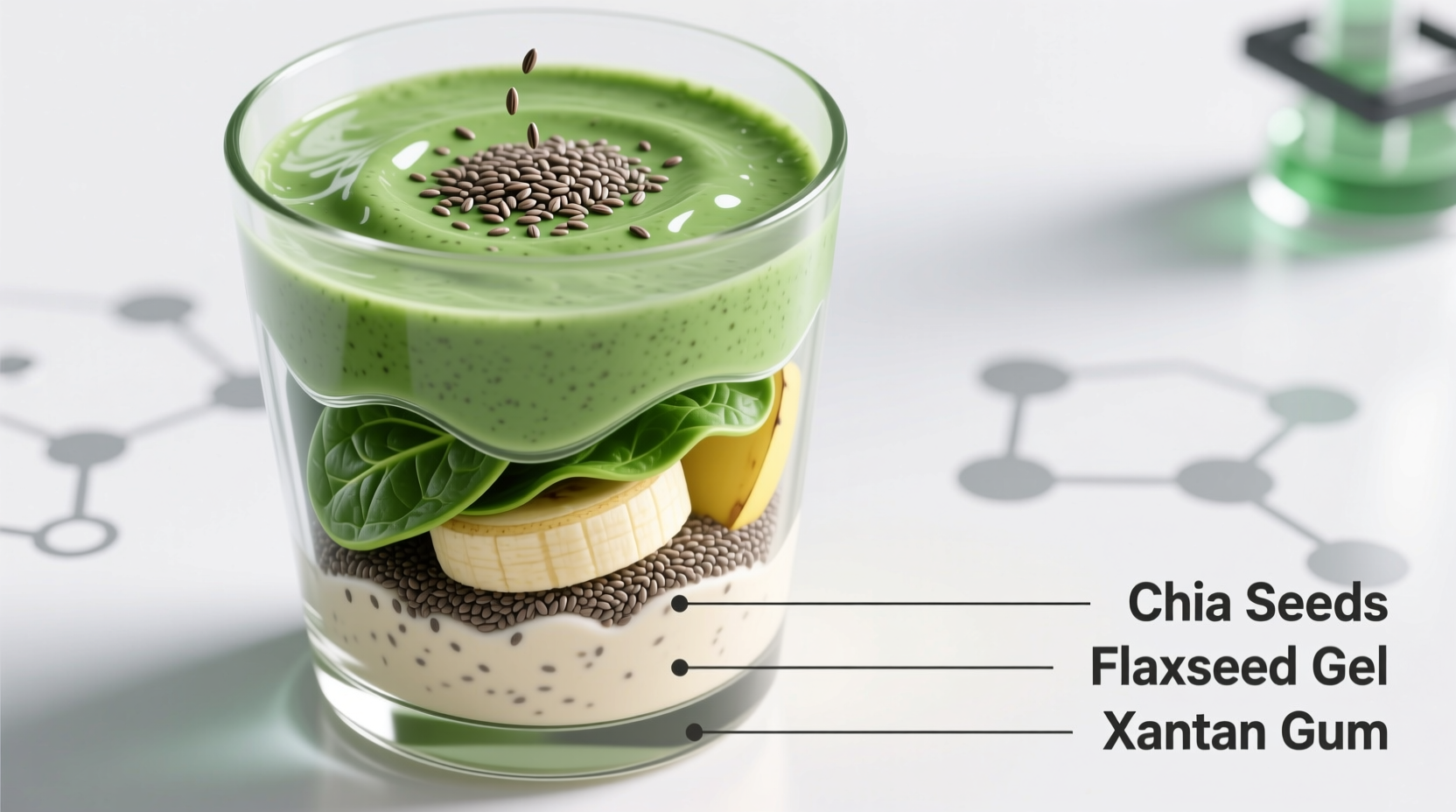
Smoothie separation occurs due to differences in density, solubility, and molecular interaction between ingredients. When you blend components like banana, spinach, almond milk, and protein powder, they form a temporary suspension—not a true solution. Over time, heavier particles sink while lighter liquids rise.
This process is accelerated by several factors:
- Liquid-heavy bases: Using too much juice or low-viscosity milk alternatives (like rice milk) increases fluidity, making separation faster.
- Fruit ripeness: Overripe bananas release more free water, contributing to layering.
- Blending time: Under-blending leaves larger particles that settle quickly; over-blending can break down fibers excessively, reducing structural support.
- Temperature: Cold ingredients slow separation slightly, but room temperature storage speeds it up.
The key isn’t eliminating separation entirely—some degree is natural—but slowing it down enough that your smoothie remains drinkable and evenly mixed for at least 30–60 minutes.
Stabilizing Ingredients That Work: What Actually Makes a Difference
Not all thickening agents are created equal. Some add texture without real stabilization, while others actively interfere with phase separation through emulsification or gel formation. Here’s a breakdown of proven stabilizers backed by food science.
Xanthan Gum: The Invisible Hero
A microbial polysaccharide used widely in gluten-free baking and commercial beverages, xanthan gum is one of the most effective stabilizers for homemade smoothies. It works by increasing viscosity and preventing particle settling through pseudoplasticity—meaning it flows easily when shaken but resists separation at rest.
Just 1/8 to 1/4 teaspoon per 16 oz smoothie is enough. Too much creates a slimy texture, so precision matters.
Chia Seeds and Flaxseeds: Natural Hydrocolloids
When soaked in liquid, chia and ground flaxseeds release soluble fiber (mucilage), forming a gel matrix that traps water and suspends solids. They also add omega-3s and fiber, making them doubly beneficial.
For best results, pre-soak 1 tablespoon of seeds in 3 tablespoons of water for 10–15 minutes before blending. Alternatively, blend dry seeds thoroughly to break cell walls and activate hydration during mixing.
Oats: More Than Just Bulk
Old-fashioned oats contain beta-glucan, a soluble fiber that forms a viscous network in water. This not only thickens the smoothie but improves mouthfeel and slows sedimentation.
Use 2–4 tablespoons of rolled oats per serving. Quick oats work too, but avoid instant flavored varieties loaded with sugar and additives.
Natural Nut Butters: Emulsifiers in Disguise
Peanut, almond, and cashew butters contain natural oils and proteins that help create emulsions. Their lecithin content binds water and fat, reducing oil pooling and water separation.
Opt for stirred-style nut butters (without palm oil stabilizers) for cleaner ingredient profiles. Stir well before use to ensure even distribution.
Banana and Avocado: Structural Supporters
Ripe bananas and avocados contribute pectin and starches that increase body. Bananas offer mild gelling properties, while avocado adds creamy fat dispersion. Both improve texture but aren’t strong enough alone to prevent long-term separation.
Use them as part of a broader strategy, not as standalone fixes.
“Even small amounts of hydrocolloid gums like xanthan can dramatically extend shelf stability in plant-based beverages.” — Dr. Lena Torres, Food Scientist, University of California, Davis
Comparison of Common Stabilizers: Effectiveness and Trade-offs
| Ingredient | Dose (per 16oz) | Separation Delay | Pros | Cons |
|---|---|---|---|---|
| Xanthan Gum | 1/8 – 1/4 tsp | 45–75 min | Highly effective, minimal quantity needed | Can become slimy if overdosed |
| Chia Seeds (soaked) | 1 tbsp + soak | 30–60 min | Nutritious, whole-food source | Adds texture, requires prep |
| Rolled Oats | 2–4 tbsp | 20–40 min | Fiber-rich, filling | May dull fruity flavors |
| Almond Butter | 1–2 tbsp | 25–50 min | Adds creaminess and protein | High calorie, may separate if poorly blended |
| Plain Yogurt | 1/4 cup | 30–50 min | Probiotics, acidity enhances flavor | Not vegan, may curdle with citrus |
Step-by-Step Guide to Building a Stable Smoothie
Creating a smoothie that resists separation doesn’t require lab equipment—just a thoughtful order of operations. Follow this sequence for optimal results:
- Add liquid base first: Start with ¾ cup of milk, kefir, or plant-based alternative. Avoid watery juices as primary liquids.
- Incorporate stabilizer: Add xanthan gum, soaked chia, or oats now. Blend briefly (5–10 seconds) to disperse evenly.
- Add creamy elements: Include yogurt, nut butter, avocado, or banana. These help build structure.
- Add frozen ingredients: Introduce frozen fruit or ice last to maintain cold temperature and aid emulsification.
- Blend thoroughly: Use high speed for 45–60 seconds until completely smooth. Pause and scrape sides if needed.
- Immediate consumption or storage: If storing, keep in a sealed jar and shake vigorously before drinking—even stabilized smoothies benefit from agitation.
Real Example: From Separating Disaster to Consistent Success
Sarah, a busy nurse working 12-hour shifts, relied on morning smoothies for breakfast but grew frustrated when hers separated within 15 minutes—often leaving her with a gritty bottom layer she couldn’t drink. Her original recipe was simple: spinach, frozen mango, orange juice, and a scoop of vanilla protein powder.
After researching stabilization methods, she revised her formula: replaced half the orange juice with oat milk, added 1 tablespoon of pre-soaked chia seeds, and included 1 teaspoon of almond butter. She also began blending the liquid and chia first for 10 seconds before adding other ingredients.
The result? Her smoothie stayed uniformly mixed for over an hour—long enough to last through her commute and morning rounds. She now preps three jars weekly using this method and reports better satiety and no waste.
Common Mistakes That Accelerate Separation
Even with stabilizers, poor technique can undermine your efforts. Watch out for these pitfalls:
- Using only juice as a base: High sugar, low viscosity. Dilute with thicker liquids like coconut milk or yogurt.
- Skipping the pre-blend step: Adding all ingredients at once leads to uneven dispersion of stabilizers.
- Overloading with fibrous greens: Too much kale or raw spinach introduces insoluble fiber that settles quickly. Balance with soft fruits.
- Improper storage: Leaving a smoothie uncovered or in a warm environment speeds phase separation.
- Ignoring pH balance: Highly acidic ingredients (citrus, pineapple) can denature proteins and weaken emulsions. Pair with buffering agents like banana or oats.
FAQ: Your Stabilization Questions Answered
Can I use psyllium husk as a smoothie stabilizer?
Yes, but cautiously. Psyllium husk is a powerful soluble fiber that forms a dense gel. Use only 1/2 teaspoon per smoothie, and always blend immediately—otherwise, it thickens rapidly and becomes hard to drink. Best suited for gut-health-focused recipes.
Is there a vegan alternative to yogurt for stabilization?
Absolutely. Unsweetened coconut yogurt, silken tofu, or soaked cashews blended into cream provide similar thickening and emulsifying effects without animal products. Silken tofu, in particular, offers protein and neutral taste with excellent suspension properties.
Do I need a high-speed blender for stabilization to work?
While high-speed blenders (like Vitamix or Blendtec) produce smoother textures and better emulsification, they aren’t mandatory. With proper ingredient sequencing and sufficient blending time (up to 90 seconds in standard blenders), you can achieve stable results. Pre-grinding oats or seeds helps compensate for lower power.
Final Checklist: Build Your Next Smoothie Like a Pro
Before pressing “blend,” run through this checklist to minimize separation risk:
- ☑ Liquid base includes at least 50% thickener-friendly milk (oat, soy, coconut)
- ☑ At least one functional stabilizer included (xanthan, chia, oats, nut butter)
- ☑ Chia or flax pre-soaked if not finely ground
- ☑ Creamy component present (avocado, yogurt, banana)
- ☑ Blending order followed: liquids → stabilizers → soft ingredients → frozen items
- ☑ Blended for full duration (minimum 45 seconds on high)
- ☑ Stored properly if not consumed immediately (sealed container, refrigerated)
Conclusion: Turn Separation Into a Thing of the Past
Smoothie separation is common, but it doesn’t have to be inevitable. With a basic understanding of food chemistry and a few smart ingredient choices, you can create drinks that stay smooth, satisfying, and evenly nutritious from start to finish. Whether you're fueling a workout, packing a lunch, or meal-prepping for the week, a stable smoothie enhances both convenience and enjoyment.
Start small—add a pinch of xanthan gum or a spoonful of chia seeds to your next blend. Observe the difference. Refine your ratios. Soon, you’ll develop a personalized formula that works flawlessly for your taste and lifestyle. The perfect smoothie isn’t just about flavor—it’s about function, too.




 浙公网安备
33010002000092号
浙公网安备
33010002000092号 浙B2-20120091-4
Comments
No comments yet. Why don't you start the discussion?