
A sourdough starter that smells sharply of vinegar can be alarming, especially if you're new to fermentation. That pungent, acidic odor often raises concerns: Is it spoiled? Did I do something wrong? The truth is, a vinegar-like aroma is usually not a sign of failure—it's a signal from your microbial ecosystem. Sourdough starters are living cultures of wild yeast and lactic acid bacteria, and their scent changes based on feeding schedules, temperature, hydration, and microbial balance. Understanding what causes the vinegar smell—and how to correct it—can turn confusion into confidence in your sourdough journey.
What Causes the Vinegar Smell?
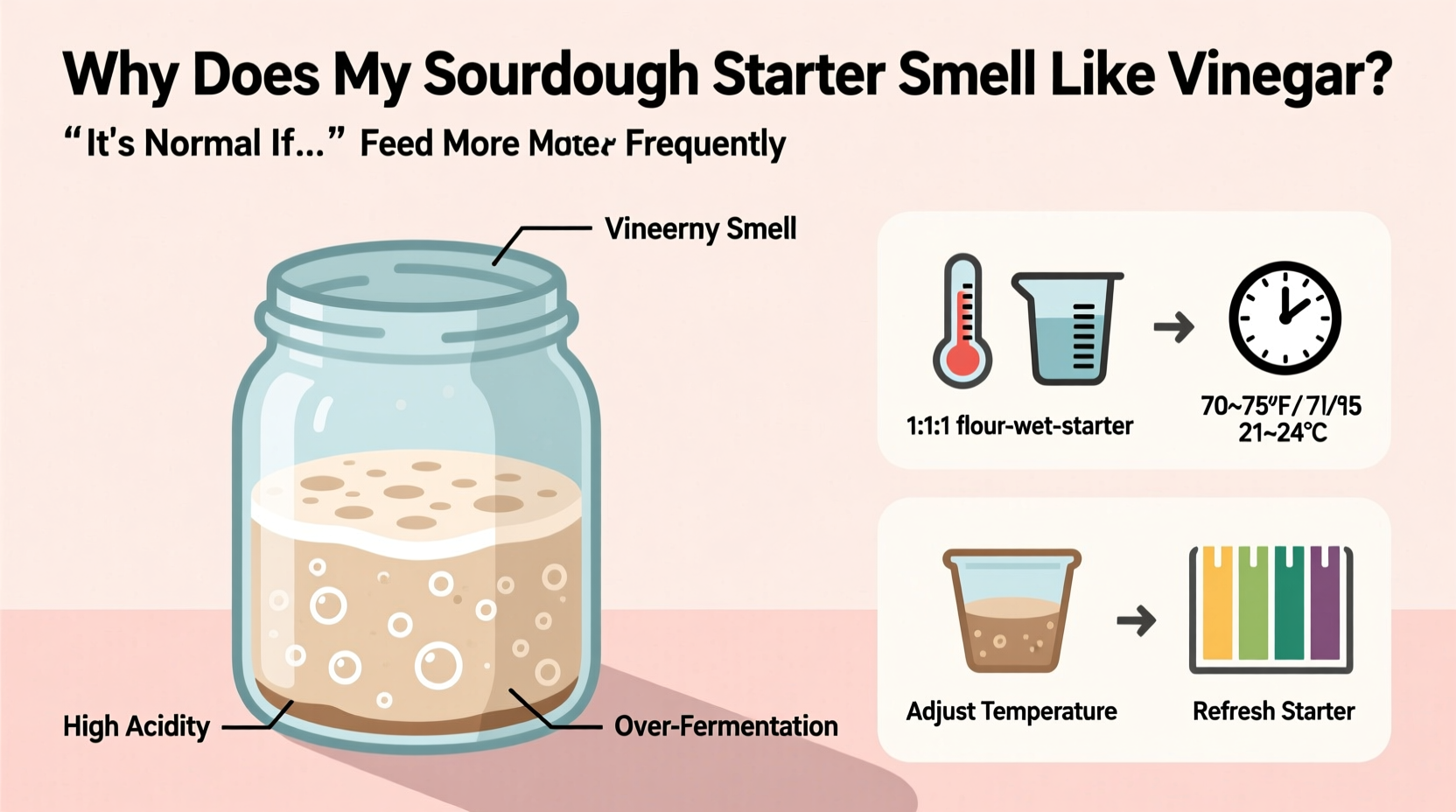
The sharp, acetic acid scent commonly associated with vinegar comes primarily from Acetobacter and certain strains of lactic acid bacteria that produce acetic acid as a byproduct of fermentation. While some acetic acid is normal and even desirable for flavor complexity in bread, an overpowering vinegar smell typically indicates an imbalance in your starter’s environment.
Several factors contribute to elevated acetic acid production:
- Infrequent feeding: When a starter goes too long without fresh flour and water, the microbes exhaust available sugars and begin producing more acidic waste.
- Low temperatures: Cold environments slow down yeast activity more than bacterial activity, allowing acid-producing bacteria to dominate.
- High hydration levels: Wet starters (above 100% hydration) favor lactic acid bacteria that produce milder acids, but under stress, they may shift toward acetic acid production.
- Prolonged storage in the fridge: Refrigeration slows yeast metabolism significantly, giving acid-producing bacteria time to accumulate acetic compounds.
- Use of chlorinated water: Chlorine and chloramines can inhibit yeast growth while being less harmful to certain bacteria, indirectly promoting acidity.
“An acidic, vinegary aroma isn’t inherently bad—it reflects microbial activity. But when it overwhelms other aromas, it’s time to rebalance.” — Dr. Kirsten Shockey, Fermentation Scientist and Author
Step-by-Step Guide to Restoring Your Starter
If your starter reeks of vinegar but still shows signs of life (bubbles, rise after feeding), it can almost always be revived. Follow this structured recovery process over 3–5 days to restore microbial harmony.
- Discard most of the starter: Keep only about 20g of the original culture. This reduces acidity concentration and gives fresh microbes room to thrive.
- Feed with equal parts unbleached all-purpose or whole grain flour and lukewarm water (1:1 ratio): For example, mix 20g starter + 40g flour + 40g water. Whole rye or whole wheat flour boosts microbial diversity and can help jumpstart yeast populations.
- Feed every 12 hours at room temperature (70–75°F / 21–24°C): Consistent feeding prevents starvation and encourages yeast dominance.
- Stir well before each feed: Oxygen exposure helps suppress anaerobic acid producers and supports aerobic yeast growth.
- Monitor changes daily: Look for increased bubbling within 4–6 hours after feeding, a domed rise, and a tangy-but-balanced aroma (think yogurt or ripe fruit, not nail polish remover).
- After 3–4 days of twice-daily feeding, test for strength: Perform a float test (drop a spoonful in water—if it floats, it’s ready). If it passes, proceed to bake. If not, continue feeding once more.
Do’s and Don’ts for Managing Acidity
| Do’s | Don’ts |
|---|---|
| Feed regularly—at least every 24 hours at room temp, or weekly if refrigerated | Leave your starter unfed for more than 7 days at room temperature |
| Store in a loosely covered container to allow gas exchange | Seal your starter in an airtight jar—this traps CO₂ and increases acidity |
| Use whole grain flours periodically to boost microbial health | Rely solely on bleached white flour, which lacks nutrients for robust fermentation |
| Keep your starter in a warm spot (ideally 70–78°F) | Place it near drafty windows, AC units, or cold countertops |
| Stir or whisk your starter daily to introduce oxygen | Let hooch (dark liquid) accumulate without mixing or pouring off |
Real Example: Recovering a Neglected Starter
Sarah, a home baker in Portland, left her sourdough starter in the refrigerator for six weeks while traveling. Upon returning, she found a layer of grayish hooch on top and a strong vinegar-pickle smell. Worried it was ruined, she nearly discarded it—until reading about revival techniques online.
She followed a strict regimen: poured off the hooch, saved 20g of the base, and fed it twice daily with a 50/50 mix of whole wheat and all-purpose flour. Within 48 hours, small bubbles appeared. By day three, the starter doubled in size within 8 hours and emitted a clean, fruity tang. On day five, she baked a loaf of sandwich bread using the refreshed starter. The crumb was airy, the crust crisp, and the flavor balanced—no trace of excess acidity.
Sarah’s experience underscores a key principle: even deeply acidic starters can recover with patience and proper feeding.
When Is the Vinegar Smell a Red Flag?
Not all sour smells are equal. While vinegar notes are common, certain odors indicate spoilage or contamination:
- Rotten cheese or vomit: May suggest putrefying proteins or unwanted bacteria like Bacillus species.
- Mold (fuzzy spots, colored patches): Immediate discard required.
- Ammonia: A sign of protein breakdown; usually resolves with consistent feeding but persistent ammonia means imbalance.
A vinegar smell alone—even a strong one—is rarely dangerous. In fact, acetic acid has natural antimicrobial properties that protect your starter from invaders. As long as there’s no mold, discoloration, or foul decay odor, your starter is likely salvageable.
Preventative Checklist for Long-Term Balance
To avoid recurring vinegar dominance, follow this maintenance checklist:
- ✅ Feed at consistent intervals (every 12–24 hours at room temp)
- ✅ Maintain temperature between 70–78°F (21–26°C)
- ✅ Use non-chlorinated water (filtered, spring, or boiled-and-cooled tap)
- ✅ Incorporate whole grain flour once a week for nutrient diversity
- ✅ Stir or whisk starter daily to aerate and distribute microbes
- ✅ Store in breathable containers (jar with lid resting on top, not sealed)
- ✅ Refresh before refrigerating: Always feed and wait for peak rise before chilling
Frequently Asked Questions
Can I bake with a vinegar-smelling starter?
Yes, but expect a sharper, more acidic loaf. If the starter is active and passes the float test, it’s safe to use. However, for milder flavor, refresh it for 2–3 days before baking.
Why does my starter smell worse after refrigeration?
Cold slows yeast activity more than bacterial metabolism. During fridge storage, acid-producing bacteria continue working, accumulating acetic acid. Always revive a refrigerated starter with 2–3 room-temperature feeds before baking.
Does a stronger vinegar smell mean more sour bread?
Not necessarily. Bread sourness depends on multiple factors: dough fermentation time, temperature, hydration, and proofing method. A very acidic starter can contribute, but proper bulk fermentation plays a larger role in final flavor development.
Conclusion: Turn Acidity Into Advantage
A sourdough starter smelling like vinegar isn’t broken—it’s communicating. It tells you it’s hungry, cold, or out of balance. With attentive care, you can restore its vitality and harness its acidity for flavorful, complex loaves. The microbial world inside your jar thrives on consistency, nourishment, and observation. Treat it like a garden rather than a machine, and you’ll cultivate not just bread, but resilience and understanding.




 浙公网安备
33010002000092号
浙公网安备
33010002000092号 浙B2-20120091-4
Comments
No comments yet. Why don't you start the discussion?