
The United Kingdom has long been associated with overcast skies, drizzle, and a general lack of sunshine. To visitors and newcomers, it may seem like the clouds never truly lift. While this perception is slightly exaggerated—regions like East Anglia and London do enjoy more sun than others—the UK does experience significantly more cloud cover than many other European countries. The reasons are deeply rooted in geography, ocean currents, atmospheric dynamics, and prevailing wind patterns. Understanding these factors reveals not just why the sky is often grey, but how the British climate functions as a system shaped by powerful natural forces.
Geographical Position and Maritime Climate
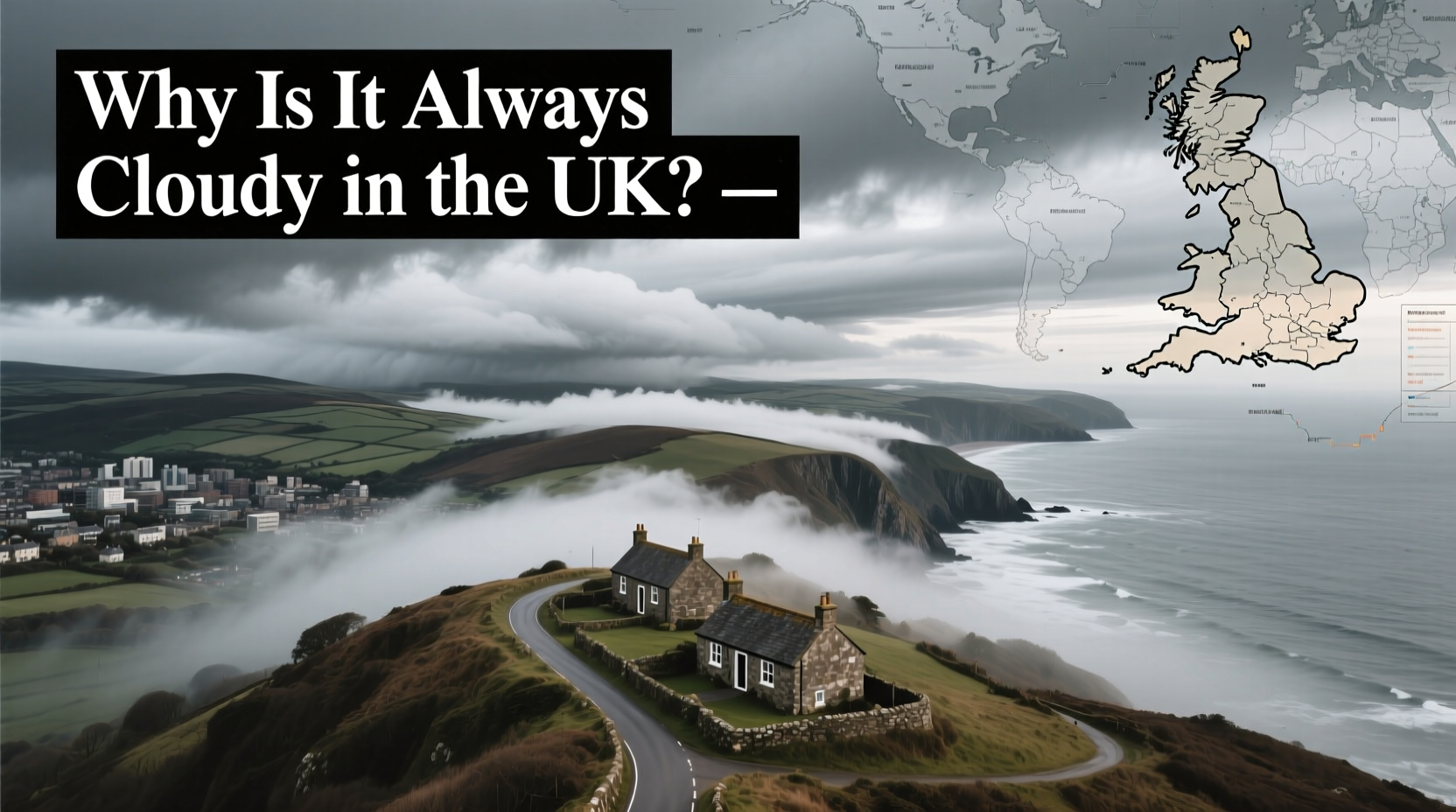
The UK lies on the western edge of the Eurasian landmass, extending into the North Atlantic Ocean between latitudes 49°N and 60°N. This places it squarely in the temperate maritime climate zone, where weather is heavily influenced by the surrounding sea. Unlike continental regions that heat up and cool down rapidly, the ocean acts as a thermal buffer, moderating temperatures but also contributing to humidity and cloud formation.
The proximity to the Atlantic means moist air masses frequently sweep across the British Isles. As warm, moisture-laden air from the ocean meets cooler land or air, it rises, cools, and condenses into clouds. This process occurs year-round, making low cloud cover a frequent occurrence, especially in western coastal areas like Wales, Northern Ireland, and western Scotland.
The Role of the North Atlantic Drift
A key player in the UK’s cloudy reputation is the North Atlantic Drift, an extension of the Gulf Stream. This warm ocean current originates in the Gulf of Mexico and travels northeast across the Atlantic, bringing relatively warm water to the shores of Western Europe. While it helps keep the UK milder than other regions at similar latitudes (like Newfoundland or southern Greenland), it also increases evaporation rates, pumping vast amounts of moisture into the atmosphere.
This moisture feeds into weather systems that develop over the ocean. As these systems move eastward toward the UK, they carry saturated air that readily forms clouds when lifted by terrain or frontal boundaries. The result is a near-constant supply of cloud-producing weather, particularly during autumn and winter.
“Maritime climates like the UK’s are inherently predisposed to cloudiness due to persistent moisture influx from the ocean.” — Dr. Helen Prescott, Climatologist at the Met Office
Prevailing Westerly Winds and Frontal Systems
The dominant wind direction across the UK is from the southwest to northwest. These westerly winds are part of the global circulation pattern known as the \"westerlies,\" which dominate the mid-latitudes. They transport weather systems directly from the Atlantic Ocean onto the British Isles, often multiple times per week.
These weather systems are typically low-pressure fronts that bring cloud cover, rain, and changing conditions. A single front can span hundreds of miles and last for days. Between them, brief high-pressure periods may bring clearer skies, but they are often short-lived due to the fast-moving nature of UK weather.
Frontal cloudiness comes in two main types:
- Warm fronts: Gradual ascent of warm air over cold air, producing widespread, layered cloud (stratus) that can persist for hours or days.
- Cold fronts: More abrupt lifting, leading to cumulonimbus clouds and heavier showers, though clearing often follows.
Because warm fronts cover larger areas and last longer, they contribute significantly to the impression of endless grey skies.
Topography and Orographic Lifting
The physical landscape of the UK enhances cloud formation through a process called orographic lifting. When moist air from the Atlantic encounters elevated terrain—such as the mountains of Snowdonia, the Lake District, or the Scottish Highlands—it is forced upward. As the air rises, it cools adiabatically, reaching its dew point and forming clouds.
This effect is especially pronounced on the western side of upland areas, where rainfall and cloud cover are significantly higher than on the eastern leeward sides—a phenomenon known as the rain shadow effect. For example, Keswick in Cumbria receives over twice as much rainfall as York, just 60 miles away, due to its position in the path of moist westerly winds.
Orographic clouds can linger for extended periods, particularly in stable atmospheric conditions, adding to the frequency of overcast days in hilly regions.
Seasonal Variations in Cloud Cover
While cloudiness is common throughout the year, there are notable seasonal differences:
| Season | Average Sunshine Hours (UK-wide) | Primary Cloud Type | Weather Drivers |
|---|---|---|---|
| Winter (Dec–Feb) | 35–60 hours/month | Stratus, Nimbostratus | Strong Atlantic lows, short days |
| Spring (Mar–May) | 120–160 hours/month | Altocumulus, Stratocumulus | Mix of lingering lows and emerging highs |
| Summer (Jun–Aug) | 170–200 hours/month | Cumulus, occasional thunderstorms | Weaker fronts, more high pressure |
| Autumn (Sep–Nov) | 80–110 hours/month | Stratus, nimbostratus | Increasing storm activity, cooling seas |
Despite summer being the sunniest season, even then, the UK averages only about 5–6 hours of sunshine per day—less than half of what Mediterranean countries receive. This further reinforces the cultural association with grey weather.
Urban Myths vs. Meteorological Reality
It's worth clarifying that the UK is not the cloudiest country in Europe. Countries like Iceland, Norway, and parts of Germany report higher annual cloud cover. However, the UK’s combination of frequent frontal systems, maritime exposure, and population density in cloudy western and northern zones amplifies the perception.
Additionally, cloud type matters. The UK sees a lot of broken or semi-transparent cloud (like altostratus), which still counts as “overcast” in meteorological terms but doesn’t always mean rain. This leads to many days of diffuse light rather than total darkness, yet still contributes to the feeling of perpetual gloom.
Mini Case Study: A Week in Manchester vs. Malaga
Consider a typical October week in Manchester, UK, compared to Malaga, Spain—both at similar latitudes.
- Manchester: Five days of overcast skies, two days of partial sun. Rain falls on three days. Average daily sunshine: 2.1 hours.
- Malaga: Six days of clear or partly cloudy skies, one day of brief cloud. No rain. Average daily sunshine: 7.5 hours.
The difference stems from Malaga’s sheltered position behind mountain ranges and its Mediterranean climate, which blocks Atlantic systems. Manchester, facing the full force of incoming lows, has no such protection. This contrast illustrates how regional weather patterns—not just latitude—dictate cloudiness.
FAQ
Does the UK get any sunny days?
Yes, absolutely. Southern and eastern regions like London, Suffolk, and Kent receive over 1,500 hours of sunshine annually—more than cities like Paris or Berlin in some years. Summer months offer the best chance for prolonged clear skies.
Why don’t high-pressure systems last longer in the UK?
The jet stream, which steers weather systems, tends to sit over or near the UK, especially in winter. This keeps low-pressure systems moving in regularly, disrupting extended periods of stable, sunny weather.
Is climate change affecting cloud cover in the UK?
Preliminary data suggests slight decreases in cloud cover in southern England over the past two decades, possibly linked to shifts in the jet stream and more frequent high-pressure blocking. However, trends are not yet consistent across the entire country.
Actionable Tips for Living with Persistent Cloud Cover
- Use full-spectrum lighting to support circadian rhythms and reduce seasonal mood dips.
- Plan outdoor activities for the afternoon, when cloud breaks are more likely than in the damp mornings.
- Track local microclimates—areas just 20 miles apart can have very different weather due to elevation and wind exposure.
- Invest in weather-resistant gear to stay active and comfortable regardless of conditions.
Conclusion: Embracing the Grey
The UK’s cloudy skies are not a flaw but a feature of its unique geographical and atmospheric identity. Shaped by ocean currents, wind patterns, and topography, the frequent cloud cover contributes to lush green landscapes, moderate temperatures, and a distinctive rhythm of life. While sunshine may be fleeting, understanding the science behind the weather offers clarity—and perhaps a new appreciation—for the misty mornings and soft daylight that define much of the British year.




 浙公网安备
33010002000092号
浙公网安备
33010002000092号 浙B2-20120091-4
Comments
No comments yet. Why don't you start the discussion?