
In a world where brand names often feel abstract or invented, 7-Eleven stands out for its simplicity and clarity. No cryptic syllables, no portmanteau of trendy words—just two numbers and a hyphen. But why \"7-Eleven\"? What do those digits mean? Was it random? A code? Or rooted in something practical? The truth is both straightforward and historically significant. The name wasn’t dreamed up by a marketing team in a boardroom—it emerged from a bold innovation in retail: staying open longer than any grocery store before it.
The story begins not with convenience stores on every corner, but with an ice company in Dallas, Texas, over a century ago. From humble beginnings as an ice dock to becoming the world’s most recognized convenience chain, the name \"7-Eleven\" has endured because it reflects a revolutionary idea at its core: accessibility around the clock.
The Origins: From Ice to Groceries
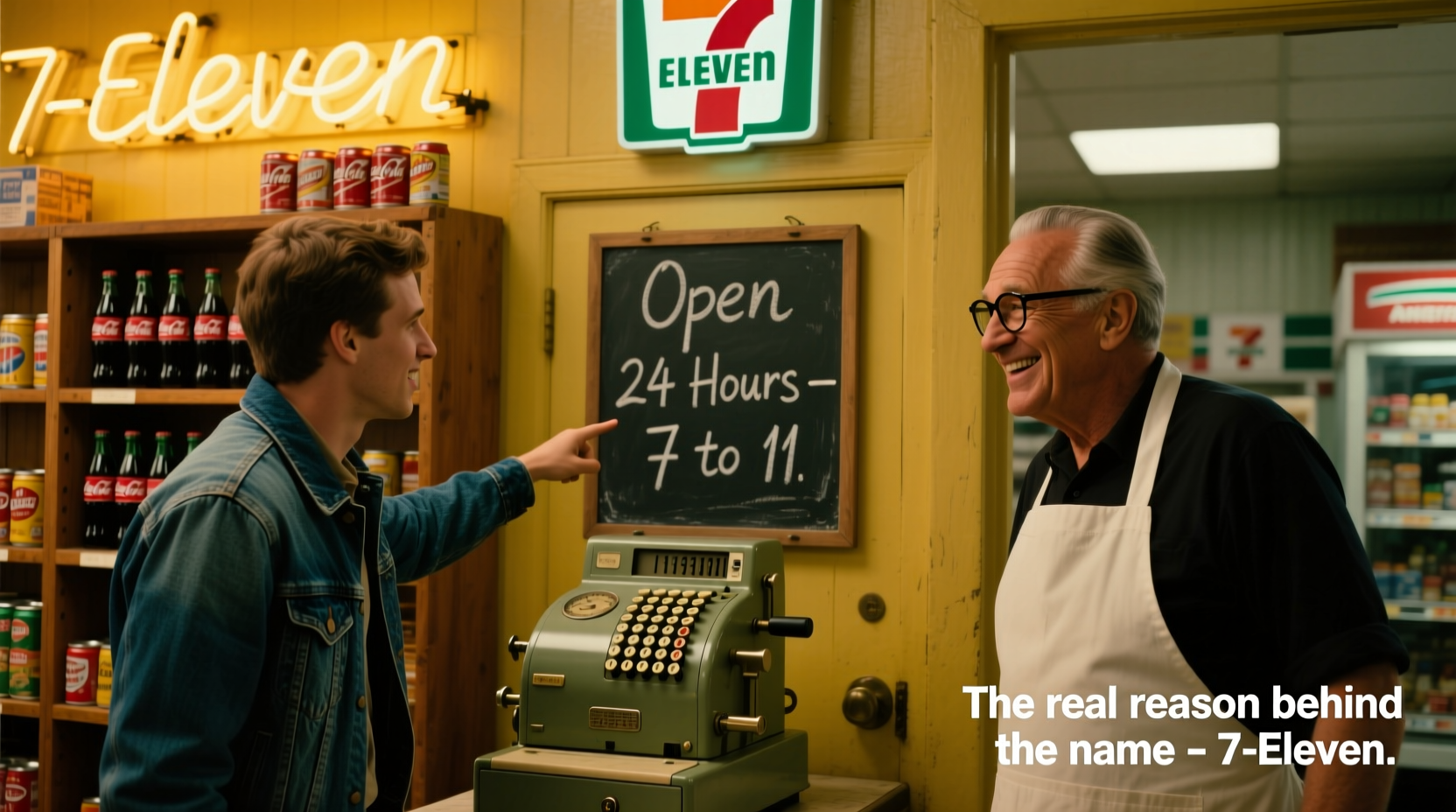
In 1927, the Southland Ice Company operated in Dallas, delivering blocks of ice used to cool food in homes before electric refrigerators became common. To increase sales, the company began selling basic groceries like milk, bread, and eggs from its five downtown ice docks. These small storefronts stayed open long after traditional grocers had closed, recognizing that customers needed essentials outside standard business hours.
By 1946, this extended availability became the brand’s defining trait. The stores opened at 7 a.m. and didn’t close until 11 p.m.—seven days a week. This was unprecedented. Most grocery stores shut down early, especially on Sundays. But Southland’s locations offered reliable access during mornings, evenings, and weekends. To highlight this advantage, the company rebranded its stores under a new name that reflected their operating hours: “7-Eleven.”
From Operating Hours to Brand Identity
The shift from “Southland Ice Company” to “7-Eleven” marked more than just a name change—it signaled a transformation in purpose. The business was no longer primarily about ice delivery; it had evolved into a retail model built on convenience, timing, and customer accessibility. The name crystallized that mission.
Interestingly, even though the stores later expanded to 24-hour operations (starting in the 1960s), the name stuck. By then, 7-Eleven had become synonymous with round-the-clock service. Changing the name would have risked losing brand recognition. Instead, the company leaned into its legacy, turning a time-based label into a globally recognized trademark.
The Global Expansion and Name Adaptation
As 7-Eleven expanded beyond the United States—first into Canada, then Japan in 1974, and eventually over 20 countries—the name remained consistent despite cultural differences. In markets where numerals aren’t dominant in language, such as Japan, the name was adapted phonetically (“Seven-Ilebun”) and stylized with red-and-green color schemes that made it instantly recognizable.
Japan’s franchisee, Ito-Yokado, transformed 7-Eleven into a high-efficiency urban staple, introducing fresh meals, ATMs, bill payment services, and even package delivery—all while keeping the American name intact. This shows how a simple, time-based label transcended its literal meaning to represent speed, reliability, and modern convenience worldwide.
| Country | First Store Opened | Operating Model |
|---|---|---|
| United States | 1927 (as Southland) | Extended hours, basics, cold drinks |
| Canada | 1965 | Similar to U.S., localized products |
| Japan | 1974 | 24/7, hot food, financial services |
| Taiwan | 1980 | Cultural integration, local snacks |
| Thailand | 1989 | Street food partnerships, delivery |
Debunking Common Myths About the Name
Over the years, several myths have circulated about the origin of the name “7-Eleven.” Some claim it refers to the atomic number of nitrogen (which is 7) and lithium (3), adding up incorrectly to 10. Others suggest numerological significance—7 being lucky, 11 being mystical. There are even conspiracy theories linking the logo to secret societies. None hold water.
The reality is far more grounded: the name was chosen for clarity and marketing impact. It told customers exactly when they could shop. As retail historian Dr. Linda Chen explains:
“7-Eleven didn’t invent convenience, but it branded it. The name was functional first—telling people ‘we’re here when others aren’t’—and only later became symbolic of constant availability.” — Dr. Linda Chen, Retail History Scholar
Even the hyphen in “7-Eleven” served a purpose. It visually linked the two numbers, making the name easier to read and remember. Early signage used large numerals with the hyphen acting as a divider, reinforcing the time-based message.
How 24-Hour Service Changed the Game
While the original hours were 7 a.m. to 11 p.m., some stores began experimenting with 24-hour operations in the 1960s, particularly in urban areas and college towns. Customers appreciated late-night access to snacks, beverages, and emergency items. By the 1980s, many locations were open all day, every day.
Despite this shift, the company never rebranded. Instead, it embraced the irony: a store named for 16-hour days now operated 24/7. The name had become iconic—more powerful than a literal description. Marketing campaigns leaned into this, using slogans like “It’s Always Open” and “Convenience You Can Count On.”
This transition highlights a key lesson in branding: once a name becomes part of public consciousness, consistency trumps accuracy. Changing it could confuse customers and dilute equity. So, 7-Eleven kept its name—not because it still closed at 11 p.m., but because the world already knew what it stood for.
Timeline: The Evolution of 7-Eleven’s Hours
- 1927–1946: Southland Ice Company stores operate with varying hours, often closing by 7 or 8 p.m.
- 1946: Rebranding to “7-Eleven” begins, reflecting standardized 7 a.m.–11 p.m. hours.
- 1963: First 24-hour 7-Eleven opens in Tucson, Arizona.
- 1970s: 24-hour stores expand in major U.S. cities.
- 1984: 7-Eleven Inc. becomes publicly traded; over half of stores offer 24-hour service.
- Present: Majority of U.S. and international stores are open 24/7.
FAQ: Common Questions About the 7-Eleven Name
Did all 7-Eleven stores originally close at 11 p.m.?
Yes. When the name was adopted in 1946, all stores followed a 7 a.m. to 11 p.m. schedule seven days a week. This was central to the brand promise of extended availability compared to other grocers.
Why didn’t they change the name when stores went 24/7?
By the time 24-hour operations became common, “7-Eleven” was a registered trademark and nationally recognized. Rebranding would have been costly and unnecessary—the name had evolved beyond literal meaning into a symbol of constant convenience.
Is there any connection between the name and the number 77 or 11:11 superstitions?
No. While some customers associate the name with lucky numbers or “angel numbers,” the company has never marketed it that way. The name originated purely from operating hours, not symbolism or mysticism.
Checklist: Key Takeaways About the 7-Eleven Name
- ✅ The name comes from original store hours: 7 a.m. to 11 p.m.
- ✅ Adopted officially in 1946 by Southland Corporation.
- ✅ Reflected a retail innovation—longer hours than competitors.
- ✅ Remained unchanged even after stores went 24/7.
- ✅ Became a global brand symbolizing instant access and reliability.
- ✅ Proves that practical naming can evolve into powerful branding.
Conclusion: More Than Just a Number
The name “7-Eleven” may seem oddly specific or even arbitrary today, especially when most locations never close. But behind those two numbers lies a story of innovation, customer focus, and smart branding. It began as a promise: we’re open when you need us. That promise shaped not just a name, but an entire category of retail.
Next time you stop by for a Slurpee at 2 a.m. or grab breakfast before work, remember—you’re engaging with a legacy born from the simple idea that convenience shouldn’t have a curfew. The name endures not because it’s accurate, but because it worked. And sometimes, the best brand names aren’t clever—they’re clear.




 浙公网安备
33010002000092号
浙公网安备
33010002000092号 浙B2-20120091-4
Comments
No comments yet. Why don't you start the discussion?