
If you've ever brought home a new appliance only to find your cat immediately investigating the cardboard box instead of the device itself, you're not alone. Cats across the world consistently choose humble cardboard containers over plush beds, heated perches, or expensive cat trees. This seemingly odd preference has long amused pet owners, but behind this quirky habit lies a foundation of evolutionary biology, psychology, and physiology. The obsession isn’t random—it’s rooted in survival instincts, environmental needs, and cognitive processing. Understanding why cats are drawn to boxes offers more than just a fun fact; it provides insight into feline well-being and how we can better support their natural behaviors.
The Evolutionary Advantage of Enclosed Spaces
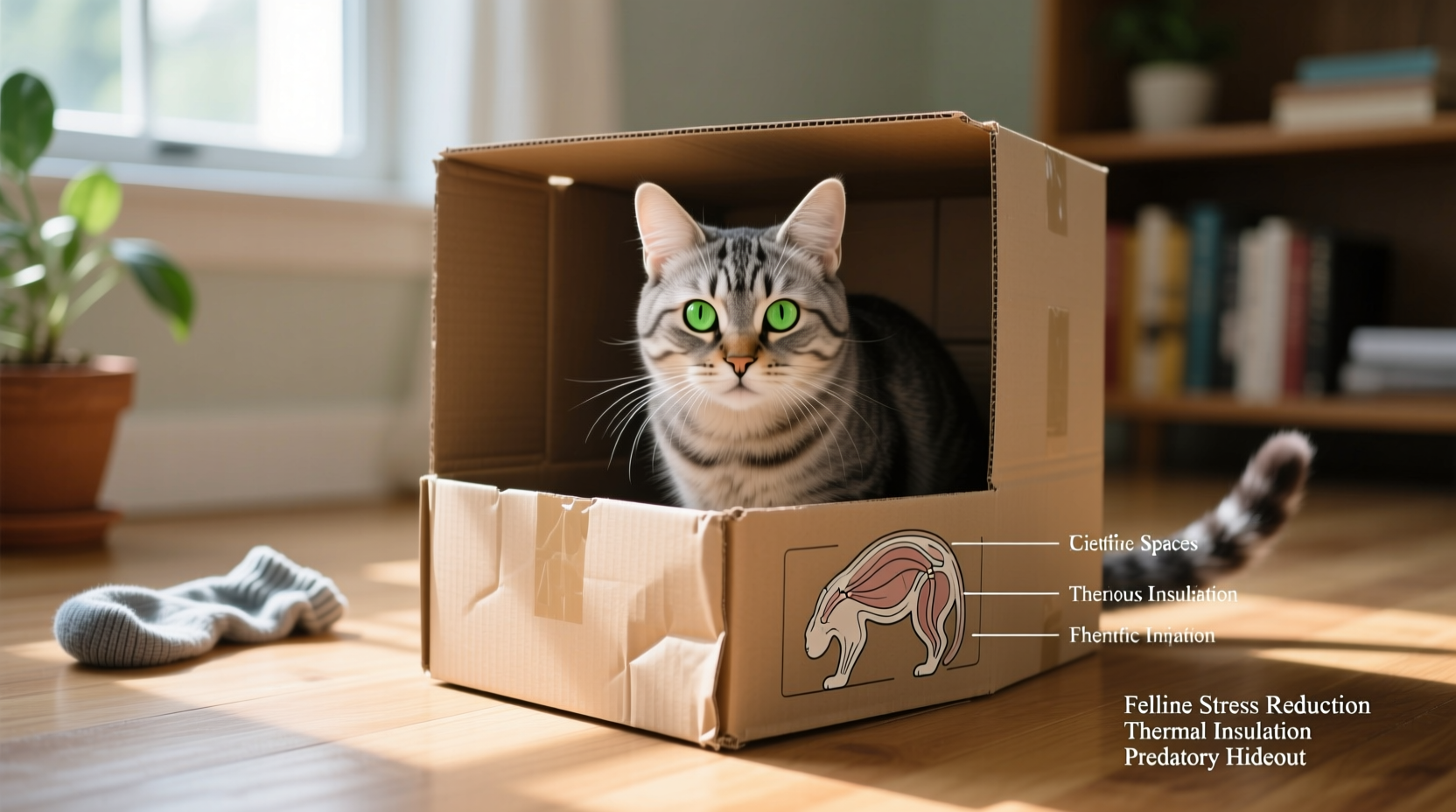
Cats, even domesticated ones, retain many traits from their wild ancestors. In the wild, small predators like the African wildcat—the progenitor of the modern housecat—rely on stealth and concealment to survive. Open spaces expose them to larger predators, making enclosed areas critical for safety. A box mimics the den-like environments where wild cats would rest, hide from threats, or stalk prey without being seen.
Enclosed spaces provide what ethologists call “security cover”—a sheltered area that reduces visibility and perceived vulnerability. For a cat, stepping into a box triggers an immediate sense of control over its surroundings. From this vantage point, it can observe the room while remaining hidden, which aligns perfectly with its ambush predator instincts. This need for concealment isn’t just about fear; it’s about maintaining a psychological edge in an unpredictable environment.
“Cats are both predators and potential prey. Boxes give them a tactical advantage—protection without sacrificing awareness.” — Dr. Sarah Ellis, Feline Behavior Scientist, University of Lincoln
Thermoregulation: The Warmth Factor
One of the most underappreciated aspects of a cat’s box obsession is temperature regulation. Domestic cats have a preferred thermal range between 86°F and 97°F (30°C–36°C), significantly higher than typical human comfort levels. Cardboard, despite its flimsy appearance, is an excellent insulator. Its layered structure traps body heat, creating a microclimate that helps cats maintain their ideal body temperature with minimal energy expenditure.
This need for warmth stems from their desert ancestry. While African wildcats evolved in hot climates, they also experienced cold desert nights. Seeking out insulated spaces allowed them to conserve energy—a crucial adaptation when food sources were scarce. Today’s indoor cats may not face food shortages, but their metabolic programming remains unchanged. A cozy box becomes a personal heating pad, reducing the effort needed to stay warm.
Stress Reduction and Environmental Control
Modern homes, though safe, can be overwhelming for cats. Household noises, visiting guests, other pets, or even rearranged furniture can trigger low-level stress. Studies have shown that access to hiding places significantly reduces cortisol levels—the primary stress hormone—in cats.
A landmark 2014 study conducted at Utrecht University observed newly sheltered cats given access to cardboard boxes versus those without. The group with boxes adapted to their new environment faster, showed fewer signs of anxiety, and engaged socially sooner. Researchers concluded that hiding spaces serve as “stress buffers,” allowing cats to process unfamiliar stimuli at their own pace.
In multi-cat households, boxes also function as neutral territories. A cat can claim a box without challenging another’s space, minimizing conflict. Even in single-cat homes, boxes offer a retreat where the animal feels fully in control—an essential component of feline mental health.
How Boxes Help Reduce Stress: A Timeline
- Day 1: Cat enters new environment (e.g., moved home, introduced to a shelter). Cortisol levels rise due to novelty.
- Day 2–3: With access to a box, the cat begins using it as a secure base. Exploration occurs in short bursts.
- Day 4–5: Cortisol levels drop measurably. The cat starts grooming, eating, and resting normally.
- Day 6–7: Full behavioral normalization. Social interaction increases if humans or other animals are present.
Sensory Processing and Cognitive Comfort
Cats process sensory input differently than humans. Their vision is optimized for motion detection in low light, but they rely heavily on touch and spatial awareness. A box provides tactile feedback on multiple sides, reinforcing a sense of physical boundaries. This is especially important for kittens and older cats, whose depth perception or coordination may be less precise.
Moreover, the confined space limits peripheral distractions, helping cats focus on specific stimuli—like a bird outside a window or a moving toy. This reduction in sensory load can prevent overstimulation, which often leads to irritability or sudden aggression. In essence, a box acts like noise-canceling headphones: it filters out excess input and creates a calm cognitive zone.
Interestingly, research suggests that cats prefer boxes with smaller openings relative to their body size. These create a snug fit, enhancing the feeling of enclosure and protection. This preference mirrors how wild cats select rock crevices or hollow logs—spaces that require squeezing in, thereby ensuring security from larger predators.
Play, Predation, and Mental Stimulation
Beyond safety and comfort, boxes fulfill a cat’s innate need for play and hunting simulation. A stationary box becomes a dynamic environment through imagination and movement. Cats will crouch, pounce, swat, and leap from boxes as if ambushing invisible prey. The acoustics of cardboard—even slight crinkling—can mimic rustling leaves or scurrying rodents, triggering predatory sequences.
Boxes also encourage problem-solving. A cat might push, flip, or reposition a box to achieve a desired angle or location. This kind of environmental manipulation strengthens neural pathways and prevents boredom-related behaviors such as excessive grooming or destructive scratching.
| Behavior | Function | Scientific Basis |
|---|---|---|
| Hiding in boxes | Stress reduction, safety | Lower cortisol levels observed in shelter cats with hiding options |
| Scratching box interiors | Territory marking, claw maintenance | Scent glands in paws deposit pheromones during scratching |
| Pouncing from box edges | Predatory rehearsal | Mimics ambush tactics used in wild hunting |
| Pushing or flipping boxes | Environmental control, play | Enhances spatial cognition and motor skills |
| Drafting box contents | Nest-building instinct | Linked to maternal behavior and comfort-seeking |
Mini Case Study: Milo the Shelter Cat
Milo, a three-year-old tabby, was transferred to a busy urban animal shelter after being found stray. Initially, he remained huddled in the back of his cage, refusing to interact with staff or adopters. He exhibited classic signs of acute stress: flattened ears, rapid breathing, and avoidance of eye contact.
On day two, a volunteer placed a plain cardboard box—just large enough for him to turn around in—into the cage. Within minutes, Milo entered the box and settled down. Over the next 48 hours, he began peeking out, then sitting at the entrance, and eventually stepping out briefly to eat. By day six, he was approaching the front of the cage and purring when spoken to. He was adopted by a family within ten days.
Shelter staff credited the box with accelerating Milo’s adjustment. Without it, they estimated he might have taken weeks to become adoptable. His case illustrates how a simple, low-cost intervention can dramatically improve feline welfare in high-stress settings.
Do’s and Don’ts of Providing Boxes for Cats
| Do | Don't |
|---|---|
| Use clean, untreated cardboard boxes | Use boxes with tape, staples, or ink residue |
| Provide multiple boxes in different locations | Place boxes in high-traffic or noisy areas |
| Add soft bedding for extra comfort | Force a cat into a box |
| Rotate boxes weekly to maintain novelty | Use plastic bins without ventilation |
| Cut large, smooth entrances for easy access | Assume all cats will use boxes equally |
Checklist: Creating the Ideal Box Environment for Your Cat
- ✅ Choose a box slightly larger than your cat when curled up
- ✅ Remove all tape, labels, and plastic remnants
- ✅ Cut a wide, rounded entrance for easy entry/exit
- ✅ Place in a quiet corner away from foot traffic
- ✅ Line with a soft, washable blanket or towel
- ✅ Monitor usage and replace if soiled or collapsing
- ✅ Offer variety—try different sizes and orientations (on side, upside down)
Frequently Asked Questions
Why does my cat scratch inside the box?
Scratching serves multiple purposes: it sharpens claws, stretches muscles, and deposits scent from glands in the paws. Even in a temporary space like a box, cats mark territory instinctively. This behavior is normal and should not be discouraged.
Is it safe for cats to eat cardboard?
Small amounts of incidental ingestion (e.g., chewing corners) are usually harmless, but consistent cardboard consumption could indicate pica—a condition sometimes linked to nutritional deficiencies or stress. If your cat regularly eats non-food items, consult a veterinarian.
What if my cat ignores boxes altogether?
Not all cats exhibit strong box preferences. Personality, early life experiences, and breed can influence behavior. Some cats prefer elevated perches or open beds. As long as your cat has access to secure, comfortable resting spots, lack of box interest isn’t a concern.
Conclusion: Respecting the Box Instinct
The fascination cats have with boxes is far more than a cute internet meme—it’s a window into their biological and emotional world. From regulating body temperature to managing stress and expressing natural hunting behaviors, boxes fulfill fundamental needs that persist despite generations of domestication. Recognizing this allows us to move beyond amusement and toward empathy.
Instead of discarding boxes immediately, consider repurposing them as part of your cat’s enrichment strategy. A few well-placed cardboard enclosures can transform a stressful environment into a sanctuary. Whether you live in a studio apartment or a multi-pet household, providing accessible hiding spaces is one of the simplest, most effective ways to support your cat’s mental and physical health.




 浙公网安备
33010002000092号
浙公网安备
33010002000092号 浙B2-20120091-4
Comments
No comments yet. Why don't you start the discussion?