
The check engine light is one of the most misunderstood features on a car’s dashboard. For many drivers, it triggers either panic or dismissal—either they pull over immediately or ignore it completely until something worse happens. But understanding the difference between a flashing and a solid check engine light can save you from costly repairs, dangerous breakdowns, and even permanent engine damage.
This warning light is part of your vehicle’s onboard diagnostics system (OBD-II), which monitors hundreds of sensors across the engine, transmission, emissions, and fuel systems. When a fault is detected, the system logs a diagnostic trouble code (DTC) and activates the check engine light. The behavior of that light—whether it’s steady or flashing—communicates the urgency and severity of the issue.
Knowing how to interpret this signal empowers you to make informed decisions about when to continue driving, when to reduce speed, and when to stop entirely.
What Does a Solid Check Engine Light Mean?
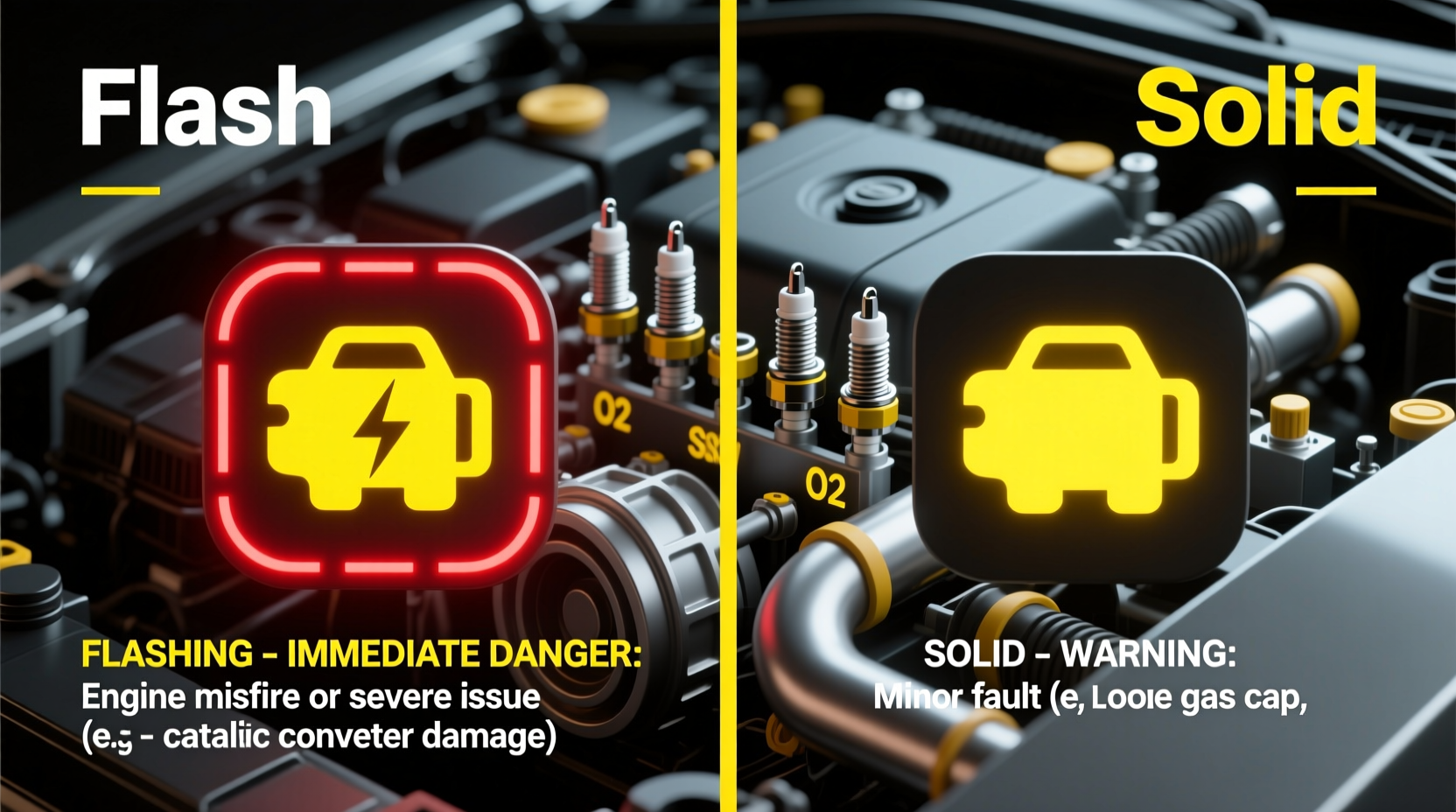
A steadily illuminated check engine light indicates a non-critical issue has been detected. While it should not be ignored, it typically doesn’t require immediate emergency action. Common causes include:
- A loose or faulty gas cap
- Minor oxygen sensor malfunction
- Faulty mass airflow sensor
- Early-stage catalytic converter inefficiency
- Minor misfires under specific conditions
In these cases, the vehicle continues to operate normally, though fuel economy or emissions may be slightly affected. The engine control unit (ECU) has recorded a fault but hasn’t detected an ongoing, severe problem that could cause imminent harm.
It’s still important to have the vehicle diagnosed as soon as possible—ideally within a week or two. Delaying too long could allow small issues to escalate into major repairs. For example, a failing oxygen sensor might slowly degrade fuel efficiency and increase wear on the catalytic converter, which is far more expensive to replace.
What Does a Flashing Check Engine Light Mean?
A flashing check engine light is a serious warning. It signals an active, severe engine malfunction—most commonly a persistent cylinder misfire—that could cause immediate and irreversible damage if driving continues.
When a cylinder misfires, unburned fuel escapes into the exhaust system and enters the catalytic converter. This component operates at extremely high temperatures, and raw fuel can cause it to overheat dramatically, potentially melting internal structures or triggering a complete failure. Replacing a catalytic converter can cost anywhere from $900 to $2,500 depending on the vehicle.
Other causes of a flashing light include:
- Severe ignition system failure (e.g., cracked coil pack)
- Fouled or failed spark plugs
- Fuel injector malfunction causing rich or lean conditions
- Major vacuum leaks disrupting air-fuel mixture
- Internal engine problems like low compression
Unlike a solid light, a flashing one means the ECU is detecting real-time, harmful conditions. Continuing to drive under these circumstances risks catastrophic engine damage, including warped pistons, damaged valves, or blown head gaskets.
“Never ignore a flashing check engine light. You’re not just risking repair costs—you’re actively damaging your engine with every mile.” — Carlos Mendez, ASE-Certified Master Technician
Key Differences: Flashing vs. Solid – A Quick Reference
| Feature | Flashing Check Engine Light | Solid Check Engine Light |
|---|---|---|
| Severity | Critical – Immediate attention required | Moderate – Monitor and schedule service |
| Driving Safety | Do not continue driving long distances | Generally safe to drive short distances |
| Common Causes | Engine misfires, fuel flooding, ignition failure | Loose gas cap, minor sensor faults, early emissions issues |
| Potential Damage | Catalytic converter meltdown, engine overheating | Gradual wear, reduced efficiency, increased emissions |
| Action Required | Pull over safely; tow to mechanic | Check gas cap; schedule OBD2 scan soon |
| Diagnostic Urgency | Same day | Within 1–2 weeks |
What to Do When the Light Comes On: A Step-by-Step Response Plan
Your response should vary based on whether the light is flashing or solid. Follow this timeline to protect your vehicle and avoid unnecessary expenses.
- Assess the Light’s Behavior
Is it flashing steadily (typically once per second) or glowing solid? Note any accompanying symptoms: rough idle, loss of power, unusual noises, or smell of fuel. - If Flashing: Stop Driving Safely
Reduce speed and pull over within a few miles. Turn off the engine. Do not attempt long-distance travel. Arrange for towing to a trusted repair shop. - If Solid: Evaluate Driving Conditions
If the car runs smoothly, you can likely continue to your destination or nearest service center. Avoid aggressive acceleration and highway speeds if experiencing performance issues. - Check Basic Fixes
Park and inspect: Is the gas cap missing or loose? Reinstall and tighten until it clicks. Some vehicles reset the light automatically after 50–100 miles if the issue resolves. - Scan for Diagnostic Trouble Codes (DTCs)
Use an OBD2 scanner (available at auto parts stores or as affordable handheld tools) to read the stored codes. Common ones include:- P0300–P0308: Random or cylinder-specific misfire
- P0420: Catalyst system efficiency below threshold
- P0171/P0174: System too lean (air/fuel imbalance)
- P0455: Large evaporative emission leak (often gas cap)
- Seek Professional Diagnosis
Even if the light turns off, unresolved codes may remain in memory. A qualified technician can perform a deeper analysis using advanced scanners and live data monitoring to identify root causes.
Real-World Example: Ignoring the Flash Can Be Costly
Consider the case of Sarah T., a commuter in Denver who noticed her check engine light flashing during her morning drive. She assumed it was similar to previous solid-light incidents and decided to “make it through the week” before visiting a mechanic. Over three days, she drove approximately 75 miles with the light flashing.
When she finally brought the car in, the technician found a failed ignition coil causing repeated misfires in cylinder #3. Unburned fuel had coated the inside of the exhaust manifold and severely overheated the catalytic converter. The initial coil replacement ($180) turned into a $2,100 repair due to converter replacement and labor.
Had Sarah stopped driving immediately and sought help, the total cost would have been under $250. This scenario underscores why distinguishing between flash and solid matters—not just technically, but financially.
Preventive Maintenance Checklist
Regular maintenance reduces the likelihood of both solid and flashing check engine lights. Use this checklist to stay ahead of common triggers:
- ✅ Replace spark plugs at manufacturer-recommended intervals (usually every 30,000–100,000 miles, depending on type)
- ✅ Inspect ignition coils and wires for cracks or carbon tracking
- ✅ Change fuel filter as specified (if applicable—many modern cars have lifetime filters)
- ✅ Use quality fuel with adequate detergent levels to prevent injector clogging
- ✅ Replace air filter every 15,000–30,000 miles in dusty environments
- ✅ Tighten or replace gas cap if damaged or not sealing properly
- ✅ Schedule annual inspection of emissions and engine management systems
Additionally, pay attention to changes in vehicle behavior—even without a warning light. Hesitation during acceleration, rough idling, or increased fuel consumption often precede a check engine alert.
Frequently Asked Questions
Can I reset the check engine light myself?
You can temporarily clear the light using an OBD2 scanner or by disconnecting the battery, but this does not fix the underlying issue. If the problem persists, the light will return—often within a few drive cycles. Resetting without diagnosis is not recommended, especially after a flashing episode.
Will the check engine light go off by itself?
Yes, in some cases. If the issue was minor and resolves itself (like a loose gas cap being tightened), the system may turn off the light after several successful drive cycles. However, the code remains stored in memory and should still be checked to confirm resolution.
Is it safe to drive with a solid check engine light?
Generally, yes—if the vehicle drives normally. However, monitor for changes in performance. Some solid-light issues, like a failing fuel pump or early transmission problems, can worsen suddenly. Have the vehicle inspected promptly to avoid escalation.
Conclusion: Respect the Signal, Protect Your Investment
The check engine light isn’t just a random annoyance—it’s a communication tool from your car’s brain. Whether flashing or solid, it carries vital information about your vehicle’s health. Treating both states with appropriate urgency prevents minor glitches from becoming financial disasters.
A flashing light demands immediate action: stop driving, seek diagnosis, and avoid further strain on expensive components. A solid light allows a brief window to investigate and plan, but delaying too long risks compounding damage.
Modern vehicles are complex, but their self-diagnostic capabilities give you unprecedented insight—if you know how to interpret them. Equip yourself with basic knowledge, invest in a simple scanning tool, and build a relationship with a trustworthy mechanic. These small steps ensure your car stays reliable, efficient, and safe for years to come.




 浙公网安备
33010002000092号
浙公网安备
33010002000092号 浙B2-20120091-4
Comments
No comments yet. Why don't you start the discussion?