
An itchy scalp after switching shampoos is a surprisingly common experience. You might have chosen a new product expecting healthier, cleaner hair—only to be greeted by persistent itching, flaking, or even redness. While the change may seem minor, your scalp is a sensitive ecosystem that reacts quickly to new ingredients. Understanding why this happens—and how to respond—is key to restoring comfort without reverting to harsh treatments.
The shift from one shampoo to another can disrupt the scalp’s natural pH, microbiome, and moisture barrier. Some formulations strip essential oils, while others introduce allergens or irritants. The good news is that most cases of post-switch itchiness are temporary and manageable with informed care. This article explores the science behind the irritation, identifies common culprits in modern shampoos, and provides practical, natural solutions backed by dermatological insight.
Why Your Scalp Reacts to New Shampoos
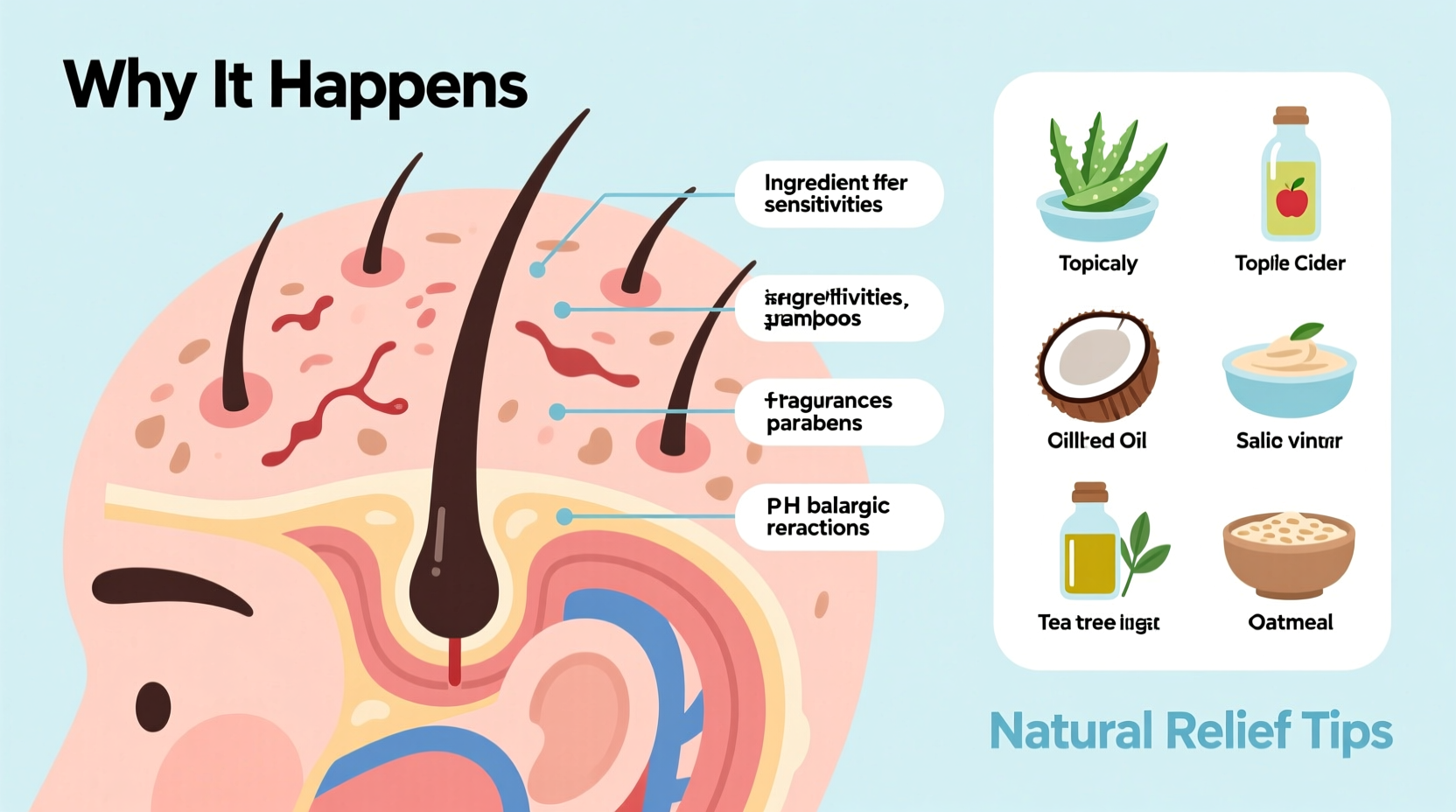
Your scalp is not just skin—it's a complex environment rich in sebaceous glands, hair follicles, and microbial communities. When you switch shampoos, especially between brands with vastly different ingredient profiles, several physiological changes can occur:
- pH imbalance: Healthy scalp pH ranges between 4.5 and 5.5. Many conventional shampoos are alkaline (pH 7+), which can disrupt the acid mantle, leading to dryness and irritation.
- Stripped natural oils: Sulfates like sodium lauryl sulfate (SLS) aggressively remove oil, compromising the scalp’s protective lipid layer.
- Allergic reactions: Fragrances, preservatives like methylisothiazolinone, and botanical extracts can trigger contact dermatitis in sensitive individuals.
- Microbiome disruption: Just like the gut, the scalp hosts beneficial bacteria and fungi. Harsh cleansers can upset this balance, allowing opportunistic microbes like Malassezia to proliferate.
In some cases, what feels like an allergic reaction may actually be a “purging phase” as your scalp adjusts. However, persistent itching beyond two weeks usually indicates intolerance or damage to the scalp barrier.
“Changing shampoos is like changing skincare routines—your scalp needs time to adapt. But prolonged itching isn’t normal; it’s a signal something in the formula doesn’t agree with your biology.” — Dr. Lena Torres, Board-Certified Dermatologist
Common Irritating Ingredients in Shampoos
Not all shampoo ingredients are created equal. While marketing labels like “natural” or “dermatologist-tested” offer reassurance, they don’t guarantee safety for every scalp type. Below are some of the most frequent offenders behind post-switch irritation:
| Ingredient | Function | Why It Causes Itching |
|---|---|---|
| Sodium Lauryl Sulfate (SLS) | Foaming agent | Over-strips natural oils, leading to dryness and micro-tears in the scalp |
| Parabens (e.g., methylparaben) | Preservatives | Known endocrine disruptors; can cause allergic contact dermatitis |
| Synthetic fragrances | Scent enhancers | Often contain undisclosed allergens; top cause of scalp sensitivity |
| Alcohol (e.g., ethanol, SD alcohol) | Thickening or solvent agent | Drying effect exacerbates flakiness and itching |
| Formaldehyde-releasing agents | Preservatives (e.g., DMDM hydantoin) | Slowly release formaldehyde, a known sensitizer |
If your new shampoo contains three or more of these ingredients, it’s likely contributing to your discomfort. Even products labeled “for sensitive scalps” may include hidden irritants under vague terms like “fragrance” or “perfume.” Always check the full ingredient list, preferably using apps like INCI Decoder or Think Dirty to uncover chemical aliases.
Natural Remedies to Soothe an Itchy Scalp
When irritation strikes, reaching for steroid creams or medicated shampoos isn't always necessary. Many natural remedies support healing by calming inflammation, restoring moisture, and rebalancing the scalp microbiome. These solutions work best when used consistently over 7–14 days.
1. Apple Cider Vinegar Rinse
Apple cider vinegar (ACV) helps restore scalp pH and has mild antifungal properties. Mix 1 part raw, unfiltered ACV with 3 parts water. After shampooing, pour over the scalp, massage gently, and leave for 5 minutes before rinsing. Use once weekly to avoid over-drying.
2. Coconut Oil Pre-Wash Treatment
Virgin coconut oil is rich in lauric acid, which penetrates hair shafts and soothes irritated skin. Apply 1–2 tablespoons directly to the scalp, cover with a shower cap, and leave for 30 minutes before washing. Its anti-inflammatory effects reduce itching and flaking caused by dryness.
3. Aloe Vera Gel Application
Pure aloe vera gel cools inflamed skin and promotes healing. Extract fresh gel from the leaf or use a fragrance-free store-bought version. Apply directly to itchy areas and leave for 20 minutes before rinsing. Ideal for sunburn-like irritation or redness.
4. Tea Tree Oil Dilution Spray
Tea tree oil (Melaleuca alternifolia) has proven antimicrobial and anti-itch properties. Combine 5 drops of tea tree essential oil with 1 tablespoon of carrier oil (like jojoba or almond) and ¼ cup of water in a spray bottle. Mist onto the scalp daily. Never apply undiluted—this can worsen irritation.
5. Oatmeal Soak
Colloidal oatmeal has been clinically shown to relieve itching in eczema and dermatitis. Blend plain oats into a fine powder, mix with warm water to form a paste, and apply to the scalp. Leave for 10 minutes before rinsing. Excellent for soothing widespread irritation.
“A 2020 study published in the International Journal of Trichology found that a 5% tea tree oil solution significantly reduced scalp itch and scaling in participants with seborrheic dermatitis—comparable to ketoconazole shampoo, but with fewer side effects.” — Dr. Rajiv Mehta, Trichology Research Lead
Step-by-Step Guide to Recovering Your Scalp Health
If your scalp remains itchy after switching shampoos, follow this 10-day reset plan to identify triggers and restore balance:
- Day 1–2: Stop using the new shampoo. Return to your previous product if tolerated, or switch to a gentle, fragrance-free cleanser (look for “low-poo” or baby shampoo formulas).
- Day 3: Perform a patch test. Apply a small amount of the suspect shampoo behind your ear. Monitor for 48 hours for signs of reaction.
- Day 4: Cleanse with a mild alternative. Use a sulfate-free, pH-balanced shampoo. Avoid scrubbing—use fingertips, not nails.
- Day 5: Apply a coconut oil treatment. Massage into the scalp and leave for 30 minutes before washing out.
- Day 6: Try an ACV rinse. Follow cleansing with the diluted vinegar solution to rebalance pH.
- Day 7: Assess symptoms. Note any improvement or worsening. If still itchy, discontinue all scented products.
- Day 8: Introduce a natural remedy. Choose one treatment (e.g., aloe or tea tree spray) and apply daily.
- Day 9: Evaluate ingredient lists. Audit all hair products—conditioners, serums, dry shampoos—for hidden sulfates or fragrances.
- Day 10: Reintroduce cautiously. If symptoms resolve, try the new shampoo again—but only once every 5–7 days, alternating with a gentle option.
This methodical approach helps isolate whether the shampoo itself is the culprit or if other factors—like hard water, styling tools, or stress—are contributing.
Real-Life Example: Sarah’s Transition to Natural Hair Care
Sarah, a 34-year-old teacher from Portland, switched to a popular “clean beauty” shampoo marketed for curly hair. Within three days, her scalp became intensely itchy, with visible flaking resembling dandruff. She assumed she had developed dandruff and tried an anti-dandruff shampoo, which only worsened the dryness.
After reading about potential irritants, she checked the ingredient list and discovered the product contained both fragrance and high concentrations of alcohol. She stopped using it and began a regimen of weekly coconut oil treatments and bi-weekly ACV rinses. She also switched to a low-pH, sulfate-free shampoo.
Within ten days, her itching subsided. “I realized ‘natural’ doesn’t mean non-irritating,” she said. “Now I read every label and do patch tests. My scalp has never felt better.”
Do’s and Don’ts for Scalp Comfort
| Do | Don’t |
|---|---|
| Wash with lukewarm water—hot water strips oils | Scratch your scalp vigorously |
| Use fingertips to massage, not nails | Use multiple scented hair products simultaneously |
| Leave conditioners off the scalp if prone to oiliness | Switch shampoos too frequently |
| Allow scalp to air-dry when possible | Sleep with wet hair, which encourages fungal growth |
| Drink plenty of water and eat omega-rich foods (e.g., walnuts, salmon) | Ignore persistent itching lasting more than 3 weeks |
Frequently Asked Questions
Can a shampoo cause an allergic reaction even if I’ve used similar products before?
Yes. Allergies can develop at any time, even to ingredients you’ve previously tolerated. This is called sensitization. For example, someone might use fragranced products for years before suddenly reacting to limonene or linalool, common components in citrus and floral scents.
How long does it take for an itchy scalp to heal after stopping a problematic shampoo?
Mild irritation often resolves within 5–7 days of discontinuing the product and using gentle alternatives. More severe reactions, such as contact dermatitis, may take 2–4 weeks to fully heal, especially if scratching has caused micro-injuries.
Is it safe to use essential oils directly on an itchy scalp?
No. Essential oils are highly concentrated and must always be diluted in a carrier oil (such as jojoba, argan, or sweet almond oil) before application. Undiluted use can cause chemical burns or worsen inflammation.
Final Thoughts and Next Steps
An itchy scalp after switching shampoos is a clear message from your body—one that shouldn’t be ignored or masked with stronger chemicals. By understanding the root causes, from pH imbalances to hidden allergens, you gain control over your scalp health. Natural remedies offer gentle yet effective ways to soothe irritation without compromising long-term wellness.
The journey to a balanced scalp isn’t about finding a miracle product, but about cultivating awareness. Read labels, listen to your skin, and treat your scalp with the same care you’d give to your face. Small changes—like switching to fragrance-free products or incorporating a weekly oil treatment—can yield dramatic improvements.




 浙公网安备
33010002000092号
浙公网安备
33010002000092号 浙B2-20120091-4
Comments
No comments yet. Why don't you start the discussion?