
NVIDIA’s rise from a graphics-focused semiconductor company to the cornerstone of the global artificial intelligence revolution has been nothing short of meteoric. With a market capitalization surpassing $2 trillion in 2024, NVIDIA has become one of the most valuable companies in the world—surpassing legacy tech giants and reshaping entire industries. The question isn’t whether NVIDIA is valuable, but why it holds such immense worth in today’s digital economy.
The answer lies at the intersection of timing, innovation, and strategic foresight. While competitors focused on incremental improvements in computing, NVIDIA bet early and heavily on parallel processing, deep learning, and accelerated computing. This vision positioned the company as the de facto engine powering the AI era.
The Foundation of Value: GPUs and Parallel Computing
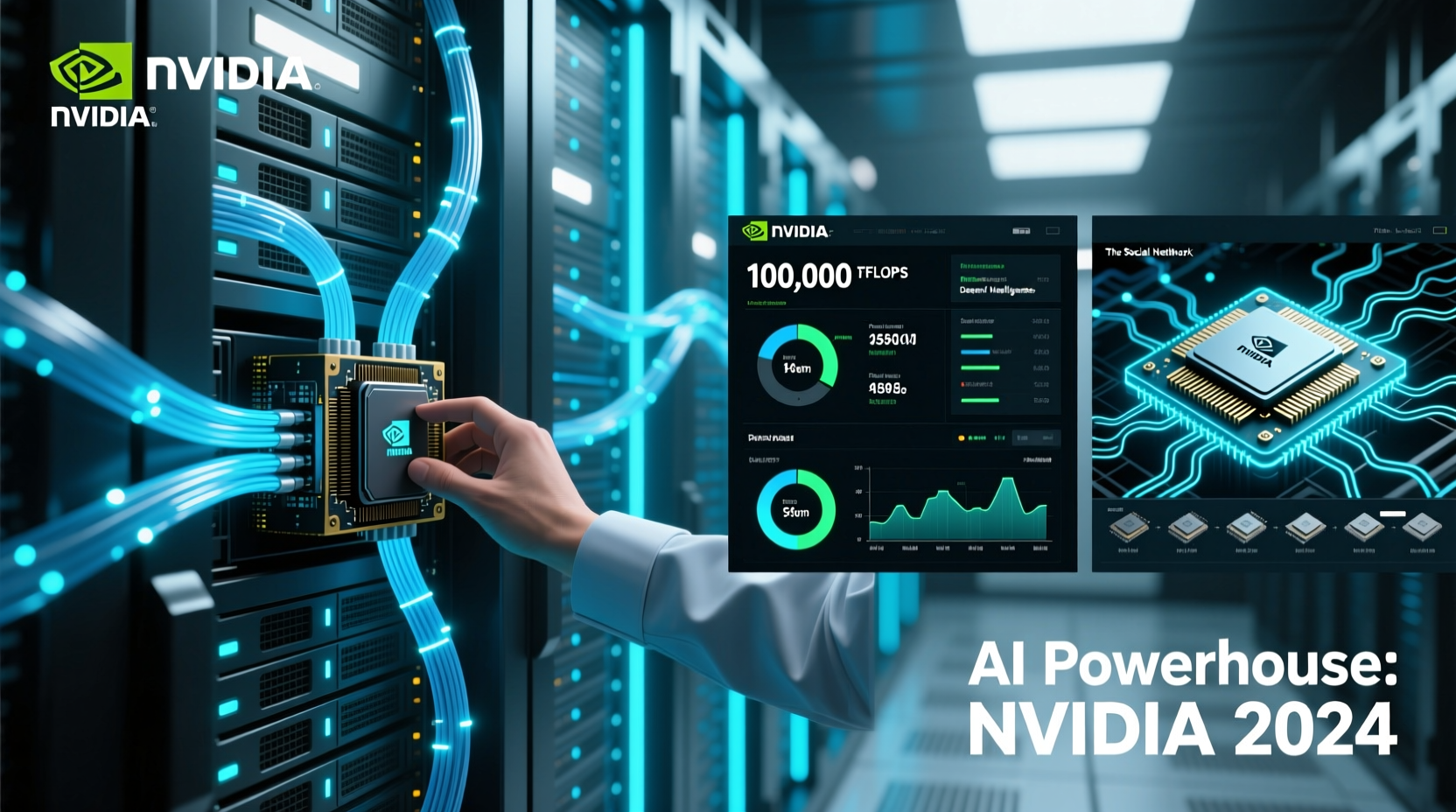
At the core of NVIDIA’s value proposition is the Graphics Processing Unit (GPU). Originally designed for rendering complex visuals in gaming and professional design, GPUs excel at performing thousands of calculations simultaneously—a capability known as parallel processing. This trait turned out to be ideal not just for rendering 3D scenes, but also for training neural networks, where vast datasets must be processed in parallel.
In the mid-2000s, NVIDIA introduced CUDA (Compute Unified Device Architecture), a revolutionary platform that allowed developers to use GPUs for general-purpose computing tasks beyond graphics. This opened the door to scientific simulations, financial modeling, and eventually, machine learning. Researchers quickly realized that GPU-accelerated systems could train deep learning models orders of magnitude faster than traditional CPUs.
AI Dominance: The Engine Behind the Revolution
When the AI boom began in the 2010s, driven by breakthroughs in deep learning and large language models, demand surged for high-performance computing hardware. NVIDIA was already ahead of the curve. Its data center GPUs, particularly the A100 and later H100 Tensor Core GPUs, became the gold standard for AI model training.
Major tech companies—including Google, Microsoft, Meta, and Amazon—relied on NVIDIA’s hardware to develop and deploy AI systems. Even OpenAI, creator of ChatGPT, runs its models on clusters powered by NVIDIA GPUs. According to industry estimates, NVIDIA supplies over 95% of the AI training chips used globally, giving it near-monopoly status in this critical segment.
“NVIDIA didn’t just enter the AI race—they defined the track.” — Dr. Anil Gupta, AI Infrastructure Analyst at TechInsights
This dominance isn't accidental. NVIDIA invests heavily in R&D—over $8 billion annually—and continuously improves its chip architecture, interconnect technology (like NVLink), and software stack (including libraries like cuDNN and frameworks like TensorRT).
Strategic Growth Beyond Hardware
NVIDIA’s value extends far beyond selling chips. The company has evolved into a full-stack computing platform provider. It now offers:
- CUDA Ecosystem: Millions of developers use CUDA, creating a moat around NVIDIA’s hardware.
- AI Enterprise Software: Tools for deploying and managing AI workflows in enterprise environments.
- DPU and Networking: Through its acquisition of Mellanox, NVIDIA controls high-speed data transfer within AI clusters.
- Omniverse: A 3D simulation platform enabling digital twins and virtual prototyping across industries.
By integrating hardware, software, and networking, NVIDIA ensures that switching costs for customers are extremely high. Once an organization builds its AI infrastructure on NVIDIA, migrating becomes technically complex and economically unfeasible.
Market Expansion and Industry Adoption
NVIDIA’s reach now spans multiple high-growth sectors:
| Industry | Application | NVIDIA Product |
|---|---|---|
| Cloud Computing | AI Model Training & Inference | H100, DGX Systems |
| Automotive | Autonomous Driving | DRIVE Platform, Orin Chips |
| Healthcare | Medical Imaging & Drug Discovery | Clara, BioNeMo |
| Manufacturing | Digital Twins & Robotics | Omniverse, Isaac |
| Gaming | Real-Time Ray Tracing | GeForce RTX Series |
This diversification reduces reliance on any single market. While data centers now account for over half of NVIDIA’s revenue, its presence in automotive, healthcare, and industrial automation provides long-term growth runway.
Mini Case Study: How Microsoft Scaled AI with NVIDIA
Microsoft’s Azure cloud platform needed to support explosive demand for generative AI workloads in 2023. Rather than building custom silicon from scratch, Microsoft partnered with NVIDIA to deploy tens of thousands of H100 GPUs across its data centers. By leveraging NVIDIA’s full stack—including networking, software, and optimized AI frameworks—Azure was able to launch AI supercomputing clusters in months, not years.
The result? Faster time-to-market for Copilot and other AI services, improved customer retention, and a strengthened competitive position against AWS and Google Cloud. This case illustrates how deeply embedded NVIDIA has become in the infrastructure of modern AI.
Checklist: What Makes NVIDIA a Long-Term Leader?
To assess NVIDIA’s sustained value, consider these key factors:
- ✅ First-mover advantage in AI acceleration
- ✅ Control over both hardware and software ecosystems
- ✅ High barriers to entry due to developer lock-in (CUDA)
- ✅ Strong partnerships with cloud providers and enterprises
- ✅ Continuous innovation in chip design and packaging (e.g., Blackwell architecture)
- ✅ Expansion into adjacent markets like robotics and quantum simulation
Challenges and Risks Ahead
No company is immune to disruption. NVIDIA faces growing competition from:
- Custom AI Chips: Google (TPU), Amazon (Trainium), and Apple (neural engines) are developing in-house alternatives.
- Regulatory Scrutiny: U.S. export controls limit sales of advanced GPUs to China, affecting growth potential.
- Supply Chain Constraints: Reliance on TSMC for manufacturing creates vulnerability during global chip shortages.
Yet, even with these challenges, NVIDIA continues to innovate rapidly. Its upcoming Blackwell architecture promises double the performance of the H100, ensuring it stays ahead—at least for now.
Frequently Asked Questions
Why are NVIDIA’s GPUs better for AI than regular CPUs?
CPUs are designed for sequential processing and handling a few complex tasks at once. GPUs, with thousands of smaller cores, can process massive amounts of data in parallel—ideal for matrix operations used in neural network training. This parallelism allows GPUs to complete AI computations up to 100x faster than CPUs.
Can other companies catch up to NVIDIA in AI chips?
While competitors are investing heavily, catching up requires more than just hardware. NVIDIA’s decades-long lead in software (CUDA), developer tools, and ecosystem integration creates a significant moat. New entrants may match raw performance, but replicating the full stack will take years.
Is NVIDIA’s stock price justified by its fundamentals?
As of 2024, NVIDIA trades at a high P/E ratio, reflecting investor expectations of future growth. Historically, such valuations are sustainable if revenue growth remains strong. Given AI’s projected expansion—estimated to grow from $150B to over $1T by 2030—many analysts believe NVIDIA’s valuation is supported by real, scalable demand.
Conclusion: Powering the Future of Intelligence
NVIDIA’s value stems from its pivotal role in enabling the next wave of technological transformation. It is not merely a chipmaker; it is the foundational layer upon which modern AI is built. From self-driving cars to drug discovery, from cloud computing to smart cities, NVIDIA’s technology underpins progress across sectors.
The company’s ability to anticipate shifts, invest in long-term innovation, and build an ecosystem that locks in developers and enterprises alike makes it uniquely positioned for continued dominance. As AI becomes as essential as electricity, NVIDIA stands not just as a beneficiary—but as an architect of the future.




 浙公网安备
33010002000092号
浙公网安备
33010002000092号 浙B2-20120091-4
Comments
No comments yet. Why don't you start the discussion?