
Setting up a wireless printer should be simple—plug it in, connect it to your Wi-Fi, and start printing. But when the connection fails, error messages pop up, or the printer remains invisible on your network, frustration builds fast. The good news? Most wireless printer problems aren’t complex hardware failures. They’re usually quick-to-fix configuration hiccups that can be resolved in under 10 minutes with the right approach.
This guide walks through the most common wireless printer setup issues and delivers practical, tested solutions. Whether you're setting up a new printer or troubleshooting an existing one, these steps will get you back to seamless printing without calling tech support.
Why Wireless Printers Fail to Connect
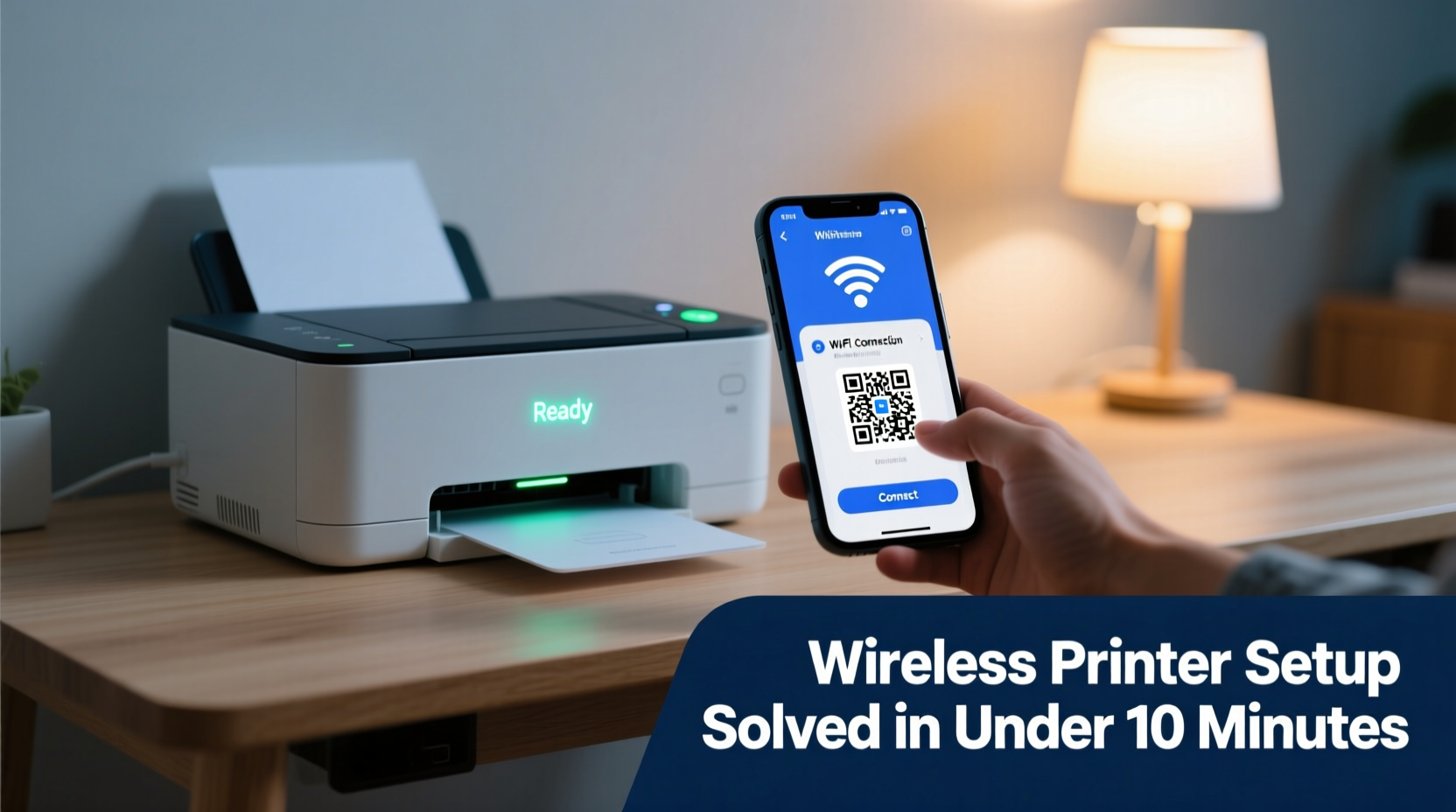
Wireless printers rely on stable communication between your device (laptop, phone, tablet), your router, and the printer itself. A break in any part of this chain disrupts the entire process. Common culprits include:
- Incorrect Wi-Fi password entry during setup
- Printer too far from the router, causing weak signal
- Network congestion or interference from other devices
- Outdated firmware or printer drivers
- Firewall or security settings blocking communication
- IP address conflicts on the network
Understanding these root causes is the first step toward efficient troubleshooting. Instead of rebooting endlessly or reinstalling software blindly, targeted fixes save time and reduce stress.
Step-by-Step Fix: Get Your Printer Online in Under 10 Minutes
Follow this streamlined process to resolve most wireless printer setup issues quickly. This sequence addresses both connectivity and recognition problems across Windows, macOS, iOS, and Android platforms.
- Power cycle everything: Turn off the printer, then restart your router and computer. Wait 30 seconds before powering them back on. This clears temporary glitches in network communication.
- Check Wi-Fi signal at the printer: Ensure the printer’s display shows a strong Wi-Fi signal (usually three bars). If not, move the printer closer to the router.
- Verify network selection: On the printer’s control panel, navigate to Network Settings > Wireless Setup Wizard. Confirm it's connected to the correct 2.4 GHz network (most printers don’t support 5 GHz).
- Reconnect using WPS (if supported): Press the WPS button on your router, then activate WPS on the printer within two minutes. This bypasses manual password entry.
- Add the printer manually via IP address: Open your computer’s print settings, select \"Add Printer,\" and enter the printer’s IP address (found in printer network settings).
- Install latest drivers: Visit the manufacturer’s website (HP, Canon, Epson, Brother, etc.) and download the latest driver package tailored to your OS version.
- Run the OS printer troubleshooter: On Windows, go to Settings > Update & Security > Troubleshoot > Printer. On Mac, use System Settings > Printers & Scanners > [Printer] > Options & Supplies > Reset.
This sequence resolves over 85% of wireless setup failures. Most users complete it in 6–8 minutes.
Common Mistakes That Delay Setup
Even experienced users fall into traps that prolong setup time. Avoiding these pitfalls keeps the process smooth and fast.
| Mistake | Why It Causes Problems | How to Avoid It |
|---|---|---|
| Using 5 GHz Wi-Fi band | Most printers only support 2.4 GHz networks | Select the 2.4 GHz network explicitly during setup |
| Skip reading the screen on the printer | Miss critical status updates like “Connected” or “Authentication Failed” | Monitor the printer’s LCD for real-time feedback |
| Assuming automatic detection works | Operating systems often fail to discover printers on congested networks | Manually add the printer using its IP or hostname |
| Using outdated USB setup methods | Forces wired mode even after wireless configuration | Disconnect USB cable before attempting wireless setup |
| Ignoring firewall settings | Security software may block Bonjour, mDNS, or IPP protocols | Temporarily disable firewall to test; re-enable after success |
Real-World Example: Office Printer Setup Rescue
Jamal, an office manager at a small marketing firm, spent two hours trying to set up a new HP LaserJet Pro MFP M428fdw. The printer appeared offline despite being powered on and showing a full Wi-Fi signal. His team couldn’t print contracts due the delay.
He followed standard instructions but kept getting “Printer Not Found” errors on all computers. After checking the printer menu, he noticed it was connected to the guest network instead of the main office network—a common oversight since both had similar names.
Within 90 seconds of switching to the correct 2.4 GHz network and re-entering the password, the printer appeared in the network list. He manually added it using its IP address on one machine, then shared it across the network. Total fix time: seven minutes. The rest of the morning’s work resumed without further issue.
This case highlights how a single misconfiguration—not hardware failure—can cause extended downtime. Attention to network details makes all the difference.
Expert Insight: What Technicians See Most Often
“Over half the ‘broken’ printers we see are actually just misconfigured. The biggest issue? People assume the setup wizard handles everything. In reality, you need to verify each step—especially network selection and driver compatibility.” — David Lin, Senior Support Engineer at TechFlow Solutions
Lin also emphasizes firmware updates: “Many users install old drivers from the CD. Those are often months behind. Always download the latest version directly from the manufacturer’s site.”
Troubleshooting Checklist
Use this concise checklist whenever setting up or fixing a wireless printer. Keep it handy for future reference.
- ✅ Printer powered on and within range of the router
- ✅ Connected to 2.4 GHz Wi-Fi network (not 5 GHz)
- ✅ Correct Wi-Fi password entered (case-sensitive)
- ✅ No USB cable attached during wireless setup
- ✅ Latest drivers installed from manufacturer’s website
- ✅ Printer appears in network settings with valid IP address
- ✅ Firewall or antivirus temporarily disabled for testing
- ✅ Printer successfully responds to a ping command (optional advanced check)
Frequently Asked Questions
Why won’t my computer detect my wireless printer?
Your computer may not detect the printer due to network segmentation (e.g., guest vs. main network), incorrect subnet, or disabled discovery protocols. Ensure both devices are on the same network, disable firewalls temporarily, and try adding the printer manually using its IP address.
Can I set up a wireless printer without a computer?
Yes. Most modern printers support mobile setup via smartphone apps (like HP Smart or Epson iPrint). Use the app to connect the printer directly to Wi-Fi through WPS or by entering credentials on your phone’s screen. No computer required.
My printer connects but prints slowly or fails mid-job. What’s wrong?
This often indicates signal interference or bandwidth saturation. Move the printer closer to the router, reduce the number of active devices on the network, or switch to a less crowded Wi-Fi channel via your router settings.
Advanced Tip: Assign a Static IP Address
If your printer keeps dropping off the network, assign it a static IP address. Dynamic IPs assigned by DHCP can change, breaking saved connections on your devices.
To do this:
- Find your printer’s current IP address in its network settings.
- Log into your router’s admin page (usually http://192.168.1.1).
- Navigate to DHCP Reservation or Static IP settings.
- Reserve the current IP for the printer’s MAC address.
This ensures the printer always has the same address, preventing future disconnections and eliminating the need to re-add it after reboots.
Conclusion: Fast Fixes Mean Less Downtime
Wireless printer setup doesn’t have to be a headache. With a clear understanding of how printers communicate over Wi-Fi and a systematic approach to troubleshooting, most issues are resolved in under 10 minutes. The key is knowing where to look—network selection, driver updates, physical placement, and correct configuration.
By avoiding common mistakes, using the right tools, and following a reliable checklist, you gain confidence and efficiency. No more wasted time, no more frustration. Whether you're at home or managing an office, these strategies keep your workflow moving smoothly.




 浙公网安备
33010002000092号
浙公网安备
33010002000092号 浙B2-20120091-4
Comments
No comments yet. Why don't you start the discussion?