


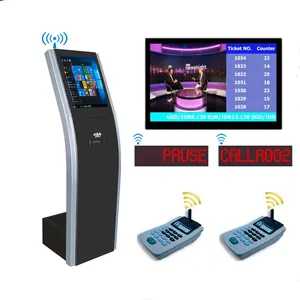


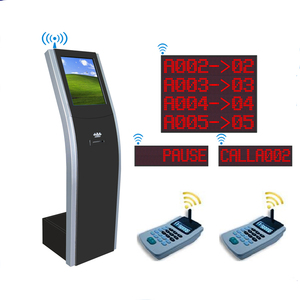


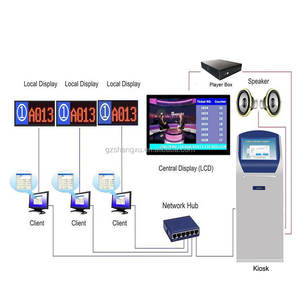
Automated Call Distributor






 1/3
1/3



 1/3
1/3

 CN
CN


 1/3
1/3


 1/3
1/3



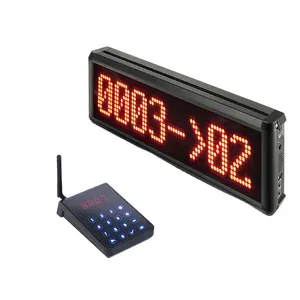
 1/3
1/3


 1/3
1/3

 1/3
1/3












 0
0

 0
0




 1/3
1/3




 1/20
1/20



 1/3
1/3



 1/3
1/3



 1/3
1/3


 1/3
1/3





 0
0


 1/33
1/33


 1/3
1/3
About automated call distributor
Where to Find Automated Call Distributor Suppliers?
China remains the central hub for telecommunications and call management hardware manufacturing, with key supplier clusters concentrated in Guangdong and Jiangsu provinces. Guangdong—particularly the Pearl River Delta region including Shenzhen and Dongguan—hosts over 70% of China’s VoIP and automated communication device producers, supported by mature electronics supply chains and proximity to major ports. This region specializes in high-volume production of IP-based call distribution systems, leveraging localized access to PCB assembly lines, chipset suppliers, and firmware development teams.
Jiangsu’s Suzhou and Wuxi zones focus on integrated enterprise-grade solutions, combining hardware units with cloud-compatible software layers. These industrial ecosystems enable vertical integration from circuit design to final product testing, reducing component procurement lead times by 25–40% compared to non-specialized regions. Buyers benefit from compact supplier networks where electronic components, injection-molded casings, and embedded software providers operate within 30–60km radii. Typical advantages include MOQ flexibility (as low as 10 units for tested configurations), average production lead times of 20–35 days, and cost efficiency due to economies of scale—unit prices averaging 18–30% below Western OEMs for equivalent specifications.
How to Choose Automated Call Distributor Suppliers?
Implement structured evaluation criteria when selecting suppliers:
Technical Compliance
Confirm adherence to ISO 9001 standards for quality management as a baseline requirement. For international deployment, ensure products meet CE (Europe) and FCC Part 15 (U.S.) certifications for electromagnetic compatibility and signal transmission safety. Verify RoHS compliance to guarantee lead-free components and environmental regulation alignment. Request test reports for SIP protocol stability, concurrent call handling capacity, and latency performance under load conditions.
Production Capability Audits
Assess operational infrastructure using the following benchmarks:
- Minimum 3,000m² facility size supporting SMT and DIP production lines
- In-house R&D team comprising at least 15% of technical staff for firmware/hardware iteration
- Integrated testing bays with VoIP simulation tools (e.g., Wireshark, Asterisk-based stress tests)
Correlate factory size and automation level with order scalability—target suppliers maintaining >95% on-time delivery rates across 12-month histories.
Transaction Safeguards
Utilize secure payment structures such as third-party escrow or letter of credit terms for initial large-volume orders. Evaluate supplier reliability through verifiable transaction records and documented after-sales service protocols. Pre-shipment verification should include functional testing of call routing logic, failover mechanisms, and integration with common PBX platforms (e.g., 3CX, FreePBX). Prioritize partners offering sample units with preloaded firmware configurations matching your use case.
What Are the Best Automated Call Distributor Suppliers?
No verified supplier data is currently available for automated call distributor manufacturers meeting minimum transparency thresholds. In the absence of disclosed metrics—including factory area, certification status, delivery performance, and response times—procurement teams must exercise enhanced due diligence. Direct engagement through industry trade shows (e.g., Canton Fair, CommunicAsia) or B2B portals with verified business licenses is recommended to establish credibility.
Performance Analysis
Without published supplier profiles, risk mitigation centers on proactive qualification: request detailed product datasheets, conduct remote video audits of production floors, and require sample validation before scaling orders. Focus on companies demonstrating experience in exporting telecom hardware, particularly those with established partnerships in North America, Europe, or Southeast Asia. Emphasis should be placed on firms providing full documentation packages, including schematic diagrams, API access for integration, and multi-language user support.
FAQs
How to verify automated call distributor supplier reliability?
Cross-validate business licenses with local Chinese registration authorities (e.g., SAMR). Request audit trails covering component sourcing (notably network processors and power supplies), ESD-safe production environments, and burn-in testing procedures. Analyze customer references focusing on system uptime, technical support responsiveness, and long-term firmware updates.
What is the average sampling timeline?
Standard sample production takes 10–20 days, depending on configuration complexity. Units requiring custom VLAN tagging, DID mapping, or PRI interface support may extend to 30 days. Add 5–8 days for international air freight delivery under DDP or DAP terms.
Can suppliers ship automated call distributors worldwide?
Yes, experienced exporters manage global logistics via air or sea freight. Confirm Incoterms (FOB, CIF, DDP) during negotiation and verify compliance with destination-country telecom regulations (e.g., RED directive in EU, RCM mark in Australia). Sea freight is optimal for containerized orders exceeding 100 units, reducing per-unit shipping costs by up to 60%.
Do manufacturers provide free samples?
Sample policies vary. Established suppliers may offer paid samples refundable against bulk orders (typically ≥50 units). For specialized models, expect sample fees covering 40–60% of unit cost, including programming and calibration labor.
How to initiate customization requests?
Submit detailed technical requirements including number of concurrent calls (e.g., 8–64 channels), SIP trunk compatibility, power options (PoE vs. AC), and integration needs (API/SDK access). Leading suppliers deliver proof-of-concept units within 3–5 weeks and provide configuration guides within 72 hours of inquiry.





