
Dog owners increasingly recognize the importance of gut health in their pets' overall well-being. Digestive issues like gas, bloating, diarrhea, or inconsistent stools are common complaints—and probiotics have emerged as a go-to solution. But when it comes to choosing between probiotic chews and powders, many pet parents face confusion. Which form delivers faster digestive benefits? Is one more effective than the other? The answer isn't always straightforward, but understanding how each delivery method works can help you make an informed decision.
Probiotics introduce beneficial bacteria into your dog’s gastrointestinal tract, helping restore microbial balance. Whether administered as chewable treats or mixed-in powders, both forms aim to support digestion, enhance nutrient absorption, and reduce gastrointestinal discomfort. However, their speed of action, bioavailability, and consistency of dosing vary significantly—factors that directly impact how quickly your dog may experience relief.
How Probiotics Work in Dogs
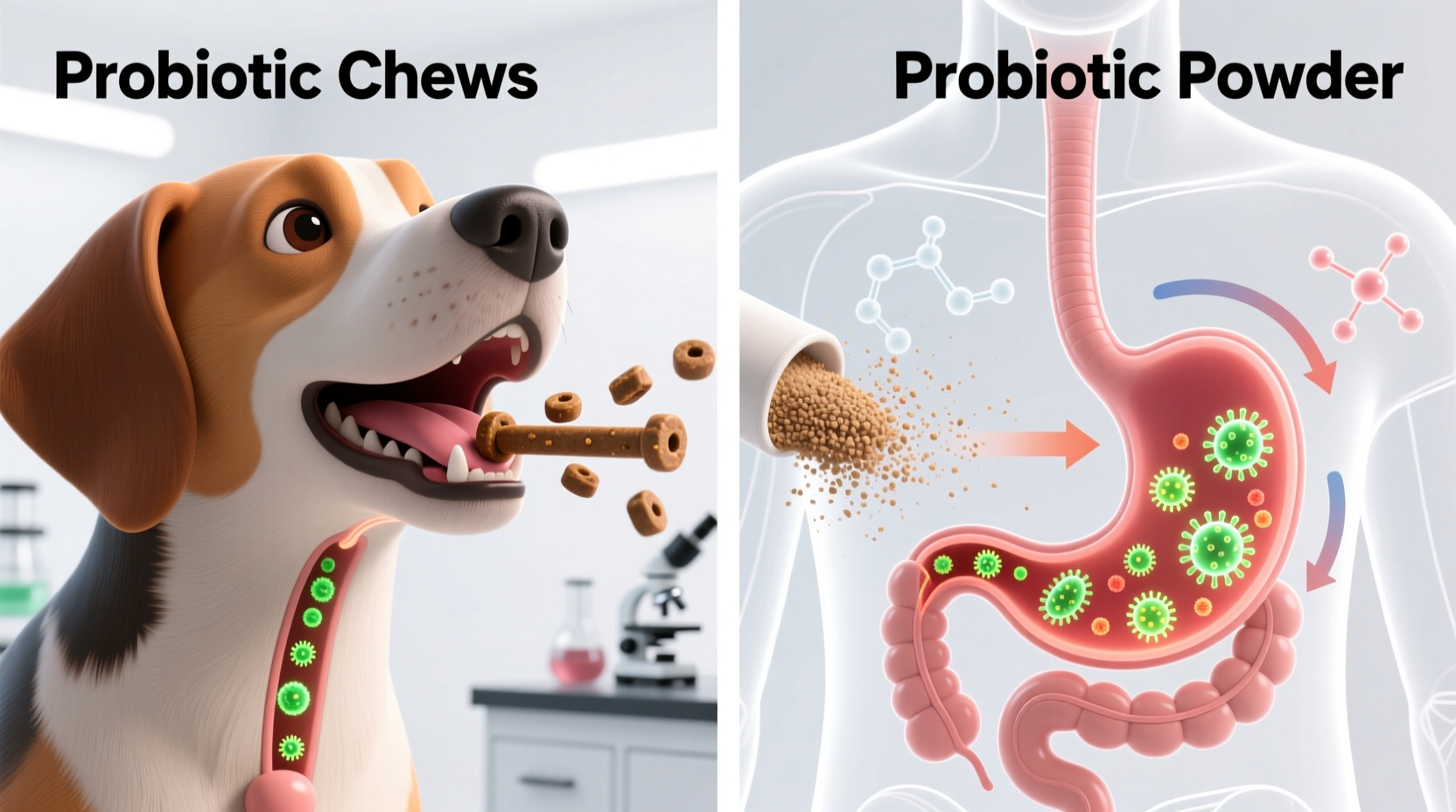
The canine gut hosts trillions of microorganisms, including both helpful and harmful bacteria. When this balance is disrupted—due to antibiotics, stress, dietary changes, or illness—digestive problems often follow. Probiotics help by repopulating the gut with live strains such as Lactobacillus acidophilus, Bifidobacterium animalis, and Enterococcus faecium, which compete with pathogens and produce compounds that support intestinal health.
For probiotics to be effective, they must survive stomach acid and reach the intestines alive. This process is known as \"gut transit survival.\" Once established in the colon, these microbes begin modulating immune responses, producing short-chain fatty acids, and improving the integrity of the gut lining—all contributing to better digestion within days under optimal conditions.
Probiotic Chews: Convenience Meets Palatability
Chewable probiotic treats are popular among pet owners for their ease of use and appeal to dogs. Marketed as tasty snacks, they often contain added flavors like chicken or peanut butter, making administration simple—even for picky eaters. Most chews also include prebiotics (such as inulin or fructooligosaccharides), which feed the probiotic bacteria and enhance their effectiveness.
However, the formulation of chews presents some limitations. To maintain shelf stability and palatability, manufacturers may use lower colony-forming unit (CFU) counts or less resilient bacterial strains. Additionally, heat processing during treat production can degrade live cultures unless encapsulated or enteric-coated. As a result, fewer viable bacteria may reach the intestines compared to powdered alternatives.
In terms of onset time, most dog owners report noticing mild improvements in stool quality within 3–5 days of consistent chew use. However, significant digestive recovery—especially after antibiotic use or chronic imbalance—can take up to two weeks.
Probiotic Powders: Potency and Precision
Powdered probiotics are typically more concentrated than chews, offering higher CFUs per serving. They’re designed to be mixed directly into food, ensuring even distribution and immediate ingestion. Because powders avoid high-heat manufacturing processes, they’re more likely to preserve bacterial viability.
Many veterinary-grade probiotic powders use microencapsulation or delayed-release technology to protect strains from stomach acid, increasing the number that successfully colonize the gut. This enhanced delivery system contributes to faster results—some studies suggest noticeable improvement in as little as 24 to 72 hours, particularly in cases of acute diarrhea or post-antibiotic dysbiosis.
Another advantage of powders is dosage flexibility. You can adjust the amount based on your dog’s size, condition, or stage of treatment. For example, a large breed recovering from gastroenteritis might require double the maintenance dose initially, which is easier to achieve with a powder than breaking multiple chews.
“Powdered probiotics often provide superior strain diversity and survivability, leading to quicker clinical response in dogs with active digestive disturbances.” — Dr. Rebecca Nguyen, DVM, Board-Certified Veterinary Nutritionist
Comparative Analysis: Chews vs Powder
| Feature | Probiotic Chews | Probiotic Powder |
|---|---|---|
| Average CFU Count | 1–3 billion | 5–10+ billion |
| Strain Diversity | 3–5 strains | 5–10+ strains |
| Survivability Through Stomach Acid | Moderate (depends on coating) | High (often enteric-coated or microencapsulated) |
| Onset of Digestive Improvement | 3–7 days | 1–3 days |
| Dosing Flexibility | Low (fixed per chew) | High (adjustable by scoop) |
| Pet Acceptance | Very high (tasty treats) | Variable (may resist mixed food) |
| Shelf Life & Storage | 6–12 months; room temperature | Often refrigerated; shorter shelf life if not stabilized |
This table illustrates a clear trade-off: chews win in convenience and acceptance, while powders lead in potency and speed of effect. If rapid digestive recovery is the goal—such as after a round of antibiotics or during an episode of loose stools—a high-quality powder is generally the better choice.
Real-World Example: Max, the Rescue Beagle
Max, a 2-year-old beagle adopted from a shelter, arrived with chronic soft stools and frequent flatulence. His new owner started him on a popular probiotic chew, following label instructions for his weight. After five days, there was minimal improvement. Concerned, she consulted her veterinarian, who recommended switching to a prescription-strength probiotic powder containing Fortiflora Canine.
She began mixing the powder into Max’s morning meal. Within 36 hours, his stools became firmer. By day four, they were well-formed and consistent. Gas reduced significantly within a week. The vet attributed the faster response to the powder’s higher concentration of Fusobacterium-resistant strains and its proven efficacy in shelter environments where gut flora disruption is common.
After two weeks, Max transitioned back to a maintenance chew for long-term gut support. This case highlights a practical approach: using powders for acute correction and chews for ongoing prevention.
Step-by-Step Guide to Choosing the Right Form
- Assess Your Dog’s Current Condition: Is your dog experiencing active digestive distress (diarrhea, vomiting, gas)? If yes, opt for a powder for faster intervention.
- Check CFU Count and Strains: Look for products listing specific strains and at least 5 billion CFUs for powders; 1–3 billion may suffice for chews used preventively.
- Evaluate Administration Ease: If your dog refuses anything mixed into food, a palatable chew may ensure compliance despite slower results.
- Consider Duration of Use: Short-term therapy favors powders; long-term maintenance can lean toward chews.
- Consult Your Veterinarian: Especially if your dog has a medical condition, prior antibiotic use, or immune compromise.
- Monitor Response Over 7 Days: Track stool quality, energy levels, and appetite. Adjust form or brand if no improvement occurs.
Common Misconceptions About Probiotic Speed
One widespread myth is that all probiotics work instantly. In reality, even fast-acting formulations require time to establish colonies and influence microbial balance. Another misconception is that higher CFU always means faster results. While important, CFU count alone doesn’t guarantee effectiveness—strain specificity, delivery method, and gastric protection matter just as much.
Additionally, some pet owners expect complete resolution in 24 hours. While symptom reduction may occur quickly (e.g., less urgent bowel movements), full microbiome restoration takes consistent use over 2–4 weeks. Patience and adherence are key.
Expert Recommendations for Optimal Results
- Pair with Prebiotics: Choose products combining probiotics with prebiotic fibers to nourish good bacteria.
- Avoid Concurrent Antibiotics: If possible, separate probiotic and antibiotic doses by at least 2–3 hours to prevent bacterial destruction.
- Store Properly: Refrigerate live-strain powders unless labeled shelf-stable. Keep chews in cool, dry places away from humidity.
- Use During Dietary Transitions: Start probiotics 2–3 days before switching foods to minimize digestive upset.
“The fastest improvement comes not from the form itself, but from matching the right product to the dog’s individual needs and ensuring consistent, correct dosing.” — Dr. Alan Torres, Integrative Veterinary Medicine Specialist
FAQ
Can I give my dog both probiotic chews and powder together?
Yes, but only under veterinary guidance. Combining forms may increase CFU load excessively or cause bloating and gas. It's usually unnecessary unless managing severe dysbiosis.
Do probiotic chews expire faster than powders?
Not necessarily. Shelf life depends on formulation and storage. Many chews last 12 months unopened, while some powders require refrigeration and degrade faster once exposed to air.
Why isn’t my dog improving after a week of probiotics?
Lack of improvement could stem from incorrect strain selection, insufficient dosage, poor bacterial survival, or an underlying medical issue like parasites or inflammatory bowel disease. Consult your vet for further evaluation.
Final Thoughts and Action Plan
When speed matters—especially in resolving active digestive issues—probiotic powders generally outperform chews due to higher potency, better strain protection, and faster colonization of the gut. However, chews remain valuable for daily maintenance, training reinforcement, and dogs resistant to supplements in food.
The ideal strategy often involves both: starting with a therapeutic-grade powder to rapidly correct imbalance, then transitioning to a high-quality chew for ongoing support. Always read labels carefully, prioritize clinically tested strains, and consult your veterinarian before beginning any new supplement regimen.




 浙公网安备
33010002000092号
浙公网安备
33010002000092号 浙B2-20120091-4
Comments
No comments yet. Why don't you start the discussion?