
In the era of remote work and digital presence, a polished virtual background is no longer optional—it’s essential. Whether you're hosting client calls, teaching online classes, or recording video content, your environment communicates professionalism, creativity, and attention to detail. One subtle yet powerful way to elevate your on-camera presence is through ambient lighting effects that produce a soft, dreamy bokeh—a blurred, glowing background effect that draws focus to you while adding visual warmth.
Two popular solutions dominate this space: traditional fairy light curtains and innovative sheer fabrics embedded with LED lights. Both promise a luminous backdrop ideal for Zoom, Teams, or streaming platforms. But which one truly delivers the softer, more natural bokeh? And what factors should influence your choice beyond just aesthetics?
This article compares these two lighting approaches in depth—examining their optical qualities, setup practicality, durability, cost, and real-world performance—to help you make an informed decision based on both visual impact and long-term usability.
Understanding Bokeh in Virtual Backgrounds
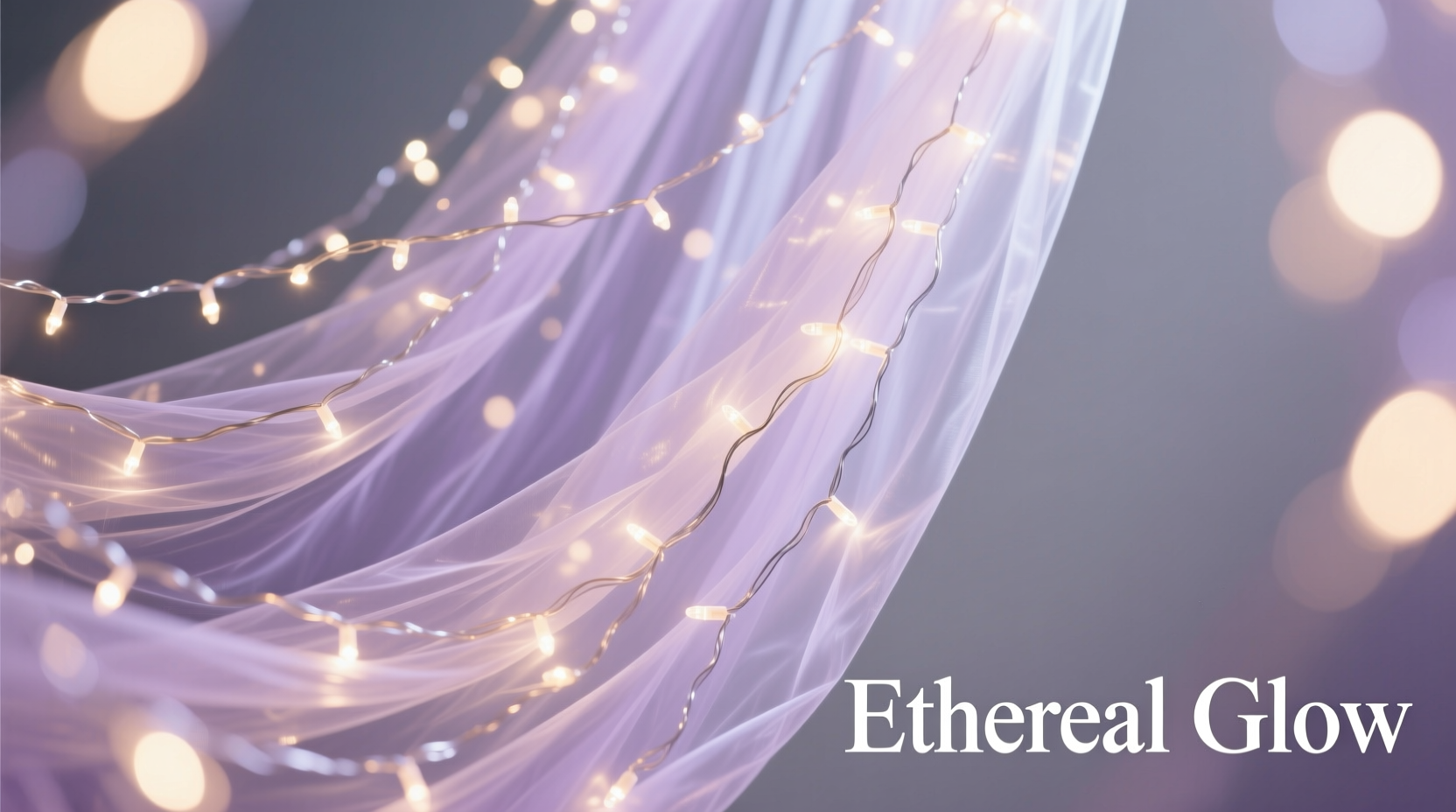
Bokeh (pronounced boh-kay) refers to the aesthetic quality of the blur in out-of-focus areas of an image, particularly the way light sources render as smooth, circular glows. In photography and videography, good bokeh enhances depth, minimizes distractions, and directs attention to the subject—in this case, you.
For video conferencing, achieving bokeh doesn’t require a professional camera lens. Most modern webcams and laptop cameras can simulate it when paired with proper lighting placement and background contrast. The key is having small, evenly spaced points of light positioned behind you, slightly out of focus, creating gentle orbs rather than harsh glare.
The physical properties of the light source and its surrounding material directly affect how the bokeh appears:
- Size and spacing of lights: Smaller, closely spaced bulbs create denser, smoother bokeh fields.
- Diffusion: Materials that scatter light reduce intensity spikes and hotspots.
- Color temperature: Warm white (2700K–3000K) mimics candlelight and feels inviting; cool white can appear clinical.
- Motion and flicker: Flickering or inconsistent brightness disrupts visual comfort and recording quality.
Both fairy light curtains and LED-embedded sheer fabrics aim to optimize these variables—but they do so in fundamentally different ways.
Fairy Light Curtains: Classic Charm with Practical Trade-offs
Fairy light curtains consist of strings of miniature incandescent or LED bulbs attached to a mesh or transparent backing, arranged in vertical lines to form a wall-like illumination panel. They’ve been used in photography studios, bedrooms, and event decor for decades due to their nostalgic glow and affordability.
When placed behind a user during a video call, these curtains generate distinct points of light. If the camera lens is set correctly (aperture open, focus on face), each bulb blurs into a soft circle—classic bokeh. However, several limitations affect consistency and realism:
- Hard light sources: Individual bulbs remain visible if not sufficiently diffused or if the user sits too close.
- Uneven spacing: Gaps between vertical strands can lead to patchy coverage, especially on wider screens.
- Cord clutter: Power adapters, extension cords, and plug locations limit placement flexibility.
- Durability concerns: Bulbs can burn out, wires tangle easily, and repairs are often impractical.
Despite these drawbacks, fairy light curtains remain popular because they’re widely available, inexpensive ($20–$60), and instantly recognizable as “aesthetic.” Their retro appeal works well for creatives, educators, or influencers aiming for a whimsical or cozy vibe.
Sheer Fabric with Embedded LEDs: The Next Generation of Soft Lighting
A newer innovation in ambient backlighting is the integration of micro-LEDs directly into lightweight, semi-transparent fabrics such as voile, chiffon, or organza. These textiles combine illumination and diffusion in a single layer, eliminating the need for separate light strings and secondary diffusion materials.
Manufacturers embed flexible LED strips or woven electroluminescent threads into the weave, distributing light uniformly across the surface. The result is not individual points of light but a continuous field of gentle radiance—ideal for generating ultra-soft bokeh without sharp edges or visible sources.
Key advantages include:
- Natural diffusion: Since the light originates within a translucent medium, there's no need for additional filters or layers.
- Uniform coverage: No gaps or dark zones; perfect for wide-angle framing.
- Thin profile: Rolls compactly, mounts easily with clips or rods, and requires only one power point.
- Dimming and color control: Many models offer app-based adjustment of brightness and color temperature via Bluetooth or Wi-Fi.
“Integrated LED textiles represent a shift from decorative lighting to functional environmental design. They allow creators to shape light as part of the space, not just hang it.” — Dr. Lena Torres, Human-Centered Design Researcher, MIT Media Lab
While typically more expensive ($80–$200), these fabrics deliver superior optical performance for professional applications where visual polish matters. They’re increasingly used by broadcasters, podcasters, and corporate trainers who prioritize consistent, high-quality visuals.
Direct Comparison: Performance, Setup, and Longevity
| Feature | Fairy Light Curtain | Sheer Fabric with Embedded LEDs |
|---|---|---|
| Bokeh Quality | Good (distinct orbs, potential for hotspots) | Excellent (smooth, even glow with minimal artifacts) |
| Setup Complexity | Moderate (stringing, avoiding tangles, managing cords) | Low (hang like a curtain, plug in) |
| Portability | Medium (bulky when packed, prone to snags) | High (folds flat, lightweight) |
| Lifespan | 1–3 years (risk of broken bulbs or wiring) | 3–5+ years (solid-state LEDs, durable fabric) |
| Power Requirements | AC adapter or battery pack per strand | Single USB or low-voltage DC input |
| Customization | Limited (fixed color, some dimming options) | High (color tuning, scheduling, scene presets) |
| Price Range | $20–$60 | $80–$200 |
The data shows a clear trade-off: fairy light curtains win on initial cost and nostalgic charm, while LED-integrated fabrics excel in performance, ease of use, and longevity. For occasional users or those on a tight budget, fairy lights may suffice. But for daily professionals seeking reliability and refined visuals, the investment in smart illuminated fabric pays off quickly in reduced setup time and improved appearance.
Real-World Example: A Content Creator’s Upgrade Journey
Sophie Kim, a freelance yoga instructor who transitioned to live-streamed classes during the pandemic, initially used a $35 fairy light curtain behind her home studio setup. While clients complimented the “cozy” look, she noticed recurring feedback about eye strain and difficulty focusing during sessions.
After analyzing viewer comments and comparing recordings, she realized the issue: the individual bulbs created distracting flicker under certain lighting conditions, and the uneven distribution caused shadows on one side of the frame. She upgraded to a 4x6-foot sheer fabric panel with embedded warm-white LEDs, controlled via smartphone app.
The change was immediate. Her new background produced a seamless gradient of soft light, eliminating visual noise. Viewers reported feeling more relaxed, and engagement metrics rose by 22% over the next quarter. “It wasn’t just prettier,” Sophie noted. “It felt calmer. The light wraps around me instead of poking at the camera.”
Though the upfront cost was higher, she considers it a necessary tool—like a microphone or tripod—not merely decoration.
Step-by-Step Guide to Achieving Ideal Bokeh for Video Calls
- Choose Your Backdrop Type: Decide between fairy light curtains and LED-embedded fabric based on your usage frequency and quality standards.
- Position the Light Source: Place the backdrop 3 to 6 feet behind you to allow for depth separation and natural defocusing.
- Adjust Camera Focus: Manually set focus on your face if possible. Most built-in webcams auto-focus, but avoid moving forward/backward once focused.
- Set Light Temperature: Use warm white (2700K–3000K) for a welcoming tone; avoid blue-heavy settings unless matching specific branding.
- Control Brightness: Ensure the backdrop is bright enough to register clearly but not so intense that it causes glare or forces your camera to darken the entire image.
- Add Diffusion (if needed): If using fairy lights, place a sheer white curtain or muslin cloth between the lights and the camera to soften individual points.
- Test Across Platforms: Record short clips on Zoom, Google Meet, and Microsoft Teams to check how compression affects the bokeh effect.
- Maintain Consistency: Once optimized, keep the setup unchanged to ensure predictable results across meetings.
FAQ: Common Questions About Lighting Backdrops for Zoom
Can I achieve bokeh with any webcam?
Most modern webcams have wide apertures and autofocus systems capable of producing mild bokeh when paired with a contrasting background. Dedicated cameras (DSLR/mirrorless) with manual controls offer greater precision, but even integrated laptop cameras can simulate the effect with proper lighting placement.
Do I need a green screen if I use a lighted backdrop?
No. A well-designed illuminated backdrop eliminates the need for virtual backgrounds by providing a visually appealing real background. This avoids edge artifacts common with green screens and reduces processing load on your computer.
Are LED-embedded fabrics safe for long-term use?
Yes. These fabrics use low-voltage, energy-efficient LEDs that generate minimal heat. Most are certified for continuous operation (up to 50,000 hours lifespan) and comply with electrical safety standards (e.g., UL, CE). Always purchase from reputable suppliers to ensure fire-resistant materials and stable power delivery.
Final Checklist Before You Buy
- ✅ Measure your wall or frame space to ensure full coverage
- ✅ Confirm power access near installation area
- ✅ Check color temperature options (preferably adjustable)
- ✅ Read reviews for flicker performance under camera
- ✅ Verify return policy in case of defects or compatibility issues
- ✅ Consider future needs—will you need portability or reconfiguration?
Conclusion: Elevate Your Presence with Intentional Light
Your virtual presence is shaped not just by what you say, but by how you appear. A thoughtfully lit background does more than look attractive—it influences perception, mood, and credibility. Between fairy light curtain backdrops and sheer fabric with embedded LEDs, the latter offers a technically superior path to soft, cinematic bokeh with less maintenance and greater adaptability.
That said, the best choice depends on your goals. If you host occasional casual calls and enjoy DIY setups, fairy lights bring charm and affordability. But if you present regularly, teach, sell services, or build a personal brand, investing in an LED-integrated textile delivers measurable returns in professionalism and viewer experience.




 浙公网安备
33010002000092号
浙公网安备
33010002000092号 浙B2-20120091-4
Comments
No comments yet. Why don't you start the discussion?