
In 2017, two flagship smartphones stood out in a crowded market: the Google Pixel (first generation) and the Samsung Galaxy S8. At the time, the choice seemed clear for many—Samsung offered a sleek design, expansive display, and powerful hardware. Google, on the other hand, entered the premium smartphone space with a minimalist approach, banking heavily on pure Android, superior camera performance, and direct access to AI-driven features. Now, with nearly a decade of hindsight, it’s worth asking: Was the Google Pixel really worth choosing over the Galaxy S8?
This isn’t just about specs or launch-day excitement. It’s about real-world longevity, user experience, software updates, and how each device aged. For users deciding between innovation and ecosystem versus refinement and versatility, the answer reveals deeper truths about what makes a phone “worth it” beyond marketing claims.
The Launch Context: Two Visions of Premium
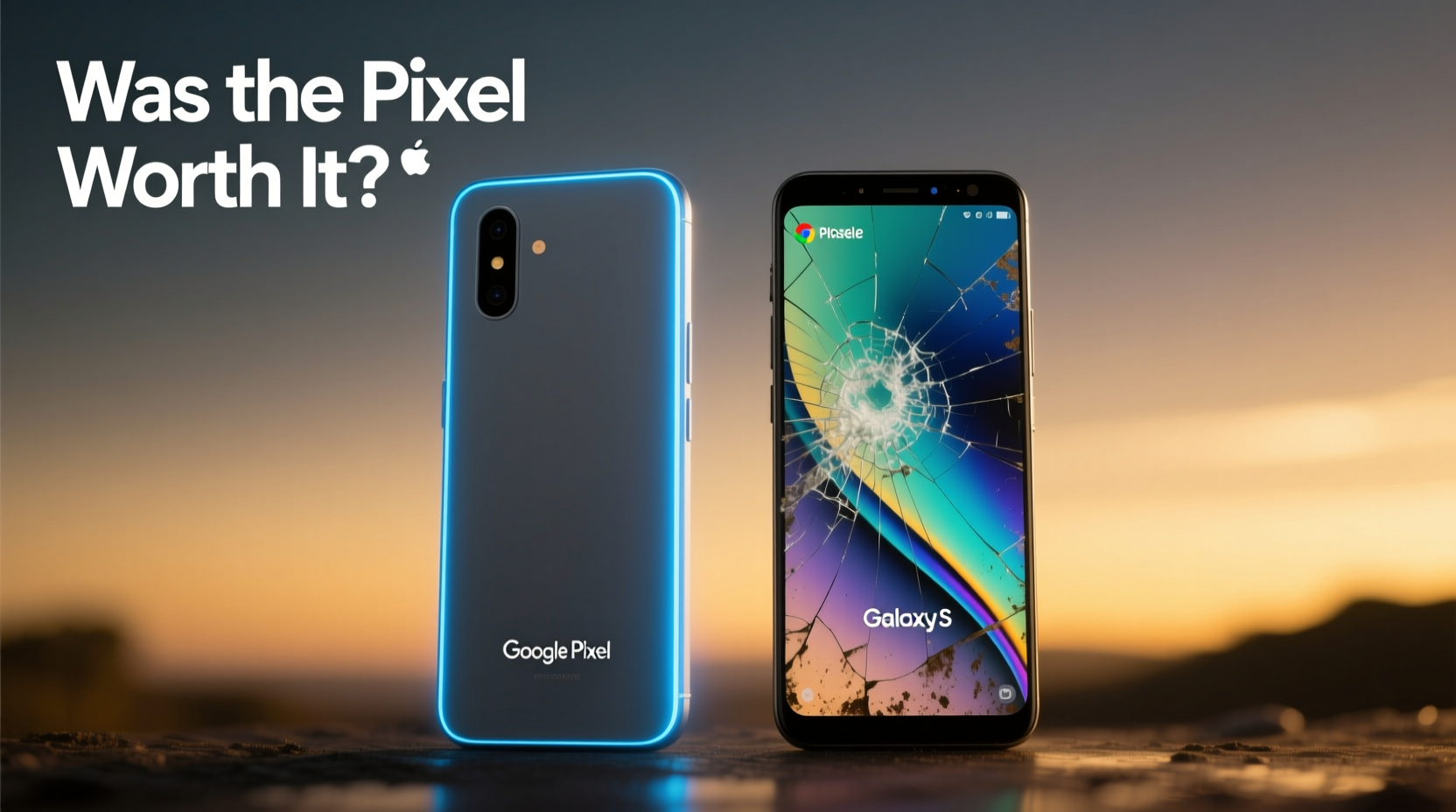
When the Pixel debuted in October 2016, it wasn’t just another Android phone—it was Google’s statement. After years of Nexus devices built in partnership with OEMs, the Pixel was the first fully Google-designed and -marketed smartphone. It launched with Android 7.1 Nougat, exclusive features like Google Assistant, and a camera that immediately set new standards for mobile photography.
Samsung’s Galaxy S8 followed in April 2017, representing the pinnacle of hardware engineering at the time. With its edge-to-edge Infinity Display, IP68 rating, expandable storage, and iris scanner, it was a showcase of industrial design and technical ambition. Priced higher than the base Pixel, the S8 targeted users who wanted cutting-edge hardware and brand prestige.
The contrast was stark: Google prioritized software integration and intelligent features; Samsung emphasized screen quality, build, and customization. But which philosophy delivered better value over time?
Camera Performance: Where the Pixel Shined
If there was one area where the Pixel didn’t just compete but dominated, it was the camera. Despite using a single 12.3MP rear sensor—while most flagships were moving toward dual-lens setups—the Pixel consistently scored higher on DxOMark than even high-end competitors, including the S8.
This was due to Google’s computational photography. Features like HDR+ and advanced noise reduction algorithms allowed the Pixel to produce sharper, more natural-looking photos in low light and challenging conditions. The S8, while capable, often struggled with blown-out highlights and inconsistent dynamic range.
“Google proved that hardware matters less than processing. The Pixel’s camera redefined what a smartphone could capture.” — David Imel, Mobile Photography Analyst, Digital Trends
Software & Updates: The Long Game
One of the most significant differentiators was software support. Google promised three years of OS and security updates for the Pixel—a bold commitment at the time. In practice, the original Pixel received updates all the way to Android 10, released in 2019, with security patches continuing into 2020.
Samsung, by contrast, provided only two major OS updates for the Galaxy S8. It launched with Android 7, upgraded to 8 and 9, but missed Android 10. Security updates tapered off significantly by 2020, leaving many S8 users exposed to vulnerabilities.
For long-term usability, this gap mattered. Users who kept their phones beyond two years found the Pixel remained smoother, more secure, and compatible with newer apps longer than the S8. Google’s stock Android also meant fewer bloatware issues and faster bug fixes.
Hardware Comparison: S8’s Edge in Design and Flexibility
While the Pixel won on software and camera, the S8 had undeniable hardware advantages. Its 5.8-inch Quad HD+ AMOLED display was widely praised as one of the best ever put in a phone. The curved edges, minimal bezels, and vibrant colors made media consumption and multitasking a pleasure.
The S8 also supported microSD cards (up to 256GB), had a removable battery via wireless charging compatibility, and featured an IP68 water resistance rating—none of which the original Pixel offered. The Pixel lacked water resistance, expandable storage, and even a headphone jack (a controversial omission at the time).
| Feature | Google Pixel (2016) | Samsung Galaxy S8 (2017) |
|---|---|---|
| Display | 5.0\", Full HD LCD | 5.8\", Quad HD+ AMOLED |
| Water Resistance | No | IP68 rated |
| Expandable Storage | No | Yes (microSD) |
| Headphone Jack | No | Yes |
| OS Updates | 3 major versions | 2 major versions |
| Final Security Patch | Early 2020 | Late 2019 |
User Experience Over Time: A Real-World Case
Consider Mark, a tech-savvy professional who bought both phones in 2017—one for daily use, one as a backup. He used the Pixel as his primary device for two years, drawn to its clean interface, fast Google Assistant integration, and unmatched photo quality during business trips. After upgrading in 2019, he passed the Pixel to his teenage daughter.
To his surprise, the Pixel ran smoothly through 2020, handling social media, messaging, and streaming without major lag. The S8, however, began showing signs of wear by late 2018—sluggish animations, app crashes, and inconsistent battery life—even after a factory reset. By 2020, it couldn’t install several newer apps due to OS limitations.
Mark’s experience reflects a broader trend: the Pixel aged more gracefully, not because of raw power, but because of efficient software and consistent optimization.
Was the Pixel Worth It? A Balanced Verdict
Worth is subjective. For users who valued design, screen quality, and hardware flexibility, the Galaxy S8 was—and still is—justifiable. It looked futuristic, felt premium, and offered features the Pixel lacked.
But for those who prioritized long-term usability, camera excellence, and seamless software, the Pixel was the smarter investment. Its ability to deliver timely updates, reliable performance, and future-proof features like Google Lens and Assistant gave it staying power that extended well beyond its price point.
Moreover, the Pixel represented something bigger: a shift toward AI-first smartphones. While the S8 focused on what a phone could *do* today, the Pixel hinted at what it could *learn* tomorrow.
Checklist: What Made the Pixel a Better Long-Term Choice
- ✅ Received three major Android OS updates
- ✅ Superior camera in varied lighting conditions
- ✅ Stock Android with no bloatware
- ✅ Faster access to security patches
- ✅ Smoother performance retention over 3+ years
- ✅ Early access to Google-exclusive AI features
Frequently Asked Questions
Did the Pixel have better battery life than the S8?
No. The Pixel’s 2,770 mAh battery generally lasted a full day under moderate use, similar to the S8’s 3,000 mAh cell. However, the S8’s adaptive display and power management gave it a slight edge in efficiency during heavy media use.
Why did the Pixel’s camera outperform the S8 despite lower specs?
Google invested heavily in computational photography. The Pixel used multi-frame processing, machine learning, and proprietary HDR+ algorithms to enhance image quality beyond what the sensor alone could capture. This software-centric approach compensated for hardware limitations.
Is either phone usable today?
As of 2024, neither is recommended as a primary device. Both lack modern security updates and compatibility with current apps. However, the Pixel remains slightly more functional due to its later Android version support and cleaner OS footprint.
Conclusion: Choosing Value Over Flash
Looking back, the Google Pixel wasn’t the flashiest phone in 2017. It didn’t have curved screens or expandable storage. But it offered something more enduring: a vision of what a smartphone could become. It proved that seamless software, intelligent features, and thoughtful design could outweigh raw hardware prowess.
The Galaxy S8 was a triumph of engineering—but engineering ages. Software, when nurtured, evolves. For users who kept their phones beyond a year or two, the Pixel’s value became increasingly apparent. It wasn’t just worth it at launch; it remained worth it longer.




 浙公网安备
33010002000092号
浙公网安备
33010002000092号 浙B2-20120091-4
Comments
No comments yet. Why don't you start the discussion?