
Dry mint is often overlooked in favor of its fresh counterpart, yet it holds a quiet power in the pantry—one that can deepen flavor profiles, extend shelf life, and lend authenticity to global cuisines. While fresh mint bursts with brightness, dried mint offers concentrated earthiness, subtle warmth, and aromatic complexity that fresh leaves cannot replicate. From Middle Eastern stews to Indian dals and Mediterranean spice blends, dry mint functions not as a substitute but as a distinct ingredient with its own culinary identity. Understanding how to use it properly unlocks layers of taste that elevate everyday cooking into something more refined and intentional.
The transformation from fresh to dried alters mint’s chemical composition, reducing volatile oils like menthol while intensifying herbal, slightly camphorous notes. This shift makes dry mint less about immediate refreshment and more about structural support within a dish—like an aromatic foundation rather than a finishing flourish. When used thoughtfully, it enhances savory depth without overpowering, integrates seamlessly into slow-cooked meals, and contributes to balanced seasoning in spice mixes. For home cooks seeking greater control over flavor development, dry mint is both a practical tool and a creative catalyst.
Definition & Overview
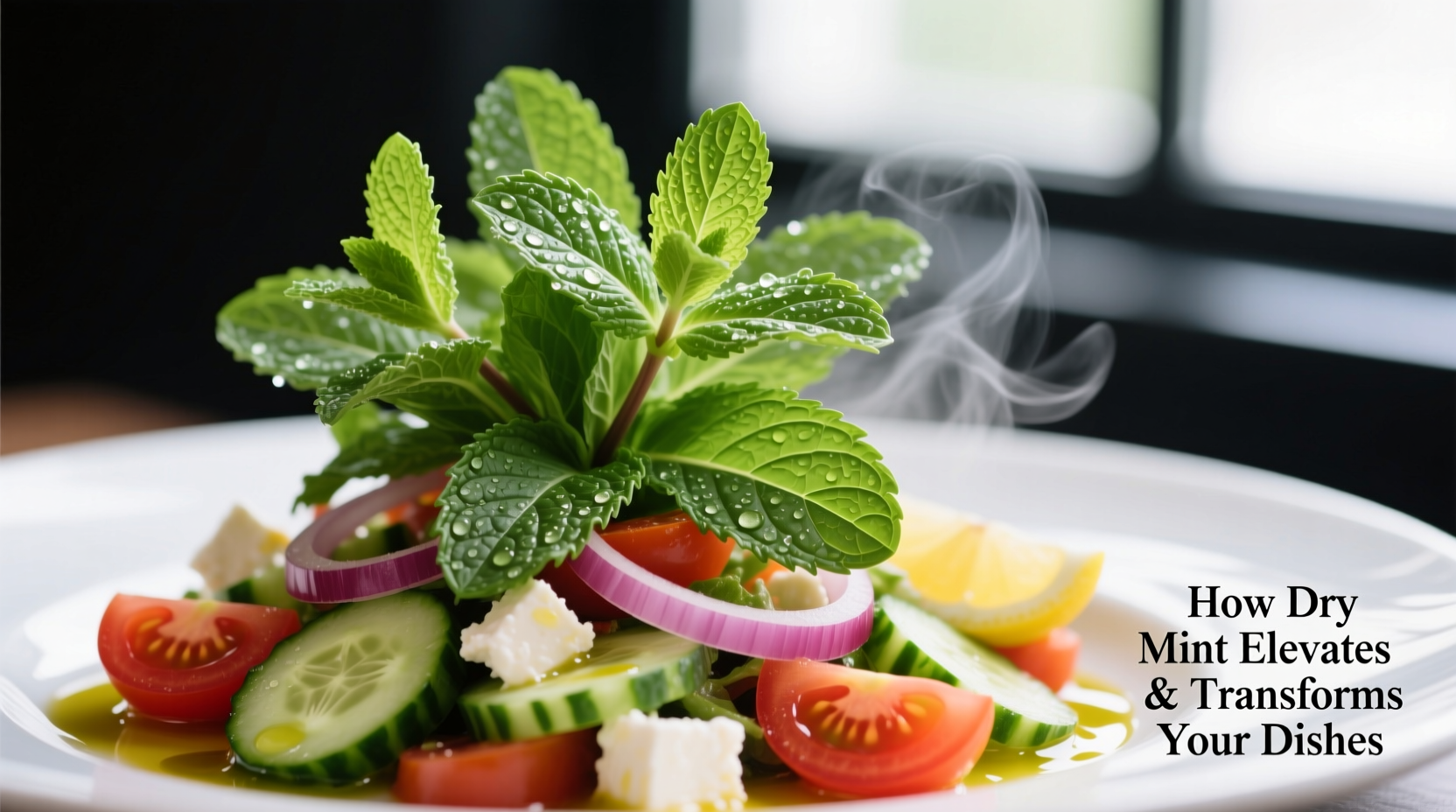
Dry mint refers to Mentha spicata (spearmint) or occasionally Mentha arvensis (cornmint), harvested at peak maturity and dehydrated through sun-drying, air-drying, or low-heat mechanical processes. Unlike fresh mint, which delivers high moisture content and sharp menthol volatility, dried mint undergoes enzymatic and oxidative changes during dehydration that mellow its pungency and concentrate its essential compounds.
Originating in the eastern Mediterranean and widely cultivated across North Africa, the Middle East, Central Asia, and the Indian subcontinent, dry mint has long been a staple in traditional food preservation and seasoning. It plays a foundational role in Persian khoresh, Turkish mezes, Afghan qormas, Lebanese tabbouleh (in some regional variations), and countless lentil- and yogurt-based preparations where prolonged cooking would diminish fresh herbs.
Culinarily, dry mint belongs to the category of dried leafy herbs, sharing functional space with oregano, thyme, and marjoram—but distinguished by its cooler, slightly sweet undertone beneath the earthiness. Its flavor profile leans herbal, mildly bitter, and faintly medicinal when raw, but mellows into a rounded, tea-like savoriness when heated. This makes it especially effective in dishes requiring extended simmering, where it infuses gradually and harmonizes with other spices.
Key Characteristics
| Attribute | Description |
|---|---|
| Flavor Profile | Earthy, herbal, subtly sweet; less mentholated than fresh mint, with mild bitterness and astringency. |
| Aroma | Dried hay-like with hints of green tea and camphor; releases floral notes when crushed or heated. |
| Color & Form | Olive-green to dark sage powder or whole/crumbled leaves; available ground, flaked, or in loose leaf form. |
| Heat Level | Non-pungent; cooling effect diminished but still perceptible in large quantities. |
| Culinary Function | Base seasoning, flavor enhancer, aroma stabilizer in cooked dishes; thickening agent in yogurt sauces. |
| Shelf Life | 18–24 months when stored properly; potency declines after 12 months. |
Practical Usage: How to Use Dry Mint in Cooking
Dry mint excels in applications where sustained heat, moisture absorption, or long-term stability are required. Because its volatile oils are partially reduced during drying, it does not dissipate quickly under heat—instead, it slowly releases flavor throughout cooking, making it ideal for layered seasoning.
In legume-based dishes such as lentil dal, mujadara, or koshari, adding ½ to 1 teaspoon of crushed dry mint early in the sauté stage (after onions and before tomatoes or broth) allows it to bloom in fat and integrate fully into the base. The result is a background note of herbal clarity that prevents heaviness and adds dimension without calling attention to itself.
One of the most transformative uses is in **yogurt-based sauces and dips**. In tzatziki, raita, or Iranian mast-o-khiar, dry mint provides consistent flavor without introducing excess moisture—a common issue with fresh mint, which can make dips watery. Use ¼ to ½ teaspoon per cup of yogurt, rehydrated briefly in warm water or lemon juice first to reactivate aromatic compounds. This technique ensures even dispersion and avoids gritty texture.
For meat rubs and marinades, combine dry mint with cumin, coriander, garlic powder, and paprika to create a warming crust on lamb, goat, or chicken. A classic example is Afghan *mantu* dumpling filling, where ground beef or lamb is seasoned with onion, garlic, and 1 teaspoon dry mint per pound of meat. The mint penetrates deeply during steaming, emerging as a fragrant counterpoint to spicy tomato sauce.
Pro Tip: To maximize flavor release, lightly toast whole dry mint leaves in a dry skillet over medium-low heat for 60–90 seconds before crushing. This process volatilizes residual moisture and amplifies aromatic intensity. Alternatively, steep 1 teaspoon in 2 tablespoons of warm olive oil for 5 minutes, then strain and use the infused oil in dressings or drizzles.
When incorporating into soups or stews, add dry mint midway through cooking—not too early (to avoid bitterness) and not too late (to allow integration). In Moroccan harira or Egyptian molokhia, it complements cilantro and parsley while standing up to prolonged simmering. For rice pilafs, mix ½ teaspoon into the cooking water or sprinkle over toasted vermicelli before adding liquid—this creates a subtle, haunting backdrop that lingers on the palate.
Variants & Types
Not all dry mint is created equal. Differences in cultivar, harvest time, drying method, and processing affect potency, color, and suitability for specific dishes.
- Whole Leaf Dry Mint: Leaves are dried intact and sold loosely. Best for infusions, pickling brines, or dishes where visual presence matters (e.g., garnishing soups). Requires crushing before use for optimal flavor release.
- Crushed/Crumbled Mint: Mechanically broken for faster dissolution. Ideal for spice blends, rubs, and doughs (such as flatbread batters).
- Ground Mint Powder: Finely milled into a uniform powder. Most potent form; dissolves completely. Use sparingly—start with ⅛ to ¼ teaspoon—in sauces, marinades, or commercial spice mixes.
- Sun-Dried vs. Oven-Dried: Sun-dried retains more natural enzymes and develops deeper umami; oven-dried is faster but may have flatter flavor. Look for deep green color and absence of mustiness.
- Organic vs. Conventional: Organic versions are less likely to carry pesticide residues and often have better aroma retention due to gentler handling.
Regional variants also exist: Turkish dry mint tends to be more floral and delicate; Iranian versions are earthier and stronger; Indian *pudina powder* is often blended with preservatives or anti-caking agents—opt for single-origin when possible.
Comparison with Similar Ingredients
Dry mint is frequently confused with other dried herbs or misused as a direct replacement for fresh mint. Clarifying distinctions improves precision in cooking.
| Ingredient | Differences from Dry Mint |
|---|---|
| Fresh Mint | Higher menthol, bright and cooling; best used raw or added at end of cooking. Contains ~85% water; cannot substitute 1:1 with dry. |
| Dried Oregano | More pungent, peppery, and assertive; dominant in Italian/Mediterranean dishes. Mint is cooler and less aggressive. |
| Marjoram | Sweeter, woodsy, with citrus tones; often paired with mint but lacks cooling finish. |
| Persian Dill (Shevid) | Grassier, anise-like; commonly mixed with dry mint in Iranian herb blends (e.g., sabzi khordan). Not interchangeable alone. |
| Curly Parsley (dried) | Bland unless fresh; dried parsley lacks significant flavor. Dry mint remains active and impactful. |
“Dried mint isn’t a compromise—it’s a different instrument. I use it like a bass line in music: quiet, supportive, but essential to the harmony.” — Chef Leila Nasseri, Persian cuisine specialist, London
Practical Tips & FAQs
How much dry mint equals fresh mint?
Due to concentration from water loss, use a 1:3 ratio: 1 teaspoon dry mint ≈ 1 tablespoon chopped fresh. Adjust based on dish type—use less in delicate sauces, more in hearty stews.
Can I substitute dry mint for fresh in salads?
Not recommended. Dry mint lacks the crispness and hydration needed for raw applications. Rehydrate in citrus juice first if necessary, but fresh is superior here.
Does dry mint lose potency over time?
Yes. After 12 months, volatile oils degrade significantly. Test freshness by rubbing between fingers—if aroma is faint or musty, replace it. Store in airtight glass away from light and heat.
What dishes benefit most from dry mint?
Lentils, yogurt sauces, stuffings, grain pilafs, tomato-based stews, kebabs, vegetable tagines, cheese fillings (e.g., börek), and herbal teas. Also excellent in savory baked goods like feta-mint biscuits.
Is dry mint safe for daily consumption?
Yes, in culinary amounts (up to 1–2 teaspoons per serving). High doses may interact with medications (e.g., cyclosporine) due to enzyme-inhibiting flavonoids. Consult a healthcare provider if consuming medicinally.
How do I store dry mint properly?
In an opaque, airtight container in a cool, dark cupboard—never above the stove or near the dishwasher. Avoid plastic bags; amber glass jars preserve aroma longest. Keep away from strong-smelling spices.
Can I make my own dry mint at home?
Absolutely. Harvest spearmint just before flowering, wash gently, pat dry, and hang in small bunches in a well-ventilated, dark area for 5–7 days. Strip leaves once brittle, then store. Home-dried mint often surpasses commercial versions in fragrance.
Storage Checklist:
✓ Use dark glass jar with tight lid
✓ Label with purchase/harvest date
✓ Keep below 70°F (21°C)
✓ Check every 3 months for aroma strength
✓ Never store in refrigerator (causes condensation)
Summary & Key Takeaways
Dry mint is far more than a preserved version of a fresh herb—it is a unique culinary agent with distinct properties that enhance depth, balance, and authenticity in a wide range of dishes. Its earthy, subdued profile allows it to function as a background enhancer rather than a foreground flavor, integrating seamlessly into complex spice matrices and slow-cooked preparations.
The key advantages lie in its stability, moisture control, and ability to withstand heat without disintegration. Whether enriching a pot of dal, fortifying a yogurt dip, or lending nuance to a lamb rub, dry mint operates with quiet authority. Choosing the right form—whole, crushed, or powdered—and understanding regional variations further refines its application.
Unlike fresh mint, which shines in raw or last-minute uses, dry mint belongs in the foundational stages of cooking. When toasted, bloomed in oil, or rehydrated strategically, its full potential emerges. Proper storage ensures longevity and consistent performance, making it one of the most cost-effective and versatile ingredients in any spice cabinet.
Mastering dry mint means expanding your flavor vocabulary beyond immediacy toward subtlety, endurance, and integration. Once understood, it becomes indispensable—not as a backup, but as a primary tool in the thoughtful cook’s arsenal.
Ready to experiment? Try this: Add ½ teaspoon dry mint to your next batch of hummus along with cumin and lemon. Blend thoroughly and taste—the difference is subtle but transformative, adding a whisper of warmth that ties the flavors together.




 浙公网安备
33010002000092号
浙公网安备
33010002000092号 浙B2-20120091-4
Comments
No comments yet. Why don't you start the discussion?