
Wearing false lashes can elevate your look with dramatic volume and length, but if you wear glasses, the experience often comes with a frustrating side effect: lashes that constantly brush against your lenses. This not only causes discomfort but can also smudge makeup, disrupt vision, and shorten the lifespan of both your lashes and your glasses. The good news is that with the right techniques, products, and a bit of practice, you can enjoy the full impact of falsies while maintaining comfort and clarity behind your frames.
The challenge lies in the natural arc of most false lashes, which are designed to extend outward—perfect for open-eyed glamour, but problematic when your eyelashes meet glass. The solution isn’t to give up on falsies altogether, but to adapt your approach based on your eye shape, lash style, frame design, and application precision.
Choose the Right False Lash Style
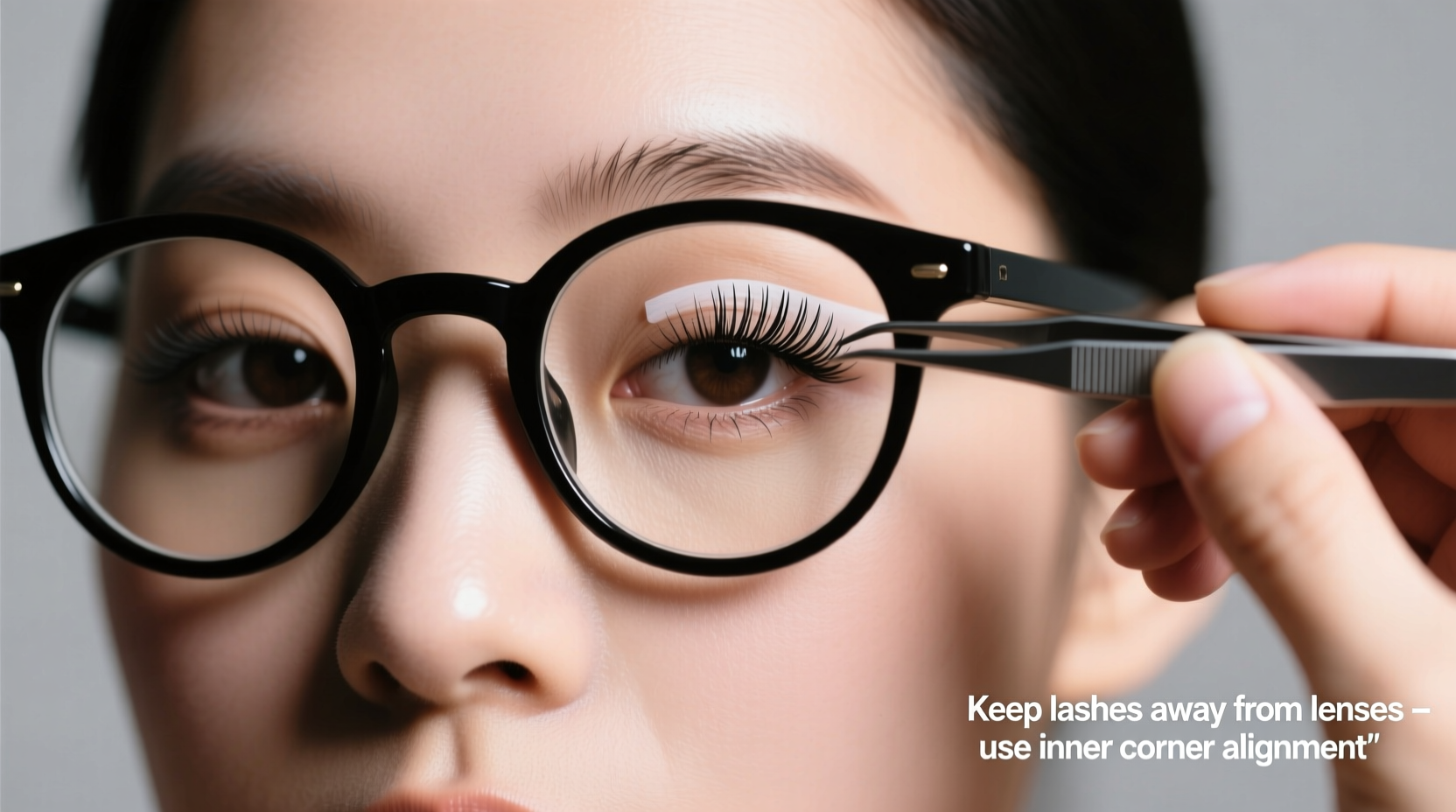
Not all false lashes are created equal—especially when it comes to compatibility with eyeglasses. The key is selecting a style that enhances your eyes without extending too far forward. Many standard false lashes have a “flared” or “dramatic winged” shape that projects outward at the outer corners, increasing the likelihood of lens contact.
Instead, opt for lashes with a more lifted, upward curl rather than horizontal extension. Look for descriptors like:
- Natural – subtle volume without excessive length
- Cat-eye – shorter at the inner corner, slightly longer at the outer edge, but not overly long
- Wispy – individual clusters that create dimension without bulk
- Demi-lashes – applied only to the outer third of the lash line, reducing front interference
Match Your Lashes to Your Frame Type
Your glasses aren’t just accessories—they play a direct role in how much clearance your lashes have. The distance between your eyelashes and the inner surface of your lenses depends on your frame’s bridge height, lens curvature, and how close the lenses sit to your face.
For example:
- Rimless or semi-rimless frames tend to sit closer to your eyes, offering less space.
- Thick plastic or oversized frames may sit farther from your face, allowing more room for lashes.
- High-nose-bridge wearers often have more gap between lashes and lenses.
- Low-set frames increase the risk of contact.
If you frequently struggle with lash-lens interference, consider trying a different pair of glasses for special occasions—one with a higher bridge or more forward-set lenses.
“Many clients don’t realize their eyewear impacts their makeup choices. A slight adjustment in frame fit can make false lashes far more wearable.” — Lena Torres, Celebrity Makeup Artist & Vision Consultant
Step-by-Step Guide to Applying False Lashes with Glasses
Applying false lashes when you wear glasses requires extra attention to angle, adhesion, and positioning. Follow this detailed process to minimize contact and maximize comfort.
- Start with clean, primed eyes. Remove any oil residue with a gentle micellar water. Apply a light eyeshadow base and set with translucent powder to ensure strong lash adhesive grip.
- Select the right lash band. Flexible, thin bands conform better to your natural lash line and reduce lifting at the ends—a common cause of lens contact.
- Trim the lash strip if needed. Hold the false lash against your lash line and trim from the outer edge if it extends past your natural eye shape. Overhang increases chances of touching the lens.
- Apply a thin layer of lash glue to the band. Use a latex-free adhesive if you're sensitive. Wait 30 seconds for it to become tacky—this prevents sliding and misalignment.
- Put on your glasses and check the clearance. Before applying the lash, place your glasses on your face and blink naturally. Note where your natural lashes hit the lens. This helps you visualize where the false lashes must sit to avoid contact.
- Apply lashes looking downward into a mirror. Tilt your chin slightly up and look down into a well-lit handheld mirror. This gives you a clear view of your lash line and helps position the falsies flatter against your lids, reducing forward projection.
- Place the center first, then secure the edges. Use tweezers or an applicator to set the middle of the lash band directly on top of your natural lash line. Then press down the inner and outer corners. Avoid lifting the outer tip—it’s the most likely part to touch your lens.
- Press lashes downward gently with a lash presser or spoon. After placement, use a cool metal spoon or lash shield to lightly press the lashes toward your lid, curving them upward instead of outward.
- Wear your glasses immediately and test blink. Put your glasses on and blink several times. If you feel contact, remove the lash and reapply with a flatter angle.
- Finish with mascara on natural lashes only. Do not apply mascara over false lashes if wearing glasses—it adds weight and can cause them to droop forward. Instead, lightly coat your bottom lashes to balance the look.
Do’s and Don’ts When Wearing False Lashes with Glasses
| Do’s | Don’ts |
|---|---|
| Choose lightweight, wispy lashes with minimal forward length | Use long, flared lashes that extend beyond your brow bone |
| Apply with glasses on to test clearance | Assume all lashes will work the same way |
| Trim lashes to fit your eye shape precisely | Leave excess band material at the outer corner |
| Use a lash shield or spoon to press lashes upward | Bend lashes outward to create drama |
| Opt for magnetic or individual lashes for better control | Layer multiple strip lashes for extra volume |
Alternative Lash Options for Glasses Wearers
If traditional strip lashes consistently cause issues, consider alternatives that offer similar impact with fewer complications.
Magnetic Lashes
Magnetic lashes attach via tiny magnets sandwiched around your natural lashes, eliminating the need for glue. They often come in lighter, segmented styles that can be adjusted for spacing. Because they’re typically thinner and more flexible, they’re easier to position under glasses.
Individual or Cluster Lashes
Applied one by one or in small groups, individual lashes allow precise placement. Focus on the outer two-thirds of your lash line to open up the eyes without adding front-facing volume. These are ideal for creating lift without length.
Lash Lifts and Tints
For a low-maintenance option, consider a professional lash lift. This semi-permanent treatment curls your natural lashes upward, giving the illusion of falsies. Combined with a tint, it enhances definition without any added weight or risk of lens contact.
Real-Life Example: Sarah’s Solution for Work and Events
Sarah, a 32-year-old graphic designer, wears prescription glasses daily and loves a polished makeup look for client meetings and social events. She used to avoid false lashes entirely after a disastrous first attempt—her voluminous mink strips kept smudging her lenses every time she blinked.
After researching solutions, she switched to a pair of lightweight, hand-made demi-lashes made with synthetic silk fibers. She trims them slightly so they end just at the outer edge of her iris and applies them using a downward-angle technique while wearing her glasses. She now uses a small spoon to press the lashes upward post-application, ensuring they curl toward her brows, not her lenses.
The result? A wide-awake, defined look that lasts all day without irritation. “I finally feel put together without sacrificing comfort,” she says. “It took three tries to get it right, but now it’s part of my routine.”
Frequently Asked Questions
Can I wear false lashes with progressive lenses?
Yes, but extra caution is needed. Progressive lenses have varying prescriptions across the lens surface, and lash contact can scratch coatings or interfere with the reading zone. Stick to short, lifted styles and avoid heavy lower lash buildup, which can reflect in the lower segment.
Why do my false lashes keep touching my glasses even when they’re short?
This usually happens due to incorrect application angle. If the outer corner of the lash lifts upward or forward, it can still reach the lens. Try pressing the entire lash strip flat against your lid with a cooled spoon after application. Also, check if your glasses sit too close to your face—adjusting the nose pads may help.
Are there specific brands that make false lashes for glasses wearers?
While no brand markets exclusively to glasses wearers, some lines are more suitable. Look for Ardell Demi Wispies, Huda Beauty Samantha (shorter version), or Velour Lash Effortless Classic. Independent artisans on Etsy often customize lengths and curls upon request.
Final Checklist Before You Apply
Before reaching for the lash glue, run through this quick checklist to ensure a smooth, comfortable experience:
- ✅ Choose a false lash style that’s short, lifted, and lightweight
- ✅ Trim the lash strip to fit your eye shape
- ✅ Cleanse and prime your eyelids
- ✅ Let lash glue become tacky before application
- ✅ Position yourself with a downward gaze and good lighting
- ✅ Apply the lash with your glasses on to test clearance
- ✅ Press lashes upward with a tool to encourage curl, not projection
- ✅ Blink naturally and adjust if contact occurs
- ✅ Avoid applying mascara on top of falsies
- ✅ Carry tweezers and glue for touch-ups if needed
“The secret isn’t avoiding lashes—it’s adapting them. With the right shape and placement, anyone with glasses can wear falsies confidently.” — Jamal Reed, Professional Makeup Artist for Eyewear Campaigns
Conclusion
Wearing false lashes with glasses doesn’t have to mean constant lens contact or compromised style. By choosing the right lash type, adjusting your application method, and understanding how your frames interact with your eye makeup, you can achieve a flawless, comfortable look that enhances your features without interference.
Whether you’re heading to a meeting, a date, or a night out, the confidence boost from well-applied lashes is worth the effort. Start with a trial run at home, experiment with angles and styles, and refine your technique until it feels seamless. Once you find what works, you’ll wonder why you ever thought glasses limited your beauty choices.




 浙公网安备
33010002000092号
浙公网安备
33010002000092号 浙B2-20120091-4
Comments
No comments yet. Why don't you start the discussion?