
Daily commuting with a backpack is a reality for millions—students, professionals, cyclists, and transit riders alike rely on them for convenience and mobility. But carrying the same bag day after day can lead to shoulder strain, back pain, and poor posture if it isn’t properly optimized. An ill-fitting or overloaded backpack doesn’t just cause discomfort; over time, it can contribute to chronic musculoskeletal issues. The good news? You don’t need to buy a new bag to improve comfort. With thoughtful adjustments to fit, weight distribution, and usage habits, you can transform your current backpack into an ergonomic companion that supports your body throughout the workweek.
Understand the Anatomy of an Ergonomic Backpack
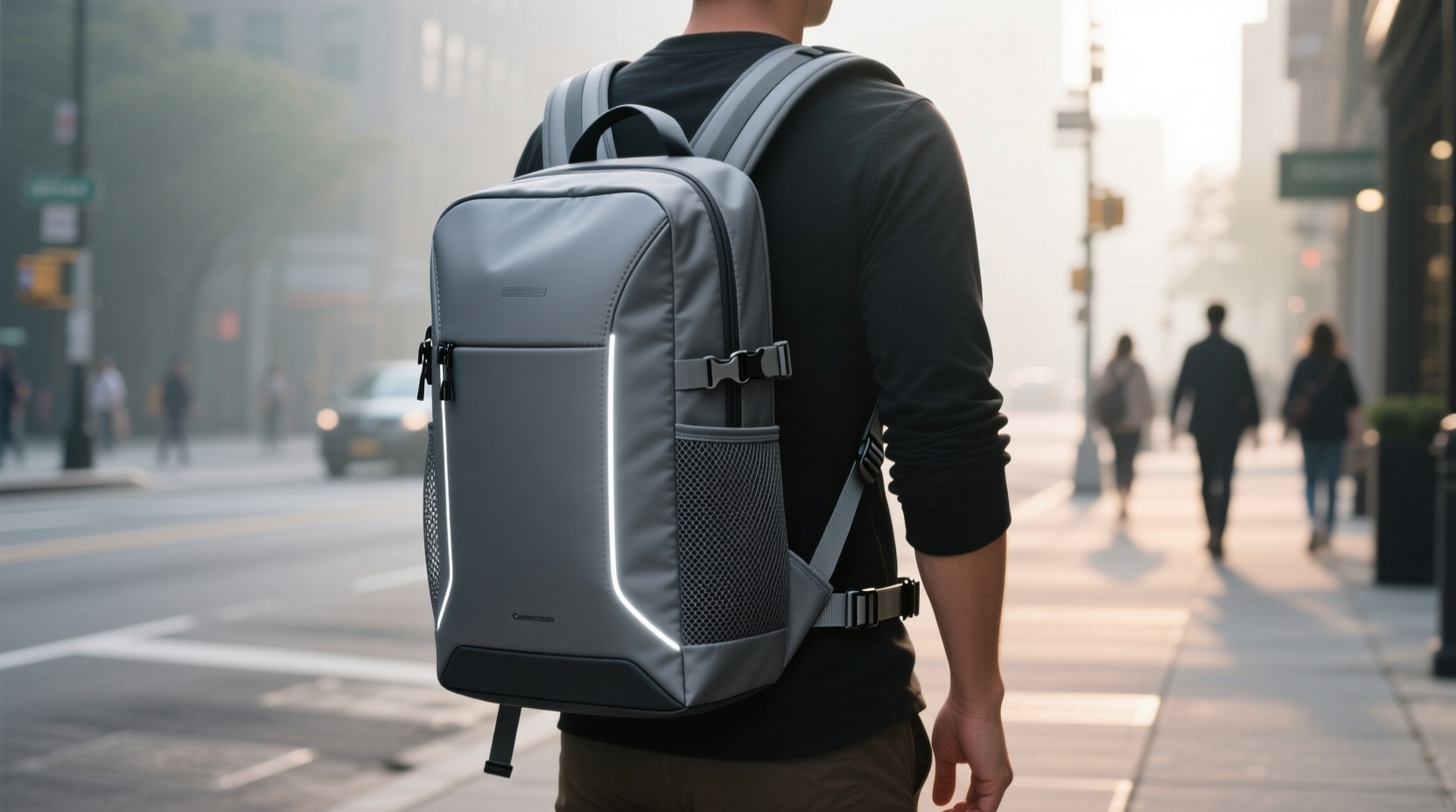
Ergonomics in backpack design revolves around alignment, support, and balance. A well-designed backpack should distribute weight evenly across your body, minimize strain on specific areas, and adapt to your natural posture. Key structural elements include padded shoulder straps, a contoured back panel, a chest or hip strap, and compartments that allow for balanced loading.
The spine maintains its natural S-curve when standing upright. A poorly fitted backpack pulls the shoulders forward or forces the wearer to lean backward to compensate for front-heavy loads, disrupting this alignment. Over time, such postural distortion can lead to tension in the neck, upper back, and lower spine.
“Backpacks should act as extensions of the body, not burdens strapped to it. Proper fit reduces biomechanical stress by up to 40%.” — Dr. Lena Torres, Physical Therapist & Posture Specialist
Even if your backpack lacks advanced features, understanding these principles allows you to make smarter choices about what to carry, how to pack it, and how to wear it.
Step-by-Step: Adjusting Your Backpack for Optimal Fit
Fit is the foundation of ergonomics. No matter how light your load, incorrect positioning multiplies strain. Follow this five-step adjustment process to align your backpack with your body’s natural mechanics.
- Position the backpack high on your back. The bottom of the bag should sit no lower than two inches above your waistline. If it hangs below the hips, weight pulls downward, increasing lumbar pressure.
- Tighten the main shoulder straps. Straps should be snug but not constricting. You should be able to fit two fingers between the strap and your shoulder. Loose straps allow the bag to sway, forcing constant micro-adjustments while walking.
- Engage the load-lifter straps (if available). These connect the top of the shoulder straps to the backpack frame near the collarbone. Pulling them tight tilts the top of the pack closer to your body, reducing forward pull.
- Fasten the sternum (chest) strap. This stabilizes shoulder straps, prevents slippage, and encourages even weight sharing between both sides. Position it at mid-chest level.
- Use the hip belt for heavier loads. If your backpack has one, route the main weight through your pelvis—the strongest part of your lower body. Up to 80% of the load should transfer here when properly adjusted.
Optimize Load Distribution and Packing Strategy
What you carry matters as much as how you carry it. Poorly distributed weight—even within recommended limits—can create pressure points and imbalance.
The general rule is to keep total backpack weight under 10–15% of your body weight. For a 150-pound person, that means no more than 15–22.5 pounds. However, many commuters exceed this without realizing it, especially when packing laptops, books, gym clothes, and lunch.
| Item | Weight (avg) | Packing Recommendation |
|---|---|---|
| Laptop (13–15\") | 3–5 lbs | Closest to the back, in a padded sleeve |
| Notebook or binder | 2–3 lbs | Near the center, vertically aligned |
| Water bottle (16 oz) | 1 lb | Side pocket or lower compartment |
| Gym shoes | 1.5–2.5 lbs | Bottom or external compression straps |
| Lunch container | 1–1.5 lbs | Side or front compartment, insulated if needed |
Pack heavy items close to your spine and centered between your shoulder blades. Lighter, bulkier items go toward the outside or top. Avoid placing dense objects like power banks or keys in outer pockets where they press directly against your back.
- Use internal organizers to prevent shifting during movement.
- Remove unnecessary items daily—check for receipts, extra chargers, or unused notebooks.
- Carry liquids in leak-proof containers and store them upright to avoid dampness or damage to electronics.
Real-World Example: Transforming a Commuter’s Routine
Take Mark, a software developer in Seattle who bikes 4 miles each way to work. He used a basic college-style backpack with thin straps and no hip belt. After six months, he developed persistent shoulder pain and numbness in his left hand. A physical therapy assessment revealed nerve compression from uneven load distribution and prolonged forward head posture.
Instead of immediately buying a new bag, Mark applied ergonomic modifications:
- He re-packed his bag, placing his laptop against his back and moving his water bottle to a side mesh pocket.
- He tightened his shoulder straps and began using the rarely touched sternum strap.
- He started leaving non-essentials—like a second pair of headphones and extra cables—at work.
- He invested in a lightweight hip belt add-on compatible with his existing pack.
Within three weeks, his shoulder pain decreased significantly. By month two, he reported improved posture and energy levels during the day. His backpack hadn’t changed structurally, but his approach to wearing and loading it had transformed his experience.
Upgrade Strategically: When Modifications Aren’t Enough
Sometimes, your backpack simply isn’t built for long-term ergonomic use. Look for these red flags:
- No padding on shoulder straps or back panel
- Lack of adjustability (fixed straps, no load lifters)
- Single compartment with no organization
- Excessive capacity (over 30 liters for urban commuting)
If you're considering a replacement, prioritize function over fashion. Ideal commuter backpacks range from 18 to 24 liters, feature ventilated back panels, include multiple adjustment points, and integrate laptop sleeves with padding. Brands like Osprey, Aer, and Deuter offer models specifically engineered for urban ergonomics.
But upgrades don’t always mean replacement. Consider accessories:
- Hip strap adapters: Some packs allow aftermarket hip belts to be attached.
- Back panel inserts: Foam or inflatable pads add lumbar support.
- Strap cushions: Silicone or gel shoulder strap covers reduce pressure.
“A $10 strap pad won’t fix a fundamentally flawed backpack, but it can make a decent one significantly more comfortable for daily use.” — Jordan Lee, Gear Engineer at Urban Mobility Labs
Ergonomic Checklist for Daily Commuters
Use this checklist every morning before heading out to ensure your backpack supports—not hinders—your body.
- ✅ Weigh your loaded backpack—stay under 15% of your body weight.
- ✅ Pack heaviest items closest to your back and centered.
- ✅ Adjust shoulder straps so the bag sits high and snug.
- ✅ Fasten the sternum strap at chest level.
- ✅ Use the hip belt for loads over 10 pounds.
- ✅ Check that nothing protrudes or presses into your spine. <7>✅ Remove any items you won’t need during the day.
- ✅ Perform a quick posture check: stand straight, shoulders relaxed.
Frequently Asked Questions
Can a backpack cause long-term back problems?
Yes. Chronic overloading or poor fit can lead to muscle imbalances, disc compression, and postural dysfunction. While short-term discomfort may resolve with rest, repeated strain increases the risk of degenerative changes over time, especially in younger users whose spines are still developing.
Is a rolling backpack a better alternative?
For some, yes—especially those with pre-existing back or shoulder conditions. However, rolling backpacks are less practical on stairs, crowded transit, or uneven terrain. They also eliminate the low-impact aerobic benefit of carrying moderate loads. Use them selectively, not as a default solution.
How often should I reassess my backpack setup?
Review your setup monthly, especially if your routine changes—such as starting to carry gym gear, switching to a heavier laptop, or increasing commute distance. Seasonal shifts (e.g., winter coats adding bulk) also affect fit and balance.
Final Thoughts: Small Changes, Lasting Impact
Making your backpack more ergonomic isn’t about perfection—it’s about awareness and consistency. Most people carry their bags the same way for years without questioning whether it’s optimal. Yet minor tweaks in fit, packing order, and usage habits can dramatically improve comfort and long-term spinal health.
You don’t need the most expensive backpack to achieve proper ergonomics. What matters is intentionality: choosing what to carry, how to carry it, and listening to your body’s feedback. Pain isn’t normal. Numbness isn’t inevitable. These are signals that something needs adjustment.




 浙公网安备
33010002000092号
浙公网安备
33010002000092号 浙B2-20120091-4
Comments
No comments yet. Why don't you start the discussion?