
For anime fans navigating the growing number of streaming platforms, choosing where to invest time and subscription fees can be overwhelming. Two major players—Crunchyroll and Netflix—offer access to anime, but their approaches differ significantly. While Netflix markets itself as a global entertainment giant with curated anime titles, Crunchyroll positions itself as the definitive hub for anime enthusiasts. But when it comes to the depth of the content library and the quality of subtitles, which platform truly delivers a superior experience?
This article dives deep into both services, comparing their anime catalogs, subtitle accuracy, localization practices, and overall value for anime lovers. Whether you're a long-time otaku or a newcomer drawn in by recent hits like *Jujutsu Kaisen* or *Demon Slayer*, understanding these differences can help you make an informed decision.
Anime Content Library: Breadth vs. Depth
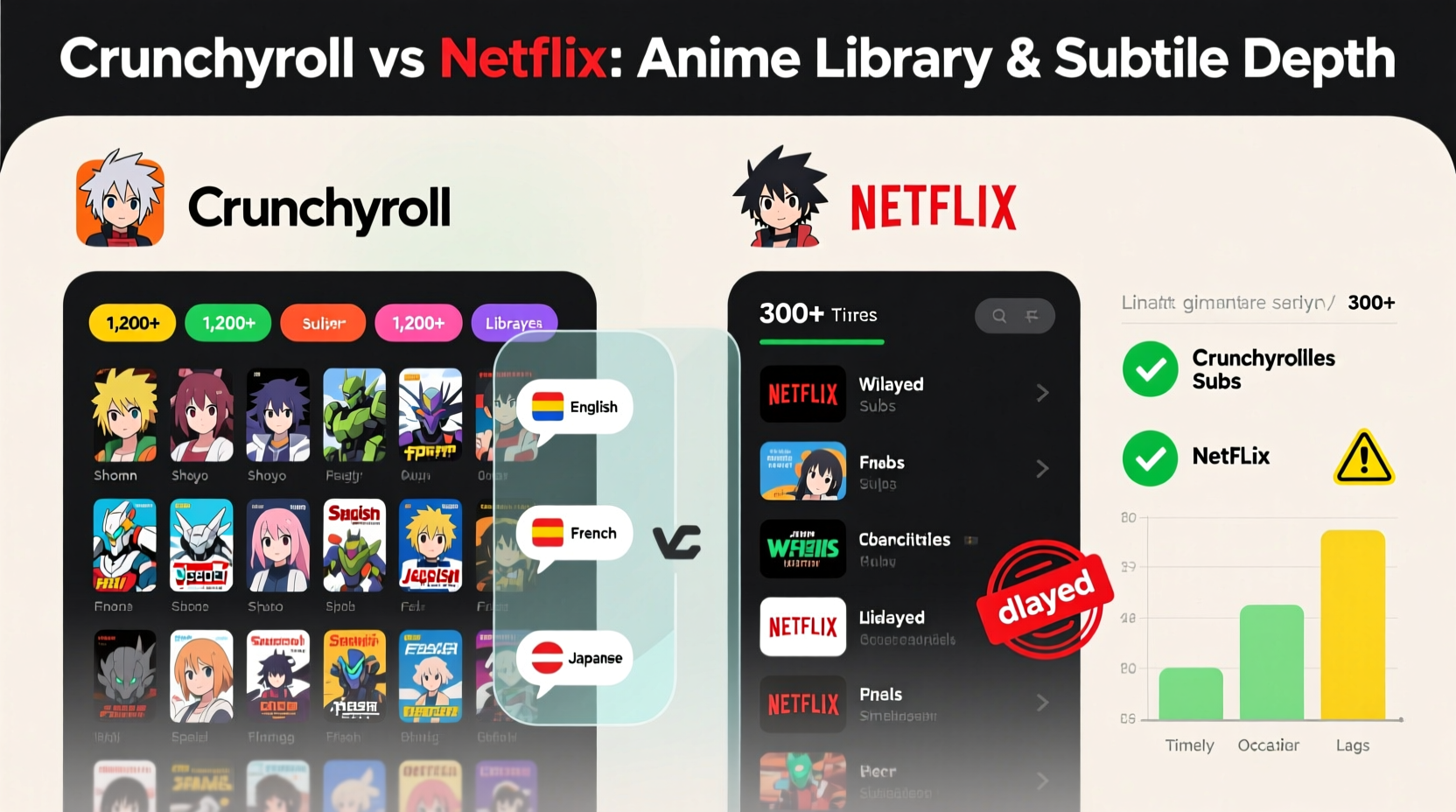
The most critical factor in determining which service is better for anime is the size, variety, and freshness of the content library. Here, Crunchyroll holds a clear advantage in terms of volume and scope.
Crunchyroll boasts over 1,300 anime series and more than 20,000 episodes in its catalog, including ongoing simulcasts from Japan released mere hours after their original broadcast. This means fans can follow seasonal shows like *Chainsaw Man*, *My Hero Academia*, and *Oshi no Ko* weekly as they air in Japan—a feature unmatched by Netflix.
In contrast, Netflix’s anime library contains around 200–300 anime titles, many of which are exclusive dubs or Netflix-original productions such as *Castlevania*, *Pluto*, and *Trese*. While these originals are often high-quality, they represent a fraction of the broader anime landscape. Moreover, Netflix rarely adds new Japanese anime immediately after release, often waiting months or even years for licensing rights.
Exclusive Titles and Licensing Power
Crunchyroll maintains strong relationships with major Japanese studios like Toei Animation, Aniplex, and MAPPA. As a result, it hosts exclusive rights to flagship series such as *Dragon Ball*, *One Piece*, *Attack on Titan*, and *Fate/stay night*. These titles form the backbone of modern anime fandom and are either absent from Netflix or available only in limited regions.
Netflix, however, counters with significant financial muscle. It commissions original anime projects and secures exclusive distribution rights in certain territories. For example, Netflix is the sole legal streamer of *Cowboy Bebop (2021)* outside Japan and holds exclusivity for films like *The First Slam Dunk* in multiple countries. Still, these wins are sporadic compared to Crunchyroll’s consistent pipeline of licensed content.
Subtitle Quality: Accuracy, Localization, and Fan Reception
Subtitles are the lifeblood of non-Japanese-speaking anime audiences. Poor translations can distort meaning, remove cultural nuance, or even alter character personalities. When evaluating subtitle quality, two aspects matter most: accuracy and localization philosophy.
Crunchyroll employs professional translators with deep familiarity with Japanese language and anime-specific terminology. Their subtitles aim for fidelity to the original script while maintaining readability. Honorifics like “-san,” “-kun,” and “-chan” are preserved, and culturally specific references (e.g., *senpai*, *bento*, *omiai*) are left intact with contextual clarity. This approach respects the source material and appeals to purists.
Netflix, on the other hand, often opts for aggressive localization. In older titles like *Death Note* and *Fullmetal Alchemist: Brotherhood*, Netflix replaced honorifics and altered dialogue to sound more “natural” in English. While this may improve accessibility for casual viewers, many fans criticized these changes as diluting the authenticity of the experience.
“Localization shouldn’t mean erasing cultural identity. Good subtitles bridge worlds without flattening differences.” — Dr. Akari Nakamura, Translator & Media Linguist, Kyoto University
Translation Consistency Across Seasons
Another key difference lies in consistency across long-running series. Crunchyroll typically assigns dedicated translation teams to multi-season franchises, ensuring continuity in tone, terminology, and character voice. For instance, the term *chakra* in *Naruto* remains consistent throughout its run, and character nicknames stay true to fan expectations.
Netflix has faced criticism for inconsistent dubbing and subtitling between seasons. The transition from Funimation-dubbed episodes to Netflix-exclusive dubs in *Black Clover* led to noticeable shifts in voice acting and script interpretation, confusing longtime fans.
Detailed Comparison: Crunchyroll vs. Netflix
| Feature | Crunchyroll | Netflix |
|---|---|---|
| Total Anime Titles | 1,300+ series (~20,000+ episodes) | 200–300 titles |
| Simulcasts (New Episodes Weekly) | Yes – within hours of Japan airing | No – delayed by months/years |
| Exclusive Originals | Limited (e.g., *High Guardian Spice*) | Strong lineup (*Pluto*, *Castlevania*, *Trese*) |
| Subtitles: Accuracy & Fidelity | High – preserves honorifics, cultural context | Mixed – often localized, honorifics removed |
| Dub Availability | Extensive – same-day dubs for major titles | Selective – mostly originals and popular series |
| Offline Viewing | Available on mobile (Premium plan) | Yes – full offline support |
| Region Locking | Moderate – varies by title | High – extensive geo-restrictions |
| Price (Monthly, Ad-Free) | $9.95 (Premium) | $15.49 (Standard) |
User Experience and Accessibility Features
Both platforms offer clean interfaces, but their design philosophies reflect their target audiences. Crunchyroll’s interface is tailored specifically for anime fans, with filters for genres (shonen, shojo, mecha), seasonal tags, and a “Simulcast Schedule” calendar. Users can sort by popularity, year, or alphabetical order, making discovery intuitive for seasoned viewers.
Netflix takes a broader entertainment-first approach. Anime is buried under general categories unless searched directly. While Netflix excels in recommendation algorithms based on viewing habits, it lacks granular filtering options for anime-specific preferences.
Crunchyroll also supports advanced playback features like adjustable subtitle fonts, sizes, and positioning—critical for viewers with visual impairments or those watching on small screens. Netflix allows basic subtitle customization but doesn’t offer the same level of control.
Real Example: A Fan’s Dilemma
Consider Maria, a university student and avid anime watcher living in Brazil. She wants to watch *Suzume* upon release and keep up with *Mushoku Tensei* Season 2 as it airs in Japan. On Netflix, she finds *Suzume* available—but only with Portuguese dubbing and no subtitles. Meanwhile, *Mushoku Tensei* isn’t on Netflix at all during its initial run.
Switching to Crunchyroll, she accesses *Mushoku Tensei* with both subtitled and dubbed versions released weekly. *Suzume* isn’t there yet, but Crunchyroll announces it will arrive six months post-theatrical release. For Maria, Crunchyroll becomes her primary platform despite the wait for some films, simply because it supports her engagement with ongoing series.
Actionable Checklist: Choosing the Right Platform
Use this checklist to determine which service aligns best with your anime-watching priorities:
- ✅ Do you want to watch new anime episodes within hours of their Japanese release? → Choose Crunchyroll
- ✅ Are you looking for faithful subtitles that preserve cultural nuances? → Choose Crunchyroll
- ✅ Do you prefer binge-watching complete series rather than waiting weekly? → Netflix may suit you better
- ✅ Are you interested in high-budget anime originals not based on existing manga? → Consider Netflix
- ✅ Is budget a concern? → Crunchyroll offers better value at $9.95/month vs. Netflix’s $15.49+
- ✅ Do you travel frequently and need offline viewing? → Both offer it, but Netflix has broader device compatibility
- ✅ Do you care about community features (forums, news, anime events)? → Crunchyroll includes blogs, polls, and virtual conventions
Frequently Asked Questions
Can I watch Crunchyroll anime on Netflix?
No. Crunchyroll and Netflix operate separate licensing agreements. Most Crunchyroll-exclusive titles like *One Piece* or *My Hero Academia* are not available on Netflix. Some overlap exists (e.g., *Hunter x Hunter*), but availability varies by region.
Why does Crunchyroll have better subtitles than Netflix?
Crunchyroll’s business model centers on anime, so it invests in specialized translation teams fluent in anime culture and linguistic subtleties. Netflix prioritizes broad accessibility, leading to more generalized, Westernized translations that sometimes sacrifice precision.
Is it worth subscribing to both platforms?
For serious anime fans, yes. Crunchyroll covers the vast majority of mainstream and niche anime with timely releases and accurate subtitles. Netflix complements this with high-quality originals and select film acquisitions. Together, they provide near-comprehensive coverage—especially if you enjoy both classic series and experimental storytelling.
Final Verdict: Which Platform Reigns Supreme?
When judged solely on anime content library and subtitle quality, **Crunchyroll is objectively better than Netflix**. Its expansive catalog, commitment to simulcasting, and meticulous attention to subtitle accuracy make it the go-to destination for anime purists and casual fans alike. The platform functions less like a general entertainment service and more like a curated cultural archive built by and for anime lovers.
That said, Netflix plays an important role in expanding anime’s global reach. Its investment in original productions brings anime aesthetics to new audiences who might never explore traditional series. Shows like *Pluto* demonstrate that Western studios can produce anime-inspired content with emotional depth and artistic excellence.
The ideal solution? Use both. Subscribe to Crunchyroll as your primary anime hub, leveraging its depth, timeliness, and authenticity. Maintain a Netflix account to enjoy its exclusive originals and cinematic offerings. Many fans already adopt this hybrid model, recognizing that each platform fills a different niche.
Conclusion: Make Your Viewing Experience Count
Anime is more than just entertainment—it’s a global art form with rich storytelling, complex characters, and cultural significance. Where you choose to watch it impacts how deeply you connect with the medium. While Netflix offers convenience and prestige, Crunchyroll delivers authenticity, breadth, and respect for the craft.
If your priority is experiencing anime as it was intended—with precise subtitles, minimal delays, and maximum selection—Crunchyroll is the superior choice. But don’t dismiss Netflix entirely. Embrace both platforms strategically, and you’ll unlock the full spectrum of what modern anime has to offer.




 浙公网安备
33010002000092号
浙公网安备
33010002000092号 浙B2-20120091-4
Comments
No comments yet. Why don't you start the discussion?