
Sleeping with wet hair may seem like a harmless habit—especially after a late-night shower or when time is tight before bed. However, doing so on a regular basis can have consequences for both your hair health and scalp condition. While an occasional damp night might not cause immediate harm, making it a routine can lead to long-term issues ranging from breakage to fungal infections. Understanding the science behind wet hair and sleep helps you make informed decisions about your nighttime hair care routine.
The Science of Wet Hair and Sleep
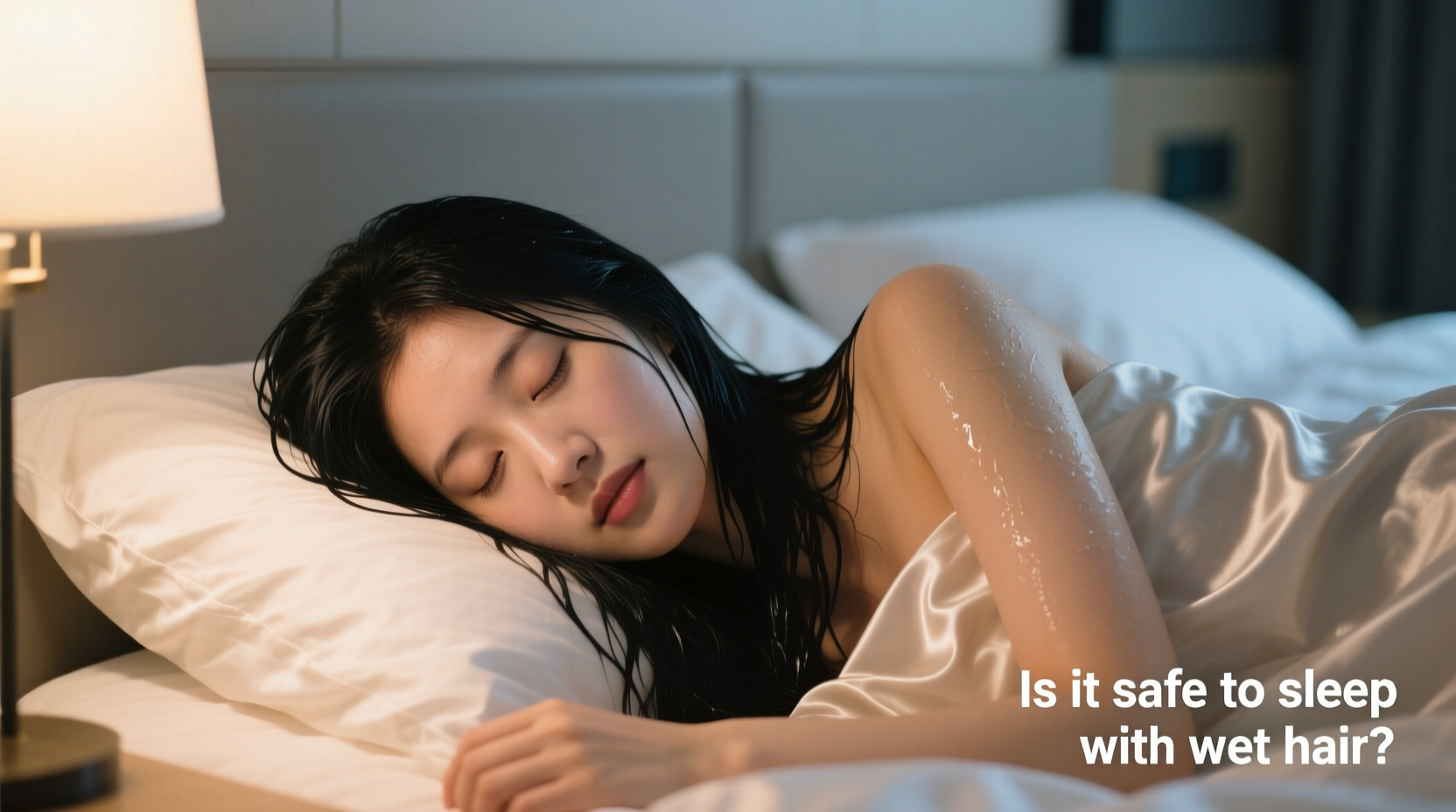
When hair is wet, its structure changes significantly. Water molecules penetrate the hair shaft, causing it to swell and weaken. This process increases the hair’s elasticity but reduces its tensile strength, making it more vulnerable to stretching and snapping. The cuticle—the outer protective layer—lifts slightly when saturated, leaving the cortex exposed to friction and environmental stressors.
Lying down on a pillow while your hair is still damp introduces mechanical stress. As you move during sleep, strands rub against fabric, leading to tangles, split ends, and breakage. Cotton pillowcases, in particular, are highly absorbent and create friction that exacerbates these effects. Additionally, moisture trapped against the scalp creates a warm, humid environment—ideal for microbial growth.
Dermatologists emphasize that prolonged exposure to dampness disrupts the scalp's natural pH balance and compromises its barrier function. Over time, this can contribute to irritation, dandruff, and even folliculitis—an inflammation of the hair follicles often caused by bacterial or fungal overgrowth.
“Wet hair is up to three times more fragile than dry hair. Going to bed with damp strands significantly increases the risk of structural damage and scalp complications.” — Dr. Lena Torres, Board-Certified Trichologist
Common Types of Damage from Regularly Sleeping with Wet Hair
The cumulative effect of sleeping with wet hair isn’t always visible right away. Damage builds gradually, manifesting in several distinct ways:
Hair Breakage and Split Ends
As wet hair rubs against fabric throughout the night, individual strands become twisted and pulled. This constant abrasion weakens the keratin bonds, especially at the mid-shaft and ends where protection is thinnest. Over weeks or months, this leads to increased frizz, split ends, and noticeable thinning, particularly in fine or chemically treated hair.
Scalp Infections and Irritation
A persistently damp scalp fosters the growth of fungi such as *Malassezia*, which is linked to seborrheic dermatitis and dandruff. Bacteria can also thrive in moist environments, potentially leading to folliculitis. Symptoms include redness, itching, flaking, and in severe cases, small pustules around hair follicles.
Increased Frizz and Loss of Definition
Natural curl patterns rely on controlled drying to maintain shape. When hair dries haphazardly against a pillow, curls lose their alignment, resulting in frizz and undefined waves. Even straight hair can develop unnatural bends or creases from compression during sleep.
Slower Drying Leading to Chilling Effects
While less directly damaging, sleeping with wet hair in cool rooms can lead to discomfort or mild headaches due to heat loss through the scalp. Though not harmful per se, it can disrupt sleep quality and leave you feeling chilled upon waking.
Do’s and Don’ts: Best Practices for Nighttime Hair Care
| Do | Don’t |
|---|---|
| Use a microfiber towel or cotton T-shirt to gently blot hair dry | Rub hair vigorously with a regular towel |
| Braid or loosely tie hair in a low bun to minimize tangling | Pull wet hair into a tight ponytail or braid |
| Apply a leave-in conditioner or heat-protectant (if using dryer) | Apply heavy oils or butters before bed—they trap moisture too long |
| Switch to a silk or satin pillowcase to reduce friction | Use rough cotton pillowcases nightly with wet hair |
| Use a hooded dryer on low heat if air-drying isn’t feasible | Go to bed immediately after showering without drying efforts |
Step-by-Step Guide to Safer Nighttime Hair Routines
If you frequently find yourself washing your hair at night, follow this five-step approach to minimize damage while maintaining convenience:
- Shower Earlier in the Evening
Allow at least 30–60 minutes between washing and bedtime. This gives hair time to partially or fully air-dry before lying down. - Blot, Don’t Rub
After washing, gently press water out of your hair using a microfiber towel or old cotton T-shirt. Avoid aggressive rubbing, which lifts the cuticle and promotes frizz. - Apply Protective Products
Use a lightweight leave-in conditioner or detangling spray to strengthen strands and reduce friction. For curly hair, a light gel or mousse can help define shape as it dries. - Style for Protection
Loosely braid long hair or gather it into a “pineapple” high puff secured with a silk scrunchie. This prevents tangling and preserves curl formation. - Upgrade Your Pillowcase
Replace cotton pillowcases with silk or satin alternatives. These materials reduce friction, retain moisture in hair, and support smoother waking styles.
Real-Life Scenario: How One Woman Reversed Chronic Hair Breakage
Maria, a 32-year-old teacher from Portland, had struggled with brittle ends and persistent scalp itchiness for over a year. She routinely washed her hair at 9 PM and went to bed within 20 minutes, believing it was more convenient than blow-drying. Over time, she noticed increased shedding, split ends, and recurring dandruff-like flakes—even after switching shampoos.
After consulting a dermatologist, Maria learned that her nighttime routine was the root cause. Her scalp never fully dried, creating a breeding ground for yeast overgrowth. The constant friction from cotton pillowcases worsened hair breakage. Following her doctor’s advice, she began towel-drying more thoroughly, switched to a silk pillowcase, and moved her wash days to mornings when possible.
Within six weeks, her scalp irritation subsided, and new growth appeared stronger. After three months, trichological analysis showed a 40% reduction in split ends and improved hair elasticity. Maria now dries her hair at least 70% before bed and only uses overnight treatments under protective caps.
Expert-Backed Tips to Minimize Risk Without Changing Your Routine Entirely
If adjusting your entire schedule isn’t practical, consider these targeted strategies recommended by trichologists and dermatologists:
- Use a quick-dry technique: Flip your head forward, wrap hair in a microfiber towel, and secure it on top of your head. Let it sit for 15–20 minutes while you do other tasks.
- Invest in a portable diffuser: Attach it to your hairdryer to distribute airflow evenly, reducing drying time without overheating roots.
- Try “pineappling” for curly hair: Gather hair into a loose, high ponytail on top of your head. This prevents flattening and maintains curl integrity.
- Limit frequency: Reserve wet-bed sleeping for once a week or less. Make it an exception, not a norm.
- Monitor scalp health: Check weekly for signs of redness, bumps, or excessive flaking. Early detection prevents chronic conditions.
Frequently Asked Questions
Can sleeping with wet hair cause permanent hair loss?
No, sleeping with wet hair does not directly cause genetic or hormonal hair loss. However, chronic tension, breakage, and untreated scalp infections (like folliculitis) can lead to temporary shedding or scarring alopecia in severe cases. Preventing prolonged moisture exposure helps maintain follicle health.
Is it safer to sleep with braided wet hair?
Braiding damp hair can reduce tangling, but tight braids increase traction on the roots, raising the risk of traction alopecia over time. If you choose to braid, keep it loose and avoid pulling at the scalp. Opt for two or three large braids instead of many small ones.
What’s the safest way to dry hair before bed?
The ideal method combines gentle towel-drying with low-heat airflow. Use a microfiber towel to remove excess water, then apply a heat protectant and use a blow dryer on cool or warm setting, directing airflow downward along the hair shaft to smooth the cuticle. Aim for 80–90% dryness before sleeping.
Final Thoughts: Balancing Convenience and Hair Health
Sleeping with wet hair occasionally won’t ruin your locks, but turning it into a daily habit invites preventable problems. The combination of weakened hair structure, mechanical stress, and a damp scalp environment sets the stage for breakage, infection, and long-term texture changes. Fortunately, small adjustments—like improving drying techniques, changing pillow materials, and monitoring scalp condition—can preserve hair strength and appearance over time.
Healthy hair doesn’t require perfection, but consistency in care matters. Whether you have straight, wavy, curly, or coily textures, respecting the fragility of wet strands is key to maintaining resilience and shine. Think of your nighttime routine not just as a matter of convenience, but as an extension of your overall hair wellness strategy.




 浙公网安备
33010002000092号
浙公网安备
33010002000092号 浙B2-20120091-4
Comments
No comments yet. Why don't you start the discussion?